Skip to comments.
Which Nations Lived in Ancient Palestine?
Greek Reporter ^
| May 16, 2026
| Caleb Howells
Posted on 05/17/2026 11:20:49 AM PDT by nickcarraway
Historically, several different nations lived in Ancient Palestine. The most famous of these are undoubtedly the Israelites, due to their rich history as described in the Bible. However, they are not the only nation that lived in the region in ancient times.
Where was Ancient Palestine?
Modern-day Palestine does not have the same boundaries as Ancient Palestine. Historically, starting with the Greeks, the term “Palestine” has been applied to the entire region that is now modern-day Israel and the State of Palestine. The ancient use of the word even applied to some of the lands east of the Jordan River rather than just the territory to the west of it.
To the north of Ancient Palestine was Phoenicia, the land of the sea-faring Phoenicians. To the southwest was Egypt. Directly south of that was the land of the Edomites. To the east and southeast were the Arabian tribes. Historians usually refer to the land of Ancient Palestine as “Canaan” when discussing the Bronze Age.
The Israelites
The nation most famously associated with Ancient Palestine are the Israelites. Their descendants, modern-day Israelis, continue to reside there to this day. The Ancient Israelites dominated the region from the Late Bronze Age through to the early Roman Empire. There were famously twelve tribes of Israel, including the priestly tribe of Levites.
The Israelites were distinct from most other nations of the ancient world in that they practiced monotheism. Rather than worshipping a whole pantheon of deities, they worshipped only one God whom they referred to as “Yahweh” (commonly rendered “Jehovah” in English).
Grecian Delight supports Greece The Israelites appeared in the region by at least the 15th century BC, going by the apparent reference to them on the Berlin Pedestal. Indeed, the Bible places their arrival in Ancient Palestine in that very century. At that time, it went by the name of “Canaan.”
Initially, the Israelites were a nomadic people. By the eleventh century BC, there is evidence that a monarchy had formed. This monarchy soon split into two separate kingdoms. Eventually, both kingdoms were destroyed by the Assyrians and the Babylonians. However, the Israelites continued to live in Ancient Palestine under foreign domination, first under the Persians, then the Greeks, and finally the Romans.
The Canaanites
The Bronze Age name of the region, “Canaan,” reveals that the Israelites were not the first to live in Ancient Palestine. Prior to them, the people of that region were the Canaanites. They spoke a Semitic language, very similar to that spoken by the Israelites.
Unlike the Israelites, there was never a single kingdom ruling over all of the Canaanites. Rather, Ancient Palestine at that time was quite similar to Greece. It was divided into numerous city-states. One of the most powerful during the Late Bronze Age was Hazor. However, there were many others.
The Canaanites filled Ancient Palestine with the worship of various Semitic gods, but their main god was Baal. In fact, Baal was not a single god. This was a title which several different gods used. One of the main Baals was Hadad. Another prominent Baal was Melqart, the son of Hadad.
In the Late Bronze Age, the Israelites gradually conquered Ancient Palestine, taking over from the Canaanites. The Canaanites were thereafter restricted to the north to the territory known to the Greeks as Phoenicia. This was essentially equivalent to modern-day Lebanon.
Philistines
Another prominent nation that lived in Ancient Palestine were the Philistines. Palestine got its name from them. The Philistines lived on the Mediterranean coast from the border of Egypt to partway along the length of Canaan and were divided into four or five main city-states.
Unlike the Israelites and Canaanites, they did not originally speak a Semitic language. Evidence from Philistine words found in the Bible, as well as personal names in the Bible and on ancient inscriptions, indicate that they originally spoke an Indo-European language. In particular, they likely spoke a language related to Greek.
In line with that linguistic evidence, there is considerable evidence that the Philistines migrated to Ancient Palestine from the Aegean. There was a wave of arrivals in the twelfth century BC during the Sea Peoples‘ invasion of Egypt. Even prior to that, however, there is evidence that some Philistines already resided in Ancient Palestine.
TOPICS: History; Local News
KEYWORDS: israel; palestine
Navigation: use the links below to view more comments.
first previous 1-20, 21-40, 41-44 next last
To: nickcarraway
Yes, especially by the British and French Conquerors who wanted to erase the Turkish Ottoman Claims in 1917, as part of the Sykes-Picot Declaration. The British even designated a ‘Palestine’ Passport, but as part of the British Protectorate.
To: Wuli
Brits? You see how they’re doing these days.
22
posted on
05/17/2026 12:39:05 PM PDT
by
rktman
(Destroy America from within? On hold! Enlisted USN 1967 proudly. 🚫💉! 🇮🇱🙏! Winning currently!)
To: Eli Kopter
In the Paul Newman film “Exodus” (1960), the Jewish refugees from post-1945 Europe were trying to flee to Palestine, which was the official British name of the country before the State of Israel was established by United Nations vote.
23
posted on
05/17/2026 12:49:16 PM PDT
by
Ciexyz
(Prayers for America and Israel.)
To: Cincinnatus.45-70
Never heard that, never heard any reference to that, and cannot find any such quote of it but yours.
24
posted on
05/17/2026 12:59:32 PM PDT
by
Wuli
(ui)
To: Ciexyz
The locals called themselves Palestinians, but were part Mandatory Palestine, and were citizens of that entity, as granted by the League of Nations from 1922-1948 Mandate. The British authorities established a distinct legal citizenship for the territory. The Palestinian Citizenship Order (1925)- Under this law, both Jewish and Arab residents were issued passports and identifying documents officially designated as “Palestine Passport” or “Palestinian Citizen.” The Jews themselves referred themselves as פּלשׂתינה א”י, or Eretz Yisrael Palestina, or Palestina Land of Israel. Before that, they were part of the Ottoman Turkish Empire, from 1299-1922, and were called “Dhimmi” of that Empire, or “Protected”. Jews have continuously occupied the land since the On the tenth day of Nissan (2488), which is equivalent to March 1274 BCE (BC), or about 3300 years.
To: nickcarraway
26
posted on
05/17/2026 1:24:07 PM PDT
by
Wuli
(ui)
To: Eli Kopter; nickcarraway; Wuli
Based on genetic studies wasn’t it shown that ancient Israelites, Canaanites, and Phoenicians were deeply interrelated. Genetically, they all belonged to a highly cohesive population of the ancient Levant and shared the same core ancestral roots.
This confirmed afaik the statements in William.G. Dever “ Who Were the Early Israelites and Where Did They Come From ?”
Genome-wide studies of ancient DNA show that people living across the Levant during the Bronze and Iron Ages (including Canaanites, Phoenicians, and Israelites) shared a remarkably similar genetic profile. They were a mix of earlier indigenous Neolithic populations and migrants from the Caucasus/Zagros regions.
https://pmc.ncbi.nlm.nih.gov/articles/PMC5544389/
The locals before 1200 BC were various genetic and linguist “Canaanites”, though they most likely never called themselves that and did not think of themselves as one people.
From 1200 to 740 BC they were what we call Israelites, though their endodym seems vague if you compare with the Merneptah pharaoh writings or the later writings by Pharaoh Shishak.
From 700 BC the locals were Judaens and also what we later call Samaritans, though they insist (and the genetics backs them) that they are Israelites, like the Judeans.
Judeans or their predecessor Israelites have occupied the land since at least 1274 BC as you state, eli
BUT, the Samaritans has also occupied the land since that time since they are in effect your cousins.
And most if the “Arabs” in the southern Levant share similar Gene’s to Jews and Samaritans.
I am convinced that the majority of “Palestinian “ Genes are from ancient Israelites (just as Jews have it).
So Jews have a right to live there and the others who are willing to live peacefully alongside Jews also, imho, have the same right
27
posted on
05/17/2026 2:16:57 PM PDT
by
Cronos
(Strange women lying in ponds distributing swords is no basis for a system of government.)
To: Eli Kopter; nickcarraway; Wuli
Btw, Eli, the Hebrew year 2488.
The Jewish calendar is Anno Mundi.
The term bcE and CE are non identical as the onky thing “common era” about 0 AD/BC is that Christian’s believed that Jesus was born then.
There was nothing else about that year which makes it a turning point to “common era”
28
posted on
05/17/2026 2:21:00 PM PDT
by
Cronos
(Strange women lying in ponds distributing swords is no basis for a system of government.)
To: nickcarraway
There is no State of Palestine.
29
posted on
05/17/2026 2:32:56 PM PDT
by
PIF
(They came for me and mine ... now its your turn)
To: PIF
30
posted on
05/17/2026 2:33:22 PM PDT
by
dfwgator
("I am Charlie Kirk!")
To: nickcarraway
Palestine used to be used interchangeably with Israel.
—
Not since 1948.
31
posted on
05/17/2026 2:34:35 PM PDT
by
PIF
(They came for me and mine ... now its your turn)
To: dfwgator
Palestinians are Arabs.
—
And?
32
posted on
05/17/2026 3:17:57 PM PDT
by
PIF
(They came for me and mine ... now its your turn)
To: PIF
Plenty of Arab countries they can go live in.
33
posted on
05/17/2026 3:19:31 PM PDT
by
dfwgator
("I am Charlie Kirk!")
To: Wuli
Hey, it’s just feelings and my truth. Somebody else can have a different truth. I’m OK with that. Maybe my hearing aids don’t pick it up just right, who knows.
34
posted on
05/17/2026 3:44:02 PM PDT
by
Cincinnatus.45-70
(What do DemocRats enjoy more than a truckload of dead babies? Unloading them with a pitchfork!)
To: Cronos
I don’t use it for that reason. However, many Christians are offended when BCE is used instead of BC and AD, even thoughthat construct was first used by Dionysius Exiguus in the 6th Century Rome. I use it as a reference because much of the later research used it as a reference point, and I don’t waste time trying to overcome butt hurt by folks who think it is a matter of faith.
To: roving
The Romans named it Palestinia. It was to humiliate the Jewish people.
—
Yeah, more revisionist history from those pointy-headed intellectuals, who wear silly hats.
36
posted on
05/17/2026 6:54:52 PM PDT
by
thepoodlebites
(and that government of the people, by the people, for the people, shall not perish from the earth.)
To: Eli Kopter
Dionysius Exiguus in the 6th Century Rome created the construct AD anno Domini, ie “year of Our Lord”
It was only in 1856, Jewish scholar Rabbi Morris Jacob Raphall explicitly popularized the specific abbreviations BCE and CE in his historical writings. This allowed Jewish academics to write about history using the standard global calendar without utilizing titles that explicitly proclaimed Jesus as “the Lord
37
posted on
05/17/2026 6:55:39 PM PDT
by
Cronos
(Strange women lying in ponds distributing swords is no basis for a system of government.)
To: dfwgator
The “Palestinians” are Arabized people. Like the Egyptians or Iraqis who are Arabized ( ie their language shifted to arabic and they think they are arab).
Genetically the “Palestinians” have ancestry from Jews, Samaritans etc and a small percentage from “Arabs”
Even lower than the percentage of “Turkic” genes among “Turks”(5 to 15%)
38
posted on
05/17/2026 6:59:43 PM PDT
by
Cronos
(Strange women lying in ponds distributing swords is no basis for a system of government.)
To: Eli Kopter; nickcarraway; x
"Hadrian named the country of Israel as “Syriana Palestina”"
That is not quite accurate.
1. The country of "Israel" had not existed for 800 years when Hadrian came along. What was there was the Roman province of Iudea
2. In 135 AD, Roman Emperor Hadrian finally crushed the Bar Kokhba Revolt, a massive and bloody three-year Jewish uprising against Roman rule
3. He officially dissolved the Roman province of Iudaea (which explicitly meant "Land of the Jews") and merged it with Galilee with Perea (the coast), with Samaria and with idumea into a larger administrative district renamed Syria Palaestinia
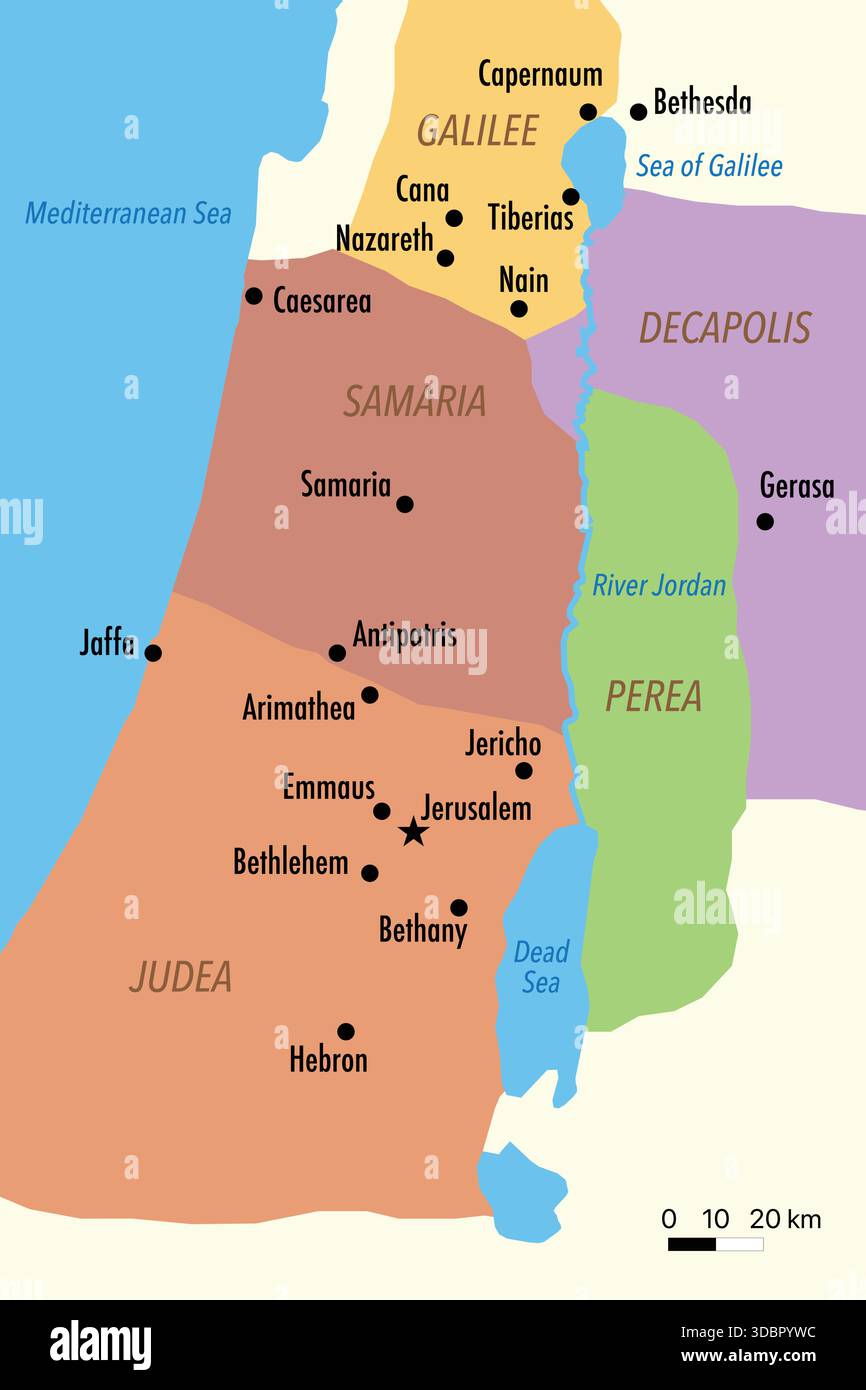
4. until the war, Iudaea was a minor, low-ranking province governed by lower-tier Roman officials (procurators). By adding Galilee and the coast to Judea, he created a much larger, high-ranking administrative district.
5. While Palaestina is etymologically derived from the Philistines, the Philistines themselves had completely vanished from history more than 600 years prior during the Assyrian conquests. Hadrian did not invent the word out of thin air to tease the defeated population. Instead, he utilized an existing geographic term. For centuries, Greek historians like Herodotus had used variations of Palaistine to describe the entire coastal and inland region of the southern Levant
5. Hadrian replaced an explicitly ethnic name (Judaea) with a generic geographic fallback, successfully hiding the Jewish connection to the province on the global stage. Kinda like the way the Han Chinese use Xinjiang instead of East Turkestan
39
posted on
05/17/2026 7:23:31 PM PDT
by
Cronos
(Strange women lying in ponds distributing swords is no basis for a system of government.)
To: nickcarraway
Not today’s Palestinians.
40
posted on
05/17/2026 8:11:47 PM PDT
by
TBP
(Decent people cannot fathom the amoral cruelty of the Democrat cult.)
Navigation: use the links below to view more comments.
first previous 1-20, 21-40, 41-44 next last
Disclaimer:
Opinions posted on Free Republic are those of the individual
posters and do not necessarily represent the opinion of Free Republic or its
management. All materials posted herein are protected by copyright law and the
exemption for fair use of copyrighted works.
FreeRepublic.com is powered by software copyright 2000-2008 John Robinson