Posted on 01/19/2026 9:19:40 AM PST by MtnClimber
When news broke of the massive child nutrition fraud in Minnesota, many Americans reacted with disbelief. During the pandemic, roughly $250 million intended to feed hungry children was siphoned off, prosecutors say, and spent on luxury cars, real estate, and other indulgences. To most people, it appeared to be a shocking betrayal of public trust.
To me, it felt unsettlingly familiar.
Decades ago, long before Minnesota became synonymous with one of the largest fraud cases in U.S. history, I had an experience in Somalia that permanently altered my perspective on aid, trust, and good intentions. It is why I read the indictments differently, not with surprise so much as recognition.
What struck me most about the Minnesota case was not only the scale of the theft but the silence surrounding it. The fraud appears to have operated in plain sight within tightly knit circles, yet few people spoke out.
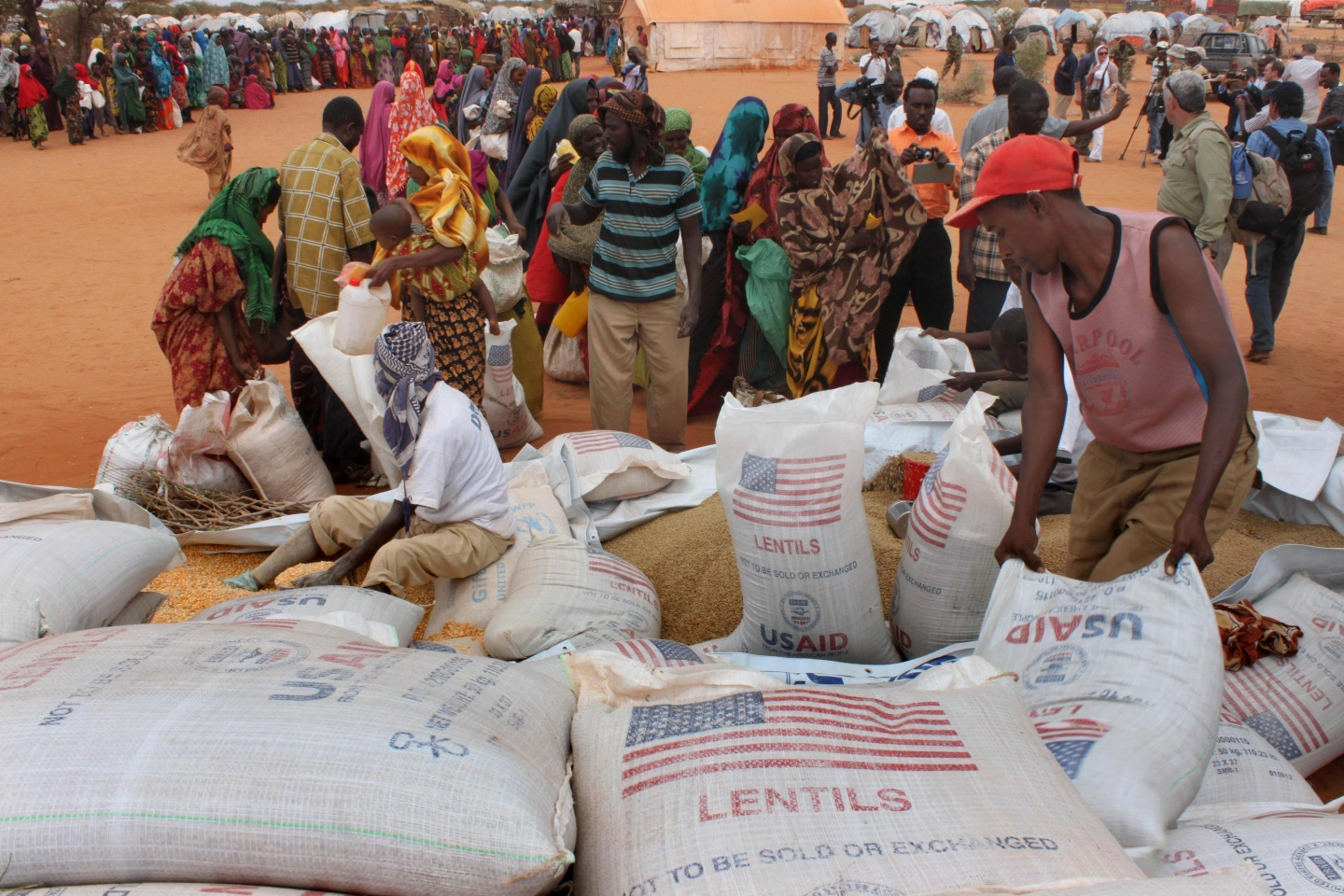
More than 40 years ago, when I was a rice farmer in California, American rice growers learned of famine conditions in Somalia. Competitors set aside their rivalry and donated an entire shipload of rice for humanitarian relief. I later traveled to Somalia, expecting to see that food had reached people on the brink of starvation.
It had not.
A powerful clan had taken control of the shipment. Once its own members’ needs were met, the remaining rice did not go to feed other Somalis. Instead, it was used to feed animals, while those outside the clan continued to go hungry.
At the time, I tried to explain what I had seen by blaming corruption, weak oversight, or a few bad actors. None of those explanations captured the deeper pattern. The behavior made sense only when I began to understand how differently trust and obligation were organized.
(Excerpt) Read more at realclearpolitics.com ...
Import the third world and become the third world.
The article contains the obligatory “ we all know many, many, Somalis are hard working people” excuse.
I guess thats why 90% are on weldare.
The fraud is built on a constant lie
32% of urban children are considered "obese." Another 20% are "overweight." There are zero "hungry children" because of economics in the USA
"Hungry children" exist because of broken homes and bad/irresponsible parents. All the money in the world won't fix that. In fact, the welfare state makes it much worse.
Mitzi concludes with——
“””Whenever loyalty to the group eclipses loyalty to shared rules, corruption flourishes. The Minnesota scandal was not an aberration so much as a warning: When institutions assume trust without enforcing it, low-trust behavior fills the vacuum. Somalia shows what happens when that low-trust approach is entrenched.””””
The Somalis are not the only ones who are ‘loyal to the group’.
We can include illegal aliens in general who are loyal to their home country and not the USA.
Or we could include Antifa who is loyal to their destructive organization and not the USA.
ete, etc, etc
The same can be said of politicians.
Explains why many quickly become millionaires on salaries that won’t pay the rent in many DC suburbs
But they are not. They are the shittiest, laziest, thievingest people on the planet.
80% are still on welfare after 10 years, and when they do get jobs, like at that Minneapolis airport, they use those jobs to rob, steal, and corrupt anything they touch.
They are horrible people, and we need to get them all out of our country.
What struck me most about the Minnesota case was not only the scale of the theft but the silence surrounding it. The fraud appears to have operated in plain sight within tightly knit circles, yet few people spoke out.
For many years the old Soviet Union had a program where sleeper agents resided in simulated U.S. towns learning to “be American”, and then be shipped here to await orders for taking over our country. That never came to pass but the Democrat Party is doing it’s best to carry on that mission.
We should have a similar program that teaches immigrants to “be American” for, I don’t know...assimilating our language, culture and values?
If you have never been on weldare you might not completely understand what being on weldare is like.
We can include Democrats whose loyalty to the group exceeds their loyalty to our country. It explains why Democrat and Patriotic can never be used in the same sentence.
“Whenever loyalty to the group eclipses loyalty to shared rules, corruption flourishes.”
There is a hidden assumption in this article.
When someone is loyal to their group there is no such thing as corruption within the group.
In fact corruption is when you allow anyone else access to resources that your group could have instead.
That has been the human condition since we crawled out of the caves.
It was a great experiment to see if we could change those old axioms.
In fact—while we accuse leftists of Utopia—it was our side that has been very Utopian.
We believed in “magic dirt”—the notion that if you brought anyone in the world to a nation with Western values they would eventually adopt Western values.
The experiment has failed.
The only question is how long it will take before we abandon our Utopian vision and start facing the reality of the human condition.
“We can ignore reality, but we cannot ignore the consequences of ignoring reality.” Ayn Rand
Rand did not take the next step—to recognize that if you refuse to be a member of a tribe all the other tribes will eventually stomp all over you.
You quote Ann Rand, well said, she saw the future clearly. The next step will drastic. Lock and load.
“scale of the theft but the silence surrounding it. The fraud appears to have operated in plain sight “
Sounds like the Deloitte IES Integrated Eligibility System in 25 states, mostly the big states, not MN.
Deloitte operates in plain sight. Silence surrounds it, except for a former state CIO (over 10 years ago in GA) and a KFF foundation there.
Disclaimer: Opinions posted on Free Republic are those of the individual posters and do not necessarily represent the opinion of Free Republic or its management. All materials posted herein are protected by copyright law and the exemption for fair use of copyrighted works.