[Transcript]
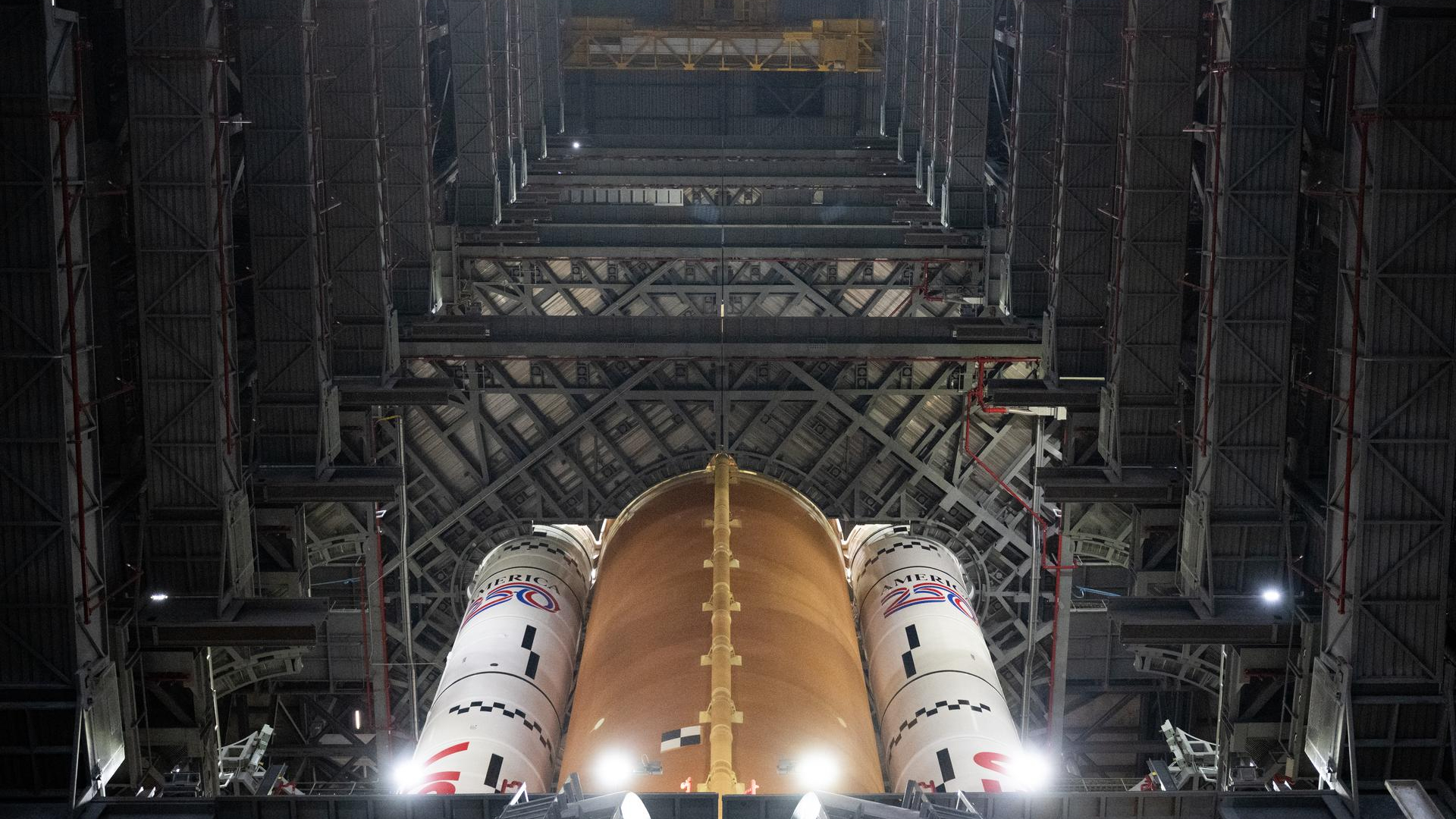
So, Artemis 2 finally has a launch window calendar, and the earliest we could see it launch is on February 6th. There are opportunities in February, March, and April. But this is really exciting. And one thing that people may be wondering still is, is that Orion heat shield safe enough to have four astronauts ride in it all the way around the moon? Well, this is something that we have new insight on with Jared Isaacman now at NASA.
In fact, Eric Berger, who wrote Liftoff and is the senior editor for RS Technica, was able to attend a half-day meeting at NASA headquarters this past week that provided a detailed review of Orion’s heat shield status, which is a great example of Jared following through on the transparency he said that he would give us as head of NASA. So, I’m going to share with you some of Eric’s findings in his article. It’s titled, “Is Orion’s heat shield really safe? New NASA chief conducts final review on eve of flight?” And he wrote this January 9th. I actually saw this article come out, but the reason I’m doing it a day late is because I was flying home yesterday. So, sorry if this is late, but it’s probably news to most of you. I just think that everything’s late if it’s not within the hour ‘cause I worked in TV news.
So, the question is, is this thing safe enough for people to fly in? Well, Jared Isaacman says he has quote full confidence in NASA’s plans to use the existing heat shield to protect the Orion spacecraft during the upcoming lunar mission. According to Eric Berger, Jared made the determination after briefings with senior leaders at the agency and a half-day review of NASA’s findings with outside experts. Isaacman said, quote, “We have full confidence in the Orion spacecraft and its heat shield, grounded in rigorous analysis and the work of exceptional engineers who follow the data throughout the process. And keep in mind, Jared has already been to space twice with SpaceX. He knows how important it is that the crew is safe and that they’re really, you know, trusting their lives with these systems and these crafts.”
And as Eric states, Jared previously indicated that reviewing the heat shield issue early in his tenure, especially with the Artemis 2 mission due to launch in as few as four weeks, was a top priority. Apparently, it was such a top priority that he was already talking with senior agency officials about this within hours of being sworn in on December 18th. So, yeah, he’s been a busy guy. Plus, count in the medical issue that they’re having at the ISS and the unexpected return of the Crew 11 astronauts early. Yeah, he’s had a lot on his plate.
And so, part of the reason I think that Jared had people like Eric at this meeting was to give that public transparency at NASA. If you guys remember, Artemis 1 launched all the way back in November of 2022. I would know I was there. And NASA was criticized for its handling of damage to Orion’s heat shield, which we found out way later was actually a problem. This damage was not disclosed for nearly a year and a half after the Artemis 1 mission. And that’s because the NASA inspector general finally published close-up images of char loss. You guys have probably seen them: chunks of ablative material at Orion’s base that were intended to protect the spacecraft during its return, but they had fallen away. And this created a lot of ripples in the community, a lot of people sounding the alarm, saying, “Hey, we need to make some changes. This is not safe.” Including astronaut Charlie Kamarta, who I interviewed last January, so exactly a year ago, about this issue. And if you don’t know, Charlie was one of the first to re-fly after the Columbia disaster. And so he, along with many others, are saying it is not enough to make the fixes. And I’m going to tell you what those fixes are in a few. But of course, Jared says actually these fixes will be enough.
So according to Eric, to address these concerns, NASA tapped an independent review team in April 2024 to assess the agency’s investigation of the heat shield. And months later, the group’s findings were finalized in December 2024, at which time NASA formally decided to fly Artemis 2 with the existing heat shield. And so again, with the transparency thing, NASA did hold a news conference to discuss its conclusions, but a publicly released copy of the independent review team’s report was heavily redacted, creating further doubt about the integrity of the process. So Jared is trying to change this culture at NASA.
Apparently, after taking over head of NASA, Jared asked engineers who investigated the heat shield issue for NASA, as well as the chair of the independent review team and senior human spaceflight officials, to meet with a handful of outside experts. And these actually included former astronauts Charlie Kamarta and Danny Olivas, both of whom have expertise in heat shields and had expressed concerns about the agency’s decision-making. And again, as Eric notes, for the sake of transparency, Jared also invited two reporters to sit in on the meeting, Eric Berger and Micah Maidenberg of the Wall Street Journal. They were allowed to report on the discussions without directly quoting participants for the sake of full and open discussion. This meeting lasted for more than 3 hours and Jared was there for most of it, although he had to step out from time to time, according to Eric, to handle that ongoing crisis at the ISS.
And apparently after Jared said that he accepted the agency’s decision to fly Artemis 2 as planned, what followed was a quote spirited discussion with Charlie Kamarta sparring regularly with the presenters and Olivas asking questions more infrequently. But they also talked about what would happen if they are wrong. And this fix of changing the re-entry trajectory isn’t enough. According to Eric, quote, “At the base of Orion, there are 186 blocks of a material called Avcoat, individually attached to provide a protective layer that allows the spacecraft to survive the heating of atmospheric re-entry. Returning from the moon, Orion encounters temperatures of up to 5,000°F or 2760°C. A char layer that builds up on the outer skin of the Avcoat material is supposed to ablate or erode in a predictable manner during re-entry. Instead, as we mentioned during Artemis 1, fragments fell off the heat shield and left cavities in the Avcoat material. So, this led to substantial testing in ground facilities, wind tunnels, and high-temperature arc jet chambers, allowing engineers to find the cause of gases becoming trapped in the heat shield, leading to cracking. This was due to the Avcoat material being impermeable, meaning it couldn’t breathe.
So NASA considered several options, including swapping the heat shield out for a newer one with more permeable Avcoat. But instead, NASA decided to change Orion’s re-entry profile. For Artemis 2, it would return through Earth’s atmosphere at a steeper angle, spending fewer minutes in the environment where this outgassing occurred during Artemis 1. Much of Thursday’s meeting involved details about how the agency reached this conclusion and why the engineers deemed that approach safe. But what if they’re wrong? What if this approach isn’t enough? Well, they talked about what would happen at the end of the meeting. According to the report by Eric, quote, “The Avcoat blocks, which are about 1.5 inches thick, are laminated onto a thick composite base of the Orion spacecraft. Inside this is a titanium framework that carries the load of the vehicle. The NASA engineers wanted to understand what would happen if large chunks of the heat shield were stripped away entirely from the composite base of Orion. So they subjected this base material to high energies for periods of 10 seconds up to 10 minutes, which is longer than the period of heating Artemis 2 will experience during re-entry. What they found is in the event of such a failure, the structure of Orion would remain solid. The crew would be safe within and the vehicle could still land in a watertight manner in the Pacific Ocean. One of the NASA engineers said, quote, “We have the data to say on our worst day, we’re able to deal with that if we got to that point.” The composite layer beneath the heat shield is intended to withstand a maximum temperature of 500°F during re-entry. So during Artemis 1, the maximum temperature recorded despite the persistent cracking and char loss was only 160°F. So any crew on board would have been safe. However, because the agency didn’t predict all of that heat shield damage, this was a serious concern after Artemis 1.
Another thing that’s going to be different from Artemis 1 is that the heat shield will have less time under a heat load compared to Artemis 1. During the first mission, Artemis 1, the vehicle descended from about 400,000 to 100,000 feet, and it was under a heat load of various levels for 14 minutes. With Artemis 2, this time it will be reduced to only 8 minutes. So, they’ve changed the re-entry trajectory so that the entry profile will only be similar for about the first two and a half minutes, but then the Artemis 2 entry will undertake a higher heat load than Artemis 1 for a couple of minutes. All of NASA’s modeling and extensive arc jet testing indicate this will produce significantly less cracking in the Avcoat material according to Eric Berger with RS Technica.
And by the way, Jared did acknowledge at the end of the meeting along with other NASA officials that the heat shield is not perfect. If NASA knew several years ago what it knows now, the heat shield would be designed differently. But they’re confident that flying the Artemis 2 heat shield on the revised profile is perfectly safe. Apparently, at the end of the meeting, Eric also pulled aside Charlie Kamarta and asked if he felt any better about four astronauts flying in Orion on this next mission. Charlie said, quote, “I would never be happy accepting a workaround and flying something that I know is the worst version of the heat shield we could possibly fly and hoping that a workaround is going to fix it.”
So anyway, shout out to Eric Berger and of course, shout out to Jared for including Eric and another reporter to relay this information to the public. I will link this article in the description. There was a bit more that I didn’t read, but again, this makes me feel a lot better going into Artemis 2 because that was an issue that I was worried about and after talking to Charlie last year, I was especially worried about it. So, it looks like the soonest we could see Artemis 2 fly finally is February 6, which is very exciting. Thank you guys so much for watching this video and supporting my channel, and I will see you in the next one.
[Music]
 Link to Eric's article: Is Orion's heat shield really safe? New NASA chief conducts final review on eve of flight Eric Berger | January 9, 2026 | Ars Technica