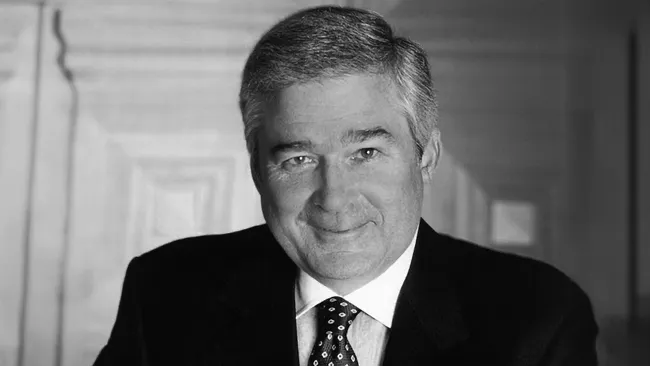
Lou Gerstner
Posted on 12/29/2025 8:43:25 PM PST by SeekAndFind
Louis Gerstner, the executive who engineered one of the most important corporate turnarounds in the history of the high-technology sector, died at the age of 83 on Saturday. Gerstner took control over IBM in 1993 when it was at the brink of breakup and bankruptcy, rebuilt the company into a services-led enterprise, and restored its strategic relevance by 2002. Multiple prominent high-tech leaders worked at IBM under Gertner's leadership, spreading his skills across the industry nowadays.
Lou Gerstner
The most important technical shift was a decisive move away from hardware-centric economics toward business services, systems integration, and enterprise software. Under his direction, IBM abandoned its long-standing practice of selling IBM PCs with the IBM's mainframe operating systems, and proprietary applications that its customers were slow to adopt in the 1980s, but which were quickly losing any relevance in the 1990s.
Moreover, product lines that failed to gain market traction were eliminated (e.g., IBM abandoned Token Ring LAN products), so only the fittest survived. After dropping OS/2, IBM became a neutral integrator that supported heterogeneous hardware and software environments and did not force customers into proprietary ecosystems. Furthermore, PCs ceased to be strategically important products, which set the stage for selling the PC unit to Lenovo in 2004. But while hardware was no longer the focus, IBM changed its approach to processes and supply chain discipline to make this business more flexible and stable.
As IBM was kept together, the company continued to offer complete IT solutions for various customers as it had unique pieces that others did not. At the core of IBM's complete solutions were its database software, transaction processing systems, and management tools that sat between hardware and applications, something that still encouraged customers to buy IBM hardware, but this time without unpopular products like OS/2. Furthermore, IBM also put emphasis on the Internet, enterprise networking, servers, and services; forerunners of cloud services in the 1990s.
IBM's strategic reset was paired with sweeping operational changes. Gerstner cut costs aggressively: he sold real estate and eliminated 35,000 positions from a workforce of roughly 300,000. Compensation was restructured to reflect overall corporate performance instead of divisional metrics, and management accountability shifted from annual reviews to continuous performance tracking, which dramatically affected corporate culture. Despite cuts and downsizing, IBM returned to growth in the 1990s, and in 2002 its workforce grew to 315,000 – 320,000, which is more than the company employed when Gerstner assumed leadership.
Over Gerstner's nine-year tenure, IBM's market capitalization expanded from approximately $29 billion to around $168 billion (that is after the dot com crash in 2000 and September 11, 2001). By the time he stepped down in 2002 and passed the baton to Sam Palmisano, IBM had been transformed into a unified, services-driven technology company.
Gerstner later chaired Carlyle Group, but his most important legacy remains the reinvention of IBM as an integrated enterprise built around future needs of its customers, a culture later inherited by many successful high-tech companies.
During the Gerstner era, IBM quietly produced a significant share of today's top-tier U.S. tech leadership, particularly in semiconductors, enterprise, software, and supply chain spaces, something that very few companies in the industry can brag about. To that end, many former IBM employees mourn the death of Louis Gerstner.
"I am saddened to share that Lou Gerstner, IBM's chairman and CEO from 1993 to 2002, passed away yesterday," wrote Arvind Krishna, the current chairman and chief exec of IBM. "Lou arrived at IBM at a moment when the company's future was genuinely uncertain. The industry was changing rapidly, our business was under pressure, and there was serious debate about whether IBM should even remain whole. His leadership during that period reshaped the company. Not by looking backward, but by focusing relentlessly on what our clients would need next."
"I was privileged to learn and experience the leadership of Lou Gerstner early in my career at IBM," wrote Lisa Su, chairman and chief executive of AMD. "He was amazingly curious and insightful about technology. So honored to have had a chance to work with him. My condolences are with Lou's family and the extended IBM family."
"Yesterday, we lost Lou Gerstner, IBM's iconic and legendary CEO from 1993 to 2002," wrote Gina Rometty, the former CEO and chairman of IBM. "Lou was my very dear friend and mentor. Much will be written about Lou's immense contributions to IBM and his philanthropic efforts, but I would like to speak about Lou the person. I first met Lou in the 1990s, and admired him immediately. He was a brilliant, principled leader who led with intellect, not fear. Lou could cut through to the heart of any issue with penetrating questions. One of the most valuable things he taught me was the importance of preparation. Not long after we met, we were getting ready for a client meeting when Lou told me that he’d been reading a book, The Greatest Generation, because it included a chapter on the CEO we were going to visit. I couldn’t believe he was researching so diligently, and I thought, 'if the CEO takes time to prepare, so should I.' […]"
Disk Operating System.
Machines based on the 68000 series were a great deal better, and many of those had full color screens.
It does. You just don’t know how to set them up.
Word Pro calls them "divisions" 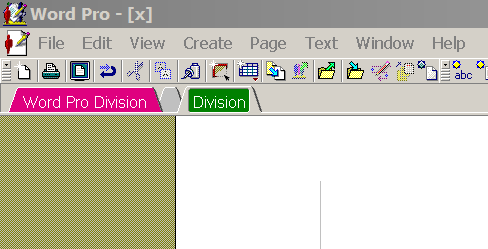
MS has them in Excel called "sheets" 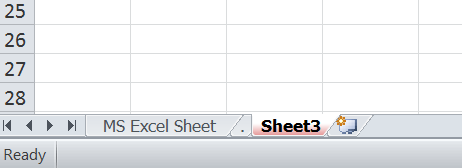
Daughter Elizabeth (Liz), now a Brilliant Ivy Trained Doctor, was a hottie in High School and College
And still a really great person.
True, but if you prefer them, you can get them in add-ins.
https://www.extendoffice.com/documents/word/418-enable-word-tabbed-documents.html
Office Tab is one option.
Truely! Of course I still use Word 2003 and 2007.
He was a tough, hard-nosed bulldog and exactly what we needed to survive.
Palmissano, who succeeded him, knew Wall Street wanted stability and predictability above all and focused on that. Innovation was secondary and risk was verboten. When I left in 2021, it was just another place to work, nothing special. My last twenty five years was in services where we were handcuffed by ridiculous overhead. A mountain of managers and executives who developed presentations for each other and then had us sit in meetings all day discussing why the work was falling behind.
I liked WordPerfect better.
Office has gotten considerably worse over the last few years.
Lou hated PowerPoint. Put it in writing. Preparing briefs for him was ‘interesting.’ 😉
I worked for ibm, as a salesMAN for one year after they bought the best company I ever sold for, Sequent, at the beginning of the 2000's.
I made out with the stock options that I had accrued over the years that I sold for Sequent, but I could never get used to all of the layers of management bullshit that ibm had in place.
I knew that a company of over 300,000 needed rules but ibm was so bloated that I had to leave, just to maintain my sanity.
No hard feelings, they had some good people, but too many lawyers and way too many internal meetings, total waste of time as too many people were just covering their butts or trying to get a piece of someone's accounts and take some of the credit {and money}.
Way too much "sharing".
Disclaimer: Opinions posted on Free Republic are those of the individual posters and do not necessarily represent the opinion of Free Republic or its management. All materials posted herein are protected by copyright law and the exemption for fair use of copyrighted works.