
Posted on 09/17/2025 5:21:51 PM PDT by nickcarraway
From guiding young filmmakers to embarking on campaigns for the NRDC, the artist cut an altruistic path through thickets rarely entered.
In 2012, Robert Redford was meeting with a reporter about a movie he did with Shia LaBeouf when the question of how to do good in Hollywood came up. The actor-director had two answers. The first, he said, was not to take celebrity too seriously. The second was not to live there.
“By coming and going, by doing the work and leaving, by dropping bombs in enemy territory and getting out,” he said.
Such an attitude might seem strange for someone who was the quintessential celebrity, an actor with leading-man good looks who was at times such a box office draw that the only release that could unseat a Redford movie was another Redford movie (e.g., The Sting and The Way We Were, c. 1973)
Robert Redford Hoped to Make a Sequel to 'The Candidate,' Decades After the Original Film Robert Redford poses for a picture at a press conference for the film Four Weddings and a Funeral January 21, 1994 in Salt Lake City, Utah. Redford is master of ceremony at the festival which promotes the best in independent filmmaking.
But Redford’s power to entertain was lapped by — and more importantly often served as a means to the end of — a larger sense of giving. Many tributes since his death Tuesday have been written about his film legacy, and from Sundance to his dozens of polished hits that legacy is boundless. But his greatest gift may have been his most subtle: he made helping people seem cool.
By now we’re used to seeing George Clooney stand up for human rights, Angelina Jolie advocate for the Global South and Leonardo DiCaprio agitate for the environment, larger-than-life movie stars putting their celebrity to altruistic end. We seldom stop to think how, long before all of them, Redford was casually embracing causes, leveraging his power to help creatures and ecosystems via the NRDC and the Redford Center; protecting Native American rights; and, with his son James, helping to raise awareness for organ transplants.
His celebrity wasn’t a distinct enterprise from these causes — his celebrity is what made us want to pursue them. After all, if the Sundance Kid was engaged in such efforts, shouldn’t we want to be too? The artist-as-activist is now so common as to be a type. But it became that way in part because Redford demonstrated the relationship — showed that the two realms could not only be blended but each serve the other.
Sure, before him you had high-profile moments, of Dalton Trumbo not testifying before the House Un-American Activities Committee, or Marlon Brando having Sacheen Littlefeather decline the Oscar. But very few Hollywood creatives before Redford ever made doing good such a part of his brand, made advocacy and acting so entwined we could forget where one ended and the other began. He didn’t performatively support causes. He just performed, and it caused so many to feel supported.
What’s more, he did so not only on a large media-platform-y scale but in small, one-on-one, unheralded ways, expending his effort for the trampled and unknown to be given their shot. Read the homages to Redford and you’ll see one word appear again and again: mentoring.
Like when he mentored a young Brad Pitt on A River Runs Through It, or when he did the same for people who worked with him on his charities.
“He was deeply involved with our campaigns to stop the development of Pebble Mine in Alaska, to save huge parts of the American West from fossil fuel development, to address really pressing water issues,” the NRDC’s Daniel Hinerfeld said in an ABC 7 story about Redford’s role as a trustee of the organization. “He really mentored us as media makers, as filmmakers, and he marshaled resources for us to tell our stories,” added Hinerfeld.
At a moment in American political culture when selfishness abides — when giving is seen as weakness and costly — Redford’s lesson feels timelier than ever. He evenly showed how helping those in need didn’t mean you lost, who effortlessly negated the idea of life as a zero-sum game. The most glamorous act, Redford conveyed over and over, was the one you did for others.
Even his film work could have this uplifting effect. Doggedly pursuing the truth suddenly became more appealing when Redford’s Bob Woodward was doing it; to watch directorial efforts like Ordinary People, The Milagro Beanfield War and 2011’s slept-on The Conspirator (and even that wobblier 2012 Shia movie The Company You Keep) was to bring on a healthy self-questioning about whether we were listening to our better angels.
Heck, even when his character was notably indifferent we found ourselves wanting to do more. What was Out of Africa or The Candidate or The Way We Were but a means for Redford to draw us magnetically to the screen so we could realize we could do a lot better than he did (and, often, should be a lot more like the female lead)?
When actors have been around a long while we can go snowblind to their effects, we can cease to imagine a world that they never entered. But pull Redford out of the last half-century of filmmaking and you have a gaping void of characters and causes that all call on us to do more to help everyone and everything around us. Every actor who wants to use their celebrity to further a charity owes a debt of gratitude to Redford; every activist who ever called a boldfaced name to platform their cause can thank the man who provided the road map.
Asked how he remembered Redford, Darren Aronofsky — who premiered his debut Pi at Sundance more than a quarter-century ago — emailed this response:
“I remember so clearly the first time I met him at Sundance ’98, when he spoke to you he completely locked in and focused deep into your soul. He taught me so much in those moments about being present that I still think about often. A few years later he was my advisor at the Institute when I workshopped Requiem for a Dream. I was wondering what his rural, cowboy perspective might be for my inner city drug nightmare. And he surprised me. His main note was to find a way that Harry and Marion could connect in the third act. And it was this inspiration that led to the phone call between the doomed lovers that is one of the most quoted scenes we shot. It would be impossible to quantify the amount of generosity he gave to the filmmaking world.”
Aronofsky had one last thought. “I’d argue there is no greater mentor in the world of filmmaking.”
Leftist creep.
I completely missed that achievement. I’m 71 and saw most of his movies. I liked many. But I was not impressed by his philanthropic causes.
Sundance film festival quickly went from a way for indepedent movies to be seen to just another elite hollywood gatekeeper. And Redford did nothing about it.
The CIA finally caught up with the Condor. Great movie imo.
World War II (and WWI) had movie stars selling bonds. Hollywood Canteen was a great thing Hollywood did for the troops. Paul Newman raised millions from his salad dressings. The thing that impressed me about Redford was his concern and interest in the unsolved murder case of his daughter’s fiancee.
If you read between the lines, the article isn’t as inspiring and positive as the writer intended.
One man’s “mentoring” is another man’s “conspiring.”
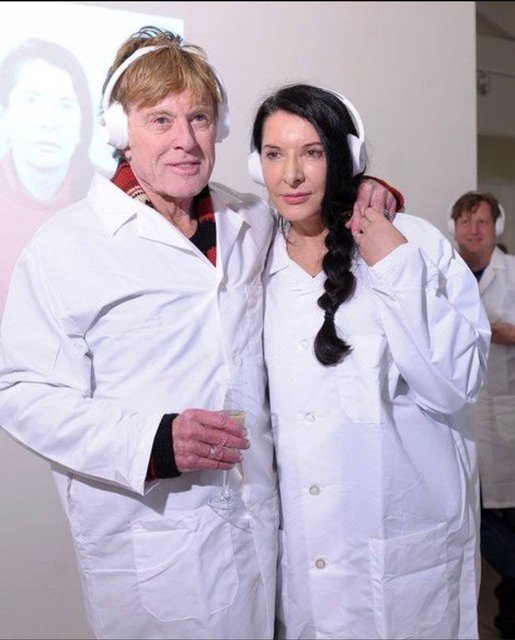
Dozens of dead celebrities just vomited in their graves.
The author makes Redford seem like a Conservative - until you read what he actually did.
I visited Sundance resort frequently when we lived in Utah. Gave off very liberal vibes but the beauty of the place overcame that easily. RIP Mr. Redford, I didn’t agree with you but enjoyed your acting.
I disagreed with his politics, but many of his movies are among my favorites. A River Runs Through It and Out of Africa were great films, and I loved his treatment of Tony Hillerman’s Leaphorn and Chee novels. He’ll be missed.
I know he was a leftie, but I am surprised to see that photo.
I disagree with that completely. He allowed George R.R. Martin to absolutely desecrate Tony Hillerman. He basically drained a;; the Tony Hillerman, and replace it with George R.R. Martin. In a just world, he would be in jail for what he did.
Did you read any of the books?
What is he then?
When I was a kid I loved Redford. Then he became woke…. Oddly enough, his career nose dived when he did.
For a star of his caliber, he didn’t make a lot of movies.
Do you know who and what that is he has his arm around in the photograph?
Disclaimer: Opinions posted on Free Republic are those of the individual posters and do not necessarily represent the opinion of Free Republic or its management. All materials posted herein are protected by copyright law and the exemption for fair use of copyrighted works.