
Posted on 12/08/2023 6:26:13 AM PST by Squawk 8888
The Firefly was designed by Fairey Aviation, UK, in 1940 to meet a British Admiralty requirement for a carrier borne, fighter reconnaissance aircraft. The Firefly prototype first flew in December 1941 from Fairey’s Great West Aerodrome, (now Heathrow Airport). Successful flight trials were completed by the end of 1942 and the first production aircraft, Mk. Is were delivered to the Royal Navy in March 1943.
Fireflies went into squadron service in October 1943 and later saw action in July 1944 against the German battleship Tirpitz, in Norway, when flying from HMS Indefatigable. From January 1945 onwards, the main area of operations for the Firefly was the Far East. Flying from HMS Indefatigable and HMS Implacable, they fought against the Japanese in Sumatra, the Caroline Islands and in the waters surrounding Japan. Later, Fairey Fireflies served with the Royal Navy and the Royal Australian Navy, during the Korean War.
A total of 64 Fairey Fireflies served with the Royal Canadian Navy (RCN), between 1946 and 1952. Based at Dartmouth, NS, they were flown from the aircraft carriers HMCS Warrior and HMCS Magnificent by No. 825 and 826 Squadrons. The Mk. V anti submarine version was ordered in 1949 to meet a NATO role for the RCN in anti submarine warfare. Firefly Mk. Vs operated in this role until late 1950, when they were replaced by Grumman Avengers.
Manufacture of the Fairey Firefly ceased in April 1956, after 1,702 aircraft had been produced. About 20 Fireflies survive, but the Museum's example is the only one in flying condition today.
The Museum's Firefly was built in 1951 and first served with the Royal Naval Volunteer Reserve, at Ford, UK. Later, it was transferred to the Royal Australian Navy (RAN) in 1953. It was retired from the RAN in 1960 and ended up in a museum in New South Wales, Australia. The Museum purchased it from them in 1979. Although a Mk.VI, it has been restored in the colours and markings of a RCN No. 825 Squadron Firefly Mk. V operating from HMCS Magnificent in 1949-50.
Could one of you pass this on to the owner of the Aviation Ping List? Haven’t heard from him lately.
Cheers,
Squawk
Yeah but, “fairy”? Doesn’t exactly strike fear into the enemy lol.
Th3 name I mean lol
It’s more than the sum of its parts.
Looks really cool. Even if it is a faery. :)
I had no idea the Brits were fighting the Japs around Japan.
You've got to love British ship names! HMS Indefatigable and HMS Implacable
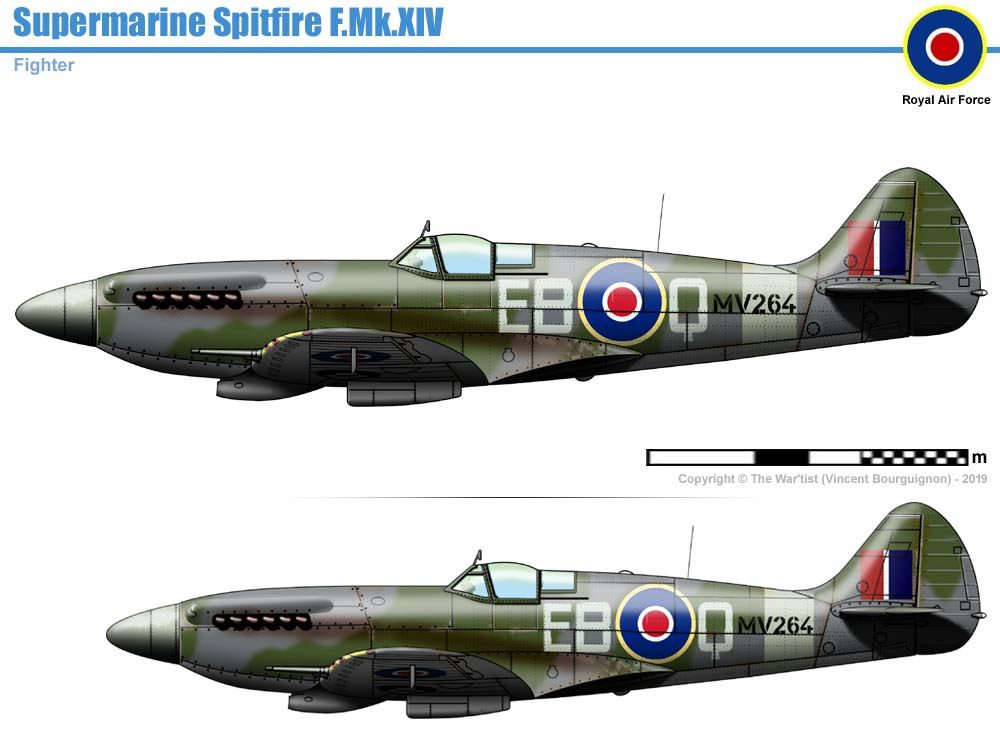
The Fairey looks a lot like a Spit, even in the recon config...

Most of the British and Indian troops were fighting Japan in the Thai-Burma campaign, with modest support from Canadians flying C-47s across the & around the Himalayas on supply runs. There were also Australians commanded by MacArthur fighting alongside US Army troops in Papua-New Guinea; their participation was limited by the fact that Australia was under direct threat and repelled at least one Japanese landing on their own mainland soil.
Wow, I know my WWII aircraft pretty well, and this is a new one on me!
Thanks.
Fun fact: The Carrier HMS Puncher was crewed entirely by Royal Canadian Navy sailors. It was part of the the UK’s strategy to have Canada’s Navy operate a fleet of Carriers after the war was over. IIRC Puncher was deployed in the North Atlantic to support Canada’s fleet of Corvettes during the Battle of the Atlantic.
Fairey Firefly Mk. VI wings video link.
Fairey Firefly: The first multi-role naval strike fighter video link: (28 minutes long)
Yikes, the fuel tank was between the pilot and the rear observer!
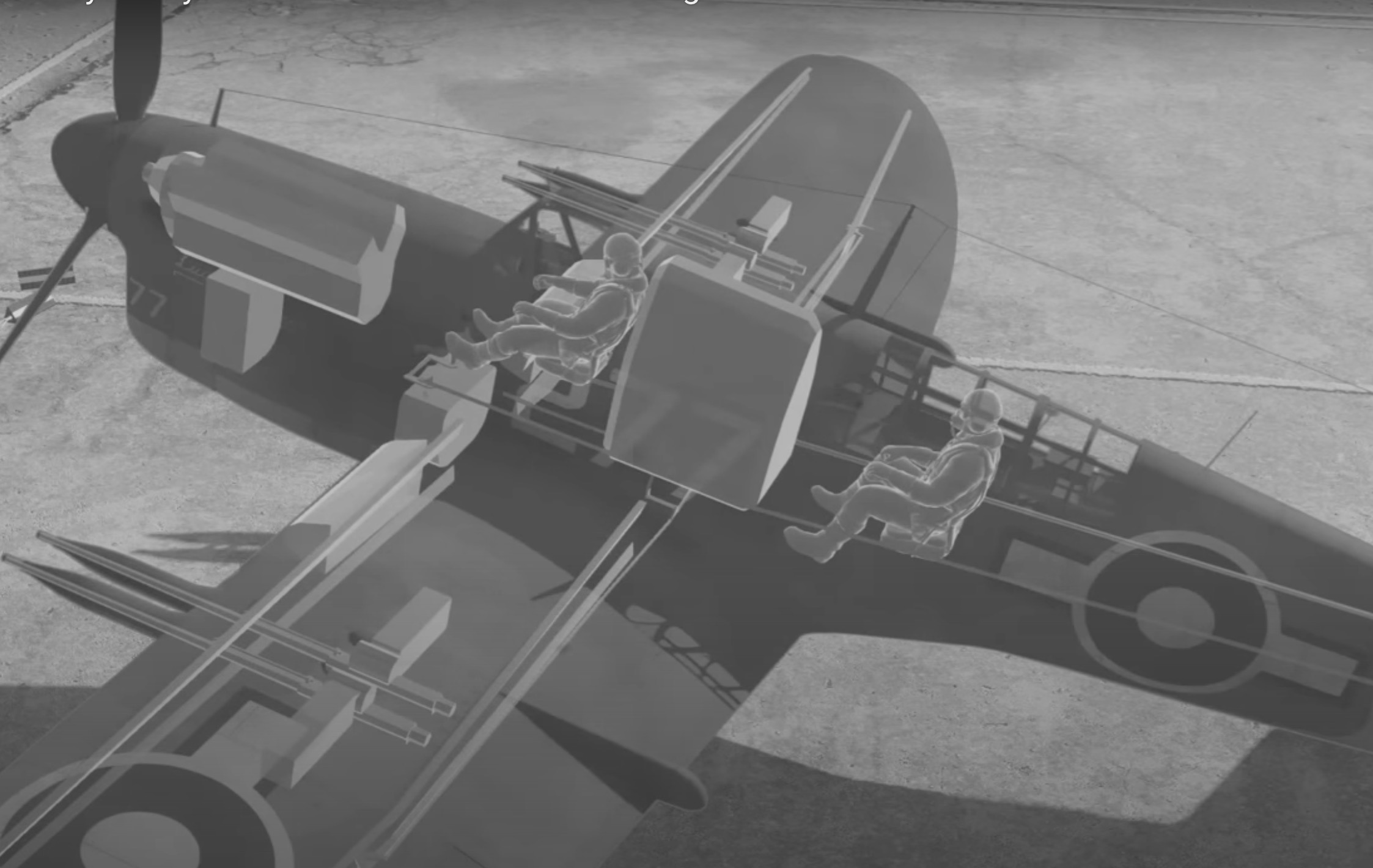
By today’s standards, it would be regarded as too dangerous to fly.
Disclaimer: Opinions posted on Free Republic are those of the individual posters and do not necessarily represent the opinion of Free Republic or its management. All materials posted herein are protected by copyright law and the exemption for fair use of copyrighted works.