Clint Eastwood: Just Say No (& Nancy)
Posted on 03/21/2023 8:01:30 PM PDT by nickcarraway
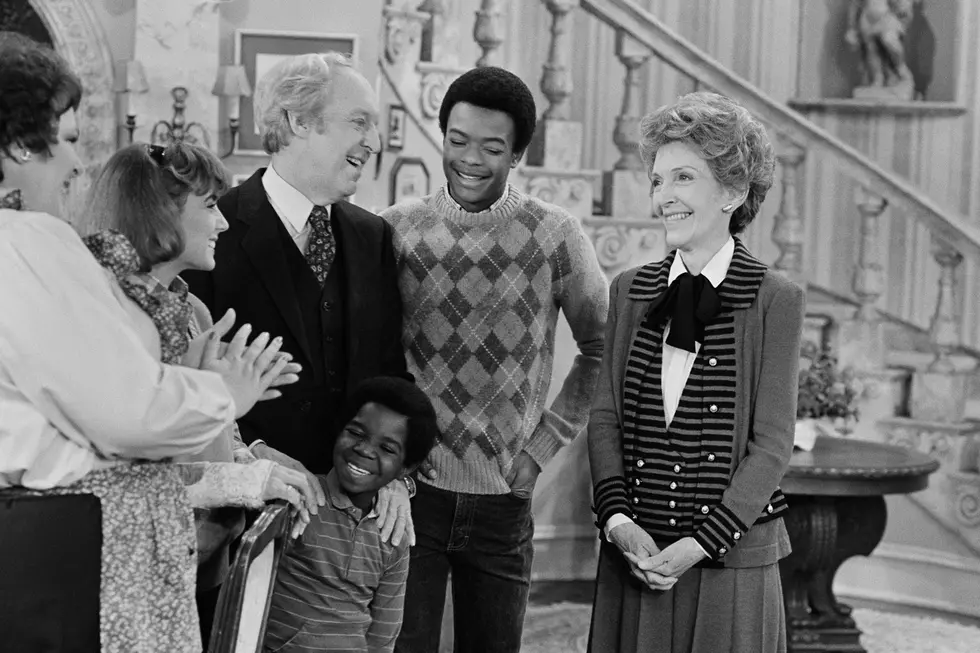
Those who think culture is bizarre and entertaining today should really go back to some of the bonkers things that happened in the '80s. As an example, the First Lady went on a sitcom about two black kids who were adopted by a rich white family in order to promote an anti-drug program that was forcibly thrust on school kids despite the fact that it didn't work at all.
Nancy Reagan's March 19, 1983 appearance on Diff'rent Strokes provides something of an origin story for anyone whose classroom was later visited by cops who told you about the danger of drugs as part of D.A.R.E., which grew out of her "Just Say No" program.
These days, there is some haziness about how the phrase "just say no" originated. Reagan claimed many times that it originated in 1982, when she was visiting an elementary school in Oakland. According to this lore, a kid raised his hand and asked her what to do if someone offered him drugs and she spontaneously replied, "Just say no!"
However, it seems the slogan was actually invented by Robert Cox, an advertising executive at Needham, Harper & Steers. In the late '70s, this agency teamed with the U.S. government to come up with a way to urge kids not to do drugs, and Cox created a campaign centered on the phrase.
The proximate cause of all this was one of the many moral panics of the '80s. There would be numerous others in the decade – including fears that the country was being overtaken by satanists, child-kidnappers, and fans of heavy metal. The panic about drugs had perhaps the greatest impact, however, and resulted in the massive expansion of the so-called War on Drugs.
Watch Clint Eastwood and Nancy Reagan Team Up To Fight Drugs
Clint Eastwood: Just Say No Subscribe to Ultimate Classic Rock on
This War on Drugs was started by former President Richard Nixon, essentially as a political strategy. “The Nixon campaign in 1968, and the Nixon White House after that, had two enemies: the antiwar left and black people," Nixon aide John Ehrlichman told Harpers in 2016. "We knew we couldn’t make it illegal to be either against the war or black, but by getting the public to associate the hippies with marijuana and blacks with heroin, and then criminalizing both heavily, we could disrupt those communities."
Jimmy Carter's administration later abandoned these policies for the most part, but successor Ronald Reagan brought them back with a vengeance, largely because they allowed him to stoke a growing panic about the "epidemic" of crack cocaine. (This scourge was also centered in poor and black neighborhoods.) The First Lady took on this cause as her personal crusade and began making appearances in support of it nationwide. This effort was launched in earnest with her guest spot on Diff'rent Strokes.
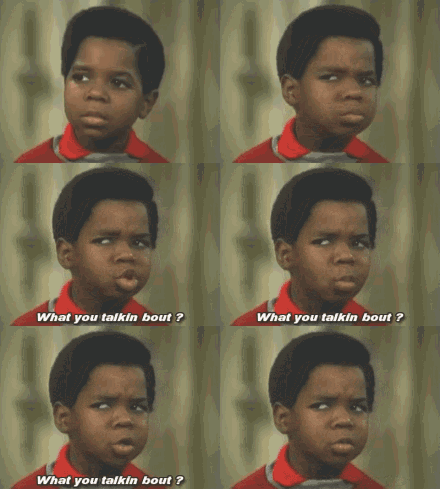
In the episode, Arnold (Gary Coleman) discovers that kids pushing drugs through his work as a reporter for his school newspaper. We're not talking pot here, but "uppers, downers, and goofballs [barbiturates]." He publishes the story, and it catches the eye of the First Lady. She visits to thank Arnold for his hard work and then goes with him to his school, where they discover that numerous elementary students have indeed been experimenting with hard drugs. Coleman gets the chance to deliver his signature line – "Whatchoo talkin' bout, Mrs. Reagan?" – and she gets the chance to repeat her mantra: "Just say no to drugs."
In the years following the Diff'rent Strokes episode, the Reagans continued to expand this battle through endless public service announcements, personal appearances, and even a music video called "Stop The Madness," which featured everyone from La Toya Jackson and Whitney Houston to David Hasselhoff and Kareem Abdul-Jabbar, along with the First Lady herself.
Watch The Video For 'Stop The Madness'
"STOP THE MADNESS" (1985, 1986) anti-drug music video Subscribe to Ultimate Classic Rock on
President Reagan also used the full powers of his office to dramatically increase funding for the FBI and DEA, creating federal civil asset forfeiture programs. His administration likewise pushed for much higher sentences for people caught with crack cocaine (which predominated among black users) than for people caught with powdered cocaine (which predominated among white ones).
The D.A.R.E. program had begun in Los Angeles, and centered on cops visiting schools to warn against the dangers of drugs. It too rapidly expanded, with Reagan declaring Sept. 15, 1988 as "National D.A.R.E. Day." There was, in other words, an extraordinary amount of money, umbrage, human power, and socially dislocating policy thrown at the issue.
There was just one small problem: All of it was for naught. The War on Drugs had no noticeable effect in the '80s, other than leading to skyrocketing numbers of young black men in to prison. Mountains of evidence would ultimately show that the "Just Say No" campaign, and its D.A.R.E. offspring, did nothing to keep kids from using drugs. In certain cases, it may have actually pushed them in that direction. Subsequent decades were marked by a rapidly growing opioid crisis.
So in the end, what's the takeaway from the First Lady going on a beloved sitcom to promote a policy she had become fascinated by? Well, it was fun television, and a culturally emblematic moment. As with the rest of those now-forgotten panics, however, it's probably best remembered as a symbol of a vast and long-running mistake we should try hard to not repeat.
“didn’t work at all.”
Says who?
What was the drug use rate in minors as opposed to now?
Willis, Arnold and Kimberly may have gotten lots of scripts, but did dot read that script.
At least she tried it was a losing effort as shows like Breaking Bad and Narcos literally make these people out to be some kind of anti heroes
Well let’s see, Dana Plato died of a drug overdose and Todd Bridges shot a dude in a crack house.
I never saw it, but there was a show called </I>Weed</I>, that glorified it, I think.
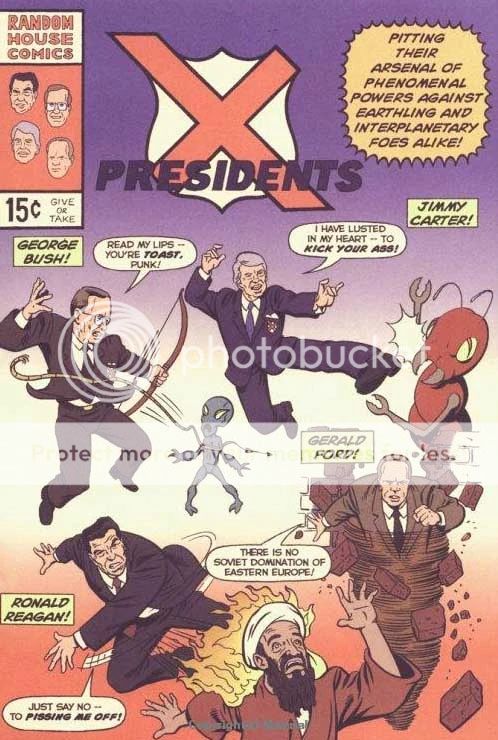
Reagan doesn’t even look like him. This must have been done between 1993 and 2000.
It was an SNL skit. The four X-Presidents were at a golf tournament when a nuclear accident transformed them.
What was funny was at the end, they started playing a song, like The Archies.
It looks like Robert Smigel.
Correct. TV Funhouse.
Then Bill Clinton got upset when they wouldn’t let him join.
Shouldn’t Gerald Ford either be falling down or shanking a golf ball of into someones head?
back then a Republican President’s wife was respected by everyone for being the first lady, and could go on network tv with a positive message. Nowadays they would never allow someone like Melania on tv, and if they did she would be heckled and hounded and mocked.
I read at the time that it was very effective, and commonsense told me it was a smart effort.
They were drilling into kids’ heads that they could “just say no” they didn’t have to debate their friends or win arguments, they could simply say “no”, it was a shifting away from the feeling of being outnumbered and being crushed by peer-pressure, to making the dopers look like the outsiders, the losers.
A junior high kid or a high school kid could just express his own stand, his own position, his own decision with a firm stand on nope and not feel totally alone when doing it.
The media hated the campaign, hated her, hated him. The Reagan years were very frustrating for the media.
When the media hates the president and does everything it can to destroy him and mock him, belittle him, and bring him down, and then he wins 49 states, well that has to be a shock to their minds.
Famous for saying when a reporter asked her why she had come to Atlanta, she said, “I don’t intend for this to take on a political tone. I’m just here for the drugs.”
Well yeah THEY clearly did not heed.
However how about America as a whole?
I was in a university in the late 1980s. It was truly “hip to be square” for most. Weed wasn’t nearly as popular there as during the late 1970s and early 1980s. It’s become much more common during the past two or three decades.
The article is more Internet revisionism.
“Weed” shows up on ballots every few years.
Dopers turn out dutifully to support Weed and cast votes for Democrats while they’re at the polls.
A candidate with the last name Weed would be a shoe-in.
Disclaimer: Opinions posted on Free Republic are those of the individual posters and do not necessarily represent the opinion of Free Republic or its management. All materials posted herein are protected by copyright law and the exemption for fair use of copyrighted works.