So what is the Second Amendment for? Created in 1791, it was for well-regulated militias of white males to purportedly check federal power, and unofficially to put down rebelling slaves and push Native Americans off their land. Now, to boost an industry and Republican politics of fear, the Second Amendment has been redefined as an individual right for anyone to own guns. Gun owners — white owners still preferred — have become unregulated.
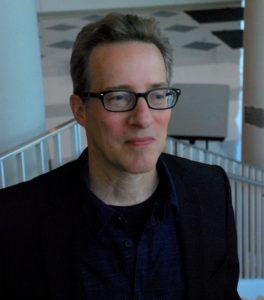
Dr. Christopher R. Martin is a scholar of journalism and expert in critical media and information literacy, Martin has been a nationally-recognized leader in news analysis and news accuracy. He teaches at the University of Northern Iowa.
One primary interest is to understand how news media outlets abandoned working class audiences in favor of moneyed “upscale” consumers. Martin has authored two books on this subject: The latest is No Longer Newsworthy: How the Mainstream Media Abandoned the Working Class (Cornell University Press, 2019), winner of the 2020 C.L.R. James Award from the Working Class Studies Association, and a Choice Outstanding Academic Title for 2019. He is also author of an award-winning book on how labor unions are covered in the news media, Framed! Labor and the Corporate Media (Cornell University Press, 2004). According to Martin, the media’s shift in audience has led to drastic consequences to the political and economic landscape. Martin is a contributing scholar to the Center for Journalism & Liberty and a regular contributor to the Working-Class Perspectives blog.
Martin’s research and writing has been published in Journalism Studies, Journal of Communication Inquiry, Communication Research, Labor Research Journal, Perspectives on Politics, Popular Music and Society, Journal of Communication, Z magazine, Editor & Publisher, Huff Post, and Nieman Reports.
With Richard Campbell and Bettina Fabos, he is co-author of Media and Culture: Mass Communication in a Digital Age (Bedford/St. Martin’s), now in its 12th edition, and Media Essentials: A Brief Introduction (Bedford/St. Martin’s), now in its 5th edition. Martin previously taught at Miami University (Ohio), and holds a Ph.D. from the University of Michigan. He is a recipient of the State of Iowa’s Board of Regents Award for Faculty Excellence (2004) and the College of Humanities and Fine Arts Faculty Excellence Award (2010). Martin is also vice president of United Faculty, an AAUP affiliate and the faculty union at UNI since 1976.