To: MtnClimber
2 posted on
06/14/2022 2:26:24 PM PDT by
MtnClimber
(For photos of Colorado scenery and wildlife, click on my screen name for my FR home page.)
To: 21stCenturion; 21twelve; 4everontheRight; abb; AFB-XYZ; AFPhys; America_Right; AZ .44 MAG; ...
Pinging the APOD list.
🪐 🌟 🌌 🍔
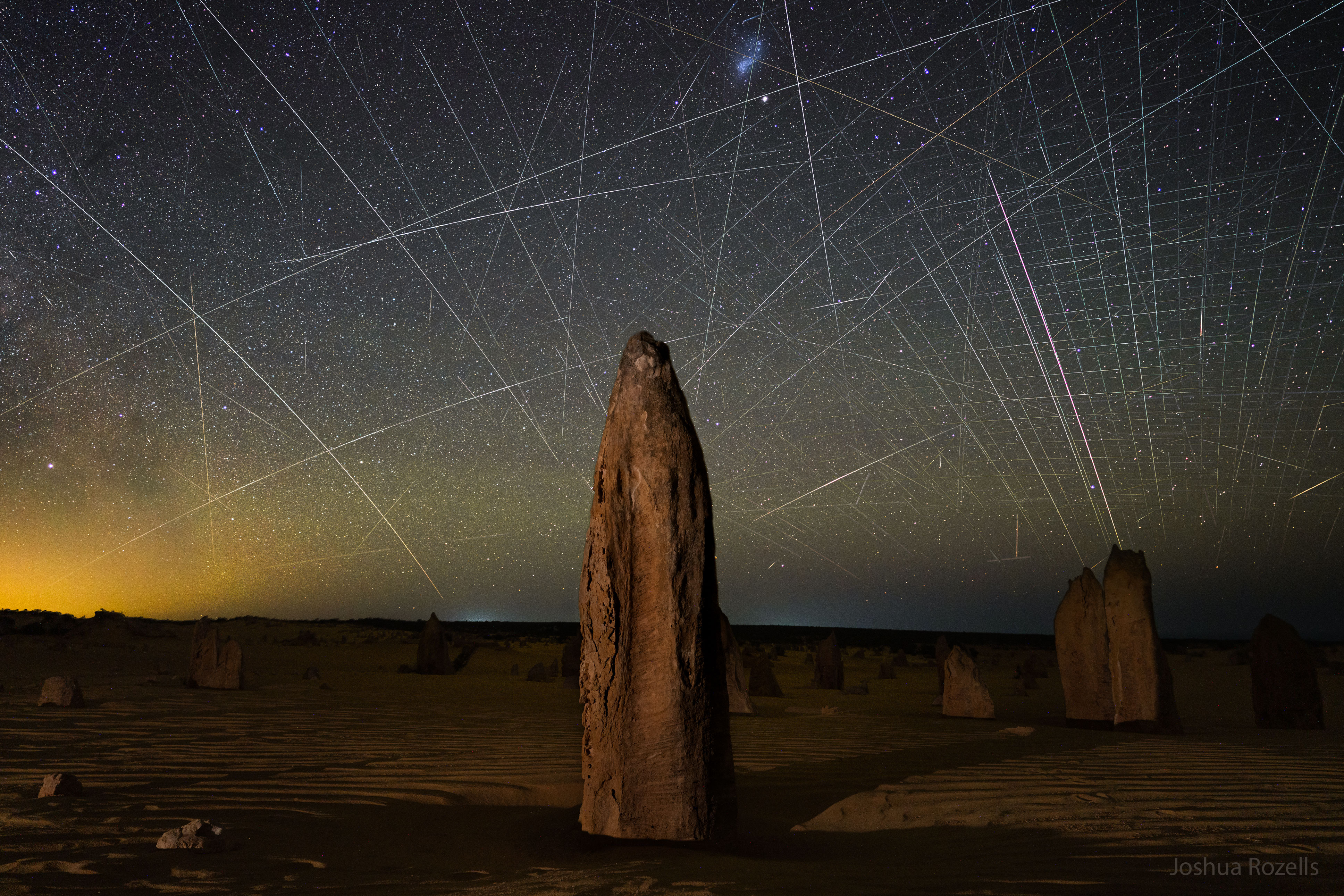
Hover your cursor over the image at the link for identifcation of the satellites leaving tracks in the photo. The text is a bit too small to read easily.
3 posted on
06/14/2022 2:29:07 PM PDT by
MtnClimber
(For photos of Colorado scenery and wildlife, click on my screen name for my FR home page.)
To: MtnClimber
4 posted on
06/14/2022 2:39:36 PM PDT by
DannyTN
To: MtnClimber
The majority of satellites in an equatorial orbit are geostationary satellites about 22,000 miles altitude. That altitude in a circular orbit has a 24 hour orbital period and, if in a W to E orbit appear to be over nearly the same point on earth. Low Earth satellites don’t have as much horizon-to-horizon coverage so an equatorial orbit would only cover several hundred miles to either side. That is why Low Earth Orbit (LEO) constellations are usually in an inclined polar orbit.
7 posted on
06/14/2022 4:18:02 PM PDT by
MtnClimber
(For photos of Colorado scenery and wildlife, click on my screen name for my FR home page.)
To: MtnClimber
8 posted on
06/15/2022 12:57:47 AM PDT by
minnesota_bound
(Need more money to buy everything now)
FreeRepublic.com is powered by software copyright 2000-2008 John Robinson