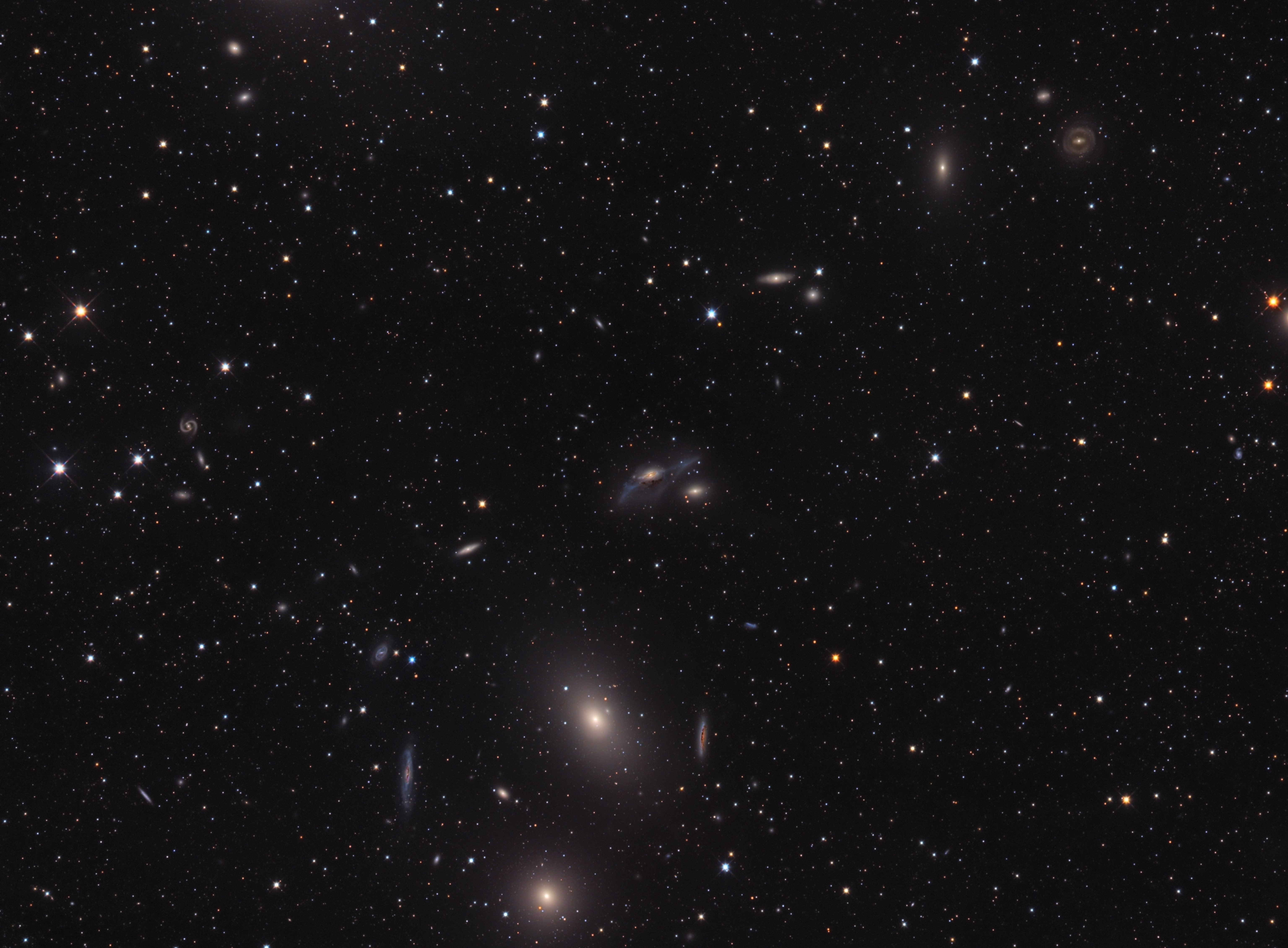
The zoom function described in post #1 works very well with this photo to get a close look at individual galaxies.
bttt
I took an astronomy course in college. It was at the time of the Hubble telescope launch. It was a fascinating class.
A few years later my best friend built a telescope with his business partners. They would sit around a table at their meetings and polish the glass for the mirror. They pushed it back and forth, rotated it, and continued.
Then they had the glass mirror coated and mounted in inside a sonotube, those forms for pouring concrete posts. An eyepiece was added to the up end of this telescope that focused on the mirror, which was aimed to the heavens at the celestial object they wanted to see.
You had to ascend a pretty tall ladder to see into this thing as it was quite large. But you could clearly see the Orion Nebula with all the colored gaseous clouds around it, or cosmic dust or whatever it is. But the experience of seeing that was something I’ll never forget.
Thanks for posting the APOTD.
I've seen one estimate that there could be up to 2 trillion galaxies in the universe. I wonder if anyone has tried to calculate how many stars that might be--given that galaxies vary greatly in size.
All those trillions of stars and planetary systems, and some say none have developed an intelligent race?
I am not buying that.