
Free Republic University, Department of History presents U.S. History, 1855-1860: Seminar and Discussion Forum
Bleeding Kansas, Dred Scott, Lincoln-Douglas, Harper’s Ferry, the election of 1860, secession – all the events leading up to the Civil War, as seen through news reports of the time and later historical accounts
First session: November 21, 2015. Last date to add: Sometime in the future.
Reading: Self-assigned. Recommendations made and welcomed.
Posting history, in reverse order
https://www.freerepublic.com/tag/by:homerjsimpson/index?tab=articles
To add this class to or drop it from your schedule notify Admissions and Records (Attn: Homer_J_Simpson) by reply or freepmail.
Link to previous Harper’s Weekly thread
https://freerepublic.com/focus/f-chat/3946351/posts
Navigation: use the links below to view more comments.
first 1-20, 21-31 next last
To: chajin; henkster; CougarGA7; BroJoeK; central_va; Larry Lucido; wagglebee; Colonel_Flagg; Amagi; ...
The Census of 1860 – 1, 3
Hon. William H. Seward, Secretary of State – 2-3
A Presidential Patent – 3
The Galway Steamers – 3
The Lounger – 3-4
Humors of the Day – 4-5
Lost Jewels – 5
Our Fort Pickens Pictures – 5-7
Great Expectations, by Charles Dickens, Ch XXIX-XXX – 8-10
Domestic Intelligence – 10-11
Foreign News – 11
Our Virginia Scenes – 11-12
Bessie Elmore – 11, 13
A Day’s Ride: A Life’s Romance, By Charles Lever, Ch XLVI-XLVII – 13-15
Coats of Arms of the States – 16, 18-19
The Great Yelverton Case – 17-18
The Ganoid –19
The “Makewake’s” Dog – 19-20
Ode to a Bob-Tailed Cat – 20
A Would-Be Representative Abroad – 21
Proposed New Style of Whisk-ar – 22
2 posted on
04/06/2021 6:58:14 AM PDT by
Homer_J_Simpson
("Every nation gets the government that it deserves." - Joseph de Maistre (1753-1821))
To: Homer_J_Simpson
Continued from April 4 (reply #32).
https://freerepublic.com/focus/f-chat/3946351/posts#32

Bruce Catton, The Coming Fury
3 posted on
04/06/2021 7:01:27 AM PDT by
Homer_J_Simpson
("Every nation gets the government that it deserves." - Joseph de Maistre (1753-1821))
To: Homer_J_Simpson
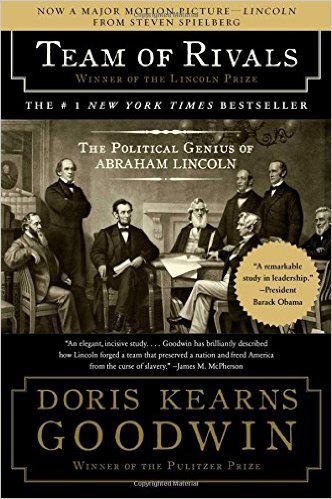
Continued from April 1 (reply #16).
https://freerepublic.com/focus/f-chat/3946351/posts#16

Doris Kearns Goodwin, Team of Rivals
4 posted on
04/06/2021 7:03:11 AM PDT by
Homer_J_Simpson
("Every nation gets the government that it deserves." - Joseph de Maistre (1753-1821))
To: Homer_J_Simpson

Abraham Lincoln: Speeches and Writings 1859-1865, edited by Don E. Fehrenbacher
5 posted on
04/06/2021 7:04:31 AM PDT by
Homer_J_Simpson
("Every nation gets the government that it deserves." - Joseph de Maistre (1753-1821))
To: Homer_J_Simpson
Mathew Brady photographed Lincoln in Washington today. “Lincoln's drooping left eyelid is clearly visible in this image.”

https://en.wikipedia.org/wiki/List_of_photographs_of_Abraham_Lincoln
6 posted on
04/06/2021 7:07:28 AM PDT by
Homer_J_Simpson
("Every nation gets the government that it deserves." - Joseph de Maistre (1753-1821))
To: Homer_J_Simpson
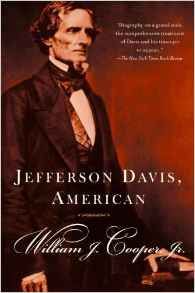
Continued from March 29 (reply #29).
https://freerepublic.com/focus/f-chat/3944470/posts#29

William J. Cooper, Jr., Jefferson Davis, American
7 posted on
04/06/2021 7:08:18 AM PDT by
Homer_J_Simpson
("Every nation gets the government that it deserves." - Joseph de Maistre (1753-1821))
To: Homer_J_Simpson


Mary Chesnut’s Diary, Edited by Isabella D. Martin and Myrta Lockett Avary
8 posted on
04/06/2021 7:09:24 AM PDT by
Homer_J_Simpson
("Every nation gets the government that it deserves." - Joseph de Maistre (1753-1821))
To: Homer_J_Simpson

The Diary of George Templeton Strong, Edited by Allan Nevins and Milton Halsey Thomas
9 posted on
04/06/2021 7:10:11 AM PDT by
Homer_J_Simpson
("Every nation gets the government that it deserves." - Joseph de Maistre (1753-1821))
To: Homer_J_Simpson
William H. Seward to Lieutenant David D. Porter, April 6, 1861 (Secretary of State directly orders change of command of a navy vessel. What could go wrong?)
https://civilwarnotebook.blogspot.com/2020/03/william-h-seward-to-lieutenant-david-d.html
Commander Andrew H. Foote to Gideon Welles, April 6, 1861 (Confusion about orders, part 3)
https://civilwarnotebook.blogspot.com/2018/06/commander-andrew-h-foote-to-gideon.html
Commander Andrew H. Foote to Gideon Welles, April 6, 1861 (Confusion about orders, part 4)
https://civilwarnotebook.blogspot.com/2018/06/commander-andrew-h-foote-to-gideon_8.html
Lieutenant Francis Asbury Roe to Commander Andrew H. Foote, Saturday, April 6, 1861 – 5 p.m. (Confusion about orders, part 5)
https://civilwarnotebook.blogspot.com/2018/07/lieutenant-francis-asbury-roe-to.html
Lieutenant David D. Porter to William H. Seward, April 6, 1861 (Navy lieutenant declines order from Secretary of state)
https://civilwarnotebook.blogspot.com/2020/03/david-d-porter-to-william-h-seward.html
Commander Andrew H. Foote to Gideon Welles, April 6, 1861 – 6 p.m. (Confusion about orders, part 6)
https://civilwarnotebook.blogspot.com/2018/06/commander-andrew-h-foote-to-gideon_27.html
Gustavus V. Fox to Virginia Woodbury Fox, April 6, 1861 (Capt. Fox aboard S.S. Bath, ready to sail on a secret mission)
https://civilwarnotebook.blogspot.com/2018/05/gustavus-v-fox-to-virginia-woodbury-fox.html
Andrew G. Magrath to Leroy Pope Walker, April 6, 1861 (SC Convention Delegate informs Southern Commissioner in Washington that the Feds are planning not to evacuate Sumter but to resupply it)
https://civilwarnotebook.blogspot.com/2017/02/andrew-g-magrath-to-leroy-pope-walker.html
James E. Harvey to Andrew G. Magrath, James L. Petigru, B. F. Dunkin & Miss S. C. Harvey, April 6, 1861 (Newly appointed Minister to Portugal attempts to aid and abet secessionists)
https://civilwarnotebook.blogspot.com/2017/02/james-e-harvey-to-andrew-g-magrath.html
Diary of William Howard Russell: April 6, 1861 (Russell on Winfield Scott, William Seward, attitudes north and south)
https://civilwarnotebook.blogspot.com/2015/05/diary-of-william-howard-russell-april-6.html
10 posted on
04/06/2021 7:13:36 AM PDT by
Homer_J_Simpson
("Every nation gets the government that it deserves." - Joseph de Maistre (1753-1821))
To: chajin; henkster; CougarGA7; BroJoeK; central_va; Larry Lucido; wagglebee; Colonel_Flagg; Amagi; ...
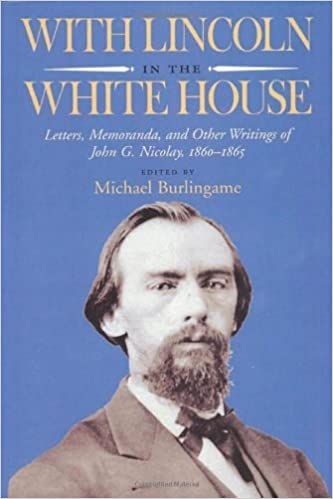

With Lincoln in the White House: Letters, Memoranda, and Other Writings of John G. Nicolay, 1860-1865, edited by Michael Burlingame
13 posted on
04/07/2021 5:43:27 AM PDT by
Homer_J_Simpson
("Every nation gets the government that it deserves." - Joseph de Maistre (1753-1821))
To: chajin; henkster; CougarGA7; BroJoeK; central_va; Larry Lucido; wagglebee; Colonel_Flagg; Amagi; ...
Diary of William Howard Russell: April 7, 1861 Raining all day, cold and wet. I am tired and weary of this perpetual jabber about Fort Sumter. Men here who know nothing at all of what is passing send letters to the New York papers, which are eagerly read by the people in Washington as soon as the journals reach the city, and then all these vague surmises are taken as gospel, and argued upon as if they were facts. The “Herald” keeps up the courage and spirit of its Southern friends by giving the most florid accounts of their prospects, and making continual attacks on Mr. Lincoln and his government; but the majority of the New York papers are inclined to resist Secession and aid the Government. I dined with Lord Lyons in the evening, and met Mr. Sumner, Mr. Blackwell, the manager of the Grand Trunk Railway of Canada, his wife, and the members of the Legation. After dinner I visited M. de Stoeckl, the Russian Minister, and M. Tassara, the Minister of Spain, who had small receptions. There were few Americans present. As a rule, the diplomatic circle, which has, by-the-by, no particular centre, radii, or circumference, keeps its members pretty much within itself. The great people here are mostly the representatives of the South American powers, who are on more intimate relations with the native families in Washington than are the transatlantic ministers.
SOURCE: William Howard Russell, My Diary North and South, p. 68
https://civilwarnotebook.blogspot.com/2015/05/diary-of-william-howard-russell-april-7.html
14 posted on
04/07/2021 5:44:32 AM PDT by
Homer_J_Simpson
("Every nation gets the government that it deserves." - Joseph de Maistre (1753-1821))
To: Homer_J_Simpson


Mary Chesnut’s Diary, Edited by Isabella D. Martin and Myrta Lockett Avary
17 posted on
04/08/2021 4:49:44 AM PDT by
Homer_J_Simpson
("Every nation gets the government that it deserves." - Joseph de Maistre (1753-1821))
To: Homer_J_Simpson

The Diary of George Templeton Strong, Edited by Allan Nevins and Milton Halsey Thomas
18 posted on
04/08/2021 4:51:17 AM PDT by
Homer_J_Simpson
("Every nation gets the government that it deserves." - Joseph de Maistre (1753-1821))
To: Homer_J_Simpson
From Robert S. Chew to Abraham Lincoln, April 8, 1861 (Lincoln’s messenger reports back that he delivered the message to Gov. Pickens that an attempt will be made to resupply Fort Sumter.)
https://civilwarnotebook.blogspot.com/2014/02/from-robert-s-chew-to-abraham-lincoln.html
Major Robert Anderson to Colonel Lorenzo Thomas, April 8, 1861 (Major Anderson sends No. 96 to the Army Adjutant-General. I don’t know what No. 96 was.)
https://civilwarnotebook.blogspot.com/2016/10/major-robert-anderson-to-colonel_29.html
Major Robert Anderson to Colonel Lorenzo Thomas, April 8, 1861 (Major Anderson tells the Army Adjutant-General that it would be a bad idea to try resupplying Fort Sumter.)
https://civilwarnotebook.blogspot.com/2016/10/major-robert-anderson-to-colonel_18.html
Captain John G. Foster to Brevet Brigadier-General Joseph G. Totten, April 8, 1861 (Major Anderson’s engineering officer updates the Army Chief Engineer about the state of affairs at Fort Sumter. It is a grim picture.)
https://civilwarnotebook.blogspot.com/2016/10/captain-john-g-foster-to-brevet.html
Edwin M. Stanton to Major-General John A. Dix, April 8, 1861 (Former Attorney General tells former Treasury Secretary that he is in the dark as to the actions of the Lincoln administration.)
https://civilwarnotebook.blogspot.com/2015/07/edwin-m-stanton-to-major-general-john.html
Diary of William Howard Russell: April 8, 1861 (The London Times correspondent visited the Smithsonian, where he got some strange ideas about U.S. geography, and has a remarkable interview with State Secretary Seward over cards and cigars.)
https://civilwarnotebook.blogspot.com/2015/05/diary-of-william-howard-russell-april-8.html
19 posted on
04/08/2021 4:53:37 AM PDT by
Homer_J_Simpson
("Every nation gets the government that it deserves." - Joseph de Maistre (1753-1821))
To: Homer_J_Simpson
John Beauchamp Jones today joins William Howard Russell as a dedicated diarist whose writings are collected at Civil War Notebook. Here is his initial entry.
Diary of John Beauchamp Jones: April 8, 1861
BURLINGTON, NEW JERSEY.—The expedition sails to-day from New York. Its purpose is to reduce Fort Moultrie, Charleston harbor, and relieve Fort Sumter, invested by the Confederate forces. Southern born, and editor of the Southern Monitor, there seems to be no alternative but to depart immediately. For years the Southern Monitor, Philadelphia, whose motto was “The Union as it was, the Constitution as it is,” has foreseen and foretold the resistance of the Southern States, in the event of the success of a sectional party inimical to the institution of African slavery, upon which the welfare and existence of the Southern people seem to depend. And I must depart immediately; for I well know that the first gun fired at Fort Sumter will be the signal for an outburst of ungovernable fury, and I should be seized and thrown into prison.
I must leave my family — my property — everything. My family cannot go with me — but they may follow. The storm will not break in its fury for a month or so. Only the most obnoxious persons, deemed dangerous, will be molested immediately.
8 O'CLOCK P.M. — My wife and children have been busy packing my trunk, and making other preparations for my departure. They are cheerful. They deem the rupture of the States a >i>fait accompli, but reck not of the horrors of war. They have contrived to pack up, with other things, my fine old portrait of Calhoun, by Jarvis. But I must leave my papers, the accumulation of twenty-five years, comprising thousands of letters from predestined rebels. My wife opposes my suggestion that they be burned. Among them are some of the veto messages of President Tyler, and many letters from him, Governor Wise, etc. With the latter I had a correspondence in 1856, showing that this blow would probably have been struck then, if Fremont had been elected.
SOURCE: John Beauchamp Jones, A Rebel War Clerk's Diary at the Confederate States Capital, Volume 1, p. 13-4
https://civilwarnotebook.blogspot.com/2014/11/diary-of-john-beauchamp-jones-april-8.html
20 posted on
04/08/2021 4:56:34 AM PDT by
Homer_J_Simpson
("Every nation gets the government that it deserves." - Joseph de Maistre (1753-1821))
To: chajin; henkster; CougarGA7; BroJoeK; central_va; Larry Lucido; wagglebee; Colonel_Flagg; Amagi; ...

The Diary of George Templeton Strong, Edited by Allan Nevins and Milton Halsey Thomas
24 posted on
04/09/2021 6:13:59 AM PDT by
Homer_J_Simpson
("Every nation gets the government that it deserves." - Joseph de Maistre (1753-1821))
To: chajin; henkster; CougarGA7; BroJoeK; central_va; Larry Lucido; wagglebee; Colonel_Flagg; Amagi; ...
25 posted on
04/09/2021 6:16:13 AM PDT by
Homer_J_Simpson
("Every nation gets the government that it deserves." - Joseph de Maistre (1753-1821))
To: chajin; henkster; CougarGA7; BroJoeK; central_va; Larry Lucido; wagglebee; Colonel_Flagg; Amagi; ...
Brigadier-General Albert Sidney Johnston to William Preston Johnston, April 9, 1861 SAN FRANCISCO, CALIFORNIA, April 9, 1861.
MY DEAR SON: Yesterday the newspapers of this city announced that Texas had completed all arrangements contemplated as necessary to separate her destiny from the General Government, the final act being the taking the oath of allegiance to the new Confederacy by the Legislature and other State officers. I have hoped to the last that a reconciliation would be, by some great statesmanlike move in the right direction, effected, with such guarantees as would be satisfactory and reestablish the tranquillity of the Southern mind and those fraternal relations which alone make our confederate system possible. Whether these acts could or could not be rightfully done under the Constitution need no longer be discussed. The people have resolved, and so declared to the world, to establish a government for themselves. A great fact thus presents itself, which must be dealt with not with technicalities, but in view of all the considerations and interests which affect the future of two great sections of our country. To continue to hold my commission after being apprised of the final action of my State, to whose partiality in a great measure I owe my position, could find no justification in my own conscience; and I have, therefore, this day forwarded the resignation of my commission for the acceptance of the President, which I hope may be promptly accepted. I have asked that my successor be appointed and ordered to relieve me as soon as practicable.
You probably have seen a paragraph in the papers to the effect that evidence is in possession of the War Department that General Johnston and other officers are conspiring to establish a Pacific republic. I say the whole charge is false in every particular, and that there is not the slightest ground for it. I am a stranger here, and have had no conversation even with any one who desires such a result or entertains such views. If the War Department has such information, why don't they order an investigation, and not give it to the letter-writers to damage the reputation of officers? My escutcheon is without a blur upon it, and never will be tarnished. I shall do my duty to the last, and when absolved take my course. I must now look out for a livelihood for my poor family; how or where to find it is not apparent, but with my courage all will not be lost. Give my love to Hennie, Rosa. Mrs. Duncan, and the children.
Your affectionate father, A. S. JOHNSTON.
You had, perhaps, better let the announcement of my resignation come from the department.
SOURCE: William Preston Johnston, The Life of General Albert Sydney Johnston, p. 270-1
https://civilwarnotebook.blogspot.com/2014/08/brigadier-general-albert-sidney_16.html
26 posted on
04/09/2021 6:21:49 AM PDT by
Homer_J_Simpson
("Every nation gets the government that it deserves." - Joseph de Maistre (1753-1821))
To: Homer_J_Simpson

The Diary of George Templeton Strong, Edited by Allan Nevins and Milton Halsey Thomas
31 posted on
04/10/2021 7:32:26 AM PDT by
Homer_J_Simpson
("Every nation gets the government that it deserves." - Joseph de Maistre (1753-1821))
To: Homer_J_Simpson
32 posted on
04/10/2021 7:34:54 AM PDT by
Homer_J_Simpson
("Every nation gets the government that it deserves." - Joseph de Maistre (1753-1821))
Navigation: use the links below to view more comments.
first 1-20, 21-31 next last
FreeRepublic.com is powered by software copyright 2000-2008 John Robinson

