
Free Republic University, Department of History presents U.S. History, 1855-1860: Seminar and Discussion Forum
Bleeding Kansas, Dred Scott, Lincoln-Douglas, Harper’s Ferry, the election of 1860, secession – all the events leading up to the Civil War, as seen through news reports of the time and later historical accounts
First session: November 21, 2015. Last date to add: Sometime in the future.
Reading: Self-assigned. Recommendations made and welcomed.
Posting history, in reverse order
https://www.freerepublic.com/tag/by:homerjsimpson/index?tab=articles
To add this class to or drop it from your schedule notify Admissions and Records (Attn: Homer_J_Simpson) by reply or freepmail.
Link to previous Harper’s Weekly thread
https://freerepublic.com/focus/f-chat/3938855/posts
Navigation: use the links below to view more comments.
first 1-20, 21-24 next last
To: chajin; henkster; CougarGA7; BroJoeK; central_va; Larry Lucido; wagglebee; Colonel_Flagg; Amagi; ...
My source is missing the final two pages of this issue. Mostly ads and cartoons, but, sadly, it also cut off the last column or two of “A Day’s Ride”.
President Lincoln Hoisting the American Flag – 1-2
Editorials – 1, 3
The Lounger – 3-4
Humors of the Day – 4-5
“Miss Patterson,” of Baltimore – 5, 7
City and Garrison of Fort Smith Arkansas – 6, 14-15
United States Arsenal at Little Rock, Arkansas, Surrendered to the State Troops, February, 1861 – 6, 14-15
Great Expectations, by Charles Dickens, Ch XXII-XXIII – 7-9
Domestic Intelligence – 9-10
Foreign News – 10, 12
Interior of the New Dome of the Capitol, at Washington – 11
The “Vanderlyn” – 12-14
The Story of My Life – 14
Rich Man Have a Care – 14
A Life Story – 15
President J. Davis’s Inauguration at Montgomery – 15-16
The Sally-Port and Front View of Fort Pickens – 15, 17
General Twiggs – 15-16
A Day’s Ride: A Life’s Romance, By Charles Lever, Ch XL – 18-19
2 posted on
03/09/2021 6:21:58 AM PST by
Homer_J_Simpson
("Every nation gets the government that it deserves." - Joseph de Maistre (1753-1821))
To: Homer_J_Simpson
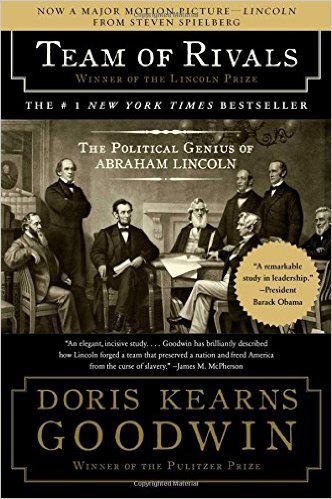
Continued from March 8 (reply #36).
https://freerepublic.com/focus/f-chat/3938855/posts#36

Doris Kearns Goodwin, Team of Rivals
3 posted on
03/09/2021 6:22:47 AM PST by
Homer_J_Simpson
("Every nation gets the government that it deserves." - Joseph de Maistre (1753-1821))
To: Homer_J_Simpson

Continued from March 5 (reply #23).
https://freerepublic.com/focus/f-chat/3938855/posts#23

David Herbert Donald, Lincoln
4 posted on
03/09/2021 6:23:28 AM PST by
Homer_J_Simpson
("Every nation gets the government that it deserves." - Joseph de Maistre (1753-1821))
To: Homer_J_Simpson

Abraham Lincoln: Speeches and Writings 1859-1865, edited by Don E. Fehrenbacher
5 posted on
03/09/2021 6:24:09 AM PST by
Homer_J_Simpson
("Every nation gets the government that it deserves." - Joseph de Maistre (1753-1821))
To: Homer_J_Simpson
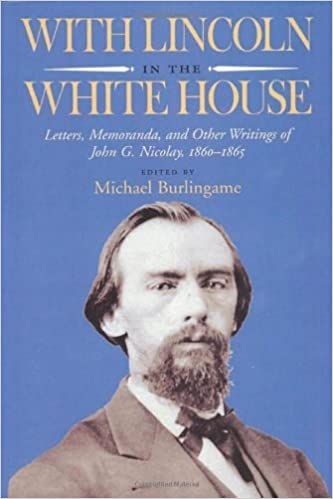

With Lincoln in the White House: Letters, Memoranda, and Other Writings of John G. Nicolay, 1860-1865, edited by Michael Burlingame
6 posted on
03/09/2021 6:25:44 AM PST by
Homer_J_Simpson
("Every nation gets the government that it deserves." - Joseph de Maistre (1753-1821))
To: Homer_J_Simpson

The Diary of George Templeton Strong, Edited by Allan Nevins and Milton Halsey Thomas
7 posted on
03/09/2021 6:26:30 AM PST by
Homer_J_Simpson
("Every nation gets the government that it deserves." - Joseph de Maistre (1753-1821))
To: Homer_J_Simpson
Major Robert Anderson to Colonel Samuel Cooper, March 9, 1861 FORT SUMTER, March 9, 1861.
(Received A. G. O., March 12.)
Colonel S. Cooper,
Adjutant-General. United States Army.
Colonel: I have the honor to report that we can see the South Carolinians engaged this morning strengthening and extending considerably what we supposed to have been intended for a mortar battery at Fort Johnson. Small parties are also working at Nos. 9 and 10, and a very heavy force at the bend of the island, this side of No. 1. Whether they are constructing another battery there or strengthening one that is already there I cannot tell. One of my officers reports that he has counted nine 24-pounders which have been landed at Cummings Point within a week. Yesterday he saw several shot or shells which appeared to be about eight inches in diameter. They are certainly busy strengthening the batteries already constructed, and probably adding others. It appears to me that vessels will, even now, from the time they cross the bar, be under fire from the batteries on Morris Island until they get under the walls of this work. I do not speak of the batteries which have been constructed on Sullivan's Island, as I am not certain of their positions. Fort Moultrie will, of course, be a very formidable enemy.
I am, Colonel, very respectfully,
Your obedient servant, Robert Anderson,
Major First Artillery, Commanding.
COLONEL S. COOPER, Adjutant-General United States Army.
SOURCES: Samuel Wylie Crawford, The Genesis of the Civil War: The Story of Sumter, 1860-1861, p. 281; The War of the Rebellion: A Compilation of the Official Records of the Union and Confederate Armies, Series I, Volume 1 (Serial No. 1), p. 192.
https://civilwarnotebook.blogspot.com/2016/07/major-robert-anderson-to-colonel-samuel.html
8 posted on
03/09/2021 6:27:13 AM PST by
Homer_J_Simpson
("Every nation gets the government that it deserves." - Joseph de Maistre (1753-1821))
To: chajin; henkster; CougarGA7; BroJoeK; central_va; Larry Lucido; wagglebee; Colonel_Flagg; Amagi; ...
Today’s posts:
“Team of Rivals,” reply #3
“Lincoln,” #4
Letter from Lincoln to Winfield Scott, #5
John Nicolay to Winfield Scott, #6
George Templeton Strong, #7
Major Anderson to Adjutant General, #8
9 posted on
03/09/2021 6:30:31 AM PST by
Homer_J_Simpson
("Every nation gets the government that it deserves." - Joseph de Maistre (1753-1821))
To: chajin; henkster; CougarGA7; BroJoeK; central_va; Larry Lucido; wagglebee; Colonel_Flagg; Amagi; ...
11 posted on
03/10/2021 6:12:32 AM PST by
Homer_J_Simpson
("Every nation gets the government that it deserves." - Joseph de Maistre (1753-1821))
To: chajin; henkster; CougarGA7; BroJoeK; central_va; Larry Lucido; wagglebee; Colonel_Flagg; Amagi; ...


Mary Chesnut’s Diary, Edited by Isabella D. Martin and Myrta Lockett Avary
12 posted on
03/10/2021 6:14:18 AM PST by
Homer_J_Simpson
("Every nation gets the government that it deserves." - Joseph de Maistre (1753-1821))
To: chajin; henkster; CougarGA7; BroJoeK; central_va; Larry Lucido; wagglebee; Colonel_Flagg; Amagi; ...

Mary Chesnut’s Diary, Edited by Isabella D. Martin and Myrta Lockett Avary
16 posted on
03/11/2021 6:22:05 AM PST by
Homer_J_Simpson
("Every nation gets the government that it deserves." - Joseph de Maistre (1753-1821))
To: chajin; henkster; CougarGA7; BroJoeK; central_va; Larry Lucido; wagglebee; Colonel_Flagg; Amagi; ...

The Diary of George Templeton Strong, Edited by Allan Nevins and Milton Halsey Thomas
17 posted on
03/11/2021 6:23:39 AM PST by
Homer_J_Simpson
("Every nation gets the government that it deserves." - Joseph de Maistre (1753-1821))
To: chajin; henkster; CougarGA7; BroJoeK; central_va; Larry Lucido; wagglebee; Colonel_Flagg; Amagi; ...

Mary Chesnut’s Diary, Edited by Isabella D. Martin and Myrta Lockett Avary
18 posted on
03/12/2021 6:03:26 AM PST by
Homer_J_Simpson
("Every nation gets the government that it deserves." - Joseph de Maistre (1753-1821))
To: chajin; henkster; CougarGA7; BroJoeK; central_va; Larry Lucido; wagglebee; Colonel_Flagg; Amagi; ...

The Diary of George Templeton Strong, Edited by Allan Nevins and Milton Halsey Thomas
Orpheus in the Underworld Overture.
https://www.youtube.com/watch?v=y4hs7vW8SV0
19 posted on
03/12/2021 6:11:32 AM PST by
Homer_J_Simpson
("Every nation gets the government that it deserves." - Joseph de Maistre (1753-1821))
To: chajin; henkster; CougarGA7; BroJoeK; central_va; Larry Lucido; wagglebee; Colonel_Flagg; Amagi; ...
Lieutenant-General Winfield Scott to Abraham Lincoln, March 12, 1861 The President has done me the honor to propose certain military questions, concerning Fort Sumter to which he desires replies.
“1st.” To what point of time can Major Anderson maintain his position at Fort Sumter without fresh supplies or reinforcements?
Answer. In respect to subsistence he has bread, flour, and rice for about 26 days, and salt meat (pork) for about forty eight days. Without additional supplies of provisions he may hold out some forty days without much suffering from hunger.
The besiegers are understood to be about 3,500 men, now somewhat disciplined, and they have four powerful batteries on land, and one floating battery, all mounting guns and mortars of large calibre and of the best patterns, bearing on Fort Sumter. Supposing Major Anderson not to be reinforced and the means of the assailants to be skilfully and vigorously employed – Fort Sumter being defended by less than 100 men, including common laborers and musicians – it might be taken, at any time, by a single assault, and easily, if previously harassed, perseveringly, for many days and nights; the assailants having the ability (by the force of numbers) of converting one out of every three or four of those demonstrations, into a real attack.
“2d.” Can you, with all the means now in your control, supply or reinforce Fort Sumter within the period you specify as the time, within which Major Anderson may hold out without fresh supplies?”
Answer. No, not within many months; But not to speak of October or November, when the proposition was first made, and repeated, in writing, the third time, December 30th – it would have been easy to reinforce Fort Sumter, with war vessels, down to about the 12th of February. In this long delay, twice that time, Fort Moultrie has been re-armed and greatly strengthened, in every way, and many powerful new land batteries (besides rafts) have been constructed. Hulks have also been sunk in the principal channel, so as to render access to Fort Sumter, from the sea, impractical, without first carrying all the batteries of the secessionists. The difficulty of reinforcing has thus, by delay, been increased 1[0] or 12 fold. First, the late President refused to allow any attempt to be made, because he was holding negotiations with South Carolina Commissioners. Afterwards, Secretary Holt and myself endeavored to obtain a ship of war for the purpose; but failing in this we were obliged to employ the steamer Star of the West. That vessel, but for the hesitation of the commander, might then have landed, it is generally believed, men and subsistence. That attempt having failed, I next, before the late Cabinet, submitted, orally, either that succor be sent by ships of war, fighting their way to the Fort, or, that Major Anderson should ameliorate his condition by the muzzles of his guns; that is, enforcing supplies by bombardment, and by bringing-to merchant vessels and helping himself (giving orders for payment) or else should be allowed to surrender, as, sooner or later, had then become inevitable.
But before any resolution was taken – the late Secretary of the Navy making difficulties about the want of suitable vessels; – another commissioner from South Carolina arrived, causing further delay. When that had passed away, Secretaries Holt & Toucy, Capt. Ward of the Navy and myself, with the knowledge of President Buchanan, settled upon the employment, under the Captain (who was eager for the expedition) of four or more small steamers belonging to the Coast Survey.- At that time, I have no doubt Captain Ward would have suceeded with all his vessels. But he was kept back by something like a truce established between the late President and a number of principal seceders, here, in the Senate, & from South Carolina, Florida, Louisiana &c., and this truce continued to the termination of that administration. That plan and all others like it, are now pronounced, from the change of circumstances, impracticable, by Major Anderson Captain Foster and all the other officers of the Fort, as well as by Brig. General Totten, Chief of the Corps of Engineers: and, in this opinion, I fully concur. The three or four steamers would have been obliged to attempt to make their way past the hostile batteries in an obstructed channel. Possibly one of them might have reached the fort, with (being small) a few days subsistence, but would, certainly probably, have been destroyed on arriving at the entrance (by the concentrated fire of three or four powerful batteries), before landing a man or a ration. In this opinion Captain Ward finally concurred.
“3d.” If I could not supply or reinforce Fort Sumter, within the time specified, with all the means in my control, then what amount of means and of what description, in addition to that already at my control, would enable me to supply and reinforce the fortress within that time.”
Answer. I should need a fleet of war vessels and transports which, in the scattered disposition of the Navy (as understood) could not be collected in less than four months; – 5,000 additional regular troops, and 20,000 volunteers – that is, a force sufficient to take all the batteries both in the harbour (including Ft. Moultrie) as well as in the approach or outer bay. To raise, organize and discipline such an army (not to speak of necessary legislation by Congress, not now in session) would require from six to eight months. As a practical military question, the time for succoring Fort Sumter, with any means at hand, had passed away nearly a month ago. Since then a surrender under assault, or from starvation, has been merely a question of time.
It is, therefore, my opinion and advice that Major Anderson be instructed to evacuate the Fort – so long gallantly held by him and his companions – immediately on procuring suitable water transportation, and that he embark, with his command, for New York.
I have the honor to return, herewith, the reports and communications of Major Anderson and his officers, submitted to me by the President. These papers of themselves demonstrate how the Fort has become untenable during the delays I have described above.
Respectfully Submitted. Winfield Scott.
Head Qrs. of the Army
Washington, March 12, 1861.
SOURCE: Abraham Lincoln Papers at the Library of Congress, Washington, D.C.
https://civilwarnotebook.blogspot.com/2016/09/lieutenant-general-winfield-scott-to.html
20 posted on
03/12/2021 6:13:03 AM PST by
Homer_J_Simpson
("Every nation gets the government that it deserves." - Joseph de Maistre (1753-1821))
To: Homer_J_Simpson
It is nice to see that Dicken’s Great Expectations was printed in the paper for all to read.
To: chajin; henkster; CougarGA7; BroJoeK; central_va; Larry Lucido; wagglebee; Colonel_Flagg; Amagi; ...

The Diary of George Templeton Strong, Edited by Allan Nevins and Milton Halsey Thomas
22 posted on
03/13/2021 7:05:59 AM PST by
Homer_J_Simpson
("Every nation gets the government that it deserves." - Joseph de Maistre (1753-1821))
To: chajin; henkster; CougarGA7; BroJoeK; central_va; Larry Lucido; wagglebee; Colonel_Flagg; Amagi; ...

With Lincoln in the White House: Letters, Memoranda, and Other Writings of John G. Nicolay, 1860-1865, edited by Michael Burlingame
23 posted on
03/14/2021 8:02:43 AM PDT by
Homer_J_Simpson
("Every nation gets the government that it deserves." - Joseph de Maistre (1753-1821))
To: chajin; henkster; CougarGA7; BroJoeK; central_va; Larry Lucido; wagglebee; Colonel_Flagg; Amagi; ...

The Diary of George Templeton Strong, Edited by Allan Nevins and Milton Halsey Thomas
 “The Icebergs,” Frederic Edwin Church (1861)
24 posted on
03/14/2021 8:04:52 AM PDT by
Homer_J_Simpson
("Every nation gets the government that it deserves." - Joseph de Maistre (1753-1821))
To: Homer_J_Simpson
Continued from March 6 (reply #29).
https://freerepublic.com/focus/f-chat/3938855/posts#29
1

2

Bruce Catton, The Coming Fury
26 posted on
03/15/2021 6:54:31 AM PDT by
Homer_J_Simpson
("Every nation gets the government that it deserves." - Joseph de Maistre (1753-1821))
Navigation: use the links below to view more comments.
first 1-20, 21-24 next last
FreeRepublic.com is powered by software copyright 2000-2008 John Robinson


