Posted on 12/24/2017 9:18:45 PM PST by Rebelbase
The mid-19th century vogue for flowing, diaphanous women's garments made from open-weave fabrics like "bobbinet, cotton muslin, gauze, and tarlatan," combined with gas lighting, candles, and open fires meant that it was extremely common for women to literally burst into flames: on stage, at parties, at home.
So flammable were these garments that when other women would rush to the aid of a blazing friend, they, too, would go up in flames.
All of these women burned to death in front of their families or friends. None of them were doing anything particularly risky at the time except for wearing clothes around a source of light or a cigarette — something men could do without the same risk. “There is a burden on women to think about their bodies in space in a way that men don’t have to,” Matthews David says. “The only fire I found for men really was a guy who left a lit pipe in his suit because woolen suits were pretty flameproof.”
The problem was exacerbated by the fact that the flame-retardant compounds of the day would cause these flowing, white garments to stiffen and yellow, meaning that many women rejected them.
Among the women who died this way was Archduchess Mathilde of Austria, who hid a cigarette behind her back when her father walked into the room and caught fire.
(Excerpt) Read more at boingboing.net ...
Pants were more practical for such work but they outlined a woman's form and so were deemed to be immodest and a temptation to men.
Better to risk getting caught on fire rather then be raped and left with no other choice but to become a prostitute.
Nope.
I’ve heard stuff like UnderArmour is the worst.
Well, duh.
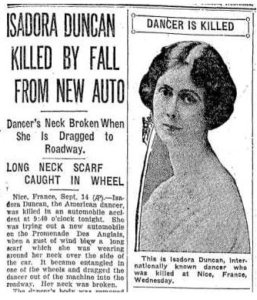
Woman motorist killed when her long scarf got entangled in the wheel, pulling her out of the moving car. That sounds like not a good way to go.
Disclaimer: Opinions posted on Free Republic are those of the individual posters and do not necessarily represent the opinion of Free Republic or its management. All materials posted herein are protected by copyright law and the exemption for fair use of copyrighted works.