Posted on 06/04/2017 2:57:21 PM PDT by BBell
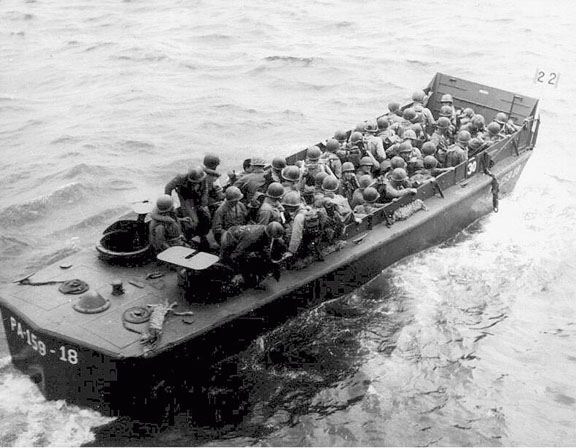
THEN: In 1939, the U.S. Navy awarded the relentless Andrew Higgins with a contract to build his Eureka boats for the military. Despite his now-famous contribution to the U.S. effort in World War II -- most notably his Higgins landing craft, a later version of the Eureka boat -- the path to this contract was bumpy and difficult, something that only someone as determined as Higgins could overcome. Although the New Orleans boat builder had successfully sold his boats to the Coast Guard and Army Corps of Engineers, the Navy was more interested in developing its own technology than testing the boats of a small-time company from the South. Higgins tried for four years to convince the Navy of hits boat's superiority before officials finally granted him a test run in 1938. Despite his objections to some of their constraints (the Navy wanted a 30-foot vessel, and he thought this was too short), he built a boat that was lighter, sturdier and more maneuverable than the competition. Higgins finally had his foot in the door.
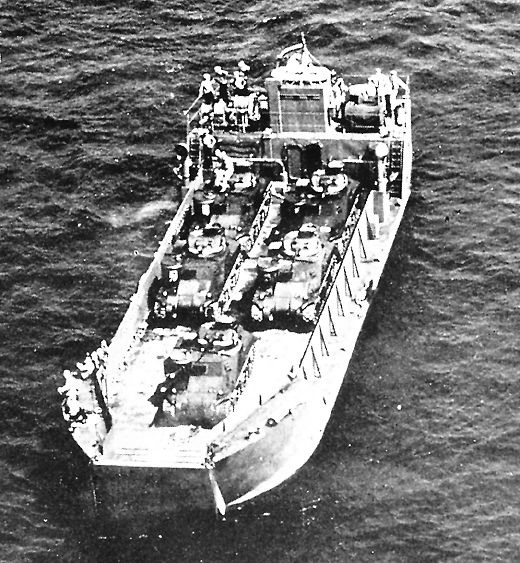
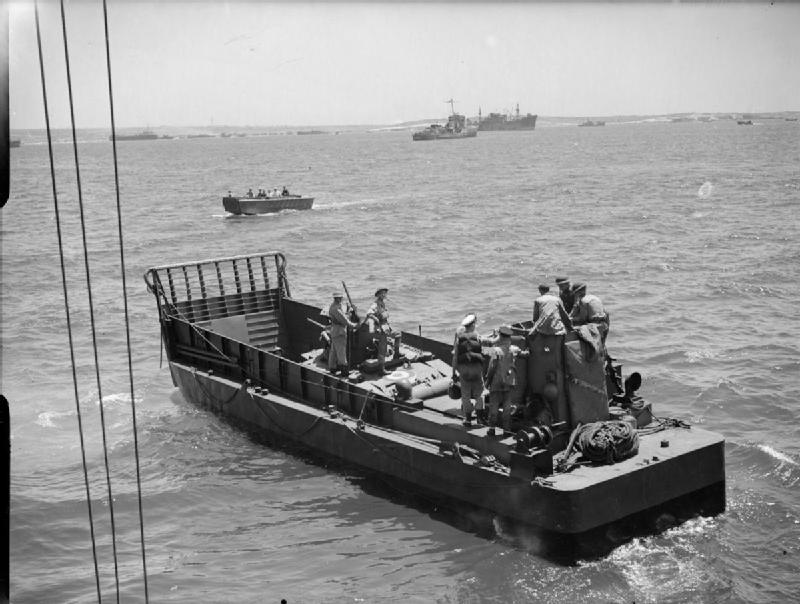
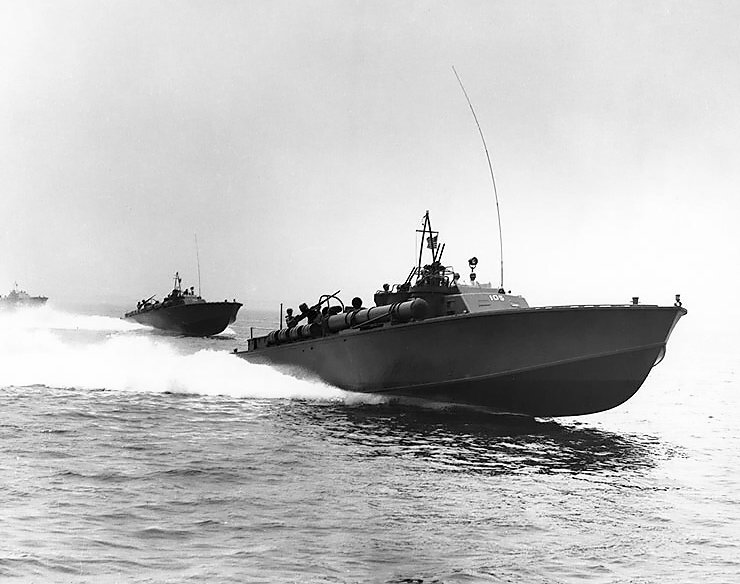
NOW: That first boat designed by Higgins Industries for the Navy evolved into multiple boats used in all parts of the war effort. Higgins Industries developed amphibious boats such as the LCTs, LCPLs and the LCMs, as well as PT boats and supply vessels. New Orleans has not forgotten Higgins and his crucial role in the war effort. The entrance to the National World War II Museum faces Andrew Higgins Drive. In addition, a reproduction of the original Higgins boat -- built by volunteers -- is on display in the museum's Louisiana Memorial Pavilion.
TRI-via:
Andrew Higgins' initial Navy contract helped his New Orleans business grow exponentially. In 1938, he employed 75 workers in a solitary boatyard. By the end of 1943, Higgins owned seven plants where 25,000
(Excerpt) Read more at nola.com ...
A true visionary.
WW2 Museum in New Orleans is a true bucket list item. Been there several times, and will go back again.
Thanks for the post. I have been aboard the Army versions....LCM6, LCM8 and...went ashore in Vietnam aboard an LCU. Our unit landed at Vung Tau which did not have a deep water harbor. We climbed down cargo nets into the well deck of an LCU and went ashore just like we all watched the WWII guys do. LOL!
Couldn’t really get near that museum almost exactly 2 years ago. Just a mob scene. Went to the civil war museum instead (which was very good).
FTA:...the Navy was more interested in developing its own technology than testing the boats of a small-time company from the South. Higgins tried for four years to convince the Navy of his boat's superiority before officials finally granted him a test run in 1938.
Two thoughts come to mind: 1) You can always tell a Navy man -- you just can't tell him much. 2) This just goes to prove the difficulty of doing business with the government is not a recent phenomenon.
Brute Krulak was a key part of the story.
Good 19 minute documentary on the Packard-Merlin engine:
https://www.youtube.com/watch?v=hRVWyZf5MQk
There’s a window to visit New Orleans, we’ve discovered. After Mardi Gras, and before it gets summertime. Weather is decent, and hotel rates are more affordable. We live in North Louisiana, so its only a 5 hour trip.
Late fall is also good, excepting Thanksgiving week. Bayou Classic that week, and it ain’t safe.
From wikipedia:
While stationed as an observer in Shanghai during the Second Sino-Japanese War in 1937, Krulak took photographs with a telephoto lens of a ramp-bowed landing boat that the Japanese had been using. Recognizing the potential use of such a craft by the U.S. armed forces, Krulak sent details and photographs back to Washington, but discovered years later that they had been filed away as having come from "some nut out in China". Krulak built a model of the Japanese boat design and discussed the retractable ramp approach with boat builder Andrew Higgins who incorporated elements of Krulak's input into the Landing Craft, Vehicle, Personnel (LCVP) or "Higgins boat", which played critical roles in the Normandy Landings and amphibious assaults in the Pacific.[5]
Few people know that after WWII, these some of the same boats, demilitarized, became party fishing boats used off the U.S. coast.
It's sad to see the state of whats left of the Packard factory in Detroit now. To think that factory had such a hand in winning WWII and now it looks like it had been bombed out in WWII.
If I remember correctly the bikers in the Billy Jack movie "The Born Losers" arrived on an old higgins boat.
my company built something for the US navy - similar item for a high spec private customer would cost $2mill. We bid $8mill. When it finally shipped, after countless change orders, it cost $20mill.
When private customers came to inspect the progress of their item, they’d bring 2-4 people, usually a business guy & a engineering guy and a regional manager type. They’d fly in the morning and fly out late same day.
The Navy brought 10-20 people to visit. The Navy guys would spend 2 full
days plus have a full travel day on either side. It was mind boggling
Yeah, we were there a few weeks before Jazz festival. (Darn, if I’d known I’d have picked THAT week!)
Packard built marine engines based on the WW1 Liberty Aircraft Engine (PT-Boats), and they built licensed copies of the Rolls Royce V1650 engine (primarily for the P-51 Mustang. 2 different engines.
I was fishing for off one of the converted PT’s back in the 1980’s. Most of the party boats used in long island are based upon the shape of the PT’s they’ll hold about 50 fishermen and are shallow drafted to get in some shallow spots.
Merlins.
Disclaimer: Opinions posted on Free Republic are those of the individual posters and do not necessarily represent the opinion of Free Republic or its management. All materials posted herein are protected by copyright law and the exemption for fair use of copyrighted works.
