Transcript [Marcus House]
So I think SpaceX may have just given us our clearest hint yet about where Starship is heading next. While Flight 13 is still being prepared, new documentation hints the mission after it could be something we’ve all been waiting years to see! With that, we’ve got loads of Falcon 9 action, and some sweet updates on this lunar landing to come, we hope, this year. Arianespace even shocked us all with views like this while sending their largest Ariane 6 payload to date, and a dramatic goodbye from Vandenberg Space Force Base! This video is sponsored by Displate!
Hey, hey! Marcus House with you here, and as we watch SpaceX prepare for the next epic event with Starship in Flight 13, we are also quite excited about the plan that follows. As far as the Starship and Super Heavy for Flight 13 are concerned, though, both vehicles are still in the Megabays preparing for the next steps as expected. We do have some more interesting new information for the following Flight 14, though! If you watched last week’s video, you’ll know that Gwynne Shotwell hinted at plans to potentially fly the first-ever orbital Starship mission with Flight 14. More good news on that because this intention was backed this week by a federal communications commission application. Here we see a “Starship Orbital Return Demo” with a start date at the very end of July, and running through until the end of the year! Of course, we would need to see everything for the Starship upper stage go perfectly during Flight 13 beforehand, but the intention here is a very welcome one.
Now, this may not mean attempting to catch Starship out of the air with the tower, of course, as they can still do a controlled splashdown at any of the other selected locations in the ocean, including downrange from the launch site, but each step brings us closer to that eventual catch! I mean, a successful catch of the ship would be the next milestone big enough to dethrone the Super Heavy booster catch as the most impressive achievement so far. I still can’t quite get my head around the launch site being able to catch both vehicles at some point in the near future. The work around the currently active Pad 2 seems to be getting close to completion after Flight 12! The section of wall which fell over thanks to all that hellish exhaust is being finished up now, and there may also be some hope for the Gateway to Mars sign lovers out there. See this? They’ve put up scaffolding along the entire wall. That seems like a huge effort just for a cleanup job, so we’re wondering if they might choose to instead paint the sign onto the wall, which would be a more robust option, but we’ll soon find out!
The catch arm reinforcements we saw SpaceX beginning to install last week took them no time at all to weld on, so they already look to be completed! Thanks to these camera views from NSF, we even got to watch and listen to some unique deluge tests. Yeah, that was the first time since Flight 12 that it had been tested, so very good signs that it all held up almost exactly as planned. Nearby, at the original Pad 1 being upgraded, there is activity everywhere you look! If we start at the tank farm, they’re well and truly making the most of the space they gained by removing those old methane tanks! There are yet another set of pedestals here now for another two large tanks to be installed. This time they appear to be extending the Liquid Methane Storage! We already noted last week the arrival of these two tanks here which will expand the liquid oxygen and liquid nitrogen capacity, but as you can see here, they are still not yet done with those expansions! These piles that we can just see sticking up out of the ground are a good indication that they will continue extending that storage.
All this, of course, should mean that SpaceX will have the ability to launch a Starship mission, recycle comfortably within 24 hours, and potentially launch again in rapid succession. Given they will soon have two launch pads active and want to do orbital refill testing, they will want that capability without needing to refill all the propellant tanks in between flights. I can’t wait to see that. Now, interestingly, over here they began tearing down the electrical bunker which was used to power the old Pad 1 facilities before they became obsolete. It will likely be rebuilt somewhere else on site, but for now at least, they appear to be running a long stretch of conduit from the retention pond at the end of Pad 2, all the way across to the Pad 1 worker break room. At the base of the tower, you may notice there is only a single excavator in the trench actively removing material, but with this sort of work, they need to take it a little easy. SpaceX would be wanting to make certain that the groundwater levels and movement are kept within a specific limit. Remember that as they dig deeper, the stress on these side walls increases, and if not accounted for, it’ll begin to bow inwards as water seeps in faster. To counteract this, they set up large steel beams along the wall and install these steel tiebacks which are drilled and anchored outward through the wall either into the tower base or the surrounding foundation!
Anyway, you can see the excavator has now dug down low enough to make the tops of all those piles visible, which will later be capped and tied in with the large concrete rebar slab. That slab will then make up the base of the launch mount, all ready for the complex framework and water deluge system to be built above. The rebar cage for the foundation of the commodities bunker that sits to the side is already done and just needs to be poured. The framework for the bunker itself, which has been under construction here out of the way for a while now, is getting corrugated steel flooring installed. It’s going to be neat, I think, watching SpaceX lift the whole thing over onto the foundation!
If you look at the top of the tower, you’ll also notice there is now scaffolding up here so the crew can begin with the roofing reinforcements. So heading up the road toward the build site, if we first stop in at the Sanchez area first, we can see the launch mount construction is slowly picking up pace! Many parts are piling up now and the 4th and final bottom module should arrive soon. Once they are all here, the 4 corners can be welded in to join them all together!
Now over here we’ve been watching the parts arrive for the water buckets. The braces which hold all these individual sections of pipes together are now on site now and these will allow SpaceX to begin assembling both halves of the deluge buckets. Also nearby are parts for the top ridge, also known as the apex, which is being built here from scratch.
Now I’ve got to say a huge thanks to the awesome work by RGV Aerial Photography. They’ve picked up this view with enough detail to see a very peculiar looking pattern of holes at the top deck for the brand new Pad 1. This looks nothing like what we saw on Pad 2. Notice the many different hole densities and patterns here along the inner edge? Now this is somewhat speculative but it would be interesting if this is the corner which gets blasted by the plume at liftoff. Remember, we have noticed a bit of a hot spot on that side after flight 12, so perhaps this new hole density pattern is there to ensure the water spraying out balances the furious exhaust overheating that area. Our eyes will certainly be watching the active Pad 2 in the future to see if they start reproducing such an upgrade there too.
So heading further on to the build site, we have a huge milestone this week for the gigantic new gigabay. It has now reached the 7th and final level. Soon the roofing is going to cover up these sweet aerial views from above which will be kind of sad because all this time we’ve been able to peer in and see those views right down and into the aisles! Speaking of though, from ground level Shaun was able to spot some already preassembled roof trusses being prepared for lifting into place. He’s been loving watching the weekly progress on this monster building growing week by week. From sheet piles, and foundation work, to actual steel growing, and now cladding installation!
Although in future we’ll have more limited views Shaun will of course continue to keep getting the best views possible. We couldn’t be out here without you being here subscribed here watching along so thanks a heaps for all that. With vehicle production continuing to ramp up, there’s going to be more focus on everything rolling back and forth during those testing phases before flights. With any luck we’ll be seeing the next flight in a few weeks’ time.
I’ve got to say, I love this infographic of the previous mission. We want to see some clear improvements to the Version 3 Super Heavy boostback process for sure.
[ad text redacted]
Ok, so it’s always busy around Starbase in Texas, but how about Florida? Well, the Gigabay at Roberts Road has progressed significantly too! Much further ahead, it is standing at its final height of 116 metres! The roof is also now finished, so all 4 tower cranes have been disassembled and the cranes around the base are working hard to finish that exterior cladding work! We may see those vehicles potentially set to launch with Starship Flight 15 stored right here if everything goes well with the next 2 flights!
Nearby at Pad 39A’s starship launch pad, SpaceX has lifted that launch clamp test rig named “Ibeproofin” into the launch mount on Wednesday. They use this to make sure all the launch arms and clamps can withstand the weight of a full stack and also the full thrust of a Super Heavy booster. That is critical now that we know those static fires are done at full thrust. The new pad design is a beast!
Moving to Space Launch Complex-37A, that is already growing another level this week which we can see thanks to Julia with NSF! That massive LR13000 crane had hold of the next tower section to be stacked. If you look close, this one is heavily decked out with its various piping and cladding already! Now SpaceX kicked off the week with a Starlink mission with booster 1093 on its 14th flight sending this stack of satellites from Vandenberg Space Force Base on Monday morning.
Now what caught everyone’s immediate attention in this Group 17-54 mission was that during the live stream they didn’t show any of the usual telemetry details. No velocity readout, or altitude, or engine animations, just the camera view there and the mission callouts. It’s not the first time that SpaceX has done this, but it always feels a little odd when you’re used to having all that data available during a broadcast. We were just hoping that this wouldn’t become the new normal as we watched the always beautiful touchdown there on the droneship Of Course I Still Love You.
Now that was the only Starlink mission for the entire week which almost seems a little odd these days, but there was plenty more action to come from Falcon 9. On Wednesday in the very early hours of the morning here was the next lifting off with AST SpaceMobile’s Block 2 BlueBird satellites between the fairings. A beautiful ride to main engine cut off and stage separation. Good news as well because all of the telemetry information was back, so I’m not sure why it was missing in the previous Starlink mission!
Now on board there were three of these BlueBird satellites numbered 8, 9, and 10, and these block 2 versions are designed to have up to 10 times the bandwidth capability of the first generation satellites. Waiting down range was the droneship A Shortfall of Gravitas and there is landing number 29 for booster 1077. We then just needed to wait for the deployment, and there we go! These satellites are all here to increase the cellular broadband service capability which should allow data transmission speeds of up to 120 Megabits per second. They need huge communications arrays which apparently expand out to around 223 square metres, or 2400 square feet. In fact, AST SpaceMobile says these Blue Bird satellites are the largest to ever be commercially deployed into Low Earth orbit, so that’s pretty crazy.
The last Falcon 9 mission for the week then roared off just yesterday morning on Friday. This was another secretive National Reconnaissance Office Launch number 179 and it was flying away from Vandenberg Space Force Base with the young booster 1103 flying on only its 3rd mission. This seems to have been carrying a few more Starshield satellites for all of their intelligence needs, and as it typically goes with these missions, no views of that second stage after main engine cut off and stage separation. An always beautiful return to launch site spectacle though with the broadcast ending right after that glorious touchdown at landing zone-4.
Aboard the International Space Station earlier in the week, the crew and ground teams prepared for the reentry of the Cargo Dragon that had arrived last month. This Dragon C209 is now tied with Crew Dragon Endeavour as the fleet leader with both having six successful missions to space. It undocked on Tuesday afternoon after being docked at the International Space Station for just over 30 days. In this case, the ISS team had loaded thousands of pounds of cargo to return home. Included in all that was loads of sweet research like the bioprinted organ and cartilage tissue samples, research aimed at improving cryogenic propellant storage for future deep-space missions, and experimental DNA-inspired materials that could contribute to new cancer treatments. Also returning were several pieces of station hardware, including an eye-imaging system used to monitor astronaut vision, an air filtration component, and equipment from the station’s waste and hygiene system. It made its way back to Earth, splashing down off the coast of California on Wednesday morning.
Now as we head hard into the next Moon activity, it shouldn’t be long before we start seeing these missions fly more often. So far it feels like it has been a fairly quiet year compared to 2025 in that regard. All the plans we’ve talked about for NASA’s Moon Base are one thing, but seeing hardware is always way more exciting. The entire Moon Base plan has been split into three phases. After those are complete, NASA aims to have continuous crew presence on the lunar surface. Let’s begin with phase one though because they want to increase lunar activity by potentially flying 25 missions, which includes 21 lunar landings.
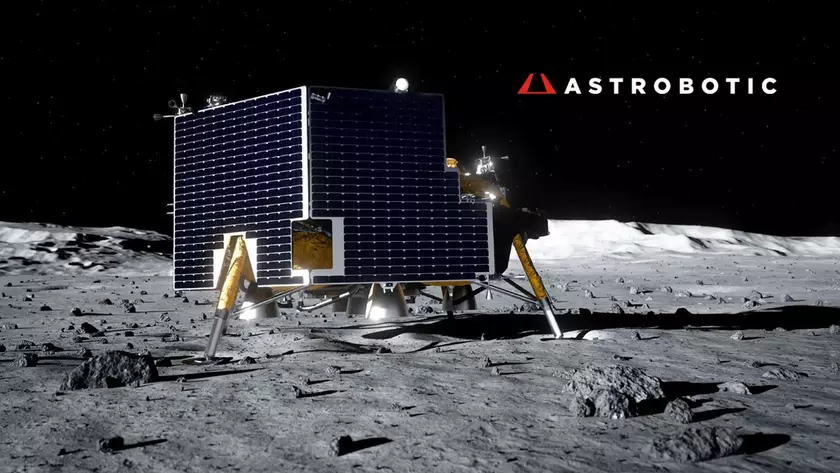
Now the first key lander, which NASA has designated Moon Base I, was Blue Origin’s Blue Moon Mark 1 Endurance lander. Due to the recent incident at Launch Complex 36A though, we have some lengthy delays of course, so we need to be patient with that one. Then the second key landing mission Moon Base II is going to be done by Astrobotic’s Griffin lander. Well, that has just completed its final integration activity and is currently on track to launch onboard a Falcon Heavy late this year. This one aims to land near the Moon’s South Pole and it’s being transported to California for environmental testing where it’s going to go through a series of preflight acceptance checks. They will of course be verifying the ability for it to withstand all those harsh launch conditions, the lengthy spaceflight, and of course that landing and lunar surface environment.
Now this mission is part of the Commercial Lunar Payload Services contracts and it’s going to carry a bunch of payloads. This includes what could be the largest commercial payload sent to the lunar surface to date, Astrolab’s FLIP rover. Here they are watching them test out the solar panel deployment, and what’s more interesting I think is that this rover is going to carry 10 payloads of its own. Indeed it’s a real mission inception this one so I can’t wait to see all the science that’s going to be gathered. With FLIP already going through its preflight tests, it’s going to be integrated with the Griffin-1 lander very soon before launch at the Cape.
Now I’ve just got to touch on some more mid-week action from Arianespace! Lifting off here with one aggressive looking gravity turn was their latest Ariane 6. This was certainly an exciting one to watch because it was the first flight using the new upgraded architecture. The solid boosters have received a nice upgrade going forward, but wow, so has Arianespace’s ability to broadcast some terrific onboard views. This is very welcome, let me tell you!
Now these upgraded solid rocket boosters are the new P160Cs. Compared to the previous P120C design, these are a meter longer, now holding about 156 tons of solid propellant. Each they still produce around 4,780 kN or close to 500 metric tonnes of thrust, and that’s around 14 more tons of propellant in each compared to the previous SRBs. All this means higher performance and mass to orbit of course, and that means that this time they were carrying 36 Amazon LEO broadband internet satellites. Yes indeed, this was another mission for the LEO constellation but more notable is that this was also the heaviest payload carried by an Ariane rocket to date.
A little over two and a half minutes into flight, the successful SRB jettison broadcast live with nice camera views there on the core stage. It was so nice to see all this, and there was more to come. The core stage continued on for another five minutes, followed by this ripper of a shot showing the core stage separation. I have been wanting to see this clarity from Arianespace for ages and stunning footage there as the core drifts away. Back to the mission, the Vinci engine had already begun the first of its planned three burns, the last of which will help the upper stage re-enter and safely burn up in the atmosphere. Just fast-forwarding through the first two burns though, there was the upper stage beginning to deploy those LEO satellites about 1 hour and 26 minutes after launch adding to the growing constellation. This was just the third of 18 Ariane 6 flights booked by Amazon for these missions, so there is still a lot more action to come.
Finally today, an honorable mention for the remains at Space Launch Complex 6! This week the legacy structures at this historic site were intentionally cleared away to make room for what’s to come. This site at Vandenberg Space Force Base of course most recently had Delta IV and Delta IV Heavy launches blasting off into the atmosphere. The history around the site has been a little sad over the years before all that of course. Way back over $4 billion were spent modifying this site for the Space Shuttle. Before any flight could take place though, the Challenger disaster grounded the fleet, and due to that and a few other reasons, this site never once saw a Shuttle launch. Instead, the Air Force terminated the Space Shuttle program at Vandenberg at the end of 1989, so yea sad.
Of course in 2023 SpaceX took over the lease agreement and they are still planning we believe to put in two landing pads for Falcon 9 and Falcon Heavy. To be honest, I’m a little confused by this at the moment because I wonder how many Falcon launches will continue to happen over the next few years as Starship begins to take the majority of mass to orbit. SpaceX have never really talked much about a Falcon retirement plan, so I’m interested to see what you think about all this! It wouldn’t surprise me at all if we start to see future Starship plans at this Launch Complex instead.
So there we go my friends, I hope you enjoyed this video! If you did, don’t forget to hit subscribe so we get to keep making them. If you want to continue with more space goodness, check out this video here next. Thanks for watching all this way through as always, I’ll see you all next weekend!
Transcript [Felix Schlang]
This week, three things happened that almost no one is talking about. SpaceX just got $86 billion dollars to spend. And Elon Musk has now told the world how he plans to spend it. A new spacecraft. The first ship catch on Flight 14, now officially filed. And the kind of production cadence nobody in this industry has ever attempted. Meanwhile, a 21-year-old NASA telescope is falling out of orbit, and a startup is about to send a robot to catch it.
My name is Felix. Welcome to What About It!? Let’s dive right in!
Let’s start with a graphic that ApoStructura published this week, because it tells the story better than I can. It shows SpaceX’s cumulative project expenses on one side, and the capital raised by the IPO on the other. The numbers are striking.
Starlink, to get to where it is today, cost SpaceX roughly $20 billion. The entire Starship program, from initial concept through Flight 12, costs about $15 billion. Falcon and Dragon together, roughly $4 billion. Add it all up and you get the cumulative cost of basically everything SpaceX has built.
Now look at the other side of the graphic. The IPO last week raised $85.7 billion. Musk reposted ApoStructura’s graphic with one comment: “the scale of what is to come has no precedent.” That hit me, because it’s true. SpaceX now has more capital to spend than the entire current company is worth in committed project costs. They built Starlink, Starship, Falcon, and Dragon, all of it, for less than half of what they just raised.
So what are they actually going to spend it on? Let me show you what’s actually on the SpaceX project board right now.
First, HLS: the Human Landing System for NASA’s Artemis program. We covered this in detail last week and many times before; the Artemis III pathfinder is now based on a version 3 Starship with a docking adapter. That development continues.
Second, the SpaceX lunar base: SpaceX has been openly talking about its own permanent presence on the Moon, independent of NASA. Ships landing, ships taking off, ships building infrastructure on the lunar surface. That requires fleets of vehicles.
Third, the million-satellite AI compute constellation: SpaceX wants to put one million satellites in orbit dedicated to AI training and inference workloads. Compute in space, powered by solar, no cooling problems, no electrical grid bottlenecks. That’s a project on a scale that requires Starship to fly constantly for years.
Fourth, Starlink V3: expanding to as many as 30,000 satellites. The current constellation will be dwarfed by what’s coming.
And here’s the strategic accelerator most people aren’t tracking. SpaceX acquired xAI back in February 2026. That means all of SpaceX’s AI development is now in-house. The compute constellation isn’t just a customer-facing product anymore. It’s also feeding SpaceX’s own AI workloads. The lunar base, the satellite constellation, the AI infrastructure, all of these are vertically integrated now.
[ad text redacted]
Your health shouldn’t wait. Head to zocdoc.com/FELIX and book a top-rated doctor today. Find the link in the description. Try it out today and help. What about it in return? So, SpaceX has massively grown. And as a telltale sign, a new SpaceX vehicle was unveiled this week.
Or more accurately, FAA documents revealed enough about it that we can now talk about this project. It’s called Project Starfall, and it’s a brand new design. Starfall is an uncrewed, disk-shaped reentry capsule. Picture a flying disk or a hockey puck. 3.1 m in diameter, less than a meter tall, with an empty mass of about 2,100 kg and a payload capacity of up to 1,000 kg. The top plate carries cold gas maneuvering thrusters. The bottom is a jettisonable heat shield. Parachutes handle the actual landing, with a controlled Pacific Ocean splashdown.
This is obviously not a Dragon replacement. Dragon is crew-capable, complex, expensive, and optimized for long-duration missions and astronaut return. Starfall is the opposite. Simple, mass-produced, optimized for cargo return at high volume. So, what’s it actually for? Two main purposes.
First, in-space manufacturing: Companies want to produce high-value items in microgravity, things like pharmaceutical compounds, protein crystals, semiconductors, and advanced materials, then return them to Earth for sale. And right now, that market is bottlenecked by return capacity. Starfall fills that gap.
Second, point-to-point rapid cargo delivery: Including, potentially, military applications. There’s been growing interest in rocket-based cargo delivery for time-critical supplies. Starfall can act as the reentry vehicle in that architecture.
Launch is flexible. Starfall can fly as a payload on Falcon 9 or on Starship. And the first demonstration mission, called Starfall Demo, has an actual flight plan we can talk about. Per the FAA Operations Plan Advisory, the demo is targeted for no earlier than June 21st from SLC-40 at Cape Canaveral. That’s like tomorrow. It’s not entirely tomorrow. It’s 2 days. The Falcon 9 will fly southeast from the Cape over the Bahamas. The upper stage will insert the Starfall payload into a parking orbit, around 180 by 600 kilometers, inclined at 56.1° about 8 minutes into flight. Then the upper stage and the payload coast in this orbit for about 2 1/2 hours, or roughly 1.5 orbits.
The upper stage then performs a de-orbit burn, lowering the perigee into the atmosphere. The Starfall payload jettisons, and the reentry phase begins about three hours into the flight, over the Northeast Pacific Ocean. The capsule splashes down approximately 600 m west of Vandenberg, California.
So in one mission, SpaceX is demonstrating launch, orbit insertion, extended coast, de-orbit, controlled reentry, parachute descent, and ocean recovery for an entirely new vehicle class. That’s a lot of new capability in a single test flight.
The FAA approved environmental assessments and test flights back in May 2026. SpaceX hasn’t been heavily publicizing this. Most of what we know comes from FAA documents and reporting that initially started back in 2025. But this is real, it’s coming, and it adds another active vehicle to the SpaceX fleet. Who would have thought? A new vehicle.
How about the other milestones? Back to Starbase. Pad 2 has not been quiet. On Monday, June 15th, SpaceX activated the trench deluge system at Pad 2. Full duration. Everything appears to have gone well. And here’s the detail worth noting. This was the first time the deluge system had been tested since the launch of Flight 12. So this is not just a routine check. This is SpaceX validating that the pad infrastructure that survived Flight 12 is still in good working order for Flight 13.
The pad is being constantly exercised, with the deluge system, the SQD arm, the BQDs, the hold-down clamps, all of it being put through its paces ahead of Flight 13. Pad 2 is essentially in flight readiness mode. The boxes get checked one by one, and that is not going to change for the rest of the year if it goes after SpaceX.
These aerial images are essential for my reporting! If you’re down at Starbase, make sure to pay our official partner SPI Helicopters a visit and book a flight! The same views our photographers get! It’s unforgettable and worth every penny! Click the card or the link in the description! Help WAI in return! Check it out today!
Booster 20 has made the trip back from Massey’s to the production site. It completed its standard pressure test plus two cryogenic proof tests. That’s two fewer cryos than Booster 19 ran, but if you remember from the Block 2 boosters, two cryos is typically the standard. So this is normal.
The next steps for Booster 20 in Mega Bay 1 are post-cryo checkouts, followed by grid fin installation and engine installation. Then it heads back to Pad 2 for static fire and stacking.
Ship 40 is the more interesting story. It completed cryo testing back in early May. Then it sat in Mega Bay 2 doing largely nothing visible from the outside. My read is that SpaceX was deliberately waiting for Flight 12 data before committing to any final changes on Ship 40. Once the Flight 12 results came in, they made their calls, and now Ship 40 has its three sea level Raptor 3 engines and three vacuum Raptor 3 engines installed.
While Ship 40 and Booster 20 are preparing to fly, the production line behind them is moving forward at full speed. Early this week, Ship 42’s nose cone was stacked on top of the payload bay inside Starfactory. That’s typically the final stacking step before a nose cone gets rolled out of Starfactory and over to Mega Bay 2 to be integrated with the rest of the ship. So Ship 42 is about to make its journey out of Starfactory and into the production bay.
Take a moment to picture what this means. Right now, three ships are in active production stages: Ship 40 ready to roll for static fire, Ship 41 fully stacked and progressing, and Ship 42 with its nose cone just completed. And let’s not forget about the boosters. There are two: Booster 20 preparing for its final pre-flight gates, and Booster 21 being built.
Three ships, two boosters, all moving forward in parallel. That’s the production cadence Shotwell was talking about when she said monthly flights after Flight 13.
And here’s the headline data point of the week. We have an FCC filing for a Starship orbital return demonstration on Flight 14. This is exactly what Shotwell said at the IPO. Flight 13 is another suborbital test. Flight 14 is the orbital injection mission and includes the first ship catch attempt. The FCC filing confirms it operationally. SpaceX is filing communications authorizations for a ship returning to Starbase. This is where Ship 41 will shine.
NASA’s Swift Observatory Rescue Mission
Ship 41 has already received both aft flaps and is getting ready for its own cryo testing at Massey’s. The vehicle that’s going to become the first Starship ever caught at the tower is right there. We can watch it being prepared in real time. So if Shotwell’s prediction holds, here’s the timeline.
Flight Timeline
Flight 13: Sometimes in early July. Booster 20 and Ship 40. Another suborbital profile, validating the changes SpaceX is making to Raptor 3 and to the version 3 architecture in general.
Flight 14: Beginning of August. Booster 21 and Ship 41. Orbital injection, and the first ever ship catch attempt at the tower. This is the flight that proves Starship can come home.
Flight 15: Beginning of September. Likely Ship 42 with whatever booster is ready by then. Another full mission profile, with the program now genuinely operational.
This is what running a launch program at scale looks like. Not just hardware moving through bays, but a complete operational tempo where the production line, the test campaign, the pad, and the mission planning are all running in lockstep.
We came back from a 221-day gap between flights 11 and 12. The next gaps are likely to be measured in weeks, not in months. Starbase is speeding up again! Let’s go!
Questions
Two questions. First, does Ship 41 actually land cleanly on the chopsticks on its first catch attempt? Or do we see an “almost but not quite” first time and a cleaner result on Flight 15? And second, what do you make of Project Starfall? Useful new capability, or a project nobody asked for? Drop both answers below. I’ll be reading every single one. Yes, you’ve reached the middle of the video! You made it! Thank you from the bottom of my heart for watching and liking the video! If you’re among the 40% who haven’t subscribed yet, and there was at least one video you learned something new from, it would mean the world to me if you did. It’s free, and it genuinely helps more people find my channel! Want to make my world even easier? There’s only one place you’d rather be! The WAI members club on Patreon and right here on YouTube. Click the card or the join button right here under the video! You’re the reason we keep doing this. Thank you so much! You rock!
Swift Observatory
NASA is about to attempt a very special rescue mission. Picture a 21-year-old telescope, slowly falling out of the sky. The telescope is the Swift observatory. It launched all the way back in 2004. And it has a fascinating job description: Be the 911 dispatcher for gamma-ray bursts. These are the most violent explosions in the cosmos, and they could actually be dangerous for Earth as well. Whenever Swift catches one going off, it sounds the alarm. In response, a wide array of telescopes all over the world swing toward the right patch of sky to investigate. It has been doing this job for two decades. But now it is in trouble.
The situation is like this: Swift sits in Low Earth Orbit. While this is already officially in space, such an orbit isn’t truly empty. There is still a faint amount of atmosphere up there. And even though it is very thin, it still creates drag. Under normal circumstances, this is a very slow process. But when the Sun’s having periods of heightened solar activity, the drag is increasing. This is what happened to Swift. It has started sinking faster than anyone expected or planned for. The sinking is now serious enough that if Swift was left alone, it would re-enter and burn up later this year.
NASA had a tough choice to make. One was to accept the fact and let it go. After all, that is the way most missions come to an end. But there was a second option: Try something new. Something nobody’s actually pulled off before. NASA chose that second option. So, the assignment is genuinely wild. Build a custom robot. Fly it up into orbit and have it rendezvous with Swift. Once there, grab a satellite that was never designed to be grabbed. It has no handles, no docking port. Nothing. But the mission requires it to be secured and then hauled back into a higher orbit. All without damaging the telescope.
Not that long ago, last September, NASA handed a contract to a startup from Flagstaff, Arizona: Katalyst Space Technologies. The company designed a robot called LINK. All while being under enormous timeline pressure. The mission called for a ridiculously fast development. From contract to launch in about 8 months. This timeline, I mean, 8 months is the part that made many eyes in the space industry go wide. But NASA and Katalyst had no choice. This clock is set by Swift’s descent, not by anybody’s comfort level.
Let’s have a look at how they pulled it off. Katalyst ran LINK through vibration and thermal testing at NASA Goddard this spring. After these tests, it was shipped to Wallops to meet its launch vehicle for integration. In this day and age, the launch vehicle question would have had a good chance to be answered by a “Falcon” - either 9 or Heavy. But in this case, NASA and Katalyst chose a rocket that is easy to have missed. An exotic, almost forgotten concept. So, what exactly are they strapping this satellite-rescue robot to? The Pegasus XL. And it’s one of the strangest, coolest rides in the whole launch business. Because it doesn’t take a pad. It takes off from a plane.
Pegasus is not a new idea. It first flew all the way back in 1990. It was designed by Orbital Sciences, which is now a part of Northrop Grumman. There is one accomplishment that can never be taken away from it. It was the first air-launched rocket to successfully reach orbit. The first to prove that giving a rocket a head start by launching it from an airplane works.
Behind this concept is the idea that by launching horizontally from an airplane at altitude, you could save on a lot of propellant. During a regular ground-to-orbit rocket launch, the vehicle has to go from a vertical stand-still to a circular orbit. This is a lot closer to horizontal than vertical orientation. Also, the air is the thickest at ground level, causing the biggest air resistance or drag. The early moments of a launch are when the rocket has to work hardest and, in the process, requires an incredible amount of thrust to even get off the ground. This thrust obviously has to come from its engines burning through massive amounts of propellant.
An airplane has a completely different design philosophy. It benefits from its large wings, which provide lift. In its natural habitat, an airplane can operate much more efficiently than a rocket. But this area of operation is restricted by the atmospheric density. Once the air gets too thin for the wings to provide enough lift, the airplane cannot climb any further. This leads to the idea of taking the best of both worlds and combining them into an air-launched rocket system. An airplane carries the rocket to around 12 kilometers, or, since it is an airplane: 40,000 ft. That plane’s got a name that will put a smile on Star Trek fans: Stargazer. The first ship Jean-Luc Picard commanded.
This Stargazer is a modified Lockheed TriStar. It hauls the rocket up tucked under its belly. It releases it in mid-flight, and for about 5 seconds the Pegasus is simply falling. Then the first stage lights, a little delta wing on its back bites into the air for lift and steering, and the thing pitches up and heads for space. There is no launch tower. No countdown clock ticking on a pad. Just a rocket dropping out of the sky and deciding to go up instead of down.
Pegasus XL is a stretched and beefed-up version of the original design. It is just short of 18 m long and has three solid-fueled stages with an option for a fourth stage. When needed, this liquid propellant-powered stage can be used to fine-tune the final orbit. It shares a trait with all the other solid-fueled rockets: Once it is lit, it burns. There is no throttling it back and no easy shutoff.
And there is another drawback with Pegasus XL. Besides the extra-large name extension, it is actually rather small. The payload capacity to LEO is about 443 kg. By modern standards, this is tiny. Still, it can be ideal for delivering a single, mid-sized satellite. There is a catch with Pegasus on top of the small-ish capacity. Unfortunately, a big one. This rocket is expensive. NASA’s ICON mission used Pegasus in 2019. It came in at $56 million for a single flight of a rocket that lifts under half a ton. Yikes. This comes down to a brutal price tag per kilogram: $126,411.
Yeah. Which is precisely why it nearly went extinct. Its last flight was a military mission back in 2021. The first mission after ICON. Ever since then, it has basically been parked in its hangar, awaiting an uncertain future. So the Swift Boost is a real comeback. After roughly five quiet years, one of the last Pegasus XLs still in the inventory gets pulled out of storage. For exactly the kind of job it was always best at: flying one precious payload, to one specific orbit, on a tight schedule, dropped from a plane over the Pacific. An old, almost abandoned rocket resurrected for one more moment of glory. But why even bother?
In this very specific mission, the Pegasus launch system has a huge advantage over regular rockets. The Stargazer aircraft can fly out over the Pacific and drop the rocket from a position chosen to match Swift’s specific low-inclination orbit. A conventional rocket is locked to whatever flight paths its fixed ground pad allows. This superior flexibility allows LINK to reach the right orbital plane much more efficiently, saving propellant otherwise wasted in maneuvers needed to catch up with Swift.
The remaining Pegasus inventory was already in an advanced state of integration, which fits a mission where the clock, not cost, is calling the shots. NASA’s own framing was simply that Katalyst picked it based on the mission’s orbital and programmatic needs as the best way to reach Swift in time for the boost. The whole campaign is staged out of Kwajalein Atoll, out in the Marshall Islands. It’s set to launch later this month.
Mission Overview
Here’s the sequence. After the Pegasus XL drops it into an orbit close to Swift’s, LINK separates and uses its own propulsion system to make its way to Swift. This process takes about a month.
During this cruise, it runs on xenon ion thrusters. The same xenon ion thrusters LINK will use for the critical moments of the mission:
The spacecraft approaches Swift until LiDAR-guided robotic grippers can do their job.
Remember the missing docking hardware? Katalyst built a workaround. It relies on a custom-built robotic capture mechanism that attaches to a feature on the satellite’s main structure without damaging sensitive instruments.
Mechanically, LINK uses its three arms to clamp onto Swift. The vehicle itself is just about one and a half meters tall and weighs in at roughly 350 kg. Once clamped on, LINK takes about another several months to boost Swift to an ideal altitude before it lets go.
The reason it’s months, not minutes, is the propulsion type: ion thrusters are extremely fuel-efficient but very low-thrust, so LINK essentially nudges the combined stack upward continuously over a long arc rather than firing a powerful burn.
One of the oldest assumptions in this business is that a satellite is disposable. That when it runs low or drifts down, you shrug, write it off, and build a new one. NASA and Katalyst are betting against that. Betting that you can just go up there, grab the thing, and give it a second life. On a deadline. With a robot. All developed in under a year!
And that’s it for today! Smash that like button. Subscribe for more! This is what fuels the Algorithm! And this is how you can help us for free! Check out our epic shirts in your favorite space nerd store! Our all-time favorite Raptor Engine design, and countless others, are there for you to explore! Click the card or the US or worldwide link in the description!
And if you want to know how SpaceX is planning to build a self-sustained Moon Base in the next 10 years, watch this video next to continue your journey! Thank you very much for watching, and I’ll see you again in the next video!