Free Republic
Browse · Search
Smoky Backroom
Topics · Post Article

To: DeoVindiceSicSemperTyrannis; HandyDandy; rockrr; jmacusa
DeoVindiceSicSemperTyrannis: "...the South would likely have abolished it around the time that Brazil did. If the South had won the war... "

That was in 1871, only six years after the USA's bloodiest war, fought to the bitter, bitter end by slave-holding leaders who refused earlier surrender if terms included abolition of slavery.

So I think not.

Consider: Since Robert E. Lee died in 1869, he would certainly have no influence over any such debate in 1871.
But Confederate President Davis lived on until a few days short of 1890, and would certainly have a great & continuing influence.
Confederate Vice President Alexander Stephens, who delivered the notorious Cornerstone Speech on March 21, 1861 -- he lived on until 1883.

And let's look at the great Southern Fire Eaters:

  1. The dean, Robert Rhett lived until 1876
  2. Louis Wigfall lived until 1874.
  3. Yes, Yancy, Debow, Ruffin, Hindman, Keitt, Barkesdale and Pettis did not live to see 1870.
  4. But Joseph E. Brown lived until 1894.
  5. And William Miles died just a few months short of 1900,
  6. While Virginian Roger Prior lived until 1919 (albeit in New York)

Add to those hundreds of thousands of Confederates veterans who fought & suffered to the end, and had that end been victory, would certainly not wish to give up the very cause -- slavery -- so many others died for.

Finally, it's important to remember that slavery's defeat in the United States had a profound effect on other countries, especially Southern America, such a Brazil.
Had slavery and the Confederacy proved victorious in the 1860s, there's no reason to suppose others would be in any hurry to abolish it.

DeoVindiceSicSemperTyrannis: "Mechanization: You totally dissed this one, saying that blacks would be needed to operate the machinery.
Perhaps, but a plantation that once required 100 slaves would now only need 10.
Mechanization on its own would at least cause slavery to shrink."

Possibly, but remember that, for the most part, slaves could fully take care of themselves.
When they were allowed (which was not always) to grow their own crops & livestock, the cost of their upkeep was nearly zero.
So, if it took, for example, 100 slaves to run a small plantation, why ever would the owners invest in expensive machines which would only do the same thing their already paid-for slaves were doing for virtually free?

In a slightly different form, we see this exact thing today -- in places where migrant farm workers are available and cheap, they are used.
Where migrants are not available, farmers sometimes invest in machinery to do the work.

So I'm saying slavery would have delayed the introduction & success of labor-saving machinery.

And one other key term to remember: "filibustering", which in 1860 did not mean speechifying in Congress, but rather referred to adventures young men put together to conquer & rule over Central American countries.
They were generally unsuccessful, but their idea was to make new lands available for white settlers and their black slaves.
They hoped a new Confederacy would provide for, in effect, state-sponsored filibustering.
Such conquests would lead to slavery spreading anew throughout the Americas.

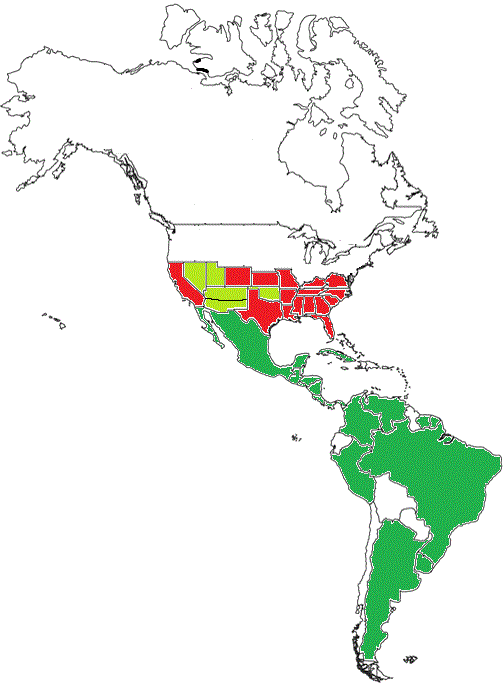
Botton line, my point is: had the Confederacy proved victorious in Civil War, the world afterwards would become a very different place than it, in fact, became.

One pro-Confederate wet-dream on the Confederacy's future "history" conquests:
334 posted on 01/24/2016 6:08:22 AM PST by BroJoeK (a little historical perspective...)
[ Post Reply | Private Reply | To 331 | View Replies ]


To: BroJoeK
Thanks for your very informative posts Joe. You're not a Civil War history professor by chance, are you? The question I ask about the possibility of the South winning the war it started and ending slavery if it had won is a bit of a ‘’gotcha question’’. I ask it anyway because after all the fulminations of “The Lost Cause ‘’ crowd it should be obvious that preserving slavery, even if it meant war was what the South intended. Anything less than victory over the North and the preservation of slavery would have been a great betrayal of the thousands who gave their lives to ‘’The Cause’’ and sheer lunacy besides.
335 posted on 01/24/2016 7:29:52 AM PST by jmacusa ("Dats all I can stands 'cuz I can't stands no more!''-- Popeye The Sailorman.)
[ Post Reply | Private Reply | To 334 | View Replies ]

To: BroJoeK
Actually, Brazil abolished slavery in 1888.

Also, you are making the assumption that folks fought to defend slavery. They didn't, because the majority didn't own any slaves. Most were fighting to protect their homes from invasion. And for those who did own slaves, the tension between them and the North over slavery was never regarding the perpetual preservation of slavery. It was always regarding whether the Fed gov or the states (or territories) should have the right to decide the issue of emancipation.

There were also other issues at stake, such as the high tariffs the north was pushing, and the fact that for the first time in history a purely sectional party had been elected, whose interests lay primarily in benefitting their section.

You are definitely right however about Jefferson Davis (among others) being a voice for the gradual abolition of slavery. He once said that once the Confederacy gained its independence, it would mean the end of slavery. The Confederate Cabinet agreed to abolish slavery within five years after the cessation of hostilities in exchange for recognition by Britain and France. Southerners were much more open to the abolition of slavery that one might think. They just wanted to be the ones to do it themselves, and not have it forced on them. This was the way the North had done it years before, but unlike the North, when the time came the South would actually have to free all their slaves, instead of cheating and selling them Southward, like a number of Northerners did.

The idea you propound that mechanization wouldn't have made much of a difference because "why buy a machine when you already have slaves to do your work" is interesting. However, there are several reasons why this is not logical. First of all, it would be a big money saver in the long run because you don't have to feed, clothe, and house machines. They don't get sick and die on you either. Also, they can do more work in a much quicker time, thus giving a farmer an edge and making him more competitive.

338 posted on 01/24/2016 3:17:46 PM PST by DeoVindiceSicSemperTyrannis
[ Post Reply | Private Reply | To 334 | View Replies ]

Free Republic
Browse · Search
Smoky Backroom
Topics · Post Article


FreeRepublic, LLC, PO BOX 9771, FRESNO, CA 93794
FreeRepublic.com is powered by software copyright 2000-2008 John Robinson