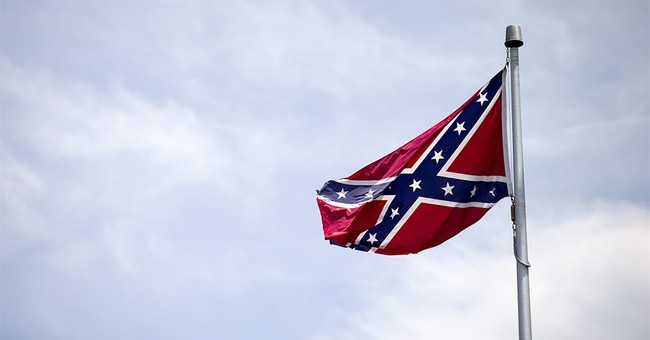
Posted on 01/20/2016 5:03:47 AM PST by Kaslin
Last July, Anthony Hervey, an outspoken black advocate for the Confederate flag, was killed in a car crash. Arlene Barnum, a surviving passenger in the vehicle, told authorities and the media that they had been forced off the road by a carload of "angry young black men" after Hervey, while wearing his Confederate kepi, stopped at a convenience store en route to his home in Oxford, Mississippi. His death was in no small part caused by the gross level of ignorance, organized deceit and anger about the War of 1861. Much of the ignorance stems from the fact that most Americans believe the war was initiated to free slaves, when in truth, freeing slaves was little more than an afterthought. I want to lay out a few quotations and ask what you make of them.
During the "Civil War," ex-slave Frederick Douglass observed, "There are at the present moment many colored men in the Confederate army doing duty not only as cooks, servants and laborers, but as real soldiers, having muskets on their shoulders, and bullets in their pockets, ready to shoot down loyal troops, and do all that soldiers may to destroy the Federal Government and build up that of the traitors and rebels" (Douglass' Monthly, September 1861).
"For more than two years, negroes had been extensively employed in belligerent operations by the Confederacy. They had been embodied and drilled as Rebel soldiers, and had paraded with White troops at a time when this would not have been tolerated in the armies of the Union." (Horace Greeley, in his book, "The American Conflict").
"Over 3,000 negroes must be included in this number (of Confederate troops). These were clad in all kinds of uniforms, not only in cast-off or captured United States uniforms, but in coats with Southern buttons, State buttons, etc. These were shabby, but not shabbier or seedier than those worn by white men in rebel ranks. Most of the negroes had arms, rifles, muskets, sabres, bowie-knives, dirks, etc. They were supplied, in many instances, with knapsacks, haversacks, canteens, etc., and were manifestly an integral portion of the Southern Confederacy Army. They were seen riding on horses and mules, driving wagons, riding on caissons, in ambulances, with the staff of Generals, and promiscuously mixed up with all the rebel horde" (report by Dr. Lewis H. Steiner, chief inspector of the U.S. Sanitary Commission).
In April 1861, a Petersburg, Virginia, newspaper proposed "three cheers for the patriotic free Negroes of Lynchburg" after 70 blacks offered "to act in whatever capacity" had been "assigned to them" in defense of Virginia.
Those are but a few examples of the important role that blacks served as soldiers, freemen and slaves on the side of the Confederacy. The flap over the Confederate flag is not quite so simple as the nation's race "experts" make it. They want us to believe the flag is a symbol of racism. Yes, racists have used the Confederate flag as their symbol, but racists have also marched behind the U.S. flag and have used the Bible. Would anyone suggest banning the U.S. flag from state buildings and references to the Bible?
Black civil rights activists, their white liberal supporters and historically ignorant Americans who attack the Confederate flag have committed a deep, despicable dishonor to our patriotic Southern black ancestors who marched, fought and died not to protect slavery but to protect their homeland from Northern aggression. They don't deserve the dishonor. Dr. Leonard Haynes, a black professor at Southern University, stated, "When you eliminate the black Confederate soldier, you've eliminated the history of the South."
Actually, there were plenty of alternatives which didn't require war, but none of those which Confederate leadership wanted to pursue.
Like you appear to, they were itching for excuses to start war, and soon enough found them.
Abe Lincoln said in is second inaugural that agents were in DC, why didn’t he negotiate? Lincoln is simply a warmonger and war criminal and by his own words we know that.
Sure dude. me you and the NJ Sate Police Cyber Crimes Unit. Up or it? Put your real name and adresss and phone number up there for the whole world to see.
Lincoln's offer was "a fort for a state" -- he would turn over Fort Sumter if Virginia adjourned its secession convention and promised to remain in the Union.
As long as that deal remained "on the table", there was much speculation about withdrawing from Fort Sumter.
But in the end, Virginians turned down Lincoln's offer, and so he went back to "plan B" which was, as Buchanan had attempted, to resupply both Forts Sumter & Pickens.
As for the Confederate assault on Fort Sumter, two points need to be remembered:
DeoVindiceSicSemperTyrannis: "They weren't eager for this fight.
And ever after Fort Sumter they didn't consider themselves at war with the US.
They didn't declare war on the US until several weeks after Lincoln called for troops to subdue them."
But they clearly were eager for a fight, certainly compared to all possible alternatives.
Lincoln also did not consider the US "at war" with Southern states, he only moved against political "combinations" which were acting unlawfully and needed to be subdued.
But within four weeks of Fort Sumter, Confederates:
All that was still a month before the first Confederate Army soldier was killed directly in battle with any Union force, and before any Union Army invaded a single Confederate state.
So obviously, the Confederacy considered itself "at war" with the United States long before the Union did anything significant to oppose them.
No dispute about that, by summer of 1861 both sides had begun to raise up fearsome armies of huge numbers.
But in January or April 1861 it was a very different picture indeed.
The entire United States Army then was about 17,000 strong, over half scattered in forts out west, some in Texas under command of a promising colonel named Robert E. Lee.
This count of 17,000 did not change until after Fort Sumter (April 12) when Lincoln called up another 75,000 from the states (some of whom refused).
In the mean time, on March 3 the Confederate Congress called for 100,000 troops and then on May 9 (after formally declaring war against the USA) authorized another 400,000 making the Confederate Army 500,000 in total.
Yes, of course, in the long run the Union Army vastly outnumbered Confederates, but that was far from the case at war's beginning, and took many months of buildup.
Same reason outgoing Democrat President Buchanan didn't negotiate: as you well know, constitutionally, those people needed to talk to Congress, which of course they refused to do.
Since when did Abe give a crap about the Constitution. LOL.
Their taking of federal government controlled forts and arms was simply a statement of their being their own independent country. After all, the states delegated powers and lands to the fed gov when creating the fed gov and the union, but when withdrawn those delegated rights and powers went back to the states. The Fed gov no longer had rights to have forts in states not under its influence. Government of the people, by the people, and for the people you know.
The Maryland incident reflected the feelings of people of that city, but in no way can be construed as action of confederate government or the state governments.
If they had wanted war so badly, they would have issued an official declaration a lot sooner than they did. Rather it was Lincoln who was eager for war. He rejected all meetings with the Confederate peace ambassadors. He maneuvered the South into firing on Fort Sumter (he sent a messenger to SC to find out if sending supplies and arms to the fort would cause SC to fire on the fort, and the answer was yes...he then sent the arms and supplies in an attempt to provoke a conflict). The confederacy was still open to peace even after Fort Sumter (in which no one was killed btw), but Lincoln would have none of it and opted for war instead.
You're either another one of the False Cause revisionists or you're dumber than a bag of hammers. Of course, the third option is, you're both.
The truth shall set you free:
That’s what I thought. No sack.
So, now we know what you really are. A lying blowhard. Typical NJ sack of shee-it.
Why don’t you run along, sonny. This one is no good for you.
Since Lincoln was a lawyer by profession.
It's how he made his living, for decades.
So Lincoln cared a lot about the law, and naturally about the Constitution.
Indeed, that's one reason we know that claims, "it was all about the money" are bogus.
Lincoln's first priority was his oath of office to the Constitution.
All assertions to the contrary are just nonsense propaganda, pro-Confederate koolaid drinking, FRiend.
Need I go on?
Listen bigmouth, put your name and address and phone number up here. Afraid to?
Yeah General. Check out article 1 sec.9 of the Constitution.
Two keywords from the above statement: "called for" and "authorized".
BTW, when you cut and paste from another website you should have the common courtesy to post a link to the site that you're plagiarizing from.
Let's test the above:
Since Obama was a lawyer by profession. It's how he made his living, for decades. So Obama cared a lot about the law, and naturally about the Constitution. Indeed, that's one reason we know that claims, "it was all about the money" are bogus. Obama's first priority was his oath of office to the Constitution.
Well, Brokeback, it appears your pathetic defense of Lincoln falls flat again, you revisionist Kool-Aid drinking False Causer neocon.
First, Seward never talked to "Confederate Ambassadors", never.
Seward did talk informally with a US Supreme Court Justice Campbell, from Georgia (according to Lincoln's secretary, Nicolay):
What Seward may or may not have told Campbell is not known, but what is known is that Lincoln had proposed a deal to leaders of the Virginia secession convention: Lincoln would abandon Fort Sumter if, and only if, the Virginia secession convention would adjourn, not return and support the Union cause.
When it became certain that Virginians would do no things, then Lincoln moved back to his previous plan: resupply Forts Sumter and Pickens.
DeoVindiceSicSemperTyrannis: "Their taking of federal government controlled forts and arms was simply a statement of their being their own independent country."
No, they were acts of military aggression, rebellion and insurrection against property and officials of the United States government.
Again I'll point to the analogy of Guantanamo Bay, Cuba.
DeoVindiceSicSemperTyrannis: "The Fed gov no longer had rights to have forts in states not under its influence.
Government of the people, by the people, and for the people you know."
Total rubbish, and this coming from people whose very first principle was their rights to their human "property".
As for their respecting other people's physical property, well, not so much.
DeoVindiceSicSemperTyrannis: "The Maryland incident reflected the feelings of people of that city, but in no way can be construed as action of confederate government or the state governments."
Depends on how you define the word "Confederate".
The Maryland state government, especially its Governor Hicks, were pro-Union, as were the vast majority of Marylanders (approx. 2-1 over Confederates), but there were many pro-Confederates in Maryland, some of whom gathered and assaulted Union troops in Baltimore, killing four, wounding dozens more.
So I would call those people, not just pro-Confederates, but Confederates, in the same sense that people who murder in the name of Islam are rightly considered Islamic.
DeoVindiceSicSemperTyrannis: "The confederacy was still open to peace even after Fort Sumter (in which no one was killed btw), but Lincoln would have none of it and opted for war instead."
No, the Confederacy provoked, started, declared and prosecuted war against the United States months and weeks before a single Confederate soldier was killed in battle with any Union force, and before any Union Army invaded a single Confederate state.
Obviously, Confederates believed they had enough "reason" for going to war, but the facts are all their "reasons" were figments of their own overheated imaginations.
A wiser course for the Confederacy would have delayed war as long as possible, imho.
You can answer all such questions yourself if you'll only remember the date May 6, 1861.
That is the date the Confederacy formally declared war on the United States.
On May 6, 1861 Union state citizens supporting the Confederacy met the Constitution's definition of treason:
Treason is punishable by Federal law, and after May 6, 1861, those Union state citizens supporting the Confederacy met conditions of that law.
Disclaimer: Opinions posted on Free Republic are those of the individual posters and do not necessarily represent the opinion of Free Republic or its management. All materials posted herein are protected by copyright law and the exemption for fair use of copyrighted works.