
Wild guess... They all died.

Great post!
To which will add— the meanings of the symbols on the US One Dollar bill.
Likely very few Americans of certain younger generations know any of this- or the history of the creation of the phrases and symbology. They only know “clicks” and electric “money” not as originally intended. Thus little appreciation of the actual sacrifice of the Founders-as you have posted. The Latin alone is largely a mystery to the uninformed. Roman numberals, major organizing phrases and concepts. Which notably Al Gore NEVER has gotten correct, and JoeBama jello brain summarized as “you know... the thing!”.... a true tyrant moron.
Here: https://historyfacts.com/us-history/article/symbols-on-the-dollar-bill-meaning/
Here- and there have been condensed email versions of this same information, all worth reading and knowing.

Of the equally distinguished congress of 1776, Mr. Livingston was a member, and had the honor of giving his vote in favor of that declaration, which, while it was destined to perpetuate the memory of the illustrious men who adopted it, was to prove the charter of our national existence. In the following year, he was reelected to congress by the state convention, which, at this time, tendered to him and his colleagues an expression of public thanks, for the long and faithful services which they had rendered to the colony of the state of New-York.
The constitution of the state of New-York was adopted at Kingston, on the twentieth of April, 1777. Under this constitution, Mr. Livingston, in May following, was chosen a senator for the southern district, and in that capacity attended the first meeting of the first legislature of the state of New-York.
In October of the same year, an election took place for members of congress, under the new constitution. Among the number chosen, Mr. Livingston was one. On the 5th of May, 1778, he took his seat in that body. This was an eminently critical and gloomy period in the history of the revolution. The British had taken possession of Philadelphia, compelling congress to retire from that city. They had agreed to hold a session at York.
At this time, the health of Mr. Livingston was exceedingly precarious. And such was the nature of his complaint, which was a dropsy in the chest, that no rational prospect existed of his recovery. Indeed, he was daily liable to be summoned from the active scenes of life, to his final account. Yet, in this dubious and anxious state, his love to his country continued strong and unwavering. For her good he had made many sacrifices; and, now that her interests seemed to require his presence in congress, he hesitated not to relinquish the comforts of home, and those attentions which, in his feeble and declining state, he peculiarly needed from a beloved family.
Previous to his departure, he visited his friends in Albany, whom he now bid a final farewell, as he expected to see them no more. His family, at this time, were at Kingston, whither they had been obliged to flee to escape the British army. To these, also, he bid an affectionate adieu, at the same time expressing his conviction, that he should no more return.
These sad anticipations proved too true. On the fifth of May, he took his seat in congress, from which time his decline was rapid. On the twelfth of June, he ended his valuable life. Although deprived of the consolations of home, he was attended, during the few last days of his illness, by his son, Henry, who was at that time a member of General Washington's family. Hearing of the illness of his father, he hastened to administer such comforts as might be in his power, and to perform the last duties to a dying parent. On the day of his decease, his death was announced in the half of congress, and by that body the following resolutions adopted: "Congress being informed that Mr. P. Livingston, one of the delegates for the state of New-York, died last night, and that circumstances require that his corpse be interred this evening, "Resolved, that congress will in a body attend the funeral this evening, at six o'clock, with a crape round the arm, and will continue in mourning for the space of one month. "Ordered, that Mr. Lewis, Mr. Duer, and Mr. G. Morris, be a committee to superintend the funeral; and that the Rev. Mr.. Duffield, the attending chaplain, be notified to officiate on the occasion."
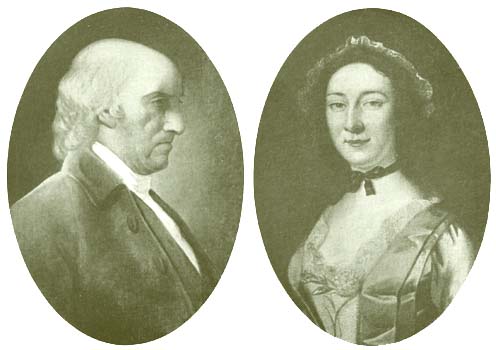
In the spring of 1775, it was no longer doubtful that a resort must be had to arms. Indeed, the battle of Lexington had opened the war; Shortly after which the New York convention of deputies were assembled to appoint delegates to the general congress. Men of a zealous, bold, and independent stamp, appeared now to be required. It was not singular, therefore, that Mr. Morris should have been elected.
On the 15th of May, he took his seat in that body, and eminently contributed, by his indefatigable zeal, to promote the interests of the country. He was placed on a committee of which Washington was the chairman, to devise ways and means to supply the colonies with ammunition and military stores, of which they were nearly destitute. The labors of this committee were exceedingly arduous.
During this session of congress, Mr. Morris was appointed to this delicate and difficult task of detaching the western Indians from a coalition with the British government, and securing their cooperation with the American colonies. Soon after his appointment to this duty, he repaired to Pittsburgh, in which place, and the vicinity, he continued for some time zealously engaged in accomplishing the object of his mission. In the beginning of the year 1776, he resumed his seat in congress, and was a member of several committees, which were appointed to purchase muskets and bayonets, and to encourage the manufacture of salt-peter and gunpowder.
During the winter of 1775 and 1776, the subject of a Declaration of Independence began to occupy the thoughts of many in all parts of the country. Such a declaration seemed manifestly desirable to the leading patriots of the day, but an unwillingness prevailed extensively in the country, to destroy all connection with Great Britain. In none of the colonies was this unwillingness more apparent than in New York.
But, notwithstanding this prevalent aversion to a separation from Great Britain, there were many in the colony who believed that a declaration of independence was not only a point of political expediency, but a matter of paramount duty. Of this latter class, Mr. Morris was one; and, in giving his vote for that declaration, he exhibited a patriotism and disinterestedness which few had it in their power to display. He was at this time in possession of an extensive domain, within a few miles of the city of New York. A British army had already landed from their ships, which lay within cannon shot of the dwelling of his family. A signature to the Declaration of Independence would insure the devastation of the former, and the destruction of the latter. But, upon the ruin of his individual property, he could look with comparative indifference, while he knew that his honor was untarnished, and the interests of his country were safe. He voted, therefore, for a separation from the mother country, in the spirit of a man of honor, and of enlarged benevolence.
It happened as was anticipated. The hostile army soon spread desolation over the beautiful and fertile manor of Morrisania. His tract of woodland of more than a thousand acres in extent, and, from its proximity to the city, of incalculable value, was destroyed; his house was greatly injured; his fences ruined; his stock driven away; and his family obliged to live in a state of exile. Few men during the revolution were called to make greater sacrifices than Mr. Morris; none made them more cheerfully. It made some amends for his losses and sacrifices, that the colony of New York, which had been backward in agreeing to a Declaration of Independence, unanimously concurred in that measure by her convention, when it was learned that congress had taken that step.
“Historian” Jon Meacham on Morning Joe: “There’s a very good case to be made, I think, that we were really founded in 1965. That’s when a multiracial, multiethnic democracy came more fully into being with the Immigration and Nationality Act, with the Voting Rights Act. And so we’re really about 60 years old.”
CLICK & SHARE THE HISTORICALLY ACCURATE ITEM BELOW AND YOU WILL UNDERSTAND WHY SO MANY “AMERICANS” (I use that term very loosely) ARE TERRIFIED TO STAND UP AND BE COUNTED! Quarter-millennium trivium: The Second Continental Congress approved the Declaration of Independence on July 4, 1776, but the parchment wasn’t signed until four weeks later, on August 2, 1776. Words matter. Of the 56 signatories, before the war was over, five were captured, 12 had their homes destroyed, and 17 lost their entire fortunes. None ever renounced his signature.
Today we have Benedict Arnolds selling out our country like Bill Clinton and Mitch McConnell etc.
Former U.S. Transportation Secretary Elaine Chao Jets to Beijing to Meet Top CCP Official Just 3 Days After Mitch McConnell’s Cardiac Arrest Hospitalization – China Ties Under Fire Again
https://www.thegatewaypundit.com/2026/07/former-u-s-transportation-secretary-elaine-chao-jets/
While McConnell fought for his life in a hospital bed, his wife was in Beijing schmoozing with the Chinese Communist Party.