Free Republic
Browse · Search
General/Chat
Topics · Post Article

To: Paladin2
The drag coefficient (Cd) of the first-generation Ford Taurus (introduced for the 1986 model year) was 0.32! This made it one of the most aerodynamic mass-market American cars of its time, a significant improvement over the typical ~0.45 Cd of many 1980s U.S. vehicles. The sleek "jellybean" design, flush headlights/grille, and other aero features (like the smooth profile and optimized body shape) contributed to this figure.

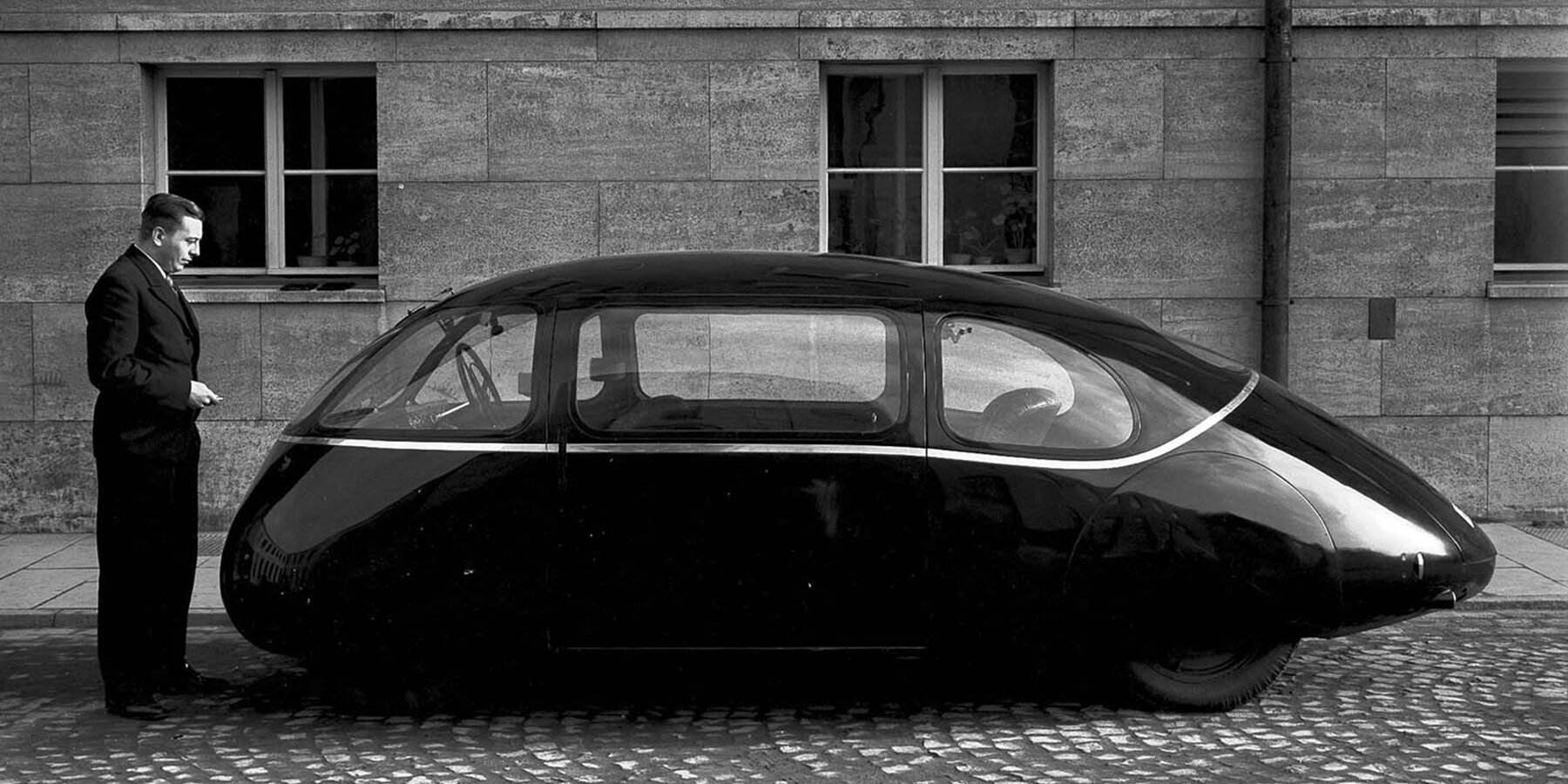
Then there was the 1930s (yes, 1930s) German Schlörwagen (also known as the "Pillbug" or "wing on wheels"). A 1939 German prototype had the lowest drag coefficient of any car from the 1930s at approximately 0.186 (full-size motorized version; scale models tested as low as 0.113–0.15).

The teardrop-shaped, highly streamlined design—built on a Mercedes-Benz 170H chassis with an aluminum body—represented the pinnacle of 1930s aerodynamic research. It was developed by engineer Karl Schlör at the Aerodynamische Versuchsanstalt (AVA) in Göttingen, drawing heavily from aircraft and airship principles. It could seat up to seven people yet achieved efficiency comparable to (or better than) many modern production cars like the Volkswagen XL1.
68 posted on 04/23/2026 7:52:01 PM PDT by ProtectOurFreedom ( )
[ Post Reply | Private Reply | To 66 | View Replies ]


To: ProtectOurFreedom

The egg shape made cars ugly, boring and stupid looking all to gain 1 MPG. Yuk.


73 posted on 04/24/2026 4:27:34 AM PDT by central_va (XI won't be reconstructed and I do not give a damn)
[ Post Reply | Private Reply | To 68 | View Replies ]

Free Republic
Browse · Search
General/Chat
Topics · Post Article


FreeRepublic, LLC, PO BOX 9771, FRESNO, CA 93794
FreeRepublic.com is powered by software copyright 2000-2008 John Robinson