
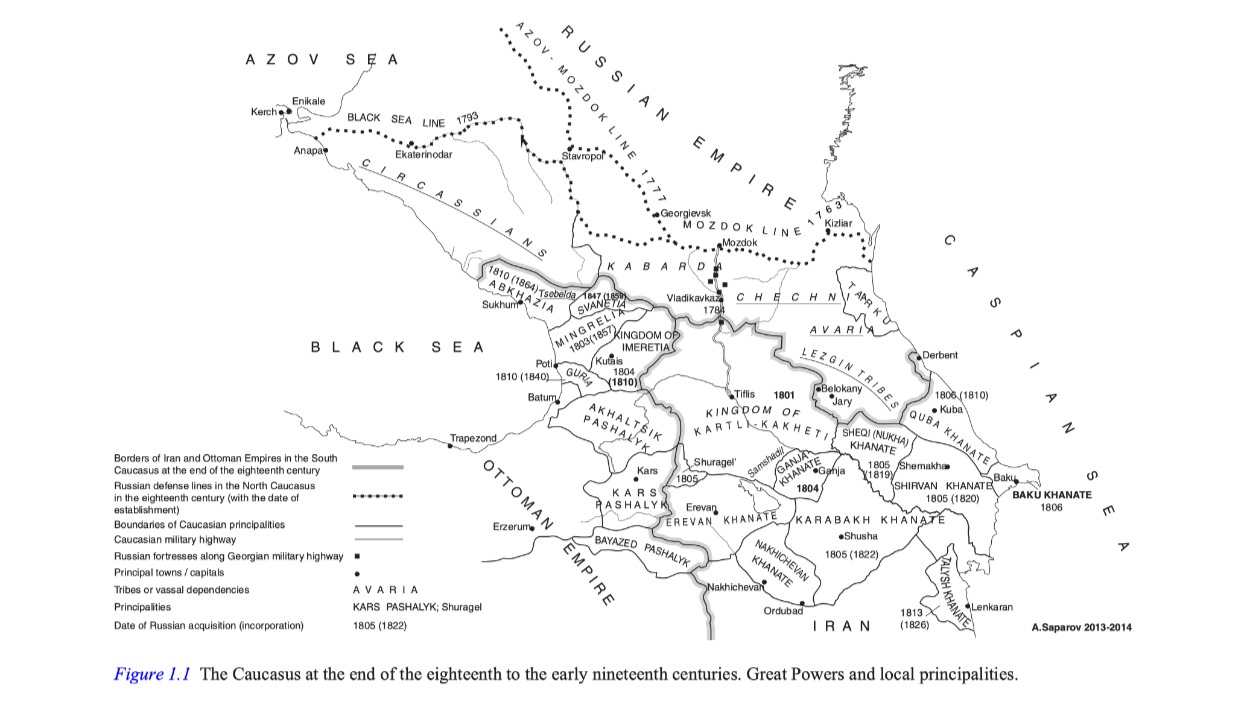
Abkhazia was a principality headed by the house of Chachba, or Shervashidze. There were also numerous nobility of various degrees in Abkhazia. The most powerful noble clans were only in nominal dependence on the supreme ruler of the country.
It is believed that from about 1578 the Abkhazian principality was a vassal of the Ottoman Empire, but this dependence was not strong and permanent. So, in 1806, Prince Keleshbey Chachba-Shervashidze broke off relations with Turkey and established ties with the Russian military command in the Caucasus, although he was in no hurry to become a Russian citizen. In such a situation, in 1808, the Abkhaz ruler was killed under unclear circumstances. Keleshbey's successor was his eldest son Aslanbey, an opponent of rapprochement with Russia.
In July 1810, a Russian squadron fired at the Sukhum fortress and landed troops, which captured the city in battle. Aslanbey fled to the Sadz, an Abkhazian tribe that lived between the Bzyb and Sochi rivers. The Russians proclaimed the ruler of Abkhazia his younger brother George, who took over the Russian protectorate.
As part of the Russian Empire, the Abkhazian principality – where Georgy Chachba-Shervashidze ruled, and then successively his sons, Dmitry and Mikhail – occupied a much smaller territory than in the previous period. The mountain cantons of Abkhazia - Tsabal, Dal, Pskhu and others, did not accept the supreme patronage of Russia and refused to obey the ruler - the Russian protege.