Skip to comments.
26 Everyday Objects From the ’80s You Totally Forgot About
UltimateClassicRock. ^
| Stephen Lenz
Posted on 03/06/2026 5:45:07 PM PST by nickcarraway
After our look at the forgotten everyday items of the 1970s — remember the rabbit ears, the pull tabs, and other "You did what with what?" things that would confuse the heck out of Gen Zers today — it only felt right that would keep the time machine grooving and Jazzercize ourselves into the 1980s.
After our look at the forgotten everyday items of the 1970s — remember the rabbit ears, the pull tabs, and other "You did what with what?" things that would confuse the heck out of Gen Zers today — it only felt right that would keep the time machine grooving and Jazzercize ourselves into the 1980s.
The 1980s: Still Analog, Suddenly Flashy
If the '70s were the era of brown-and-amber practical stuff, the '80s were the decade that decided everyday should be louder and preferably with a really good beat. Things generally were still analog enough that you rewound tapes and lived by the landline (can you imagine?), but really shiny enough to feel like the future had officially arrived.
In our “Everyday Life in the 1980s” gallery, we zoomed out to the real-life scenes -- malls, arcades, parking lots full of sedans, and breaking away from the stereo with the Walkman. Now we're zooming in on all the stuff: the objects that sat on kitchen counters, hung on the wall, lived in backpacks, and cluttered up living rooms in the coziest, most nostalgic way.
HF60 SONY CASSETTE
Was there a better cassette for a mix tape? No. (Bruno Guerrero/Unsplash)
While the ’80s might be most defined by the music and movies, they were also very much a “things” decade. More plastic. More gadgets. Way more buttons. There was more to collect, clip, stack, swap, and show off. And while all of it seemed totally normal at the time, today it all feels like a perfectly preserved time capsule from a louder, brighter, button-filled decade.
From kitchen gadgets to clunky electronics and classroom staples, the 1980s were packed with unforgettable everyday objects. Scroll through and see how many of these totally normal ’80s staples you remember. Gallery Credit: Stephen Lenz
ColecoVision
The ColecoVision entered a very competitive early-’80s gaming race, running up against systems like Atari and Intellivision. If this was the console your parents chose, you might have felt a mix of pride and mild jealousy, depending on what your friends had. But with its arcade-style graphics and Donkey Kong front and center, it definitely held its own.
Phone Answering Machine With Mini Cassette
Before voicemail was built into the actual phone service, you had to go home to listen to your messages. Waiting to hear about that job? You had to physically walk through the door and press play. And those machines ran on their own adorable mini cassettes.
A VHS Rewinder
“Big VHS” had us convinced that if we used our own VCR to rewind a tape before returning it to Blockbuster, the machine would overheat, melt into a puddle of plastic, and ruin our lives.
Was it actually true? Who knows. We weren’t about to risk it.
Disposable McDonald's Aluminum Ashtrays
For today's McDonald's customers, it might be hard to imagine that the fast-food restaurant we all remember was once filled with a haze of cigarette smoke. This relic of the past was as emblematic of the '80s as the heavy glass brown ashtrays at McDonald's were of the '70s. They somehow always made their way to the backyard picnic table.
Merlin
While Simon seemed to get all the attention, Merlin was the true favorite for us quiet, solitary, nerdy kids.
Swatches
Did you switch to Swatch? These watches were all about making a fashion statement and coordinating with your outfits, not so much about getting to appointments on time. Surprisingly low-key for their era, but those vibrant colors and endless designs were awesomely chic. Like plastic shoes for your wrists!
Intellivison Home Gaming System
As the name suggests, Mattel’s entry into the home gaming business positioned itself as the more “intelligent” system (hence the name) and even enlisted the well-spoken George Plimpton as its spokesman. It boasted 16-bit graphics — the highest of them all at the time — but a more limited game library meant you weren’t necessarily the neighborhood superstar if this was the console in your living room.
A Wall-Mounted Bottle Opener
Ask any ’80s kid and they’ll go on and on about how soda tasted better from glass bottles — because that was 100% true. And with so many things coming in glass back then, why wouldn’t you have a wall-mounted bottle opener attached in the most convenient spot near the fridge?
Wacky Packages
Nothing was funnier than these popular product parody trading cards from the '70s and well into the '80s. If you were a Mad Magazine kid, you had an album of these. Don't miss our list of some that you might find surprising: You Won’t Believe These 10 Wacky Packages Cards From the ’70s
Coleco Electronic Quarterback
With no actual graphics to speak of, this very primitive hand-held sports game was launched in the late 1970s, and was popular well into the '80s. The game basically consisted of moving red lines. EXCITING! Watch closely in the original Tron movie, and you'll see it featured in a scene.
McDonald's Styrofoam Containers
Smoking at McDonald's is a thing of the past, and so are these shunned styrofoam containers. Replaced with paper versions in 1990, the fast food giant still held on to their styro drink cups for a bit longer. The transition made national news.
The Commodore 64
While the Commodore VIC-20 may have felt like it leaned more toward homework, the Commodore 64 was where things got seriously fun. With games like Summer Games (based on the iconic 1984 Olympics in Los Angeles), it turned your desk into a mini arcade — even if you were technically supposed to be typing up an English paper.
The Wall-Mounted Kitchen Touch Tone Phone in Many Colors
Hard to imagine being tied to a landline — let alone one in the kitchen with your parents standing right there — while you whispered to Stacey about how dreamy Carl from Trigonometry was. But that was life in the 1980s.
Apple Macintosh Plus With Carrying Bag
The Macintosh Plus made personal computing feel portable — or at least as portable as 17 pounds of discolored beige plastic could be. If your family had one, it felt like you were living in the future. If your family had one, you probably own major Apple stock and have three yachts.
Phone Books
Pre-internet, you needed a phone book to find a local plumber — or even the number for someone in town if you hadn’t memorized it. Because here’s the crazy thing: back then, you actually memorized phone numbers. That feels almost impossible to imagine today. (They were also used as booster seats in a pinch.)
Metal Ice Cube Trays With Release Lever
Like little guillotines for ice, your fingers would stick to them if you didn’t give them time to sit. It was always a struggle, and the success rate was maybe 60%, but the sound of the ice releasing with that hard swing of the lever? That’s a core ’80s sonic memory.
Fanny Packs
If you are Gen Z and reading this, you might not even realize that those popular hip bags were a fad before, but nothing beat a fanny pack to keep your beeper and fake ID safely tucked away.
Fisher-Price Playsets
These popular playsets were the must-have toys for kids in the '80s and are now hot sellers on the collectibles circuit. Most doubled as carrying cases for the accessories, including Fisher-Price Little People and vehicles, complete with a fold-away handle.
Fisher-Price fan? Check this out: Iconic Fisher-Price Toys From the ’70s and ’80s We Loved
Electric Typewriters
Remember the good old days when a typo meant you got to practice your white-out skills? Not as clunky as the ol' manual, these beasts were a little less noisy and made you feel like you were writing a crime report in an episode Scratch 'n Sniff Stickers
It was the '80s, and if your thumb didn't smell like skunk or dill pickle, were you even cool? Turns out Trend's scratch 'n sniff stickers are still around! Grab some nostalgic scents by visiting their website.
This Boombox
It was quite the scene when a breakdancing session broke out next to the math classroom. Boomboxes blared, creating and playing your favorite mixtapes, proudly perched on shoulders or hoisted triumphantly in the air—just like John Cusack famously did in Say Anything.
The Tandy 2000 Personal Computer
Believe it or not, Radio Shack used to sell computers, though I don't remember anyone actually owning one. They were powerful but notoriously incompatible with anything else — a quintessential '80s characteristic. Despite that, imagine The Incredible Hulk, a.k.a. David Banner (Bill Bixby), endorsing them. Awesome!
Sony Walkman
The Sony Walkman, particularly the yellow, somewhat weatherproof sport edition, was the ultimate accessory when you were rollerblading or Jazzercizing.
Polaroid Cameras
The '70s were all about taking a photo and then waiting what seemed like forever to see the results. The '80s changed everything: you took a photo, shook it for no reason at all, and watched the magic happen. Instant memories, with a spot underneath to write witty captions.
Atari
The pixelated graphics may seem almost 'cute' by today's standards, but the Atari brought arcade adventures right to your living room. Who needs a smoky dive bar for pinball when you can play a basic video game version at home, complete with major joystick blisters? Sit Ubu Sit End Title Sit Ubu Sit End Title UBU Productions
The 'Sit Ubu Sit' TV End Title Not so much an object but really a core memory, the "Sit Ubu Sit" production end card appeared after popular sitcoms produced by Gary David Goldberg, including Family Ties. Ubu was Goldberg's dog, which died in 1978. To this day I hear this and think, "Darn, bedtime."
LOOK: Can You Recognize These Iconic '70s Objects Step back into the 1970s and explore the everyday objects that defined daily life — and might leave younger generations scratching their heads. Gallery Credit: Stephen Lenz
A Waterbed
Kids today might think waterbeds are an urban myth, but they 100% existed. Why sleep on springs when you could sleep on a giant bag of water? Sure, there was always the risk of getting wedged between the padded pleather rails and the mattress itself, and moving one practically required a plumbing degree. If your house couldn’t handle what felt like 65 tons of weight, well… good luck. Needless to say, they were cool as heck.
A Cash Register
There once was a time when store cashiers had to press actual buttons on a big mechanical register, punch in every price by hand, and make change in their heads. No barcode scanners. No touchscreens. No friendly little beep doing the math for you. Just clacking keys, a very aggressive ringing drawer that could knock you on the floor, and a cashier who knew their times tables cold.
Rabbit Ear Antennas & TV Test Patterns
Before cable gave us more than three channels, before streaming whatever the heck we wanted, before asking the TV to “skip the intro” (seriously, what can’t we do now?), there were rabbit ear antennas perched on top of the set like little alien antennae trying to contact another planet. Yes, you had to actually tune your TV like a radio. You’d twist the dial slowly and adjust the rabbit ears just right — and sometimes, if the picture was snowy enough, you just pretended the show took place during a blizzard. Commitment.
And let’s not forget the TV test pattern. When programming ended — yes, stations used to actually stop airing shows at midnight — your screen would switch to color bars and a steady tone. If you happened to be experimenting with anything psychedelic at the time, it may have been the most fascinating “show” on television.
A TV 'Clicker'
You’ve probably heard someone say, “Pass me the clicker.” That phrase stuck around, just like we still say we’re “hanging up” the phone — even though nothing actually hangs anymore. The reason? Early TV remotes really did click.
The Zenith Space Command “clicker” used ultrasonic sound to change the channel. When you pressed a button, it made an actual mechanical clicking noise that triggered the TV to switch stations. And here’s the wild part: it didn’t even require batteries. Read more on the Zenith clicker here: Why Are TV Remotes Sometimes Referred to as ‘the Clicker’?
A Corded TV Remote
So, picture this: back in the day, before fancy-schmancy remotes ruled the living room, there was the OG remote — your little brother. But then came this bad boy, the real deal. And let me tell you, it was anything but "remote." Nope, this sucker needed to be plugged into the wall and the TV set, with a cord practically begging to be tripped over at least twice a day by every member of the family.
TV Antenna Rotor Control ("the Rotor") and TV Antenna
Before cable, you actually had to tune your stations. And if you didn’t have rabbit ears on top of the TV, you probably had a full-on antenna tower next to your house — the same one kids inevitably climbed to retrieve rogue baseballs and Frisbees from the roof.
How did you move that giant antenna to tune in a station? With a fancy rotor control box that you dialed from the safety of your living room. And for those of you who really want to cut the proverbial cord (or add more cords, actually), you can still find them on eBay, like this example from klocks*vintage.
A Juke Box
One look at this photo and you’re probably humming the theme from Happy Days. There was a time when the music in restaurants — especially diners — wasn’t curated by an algorithm but by the customers themselves. Drop a nickel in, punch a few buttons, and suddenly the whole place was listening to your pick. It was basically crowd-sourced music decades before we had a name for it.
Pull Tabs From Soda and Beer Cans
Before soda cans had the little tabs that push in (which, if you think about it too long, is its own thing), they were completely pulled off. You’d hook your finger in the ring, pop the top, and the entire tab came free, which meant pull tabs were everywhere. Parking lots. Beaches. The bottom of every junk drawer.
Some kids turned them into surprisingly elaborate jewelry projects. Others just flicked them onto the ground without a second thought. Eventually, someone decided maybe having sharp metal pieces scattered across America wasn’t ideal, and the “stay-on” tab was born.
But for a while there, cracking open a soda meant physically removing part of the can — and hoping you didn’t slice your finger in the process.
A Mood Ring
Still a total mystery to most of us who lived in a ’70s haze, mood rings were supposed to change color based on your mood. They were marketed as a way to tell you what mood you were really in — as opposed to how you actually felt, which was… odd. One minute you thought you were fine, the ring said “anxious,” and suddenly you were questioning everything. Like the doll bottle where the milk magically disappeared or Mexican jumping beans that moved for no clear reason, the secret behind mood rings was probably better left unexplained. And honestly? That was part of the fun.
Mexican Jumping Beans
You might be surprised to hear that these pocket-sized mysteries are still around — but they are. How PETA hasn’t shut these down is also a mystery, because the reason they “jump” is that there’s actually the larva of a small moth inside, wriggling around and slowly eating the bean it’s encased in. I know. WHAT?!
Cigarette Dispensing Machine
Let’s be real — in the 1970s, smoking was everywhere. In the car. On airplanes. In restaurants. Even in designated “smoking areas” at high schools. It wasn’t unusual; it was just life.
And where did people buy their cigarettes? Sometimes with zero interaction at all. Cigarette vending machines were tucked into restaurants, bowling alleys, and bars. You’d drop in some coins, pull a knob, and out came a fresh pack — no questions, no cashier, no raised eyebrows.
It’s hard to imagine today, but for a while there, buying cigarettes could be as simple as grabbing a soda.
\ 8-Track Tapes
Ah, the 8-track tape — a bulkier, older sibling to the beloved cassette tape. Its claim to fame? The ability to play in a continuous loop without needing to be ejected. But here's the kicker: I distinctly remember our 8-track player being exclusively in the car, which meant if we wanted to jam out to those albums that we only had on 8-track, we had to cozy up in the Honda Civic.
Transistor Radios
Back in the ’70s, portable music meant a transistor radio clipped to your belt and a single earbud delivering all the sound, which, to most of us today, would probably make us feel like we were walking on a slant.
Kodak Flash Cubes
Disposable camera flashbulbs? You bet. These tiny, let's be real, explosives gave your photo subject seriously creepy red eyes and pretty much temporarily blinded them. Spinning automatically after each photo was taken, the "snapping" sound became synonymous with '70s photography.
Car Cigarette Lighter
Nowadays, the idea of having to manually roll up a car window seems like a relic from a bygone era, let alone considering a cigarette lighter as the pinnacle of convenience in vehicles. And if that doesn't boggle your mind enough, think about this: it wasn't uncommon for kids to be left alone in the car for long stretches of time. And what did they do with that freedom? Well, sometimes they'd get a little too creative—like accidentally melting GI Joe's foot moments after Mom stepped out to grab some pork chops from the butcher.
45 RPM Record Adapter
Can you believe it? Back in the day, 45 RPM records were all the rage—just one small disc with a single song on each side. But to play them properly, you'd need one of these inserts to prevent the record from sounding all wonky, especially since you had to crank up the speed. Naturally, these inserts had a knack for disappearing, often ending up in the depths of your Barrel of Monkeys barrel.
Metal Adjustable Roller Skates With Key
If you were going to patrol your dead-end street with your pals, it was best done on roller skates, and not the fancy shoe or even boot kind like Olivia Newton-John wore in Xanadu, we're talking the heavy metal contraptions that attached to your sneakers. They required a skate key to keep them nice and tight—and a tin of band-aids because you got roughed up pretty bad.
Nut Cracker and Nut Pick Set
Tucked away in pristine packaging, untouched for eons, were those nut pick and cracker sets, gathering dust until the rare occasion when company came knocking. Sure, they were meant for cracking open walnuts with precision, but in reality, they were more like relics from a bygone era.
Nobody dared to use those sharp dental tools as intended—oh no. But leave it to your maniac cousin to grab one and carve his name into the picnic table instead.
Drive-In Theater Speaker
Back in the day, before you could tune in to a tinny radio station on your car's stereo at the drive-in, your only option to catch the actual movie audio was to park close enough to one of those metal speakers you'd hang on your car window. But let's be real, you were more interested in chowing down on snack shop treats and having a blast on the swings than worrying about the sound quality.
5 Line Chalk Holder
Sure, these handy chalkboard tools weren't exclusive to the '70s, but they sure made life easier for teachers trying to draw straight lines on those rough Monday mornings. And if you were a band geek, well, seeing these meant one thing: music theory time. Before you knew it, you'd be Do-Re-Mi-ing your way through class in no time.
Credit Card Imprinter
Can you imagine? In the good ol' days, you'd hand over your credit card to the clerk, who would then use this strange contraption to make an imprint of it. The sound? Well, let's just say it was unforgettable, kind of like a guillotine dropping. Probably similar to how your parents felt every time you needed new school supplies.
View-Master Reels
You can still find them today, albeit as nostalgic classics on the shelves of Target: View-Masters, the go-to entertainment in '70s households with just one TV. Today kids might hang out with their own tablet, but we huddled in our dimly lit bedrooms, flipping through the same stills from Disney cartoons on our View-Masters, over and over again, with only the desk lamp for company. And we loved it.
The Mysterious White Dot in a Black & White TV Set
Once the family got a fancy color TV, those old black and white sets found themselves relegated to the kids' rooms or the basement rec room. But the real hassle? Waiting for them to warm up.
But here's where it gets really strange: when you switched them off, there was this eerie moment where everything faded to black, except for this tiny white dot smack dab in the middle of the screen. Someone once told us it was the moon, so I'd press my face right up against the screen, staring at it until it vanished. And you know what? To this day, I still believe it.
TOPICS: Chit/Chat; History; Hobbies
KEYWORDS: 80s; technology; toys
Navigation: use the links below to view more comments.
first previous 1-20 ... 61-80, 81-100, 101-120, 121-139 next last
To: Tijeras_Slim
Its pretty amazing how fast comouters have progressed. Wish i had done thungs different like not feeling driven tk get the “latest and greatest” and learndd tk buy used instead. Woulda saved many many thousands of dollars had we done so. Im looking at a dell 11’th gen on ebay for $200 eh8ch is way fsster thsn anything i had bought previously (thiuhg not as fast or powerful as my diy desktop, which i was able to bui,d for $1300. Bu5 even that is too much ax i felt driven to get latest parts, but was abke to compromise a bit this time lol)
81
posted on
03/06/2026 9:46:19 PM PST
by
Bob434
(NYWAYS)
To: nickcarraway
Cameras that used photographic film.
82
posted on
03/06/2026 9:59:58 PM PST
by
Nachoman
(Proudly oppressing people of color since 1957.)
To: Bob434
I’m just guessing, but,
I think you are posting from your cell phone.
83
posted on
03/06/2026 10:11:51 PM PST
by
Repeal The 17th
( I am obsessed with not being obsessed with anything.)
To: Bob434
I’m just guessing, but,
I think you are posting from your cell phone.
84
posted on
03/06/2026 10:12:57 PM PST
by
Repeal The 17th
( I am obsessed with not being obsessed with anything.)
To: FamiliarFace
The 80s list stopped after the Atari. Everything after that was in the 70s list that followed.
-PJ
85
posted on
03/06/2026 10:16:48 PM PST
by
Political Junkie Too
( * LAAP = Left-wing Activist Agitprop Press (formerly known as the MSM))
To: Chickensoup; GaltAdonis; nickcarraway
does anyone remember calling it the Trash 80? Remember it well. My chiropractor had his whole medical records using it.
But one of my fellow research scientists used a TI-99/4A with a cassette tape recorder for programming and data storage, and set up a small side business selling them. They were first marketed in the late '70s, IIRC.
But it was in the early 1980s that the IBM Personal Computer hit the market (8086 CPU/DOS), one which I could not afford at $5,000. Only the Research Director was allowed that expenditure for his ow use (really for status and bragging, he never leared how except to flick the on/off switch0.
Another research pal's sons got a job selling Osborne-1 Portable PCs (2 5-inch floppy drives for programmind and storage, 4-bit CPU, CP/M operating system, carry and stow it under your airline seat) at $2,000 (had to get an unsecured loan over 2 years to buy it) which I hoped I could use to speed up calculations and promote my value.
While finishing my doctorate in 1972 I was tied to an RTTY input (much better than punch card decks) for the Xerox Sigma 5 batch jobs using Fortran IV language. ,p> But in the pressures of the research with innovated marketed products, I was just too tired to learn CPM. Paid for the Osborne, never able to create and run the simplest programs. Research reports and publishable papers still put in print by personal secretary/typists.
Did learn and use to the uttermost my HP Portable Plus and LaserJet printer for everything.
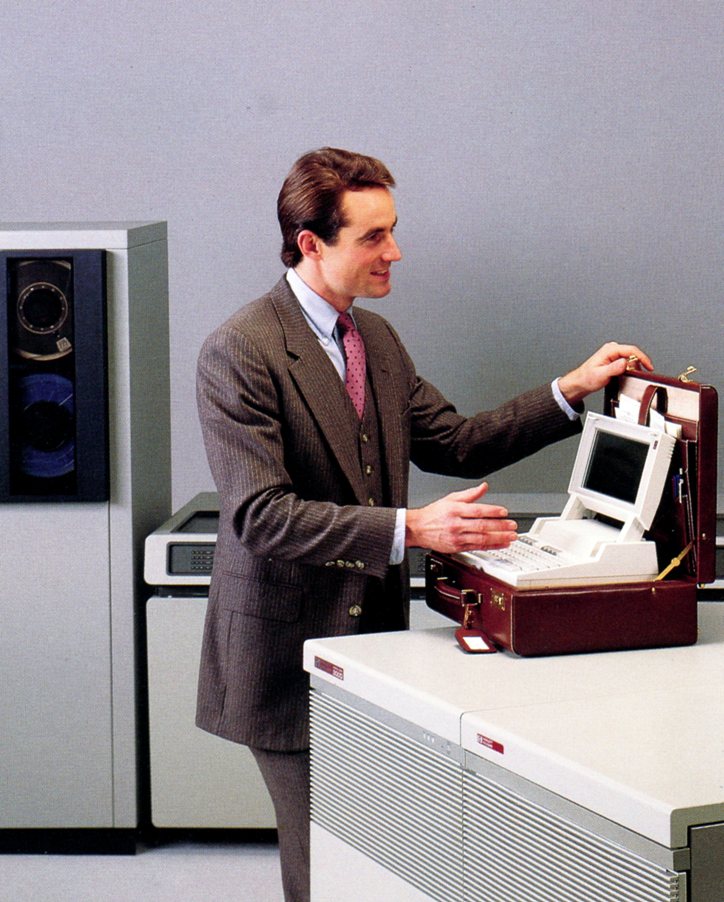
By 1993, when I retired, most of these typists were gone, and you had to write and print your own letters, reports, and papers.
And we were in the last stages of using Kodak carrousel-fed 35mm slide projectors for trade conference presentations, or overheaf projectors with transparent-copied off-the-cuff internal presentations.
All those are gone, as are the cigarette machines and quarte-a-cup coffee dispensers.
Ah, well, retired too early. r too late, don't know which. Just checked eBay, and if I still had the Osborne, it would still be worth $500 to a collector (about $5 in 1982 dollars).
86
posted on
03/06/2026 11:04:53 PM PST
by
imardmd1
(To learn is to live; the joy of living: to teach. Fiat Lux! Tis)
To: nickcarraway
BRING BACK LAWN DARTS, damnit!
87
posted on
03/06/2026 11:51:04 PM PST
by
Organic Panic
('Was I molested. I think so' - Ashley Biden in response to her father joining her in the shower)
To: GaltAdonis
The Z-80 was quite a workhorse. I worked for an employer who saw no need to have an assembler because Pro-Log Corporation advocated hand assembly and then keying in HEX to the PROM programmer. Egad! I wrote a Z-80 assembler that ran on a Computer Automation LSI-2 and later LSI-4 minicomputers. They bitched until they saw how much money that saved.
I did a lot of embedded work with Z-80s. My favorite was the 68000.
88
posted on
03/07/2026 1:34:15 AM PST
by
GingisK
To: Jamestown1630
...and the dimmer switches on the floor.
89
posted on
03/07/2026 1:36:48 AM PST
by
GingisK
To: Getready
...Slide rules took us to the moon... Not really. The heavy calculations were performed by UNIVAC 1108s, CDC 7600/8600, IBM 360/195, so on.
90
posted on
03/07/2026 1:38:58 AM PST
by
GingisK
To: FamiliarFace
In my area, they seem to be doing away with landlines, at least in apartment complexes.
91
posted on
03/07/2026 6:08:27 AM PST
by
Jamestown1630
("A Republic, if you can keep it.")
To: Jamestown1630
The house we bought, built in 2017, has no phone jacks in it. Makes me so mad!
92
posted on
03/07/2026 6:12:37 AM PST
by
MayflowerMadam
( "Trouble knocked at the door, but, hearing laughter, hurried away". - B. Franklin)
To: Jamestown1630
I think that’s what they did here when we moved. It would’ve been very expensive to get a landline put in. I wanted one, but hubby said let’s try out the voip. It works most of the time. We have cellular after that. These days, I don’t think a landline is worth the money. We rarely use our VOIP anymore, although we occasionally do. It’s good to have it as an option sometimes.
93
posted on
03/07/2026 6:13:58 AM PST
by
FamiliarFace
(I got my own way of livin' But everything gets done With a southern accent Where I come from. TPetty)
To: nickcarraway
Mark for later enjoyment....
94
posted on
03/07/2026 6:15:31 AM PST
by
zzeeman
("We can evade reality, but we cannot evade the consequences of evading reality." )
To: MayflowerMadam
Landlines always worked, even when the power went out.
95
posted on
03/07/2026 6:19:43 AM PST
by
Jamestown1630
("A Republic, if you can keep it.")
To: Jamestown1630
“Landlines always worked, even when the power went out.”
Sadly, that’s no longer the case. When we lost power, we retired on our landline to be able to communicate — call the electric company for one thing.
One day we lost power, I picked up the receiver ... dead. Grrrr!
Turns out AT&T had gone through the subdivision and replaced the wiring with fiber optic cable. The new system requires electric power. No more landline. That was between 2016 and 2023.
96
posted on
03/07/2026 6:32:46 AM PST
by
MayflowerMadam
( "Trouble knocked at the door, but, hearing laughter, hurried away". - B. Franklin)
To: MayflowerMadam
That’s sad.
We have VOIP now, along with cell phones. VOIP goes away when the power goes out...and to keep cell phones working during a prolonged outage, you need power banks.
I’m not sure this is really ‘progress’. We just seem to trade things off...
97
posted on
03/07/2026 6:39:54 AM PST
by
Jamestown1630
("A Republic, if you can keep it.")
To: Repeal The 17th
No. Ive been hired by the teacher’s guild of the world to increase brain synapses in folks to h3lp stzve off dementia, and 5he best wa y to do that is to write so that peoplexs brains have to wo4k a little when reading. Znd i do it all a5 no charge to the masses. Thats just how i roll
98
posted on
03/07/2026 6:43:18 AM PST
by
Bob434
(NYWAYS)
To: Jamestown1630
We have a generator for when the power goes out, so still have the juice for VOIP, but if the internet goes out with the power lines, the VOIP still isn’t functional until they get the internet lines fixed. Still, we do have power for the cell phones during power outages.
99
posted on
03/07/2026 7:14:16 AM PST
by
FamiliarFace
(I got my own way of livin' But everything gets done With a southern accent Where I come from. TPetty)
To: nickcarraway
I turned my small spare bedroom into a 1980’s retrogaming room. I put in a Sony CRT TV and via switchboxes I can connect an Atari 2600, 5200, or 7800, Intellivision, Colecovision, NES, or Sega Master System. The consoles are modded to output better video, ranging from composite to S-Video and even RGB component video in some cases.
Navigation: use the links below to view more comments.
first previous 1-20 ... 61-80, 81-100, 101-120, 121-139 next last
Disclaimer:
Opinions posted on Free Republic are those of the individual
posters and do not necessarily represent the opinion of Free Republic or its
management. All materials posted herein are protected by copyright law and the
exemption for fair use of copyrighted works.
FreeRepublic.com is powered by software copyright 2000-2008 John Robinson