FLT-bird:
"None of the families who lived there at the time that I am descended from owned so much as a single slave.
This was the norm throughout the Southern states at the time." And yet, the 1860 census didn't lie.
It shows Giles & Marshall County (South-central TN) slave populations around 35% of the total and cotton as the major cash crop.
This puts those counties well within the Deep South's King Cotton slavery culture and locked Giles & Marshall loyalties into the CSA.
Giles & Marshall contrast sharply with Eastern Tennessee, where slaves & slaveholders made up less than 10% of the population, and also contrast with nine other notable anti-CSA regions of the Confederacy, all with few to no slaves, including: 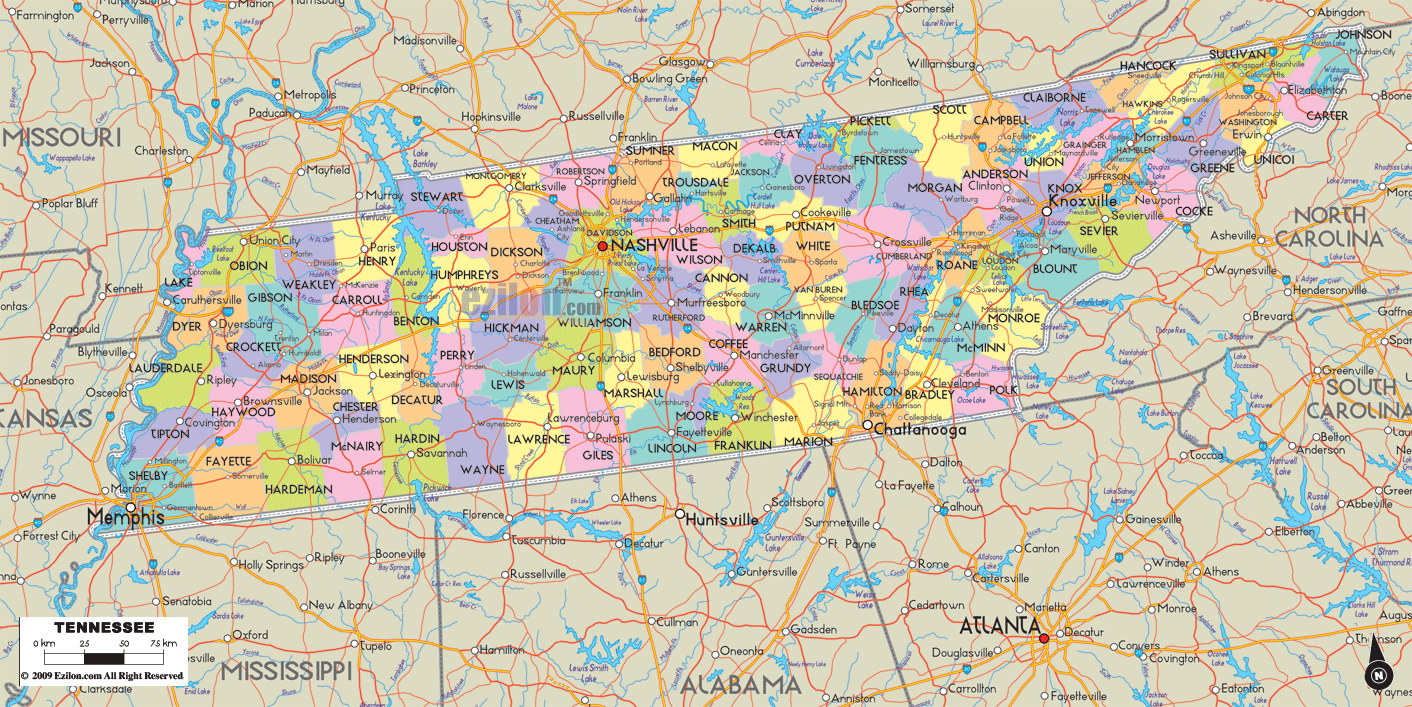
- Western Virginia
- Eastern Tennessee
- Western North Carolina
- Northern Georgia
- Northern Alabama
- Mississippi Free State of Jones, Piney Woods
- Arkansas Ozarks
- Southern Louisiana, including Cajun country
- Northern Texas and Texas Hill Country
FLT-bird:
"1. I would need to see where you are getting that 30% figure and
2. 87% of Tennesseans voted to secede." Two questions, two answers:
- This link shows the percentages of slave populations in Eastern (9%), Central (29%) and Western (34%) Tennessee, 1860.
It also shows overall Tennessee slave population as 25%.
Numerous studies support slaveholding family numbers, including: - Mooney (foundational)
- Tennessee Encyclopedia synthesis
- Edwards (explicit “families” language)
- Cimprich (East TN rarity & small scale)
- Owsley structural analysis
- Census Office spatial evidence
Any of these you can find with online inquiries, and are the basis for my % families owning slaves: 5%-8% East TN, 22%-28% Middle TN, 35%-45% West TN.
Bottom line: here are the numbers I found for Tennessee based on the 1860 census and secondary studies:
1860 Tennessee Population and Slaves by Region:
| Area | Free population
(approx.) | Estimated free
families | Enslaved
population | % enslaved of
total pop. | % of free families
owning slaves |
|---|
| East Tennessee | 245,000 | 47,000 | 28,000 | ~10% | ~5–8% |
| Middle Tennessee | 435,000 | 84,000 | 155,000 | ~26% | ~22–28% |
| West Tennessee | 195,000 | 37,500 | 92,000 | ~32% | ~35–45% |
| Tennessee (total) | 875,000 | 168,000 | 275,719 | 24.9% | ~25% |
| |
| Giles County (Middle TN) | 15,800 | 3,000 | 9,200 | ~37% | ~40–45% |
| Marshall County (Middle TN) | 11,400 | 2,200 | 6,100 | ~35% | ~38–43% |
As you can see, Giles & Marshall counties were in the heart of Tennessee's Cotton Belt and so achieved slave populations equal to or greater than those in even West Tennessee plantation counties.
- 87% of Tennesseans did not vote for secession on June 8, 1861.
The actual number was ~70%, and counties like Giles and Marshall did not change much -- they voted for a secession convention on February 9 by 75% and for secession on June 8 by over 90%.
That's because Giles & Marshall were solidly in the South-Central Tennessee Cotton-Belt slavery culture, so they voted with their Deep South Neighbors. Also, East Tennessee counties like Scott, Sevier and Carter remained at ~95% against secession, while West TN counties like Shelby (Memphis) remained solidly (over 97%) for secession.
So the Feb.-June flip from anti-secession to pro-secession came most dramatically in Northern Middle TN counties -- those counties north of Giles & Marshall -- counties like Sumner, Wilson, Davidson (Nashville) & Rutherford.
Those were less tied to the Deep South's Cotton economy than were Giles & Marshall.
FLT-bird:
"That was their culture.
It was the norm throughout the Southern states.
Most of the White population did not own slaves and most supported the CSA." Again, Giles & Marshall (South-central TN) counties were deeply embedded in the Deep South's Cotton & slave culture, with slave populations over 35% of the total and slaveholding families around 40%.
This means, if your ancestors did not themselves own slaves, then their neighbors, cousins and other relations certainly did.
That's why, unlike East TN (i.e., Knoxville) and North-central TN (i.e., Nashville), which voted against secession in February, Giles & Marshall voted overwhelmingly for secession in both February and June, 1861.
Giles and Marshall did not need the Battle of Fort Sumter to motivate them to join the Deep South's Confederacy because they were already part of it, economically and culturally.
FLT-bird: "Neely's estimate of 14,400 in the union is at the extreme low end of estimates. "
No, those 14,401 are identified and named individuals, not estimates.
From those you can extrapolate, calculate or estimate until the cows come home, but Neely's are names, not estimates.
The same is true of Neely's 4,108 Confederate civilians arrested by CSA authorities -- a number that is relatively equal to the Union arrests per capita but is based on far less systematic records available.
IOW, just as you can extrapolate, calculate & estimate Union numbers based on Neely's 14,401 named Union individuals, so you also extrapolate, calculate or estimate based on his 4,108 named Confederates.
And yet, the 1860 census didn't lie. It shows Giles & Marshall County (South-central TN) slave populations around 35% of the total and cotton as the major cash crop. This puts those counties well within the Deep South's King Cotton slavery culture and locked Giles & Marshall loyalties into the CSA. Giles & Marshall contrast sharply with Eastern Tennessee, where slaves & slaveholders made up less than 10% of the population, and also contrast with nine other notable anti-CSA regions of the Confederacy, all with few to no slaves, including:and yet the 1860 US Census shows not a single slave in the 3 families I'm descended from in that area. Also despite only 4.42% of the White population owning slaves in Tennessee, 87% of the population voted for secession. Obviously most non slave owners voted to secede..
This link shows the percentages of slave populations in Eastern (9%), Central (29%) and Western (34%) Tennessee, 1860. It also shows overall Tennessee slave population as 25%. Numerous studies support slaveholding family numbers, including: Mooney (foundational) Tennessee Encyclopedia synthesis Edwards (explicit “families” language) Cimprich (East TN rarity & small scale) Owsley structural analysis Census Office spatial evidence Any of these you can find with online inquiries, and are the basis for my % families owning slaves: 5%-8% East TN, 22%-28% Middle TN, 35%-45% West TN. Bottom line: here are the numbers I found for Tennessee based on the 1860 census and secondary studies: 1860 Tennessee Population and Slaves by Region: Area Free population (approx.) Estimated free families Enslaved population % enslaved of total pop. % of free families owning slaves East Tennessee 245,000 47,000 28,000 ~10% ~5–8% Middle Tennessee 435,000 84,000 155,000 ~26% ~22–28% West Tennessee 195,000 37,500 92,000 ~32% ~35–45% Tennessee (total) 875,000 168,000 275,719 24.9% ~25% Giles County (Middle TN) 15,800 3,000 9,200 ~37% ~40–45% Marshall County (Middle TN) 11,400 2,200 6,100 ~35% ~38–43% As you can see, Giles & Marshall counties were in the heart of Tennessee's Cotton Belt and so achieved slave populations equal to or greater than those in even West Tennessee plantation counties.
According to the 1860 US census, the percent of the White population in Tennessee which owned slaves was 4.42%. The rates were higher in central and eastern Tennessee but the overwhelming majority of White families in both regions did not own slaves. The culture was therefore one of not owning slaves.
87% of Tennesseans did not vote for secession on June 8, 1861. The actual number was ~70%, and counties like Giles and Marshall did not change much -- they voted for a secession convention on February 9 by 75% and for secession on June 8 by over 90%. That's because Giles & Marshall were solidly in the South-Central Tennessee Cotton-Belt slavery culture, so they voted with their Deep South Neighbors. Also, East Tennessee counties like Scott, Sevier and Carter remained at ~95% against secession, while West TN counties like Shelby (Memphis) remained solidly (over 97%) for secession.
The Entire states had a non slave owning culture since that represents the vast majority of families even in central and western Tennessee. The state voted not to secede until Lincoln chose to start a war to impose federal government rule on states that did not consent to it. Then Tennessee voted overwhelmingly in favor of secession..
So the Feb.-June flip from anti-secession to pro-secession came most dramatically in Northern Middle TN counties -- those counties north of Giles & Marshall -- counties like Sumner, Wilson, Davidson (Nashville) & Rutherford. Those were less tied to the Deep South's Cotton economy than were Giles & Marshall.
Obviously the cotton economy you claim existed in those areas was not enough to get the state to vote in favor of secession until Lincoln chose to start a war. Lincoln's war was clearly the issue they seceded over
FLT-bird: "That was their culture. It was the norm throughout the Southern states. Most of the White population did not own slaves and most supported the CSA." Again, Giles & Marshall (South-central TN) counties were deeply embedded in the Deep South's Cotton & slave culture, with slave populations over 35% of the total and slaveholding families around 40%.
Again most White families did not own slaves. Their culture was one of non slave ownership. Also my research shows that the rate of slave ownership in Marshall county was about 25%.
This means, if your ancestors did not themselves own slaves, then their neighbors, cousins and other relations certainly did.
They did not own any and most of their neighbors, cousins and other relations did not own any.....most of Giles and Marshall counties certainly did not own any.
That's why, unlike East TN (i.e., Knoxville) and North-central TN (i.e., Nashville), which voted against secession in February, Giles & Marshall voted overwhelmingly for secession in both February and June, 1861.
Davidson county....ie Nashville voted overwhelmingly for secession. 93.3%
Giles and Marshall did not need the Battle of Fort Sumter to motivate them to join the Deep South's Confederacy because they were already part of it, economically and culturally.
They supported the CSA in both. Their culture like most of the rest of the South was one of non slave ownership since the overwhelming majority of White Southerners did not own any slaves.
No, those 14,401 are identified and named individuals, not estimates. From those you can extrapolate, calculate or estimate until the cows come home, but Neely's are names, not estimates.
No. Neely's estimate is at the extreme low end. Records from the Provost Marshal's office in Washington D.C. indicate as many as 38,000 citizens were arrested and made prisoner without the benefit of the writ of habeas corpus.
IOW, just as you can extrapolate, calculate & estimate Union numbers based on Neely's 14,401 named Union individuals, so you also extrapolate, calculate or estimate based on his 4,108 named Confederates.
I already cited the source for the 38,000 figure.
https://www.abbevilleinstitute.org/lincolns-prisoners/