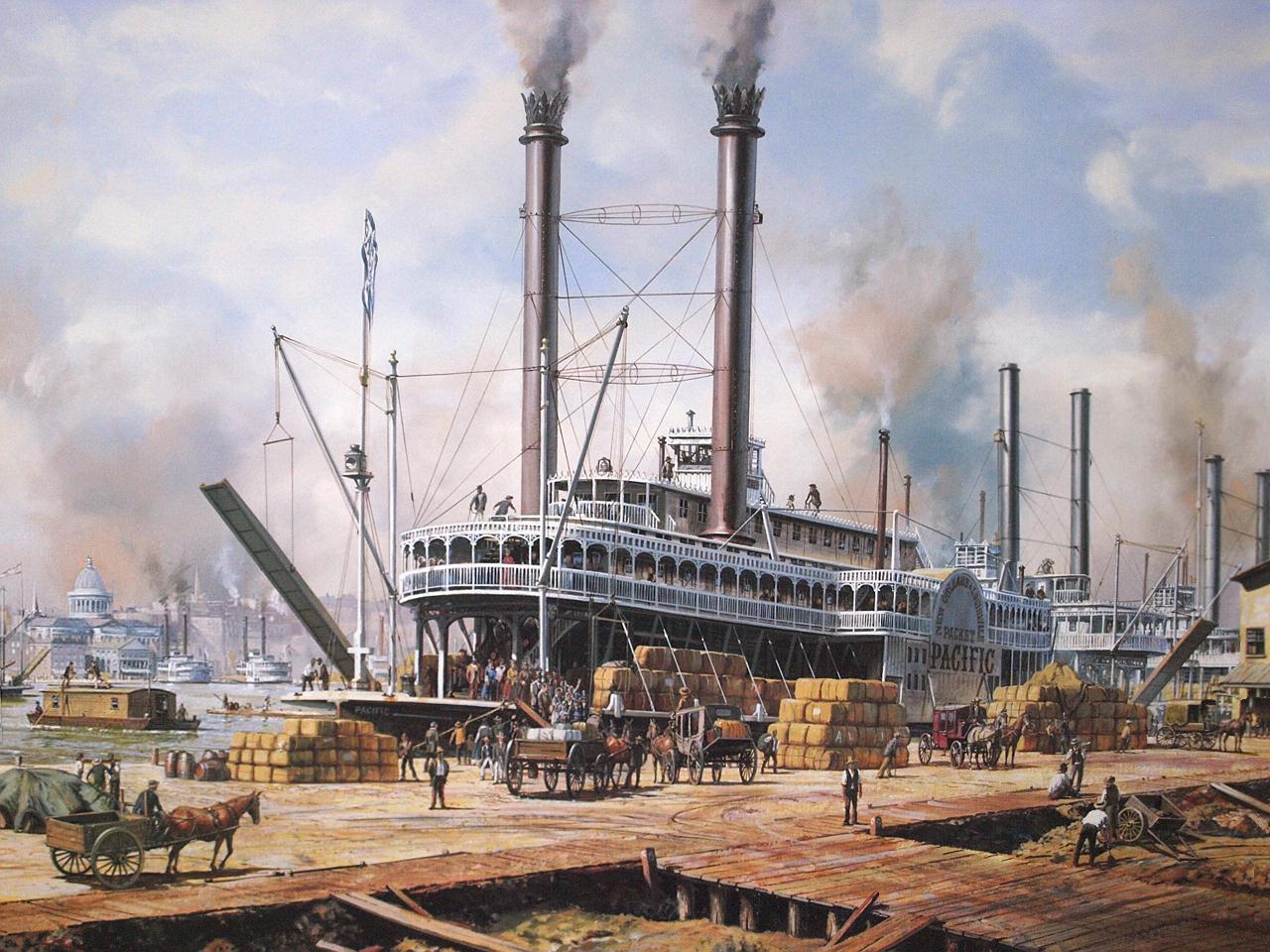
New Orleans c. 1860 Mississippi River steamboats:
 ClearCase_guy: "As I understand it, New Orleans was becoming a much bigger deal by 1860.
Steam ships running up and down the Mississippi.
Railroads moving east and west to connect to the river.
New Orleans sending more goods overseas.
New York faced the possibility of getting completely cut out of the deal.
The big money up North didn’t like that."
x: "In 1840, New Orleans was the 3rd largest city in the US, after NYC and Baltimore, and the 4th busiest port in the world, after London, Liverpool, and New York.
By 1860, though, things had begun to turn."
Right.
By 1860, New Orleans (169,000) had fallen to the fifth largest US city, after New York (1,080,000), Philadelphia (566,000), Baltimore (212,000) & Boston (178,000).
During the decades from 1830 to 1860, New Orleans population had grown at 4.4% per year (compounded), but New York City had grown at 5.4% and so was rapidly expanding its lead over New Orleans and other major US cities.
1860 US railroads:
In terms of Federal tariff revenues, New Orleans in 1860 paid twice more than every other Confederate city combined, but it was still only 4% of total Federal tariff revenues.
Further, tariffs collected in New Orleans were at least 50% on goods which would be transported by river steamboats or by railroads to Northern customers.
So, the total contribution of all Southern ports was around 4% of Federal tariff revenues.
That's why neither New Orleans nor any other Confederate city represented a serious threat to Union tariff revenues in 1860.