Skip to comments.
Finally, an honest Abe
New York Post ^
| Nov. 25, 2012
| Harold Holzer
Posted on 02/11/2026 10:47:43 AM PST by T Ruth
Director Steven Spielberg, whom I introduced last week [in 2012] at Gettysburg at ceremonies marking the 149th anniversary of Abraham Lincoln’s greatest speech, said he was deeply humbled to be delivering an address on that history-making spot.
***
… Daniel Day-Lewis gives the definitive portrayal of our time, perhaps ever, of Honest Abe.
For people like me, who have spent their lives studying Abraham Lincoln, the film is chilling — as if he’s really come to life.
Day-Lewis does it by avoiding the traps most Lincoln actors fall into, the stoic, “Hall of Presidents”-esque stereotype that probably most Americans imagine.
There are no moving pictures of Lincoln, no recordings of his voice. But after his death, everyone was Lincoln’s best friend, and there are descriptions of everything from his accent to his gait.
The most important thing is the voice. Far from having a stentorian, Gregory Peck-like bass, Lincoln’s was a high, piercing tenor. Those who attended his speeches even described it as shrill and unpleasant for the first 10 minutes, until he got warmed up (or his endless stories managed to cow them into submission).
***
Few great people are appreciated in their time. And it’s good to remember that, no matter how right the decisions seem now, they were hard-fought then.
“I wanted — impossibly — to bring Lincoln back from his sleep of one-and-a-half centuries,” Steven Spielberg said at Gettysburg, “even if only for two-and-one-half hours, and even if only in a cinematic dream.”
***
Harold Holzer is one of the country’s leading authorities on Abraham Lincoln. ...
[At the end of the article Holzer gives thumbnail reviews of all prior Lincoln films, ranking them from worst to best, which Holzer considers to be Spielberg’s.]
(Excerpt) Read more at nypost.com ...
TOPICS: Arts/Photography; History; TV/Movies
KEYWORDS: abrahamlincoln; danieldaylewis; greatestpresident; haroldholzer; lincoln; newyorkpost; spielberg; stevenspielberg
Navigation: use the links below to view more comments.
first previous 1-20 ... 81-100, 101-120, 121-140 ... 541-548 next last
To: x
In 1860, the public works needed to irrigate cotton production in Arizona and California were still two generations away. The technology needed to pump water out of the aquifers to irrigate cotton was also not available. Additionally, before the construction of the transcontinental railroads and the Panama Canal, the cost of shipping cotton from West Coast seaports to manufacturing facilities in the Northeast and Europe would make it less competitive than cotton from the Southeast.
Beyond agriculture, the Western states were more conducive to mining, ranching, and small scale farming. I don't think you can make a case that slavery would have worked in the West at that time.
To: DiogenesLamp; x; Ditto; rxh4n1; HandyDandy; jeffersondem
Sorry, for the delay in responding.
I'll see if I can make up for lost time.
DiogenesLamp: "BroJoeK posted a link to all the numbers some years ago.
He tried to argue the North was buying the vast bulk of everything because they had gold.
His numbers did not actually reflect that claim.
He tried to cherry pick his data to make it look like that was what was happening, but at the time I went through the work of unraveling all the misdirection and I showed that this wasn't what was happening at all.
You have to look at all the years to figure out what role specie played in the exchange."
Sadly, DiogenesLamp's memory is as defective as are his powers of logical thinking.
Further, like all Democrats, DiogenesLamp reverses reality by accusing others of his own bad behavior.
DiogenesLamp: "The South produced 72% of the export value.
The North produced 28% of the export value.
Assuming balanced trade, which is the norm, this would mean that the South should have been able to purchase 72% of the total value of imports, and the North should have been able to purchase 28% of the imports."
Here is the truth of it:
- DL's 72% comes from an 1862 US Treasury report which broke down all US exports by region -- "Western Products", "Southern Products" and "Eastern Manufacturers.
- This report shows "Southern Product" exports as $229,031,626 which is 72% of "Total goods and produce" of $378,189,274.
For DiogenesLamp, that is "case closed", no further inquiry is necessary, or will be tolerated, for Lost Cause narrative purposes.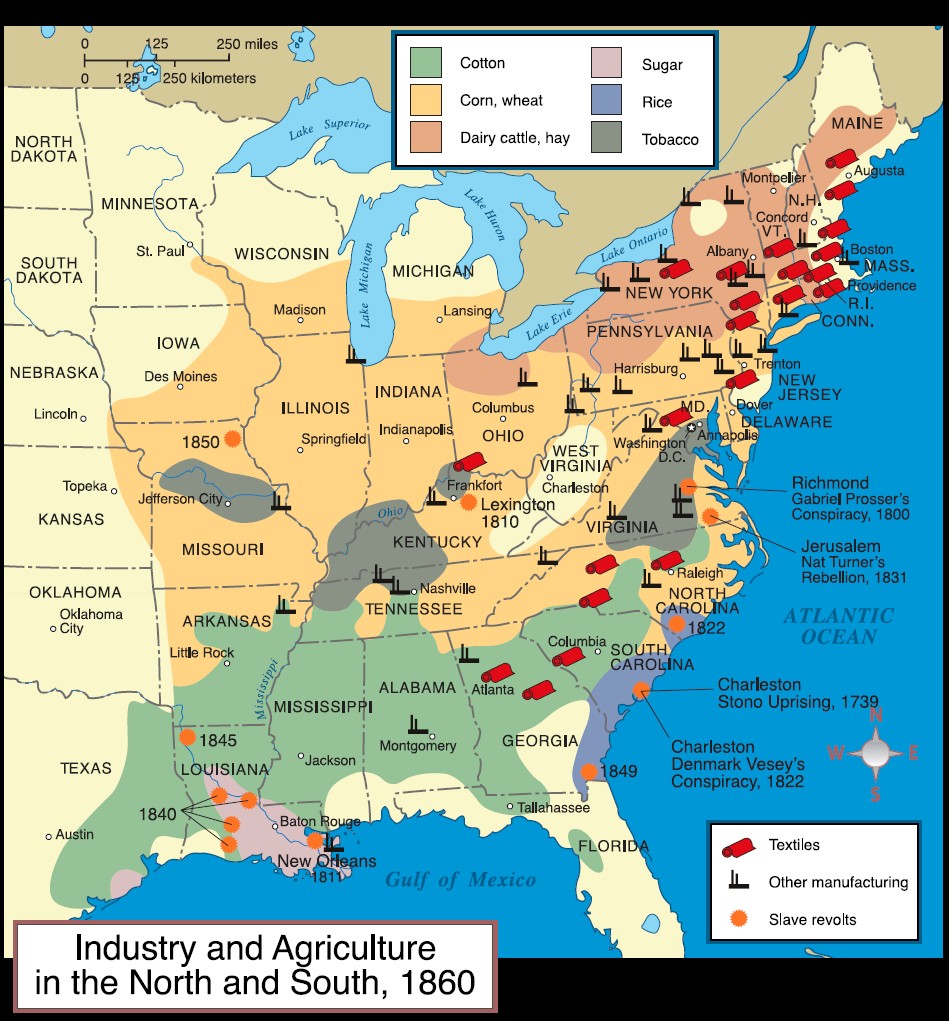
- But in reality, there are numerous issues with this 1862 US Treasury report, beginning with the fact that ~10% of items listed as "Southern Products" were actually produced in Union states including:
- Clover seed (all)
- Brown sugar (all imported)
- Hops (all)
- Tobacco (80% Union, 20% Confederate)
- Manufactured cotton products (50% Union value added)
- Combined, these reduce "Southern Products" exports from $229,031,626 to $207,594,794 and the overall percentage of "Southern Products" from 72% to 66%.
But that's just for starters. - The second item DiogenesLamp mentioned: California gold and Nevada Silver.
Prior to 1850, the US imported more gold & silver than exported, but after 1850, the US began exporting massive quantities of specie, over $500,000,000 worth by 1860.
This gold & silver was used to pay for otherwise imbalanced US imports over exports. - When US California-Colorado gold & Nevada silver exports are included, then Confederate state 1860 exports of $207,594,794 shrink from 66% of the total to 55%.
But we're not finished: - Revised numbers from a 1960 study corrected errors and missing data from the original 1862 Treasury report, putting total US 1860 exports $400,122,000.
This further reduces the total of 1860 Confederate state exports to 52% of total 1860 US exports.
So, 52% of total US exports is what our Lost Causers can use to claim the South dominated the US economically and "paid for" Federal government.
But 52% is gross exports on which zero tariffs were paid -- only imports paid tariffs.
So, who purchased the imports which paid tariffs that funded Federal government?
The numbers couldn't be clearer: only 6% of all US tariffs were paid in Southern ports, and of those all but 1% was paid in one port: New Orleans.
And the importance of New Orleans is that it was (&is) less a Southern Port than a national port for the Mississippi River basin, which then covered some 40% of US territory and of which 80% was in Union states.
IOW, imports to New Orleans (as contrasted with, say, Charleston, SC) were paid for mostly by Union state customers.
Bottom line: virtually zero import tariffs were paid directly by Southerners.
So, what do our Lost Causers say about that?
Oh well, they say, it doesn't matter who paid the tariffs, what matters is that Southern products produced export earnings (52%) necessary to buy imports in the first place.
Therefore, "Southern Products" "paid for" Federal government.
At this point, do we need to remember that 95% of "Southern Product" exports were not produced by Southerners, not even by American citizens.
They were produced by African slaves, and slavery was only possible because of Constitutional protections such as Fugitive Slave Laws and 3/5 proportional representation.
Without such Federal protections, slavery would have long since disappeared in the South, and King Cotton would have been strangled as a baby in his cradle decades before 1860.
More important, the real contribution of Confederate states to the US GDP in 1860 was ~15%, from roughly 20% of the US white population.
So, any suggestions that those 20% of US whites would have purchased indirectly 15% of US imports is 100% reasonable.
Any higher number is just Lost Cause propaganda.
x #76: "...Southerners sold cotton to Europe.
The Southerners used the money to buy things from the North and to invest in Northern banks, industries, and railroads.
The Northerners used that money — and the money they got from exports of gold, timber, and grain — to buy things from Europe.
It’s at that stage that the Federal taxes were imposed and collected, not on the early activities."
Exactly right.
Finally, there's another major factor that nobody has ever mentioned here: mainly British, but also other foreign investments in the US economy through 1860 totaled circa $500 million, or ~10% of total US GDP.
This ~$500 million (circa $3 trillion in today's values) absolutely fueled American prosperity and allowed for imports well beyond what product exports alone supported -- in 1860 that, along with specie, was 25% more.
Bottom line: in 1861, when 71% of "Southern Products" disappeared from US export totals, total US exports fell only 35%, suggesting "Southern Products" made up ~50% of US exports.
By 1864 US total exports had returned to 1860 levels without significant contributions from Confederate state products.
So, Confederate state economies were certainly important to the US total -- they were 20% of the white population, 15% of GDP, ~25% of non-slave asset values, but the Southern economy was nowhere near generating 72% of exports, as claimed by DiogenesLamp and other Lost Cause apologists.
102
posted on
02/19/2026 1:05:20 PM PST
by
BroJoeK
(future DDG 134 -- we remember)
To: BroJoeK
I stopped reading your long posts a long time ago Bro.
I used to read them, but it became so tedious unraveling all the things you said which were biased or irrelevant, and so I just quit reading them.
103
posted on
02/19/2026 1:37:57 PM PST
by
DiogenesLamp
("of parents owing allegiance to no other sovereignty.")
To: DiogenesLamp
“I used to read them, but it became so tedious unraveling all the things you said which were biased or irrelevant, and so I just quit reading them.”
I just skim them; saves time and you get just as much out of them as if you studied them word for word.
To: Wallace T.; BroJoeK
Cotton was grown on a smaller scale by Indians in Arizona and missions in California. Irrigation was indeed necessary. The Pima Indians had quite a sophisticated irrigation system for pre-Columbian America. When it was discovered in the 1880s that California’s climate was inhospitable to the boll weevil, California got more serious about cotton growing. While the big water projects didn’t come until the 20th century, I’m not going to discount the ingenuity of 19th century Americans when they put their mind to things.
The transcontinental railroads were already built by the 1880s. Romans and Spaniards used slave labor in mining. When the political will was there to create a slave society uses would be found for slaves.
105
posted on
02/19/2026 1:57:19 PM PST
by
x
To: HandyDandy
Yeah, I know that it really irritates the Lincoln veneration society to quote his letter to Greeley.
What it shows is that Frederick Douglass was correct in what he said in his memorial to Lincoln, which is that Preserving The Union was Lincoln’s goal in waging war on the States that wanted to leave the Union.
Lincoln was not going to sit idly by and let that happen any more than King George III was going to let the American colonies leave.
George’s government even outdid Lincoln by issuing two emancipation proclamations, Dunmore in 1775 and Philipsburg in 1779.
106
posted on
02/19/2026 2:06:14 PM PST
by
Pelham
(President Eisenhower. Operation Wetback 1953-54)
To: BroJoeK
Great post Joe. You did some serious research. Thanks.
107
posted on
02/19/2026 2:12:02 PM PST
by
Ditto
To: Pelham
Yeah, I know that it really irritates the Lincoln veneration society to quote his letter to Greeley. LOL. You Lost Causers are so predictable. Do you understand that Lincoln had the Emancipation Proclamation sitting in his desk waiting for a Union victory to release it.
You guys are such a joke.
108
posted on
02/19/2026 2:17:49 PM PST
by
Ditto
To: Pelham
George’s government even outdid Lincoln by issuing two emancipation proclamations, Dunmore in 1775 and Philipsburg in 1779. Again, you either distort and misstate, or you are terminally ignorant. Do you know what happened to those Blacks who enlisted in the British army at the end of the war with the promise of freedom? TheBritish got them out of America all right. They took them to their Caribbean islands and sold them back into slavery. Nice deal.
109
posted on
02/19/2026 2:24:21 PM PST
by
Ditto
To: DiogenesLamp; wardaddy
“Some years ago, I realized the 1860 Republicans were the liberals.”
Some of them were radicals of the Left, way beyond liberal. The Radical Republicans were a very powerful group within the early GOP right through the late 1870s.
Some of that was due to the influence of ex-patriate ‘48er German revolutionaries who helped found the party. Literal pals of Karl Marx who had fled to America after bungling their European takeover.
Some was from Northern Puritan culture as it discarded Christianity in favor of “imminentizing the eschaton” via politics, a habit that characterizes the Left even today.
You can find early American Communists lamenting that the Republican Party was “the one that got away!” after an illustrious beginning. They remembered the early history after everyone else had forgotten it.
The Communist side in the Spanish Civil War called itself the Republicans. The American volunteers called themselves The Lincoln Batallion and the John Brown Brigade. Some of that wasn’t just coincidence, that’s the portion of American history that they identified with.
110
posted on
02/19/2026 2:39:06 PM PST
by
Pelham
(President Eisenhower. Operation Wetback 1953-54)
To: Pelham
Do you remember that mini-series “Amerika” from the 1980s, about a fictional Soviet occupation of the US?
They would have a parade with banners with pictures of Lenin and Lincoln.
111
posted on
02/19/2026 2:44:00 PM PST
by
dfwgator
("I am Charlie Kirk!")
To: Ditto
“Again, you either distort and misstate, or you are terminally ignorant. Do you know what happened to those Blacks who enlisted in the British army at the end of the war with the promise of freedom?”
Yeah, anything that doesn’t agree with your version equals terminal ignorance. You’re “special” that way.
Or we could see what descendents of Black Loyalists have to say about what happened.
https://thecanadianencyclopedia.ca/en/article/black-loyalists-in-british-north-america
During the American Revolutionary War (1775–83), thousands of free or enslaved Black people fought for the British, hoping to gain their freedom along with the promise of land. By 1783, when the Treaty of Paris was signed, British forces and their allies fled to such locations as Europe, the West Indies (the Caribbean) and the Province of Québec (divided in 1791 into Upper Canada and Lower Canada ). Between 1783 and 1785, more than 3,000 free Blacks or former enslaved people settled in Nova Scotia , where they faced hostility, racial segregation, low-paying jobs and inequality (see also Arrival of Black Loyalists in Nova Scotia).
The institution of enslavement was commonplace in the 18th century, particularly in Britain’s American colonies (what we now know as the United States of America). However, the colonists were not content with how much control the British government had over life in the colonies and wanted to exercise more independence. Unable to come to a mutual agreement with Britain, the colonists declared themselves independent of Britain, leading to the American Revolution (also known as the American War of Independence).
When control of Virginia was being lost to the rebels in 1775, the governor of Virginia, Lord Dunmore, sought to recruit soldiers to fight for the British. He issued a proclamation that any enslaved or indentured person would be given their freedom if they joined the British forces. The response was overwhelming — some 800 Black enslaved or indentured persons joined the British, although even more had tried to reach the British lines.
In 1779, when it was becoming apparent to the British that they were losing the war, the British Commander-in-chief, Sir Henry Clinton, issued the Philipsburg proclamation, which said that any Black person who deserted the colonists’ side and joined the British would receive “freedom and a farm” — full protection, freedom and land. Thousands of people of African descent joined the British Loyalists .
It is estimated that as many as 100,000 enslaved persons eventually took asylum behind British lines. By the summer of 1782, it was clear that the Americans were winning the war, and the British started to prepare for their departure. By 1783, the British officially lost the war and the Treaty of Paris was signed. British forces and their allies had to leave the United States. The British left a number of Black people behind as they retreated, many of whom were recaptured into slavery. Other Black Loyalists were resettled in Florida, the West Indies, the future Upper and Lower Canada and the present-day provinces of Nova Scotia and New Brunswick .
Thousands of White Loyalists and their enslaved persons joined the British in the fight against the American colonists. Some of these enslaved persons were enlisted in Lord Dunmore’s “Ethiopian Regiment.” However, to soothe the anxieties of slaveholders, who were fearful of enslaved people using guns, Lord Dunmore placed the men in roles such as digging trenches, shoe-making , blacksmithing and carpentry . Meanwhile, the women worked as nurses, cooks and seamstresses. As the war progressed and the British and their allies recognized the need for more manpower, Black enslaved men were armed with guns and sent to the battlefield.
As the war was coming to an end and British defeat was inevitable, many White Loyalists and thousands of their enslaved persons left for places like Florida, Bahamas, Jamaica and other territories owned by the British throughout the Caribbean. All enslaved persons who escaped and fought for the British before 30 November 1782 were to be set free. To determine which enslaved persons were to receive their freedom, information such as their name, age and dates of escape was recorded in The Book of Negroes (see also Lawrence Hill’s The Book of Negroes ). With certificates of freedom in their possession, these formerly enslaved persons headed to Nova Scotia after the war to begin new lives.
Settlement in Nova Scotia
Approximately 3,000 Black Loyalists departed New York in 81 ships heading to Nova Scotia between April and November of 1783. Some arrived as hired workers, indentured workers, apprenticed workers, or as free persons; some travelled on their own accord. A little more than 1,200 enslaved people came to Nova Scotia with their White Loyalist owners; they were the largest single group added to the black enslaved population in the Maritimes.
Once they arrived in Nova Scotia, Black Loyalists and enslaved persons alike were sent to and settled in places like Shelburne , Birchtown, Annapolis Royal , Preston and Digby . Among the various towns, Birchtown shortly became one of the most populated settlements of Black people (free and enslaved) outside of Africa, at that time. After arriving in Nova Scotia, disenfranchisement soon set in; the promises of freedom, equality, jobs and land were often unfulfilled. Working in low-paying jobs, being on the brink of starvation, and experiencing segregation in all aspects of life proved to be the reality for Black Loyalists in Canada.
Challenges and Struggles
Many Black Loyalists who arrived in Nova Scotia after the war endured these hardships and challenges. Although they were promised land, many of them were met with broken promises. They also found harsh conditions such as starvation, indentureship, exploitation of cheap labour, severe winters, lack of educational opportunities, racism, and shortages of food and clothing . Although Black Loyalists were promised land, so too were approximately 30,000 White Loyalists. Black Loyalists were at the back of the line when the time came to divide and allocate land.
In Birchtown in 1787, the first Black people finally received their land grants, four years after their arrival. However, it was far less acreage than their White counterparts received. This long wait and shortage of land was also experienced by Black Loyalists in other Nova Scotia towns, such as Digby and Brindley Town. The long-awaited and sometimes unfulfilled promises of expected land grants, as well as the other challenges they faced, was too much for many. In 1792, approximately 1,200 Black Loyalists set sail for Sierra Leone to establish the new colony of Freetown. Those who stayed behind continued to try and build a better life for themselves.
Black people in the Maritime provinces also encountered racism. One event against Black people began on 26 July 1784 and lasted for about 10 days. The Shelburne race riots saw black property destroyed by White Loyalists in Shelburne and the Birchtown area. Disgruntled with poverty, the lack of work (which they blamed on cheaper Black labour), and the delays in receiving land that was promised to them, White Loyalists decided to take out their frustrations on free Black people.
Religious Life
Religion was a very important part of everyday life for Black Loyalists. In the face of their challenges and struggles, they turned to each other to create a sense of community. The Black Loyalists and other Black persons who made up the various communities across Nova Scotia established their own schools and churches, and congregations of Anglican and Methodists were set up in towns like Birchtown, Brindley Town and Little Tracadie. Notable church leaders, such as William Furmage, William Ash, Moses Wilkinson and Boston King, led congregations from both denominations.
David George, the pastor of the first Black church in North America in South Carolina (c. 1773), and a former enslaved person, introduced the Baptist church in towns across Nova Scotia, including Preston, Halifax, Digby and Liverpool. The sense of hope that religion brought to the Black community in Nova Scotia in the late 18th century was a welcome source of respite in the midst of the challenges and hardships they faced.
Black Loyalists in Upper Canada
Although a large majority of Black Loyalists were sent to Nova Scotia after the American Revolution , several hundred arrived before and after the war in what would become known as Upper Canada (created in 1791). They arrived either as free persons or as enslaved persons with their White Loyalist masters. Many settled along the St. Lawrence River to the Bay of Quinte and in settlements in the Niagara Peninsula and along the Detroit River . Also, some enslaved Black people settled, along with their Loyalist masters, in the area soon to be known as the Eastern Township s in Lower Canada (now Quebec ).
One notable Black person who obtained his freedom by fighting for the British in the American Revolution was Richard Pierpoint , an African man from Senegal, who was captured and sold into slavery in 1760. Pierpoint was honorably discharged from the Butler’s Rangers unit and settled in the Niagara region. Unlike his Black Loyalist counterparts in Nova Scotia, Pierpoint received 200 acres of land. Pierpoint and other Black Loyalists in Upper Canada also played a significant role supporting the British in both the War of 1812 and the Rebellions of 1837–38 (see also The Coloured Corps: Black Canadians and the War of 1812 ).
Legacy of Black Loyalists in British North America
Wherever Black Loyalists settled in British North America , whether in Nova Scotia, Upper Canada, Lower Canada or other British territories, they generally faced challenges, hardships, trials and tribulations. For example, while the Nova Scotia government provided land to both Black and White Loyalists, the Crown did not provide land titles to Black settlers. This meant that Black Loyalists who settled never officially owned the land they lived on. Without clear title, residents cannot sell their property or legally pass it down to other relatives. In 2017, the Nova Scotia government announced that it would spend $2.7 million over two years to help African Nova Scotians in five historically black communities to obtain clear legal title to land that has been in their families for generations.
Black Loyalists in British North America have left a lasting legacy, and their memory and accomplishments live on today. In Nova Scotia, the Black Loyalist Heritage Centre, located in Shelburne , and the Black Cultural Centre for Nova Scotia , located in Cherry Brook, are just two places dedicated to memorializing the heritage and legacy of Black Loyalists. In February 2021, the Royal Canadian Mint released a commemorative coin honouring Black Loyalists. The silver coin shows the coat of arms of the Black Loyalist Heritage Society and its motto, “The heart of your knowledge is in your roots.”
112
posted on
02/19/2026 3:09:57 PM PST
by
Pelham
(President Eisenhower. Operation Wetback 1953-54)
To: dfwgator
“They would have a parade with banners with pictures of Lenin and Lincoln.”
Not an uncommon pairing on the Left.
There’s some historians on the Right who would agree, seeing Lincoln’s willingness to send an army against fellow Americans as something worthy of Lenin.
In Lincoln’s view everyone in the South remained a U.S. citizen. They couldn’t voluntarily leave the Union and form a new government, so the objects of his war were fellow citizens of the USA. The irony of this echoing George III’s argument against “treasonous rebels” didn’t slow him down any.
113
posted on
02/19/2026 3:56:26 PM PST
by
Pelham
(President Eisenhower. Operation Wetback 1953-54)
To: Pelham
”I know that it really irritates the Lincoln veneration society to MIS-quote his letter to Greeley.”
There, I fixed it. I have no problem with what Frederick Douglass said, or with the whole Lincoln quote. What bothers me is how often you cats think you are quoting Lincoln but leave off the final, closing sentence. That makes it a “clipped” quote. That is what irritates me. It’s odd that you all do that. Once again, here is the closing, final sentence in Lincoln’s letter to Greeley:
“I have here stated my purpose according to my view of
official duty; and I intend no modification of my oft-expressed
personal wish that all men every where could be free. Yours,
A. Lincoln.”
One can only conclude that those who leave off that last sentence are intending a modification of his oft-expressed wish that all men every where could be free.
114
posted on
02/19/2026 4:16:16 PM PST
by
HandyDandy
(“Borders, language and culture.” Michael Savage)
To: DiogenesLamp; jeffersondem
 DiogenesLamp
:
"I stopped reading your long posts a long time ago Bro.
I used to read them, but it became so tedious unraveling all the things you said which were biased or irrelevant, and so I just quit reading them."jeffersondem: "I just skim them; saves time and you get just as much out of them as if you studied them word for word."
Very few Lost Cause propagandists can deal with actual facts & logic, and even those few do so poorly.
For the rest of you, it's all about the narrative -- nothing else matters beyond getting your narratives seen, regardless of facts & logic to support them.
115
posted on
02/20/2026 3:47:03 AM PST
by
BroJoeK
(future DDG 134 -- we remember)
To: BroJoeK
Very few Lost Cause propagandists can deal with actual facts & logic, and even those few do so poorly. Joe, i've whipped your @$$ so many times before, it has become tedious. You never learn anything, you just come back with more obfuscation, false equivalence, and excessive irrelevant details.
This is why I stopped taking you seriously on this issue.
Now I've gotten you to admit that 50% of the government revenue came from the South, and at one time I got you to admit it was as high as 60%.
But even at 50%, how is it reasonable for 1/4th of the citizens to pay 50% of the taxes, while the other 3/4ths pay only 50%?
The North should have been paying 3/4ths of the Taxes, and the South should have been paying 1/4th.
No matter how you look at it, the North was exploiting the South as a money cow.
116
posted on
02/20/2026 6:17:12 AM PST
by
DiogenesLamp
("of parents owing allegiance to no other sovereignty.")
To: Pelham; Ditto; HandyDandy; x; rxh4n1
Pelham quoting:
"In 1779, when it was becoming apparent to the British that they were losing the war, the British Commander-in-chief, Sir Henry Clinton, issued the Philipsburg proclamation, which said that any Black person who deserted the colonists’ side and joined the British would receive “freedom and a farm” — full protection, freedom and land.
Thousands of people of African descent joined the British Loyalists ." That's not what H. Clinton's Philipsburg Proclamation said.
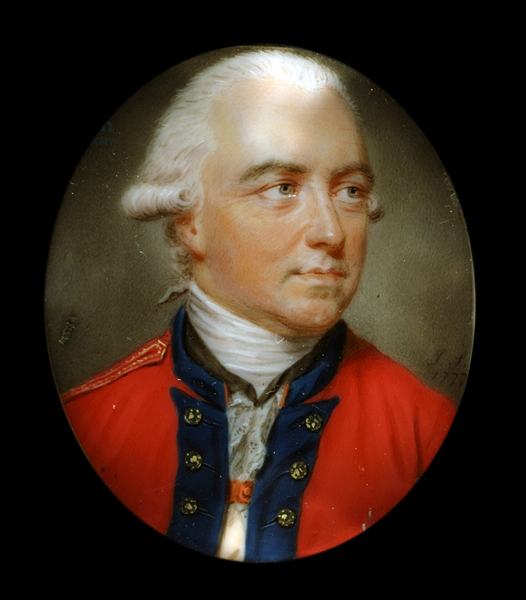 Here are the actual words:
"Whereas the enemy have adopted a practice of enrolling NEGROES among their Troops, I do hereby give notice That all NEGROES taken in arms, or upon any military Duty, shall be purchased for the public service at a stated Price; the money to be paid to the Captors. But I do most strictly forbid any Person to sell or claim Right over any NEGROE, the property of a Rebel, who may take Refuge with any part of this Army:
And I do promise to every NEGROE who shall desert the Rebel Standard, full security to follow within these Lines, any Occupation which he shall think proper.
Given under my Hand, at Head Quarters, PHILIPSBURGH the 30th day of June, 1779.
H CLINTON"
Pelham quoting:
"It is estimated that as many as 100,000 enslaved persons eventually took asylum behind British lines." That figure of 100,000 slaves escaping to British lines is often quoted but is wrong by orders of magnitude.
- The actual number maxes out around 20,000.
- The difference -- 80,000 -- are estimates of attempted slave escapes prevented & captured by Patriot slave patrols.

- The problem with 80,000 (=~10,000 per year) is: that is a normal number for average escapes at any time during peace or war.
- It means ~2% of slaves attempted to "escape" but were captured by slave patrols per year.
- And the key problem with that is: captures does not necessarily mean attempted escapees.
IOW, slaves visiting family a few miles away without proper permission are captured and returned.
They were not trying to escape, they just didn't have the proper permission slips.
But they are counted in the 80,000 estimate.
Pelham quoting: "As the war was coming to an end and British defeat was inevitable, many White Loyalists and thousands of their enslaved persons left for places like Florida, Bahamas, Jamaica and other territories owned by the British throughout the Caribbean."
Here is a repeat of data I posted previously:
New York City Evacuation Day, 1785:
 In 1780 the US population included around 500,000 Africans of whom ~40,000 were freedmen.
Of those:
- ~20,000 had escaped to British lines and been declared free.
Of those 20,000: - ~8,000 of those died during the war of disease, starvation and warfare.
- ~10,000 were evacuated by the British in 1783 to Canada, Britain and the Caribbean.
~1,600 of those eventually migrated to Sierra Leone in Africa. - ~2,000 remained in the US, most of whom were eventually captured and re-enslaved.
In addition to circa 10,000 freed blacks evacuated by the Brits after the Revolutionary War, there were another ~15,000 Loyalists
slaves taken with their owners to Britain, Nova Scotia and the Caribbean.
These Loyalists' slaves were
never freed and, especially in the Caribbean, could be sold at their owners' discretion.
Bottom line: the Brits had no thought of freeing all American slaves, only those escapees from rebel Patriots during the Revolutionary War.
This makes Dunmore & Philipsburg Proclamations more equivalent to US Civil War Confiscation Acts of 1861 and 1862 than of Lincoln's 1863 Emancipation Proclamation.

117
posted on
02/20/2026 7:10:52 AM PST
by
BroJoeK
(future DDG 134 -- we remember)
To: HandyDandy
While you like to whine about not including the part about his personal wish, Lincoln’s letter to Greeley expressly spells out that his overruling goal was to preserve the Union.
And he says that if that meant not freeing any slaves then that’s what he would do.
Those are his words. Abolitionists like Greeley and Marx publicly criticized Lincoln for his failure to act and he was responding to them. John C Fremont had issued an emancipation proclamation for the western Territories and Lincoln fired him for doing it.
Lincoln’s own emancipation order didnt free a single slave in the loyal states that remained in the Union. The 13th Amendment in December 1865 accomplished that 8 months after his death. Had this been his primary goal it should have been possible as soon as he took office. There were no longer enough slave states remaining in Congress to prevent it.
118
posted on
02/20/2026 7:20:56 AM PST
by
Pelham
(President Eisenhower. Operation Wetback 1953-54)
To: Pelham
119
posted on
02/20/2026 7:26:33 AM PST
by
wardaddy
(If u hate Trump you’re stupid or clueless what’s going on)
To: DiogenesLamp; x; Ditto; rxh4n1; HandyDandy; jeffersondem
DiogenesLamp:
"Joe, i've whipped your @$$ so many times before, it has become tedious.
You never learn anything, you just come back with more obfuscation, false equivalence, and excessive irrelevant details." But you have "whipped" nobody, ever.
You have only ever babbled your stupid fact-free nonsense & lies.
You simply cannot, or will not, deal with actual facts & logic.
So, all your brave words here are the equivalent of a football team pushed into its own endzone and then claiming they scored a "touchdown"!
No, you lost every time.
DiogenesLamp: "Now I've gotten you to admit that 50% of the government revenue came from the South, and at one time I got you to admit it was as high as 60%."
I've "admitted" no such thing, only repeated what I've said for many years: Confederate states contributed roughly 50% to total US exports, not to revenues from import tariffs.
You insist those are linked, but reality is that about 80% of import tariffs, even indirectly after raw materials were manufactured, ~80% of end users lived outside Confederate states.
Confederate state contributions to the US GDP in 1860 were roughly 15% and within three years of the loss of all Confederate state exports, by 1864 total Union exports matched those of 1860.
Bottom line: sure, Confederate states exports were important, but they were not the great factor you guys like to pretend.
Nor do they in any way justify your Marxist trope of "the North was exploiting the South as a money cow."
120
posted on
02/20/2026 7:31:40 AM PST
by
BroJoeK
(future DDG 134 -- we remember)
Navigation: use the links below to view more comments.
first previous 1-20 ... 81-100, 101-120, 121-140 ... 541-548 next last
Disclaimer:
Opinions posted on Free Republic are those of the individual
posters and do not necessarily represent the opinion of Free Republic or its
management. All materials posted herein are protected by copyright law and the
exemption for fair use of copyrighted works.
FreeRepublic.com is powered by software copyright 2000-2008 John Robinson