It need only run short.
Geologically short.
Money is a substance created whimsically by central banks.
It has no impact on geology.
And the really ugly part is that the price of oil can be decreed.
If the price of oil is so high that it is destroying society, you pass a law that defines the price of oil to be a number arbitrarily defined.
And no, this does not mean oil providers cross their arms across their chests and refuse to provide it.
They will do as they are ordered to do by men in uniform with guns."
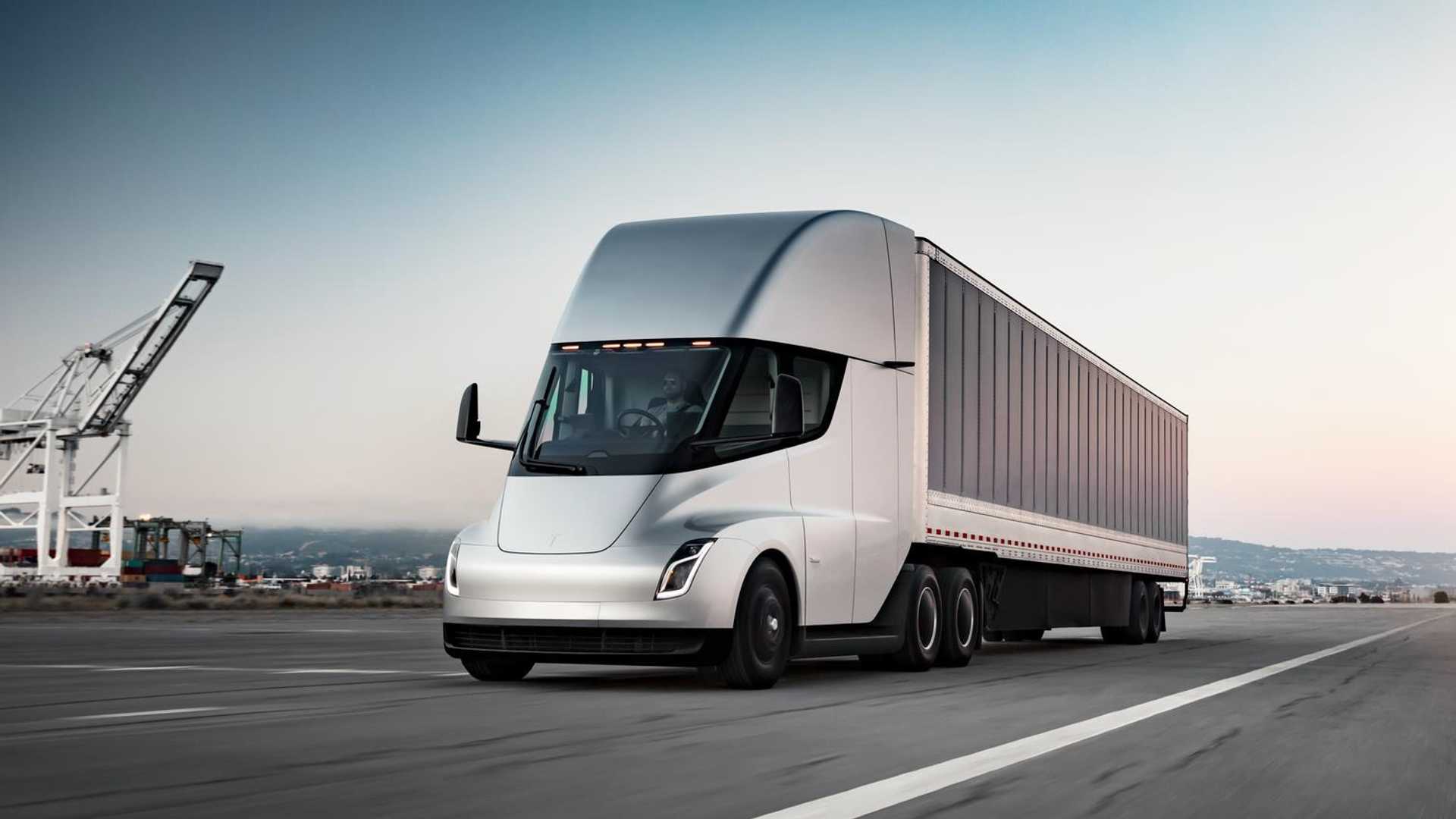
Telsa all electric truck:
 Sorry, but I seriously don't understand why you are so confused and disoriented about simple economics of supply and demand, and technological abilities to substitute multiple energy sources as price & availabilities change.
What's up with that?
Do you not understand that as oil becomes scarcer and more expensive, then we switch over to other energies which are relatively cheap & abundant?
And there's a long list of alternatives to oil-from-the ground, including natural gas, coal, bio-fuels & electricity.
How can that be difficult for you to understand?
Here's the truth of it: everything is based on costs, and if you look at Earth's total energy resources compared to current usage rates then total supplies are:
Mercedes-Benz Electric Big Rig:

- Oil: 225 years globally, 370 years for the USA
- Natural gas: 200 years globally, 150 years for the USA
- Coal: 140 years globally, 1,000 years for the USA
- Uranium: 1,000 years globally, but unlimited using seawater extraction methods.
Owen: "As for electricity, it doesn’t move food on a diesel powered truck from farms to city grocery stores."
Of course it can, it does and will more, when the economics work.
Owen: "Scarcity is the destroyer of all societies.
You have problems fueling food transport?
The very first thing that occurs is all non food items cease transport because that space is required for food.
That means no spare parts for you nuclear reactors or nat gas power generators or anything else.
It also means no drug transport."
Sorry, but all that kind of talk is pure nonsense, unless you're thinking about some kind of fast shock to the economy, such as a World War Three, or maybe an asteroid strike!
But none of that happened during Covid-19 or during the oil-shocks of the 1970s.
Yes, there were some problems, but no major disruptions as you suggest here.
Also, consider this: In the USA, about 70% of all freight goes by truck, 10% by rail, 10% by pipeline and 5% by inland waterways.
In Russia, where truck transportation is relatively less cost-effective, railroads take 50% and trucks only 40%, despite Russia having only half the overall rail milage as the US.
So, as the economics change, the US could easily ship double or triple the volumes of goods by rail as we do today.
Owen: "This is what scarcity does.
It does not care about money."
Only in the most extreme emergencies, the likes of which the US did not see,even during World War II.
Yes, there were shortages, rationing and government controlled industrial planning, but not to the degree that ordinary life was made impossible.