You’re not getting it.
“In general, experts can usually tell a fake coin from a real one by matching it to other known examples of the same issue. Gold - being so chemically stable - changes little over thousands of years, leaving gold coins difficult to distinguish from clever modern fakes. But silver does change - it tarnishes, acquires deposits, etc. - and these are harder for forgers to imitate. Bronze changes even more; it’s hard to convincingly mimic a patina”.
You don’t want to ‘scrub’ that.
I collect ancient coins. basically all ancient coins have been cleaned at some point, they were in the ground usually. So cleaning an ancient coin doesn't have the same stigma as cleaning a modern one. However, in the case of ancients eye appeal is king. So if you have a fantastic patina, of course you'd be a fool to strip it. But on the other hand, it the patina is ugly - not all are nice - and you want to start over, it's done all the time. But not with a wire wheel!
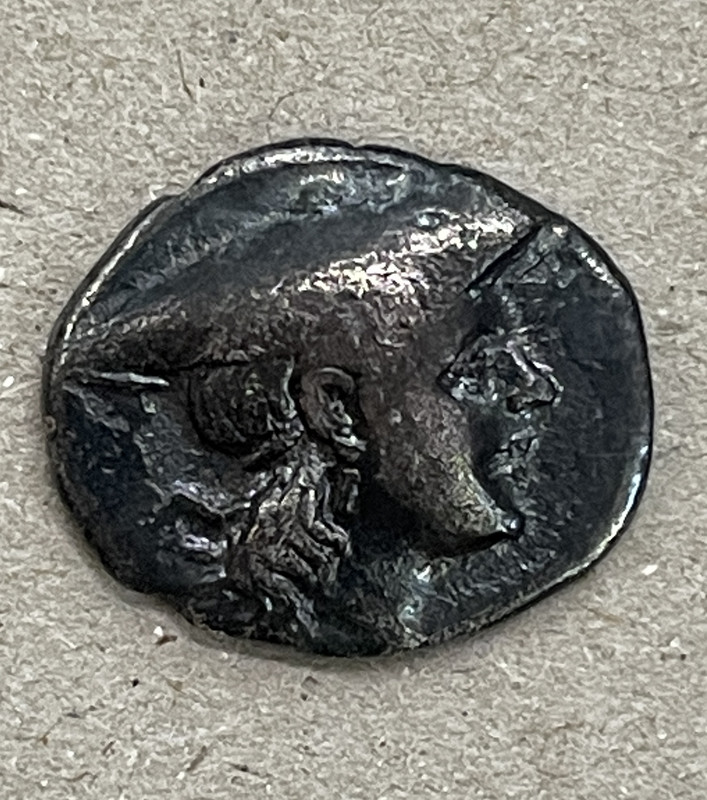
One of mine, a silver Greek coin from about 350 BC. The silver has toned to a blue/green with golden highlights. Hard to capture in photos. It's been this way on my family for about 60 years, so it might have taken centuries to get this look. I'd never ever even consider cleaning that off.