Suppose for sake of argument, that the slaves had been freed and were instead sharecroppers or wage laborers as they were after the war....
...So now that the slaves are all free in our thought experiment, do the Southern states not still need low tariffs?
Do the Northern states not still want high protective tariffs to fatten their profit margins as they get to raise prices and increase sales?..."
Here's what's wrong with your thought experiment: if there was no slavery, there would be no Republicans, period.
Republicans were the anti-slavery party, so, no slavery, no Republicans.
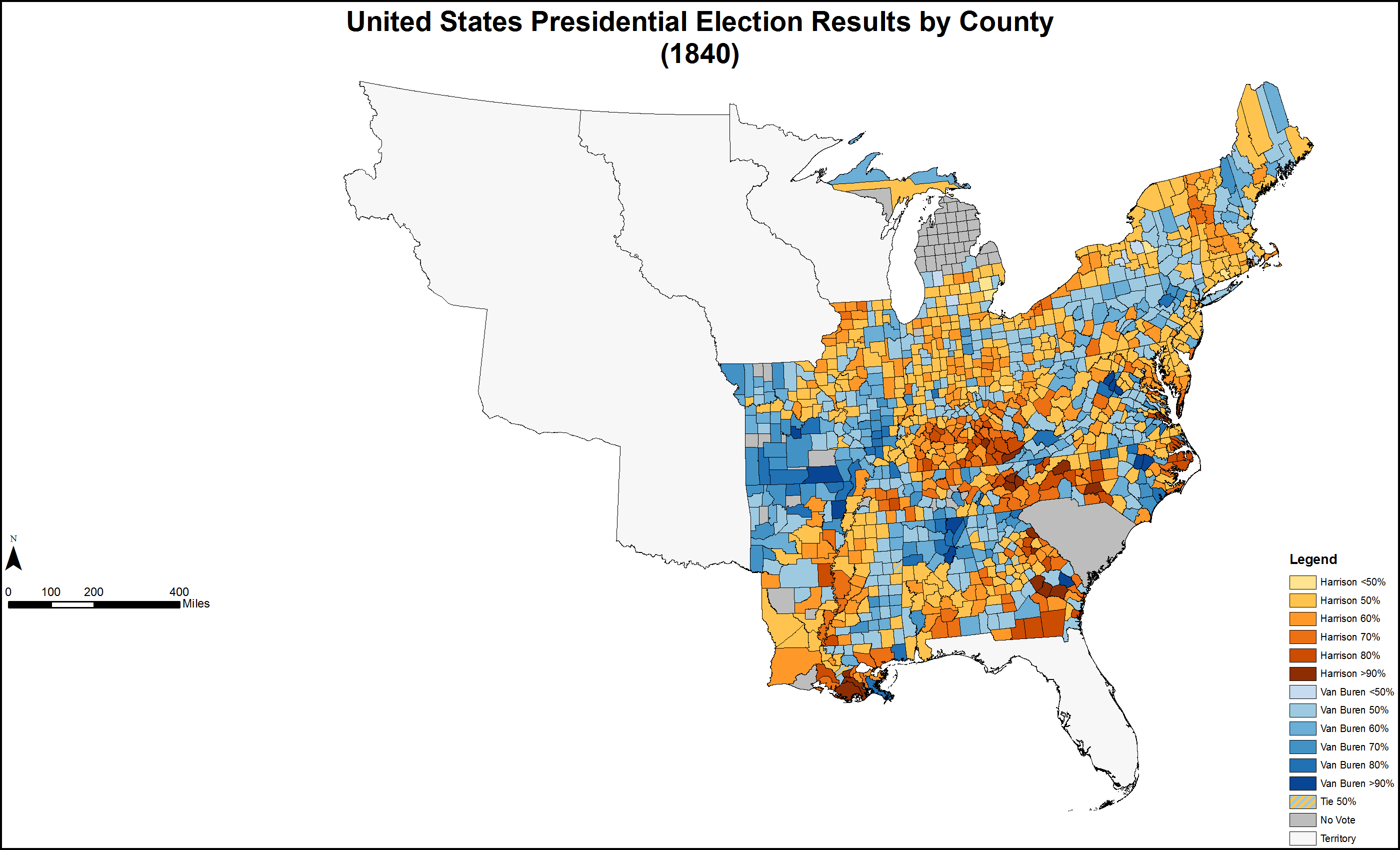
Instead, the Old Whigs would have remained the opposition party, and the key fact about Whigs is: they were a national party.
In good years for Whigs -- 1840 and 1848 -- they won as many Southern states as Northern.
Whig Southern Election Percents of Victory (or % loss) in 1840 and 1848
| Southern State | 1840 Whig % Victory | 1848 Whig % Victory |
|---|---|---|
| Alabama | (-9%) | (-1%) |
| Arkansas | (-8%) | (-10%) |
| Florida | none | 14% |
| Georgia | 12% | 3% |
| Louisiana | 19% | 9% |
| Mississippi | 7% | (-1%) |
| North Carolina | 15% | 10% |
| South Carolina | N/A | N/A |
| Tennessee | 11% | 5% |
| Texas | none | (-40%) |
| Virginia | (-1%) | (-2%) |
There was no practical difference between Whigs and Republicans except for slavery, and when slavery was not an issue, then at least as many Southerners voted for Whigs as for Democrats.
Take away slavery, and the South in 1860 is no longer "solid", but rather is as split politically as other regions.
That means there were as many Southerners supporting relatively higher protective tariffs as were opposed, and of course Southern Whigs would always insist their region gets a "fair share" of Federal spending.
Absent slavery, secession would never be threatened because matters of tariff rates or Federal spending were always subject to negotiation and reasonable compromises.
That's where your thought experiment should have taken you.