Well Lincoln clearly thought they would, but we know in hindsight that the promise of permanent legal slavery in the US wasn't what they wanted. Apparently what they wanted was to not be part of the US.
Yes, you impose your own notions on the history. And again with the stupid Bush v. Gore map. I could post a dozen maps from US electoral history that show different configurations of states with parties, but don't want to waste time on that.
I have looked at a lot of election maps over the years. I can't think of any where there was a great deal of separation between New York and the Great Lakes states.
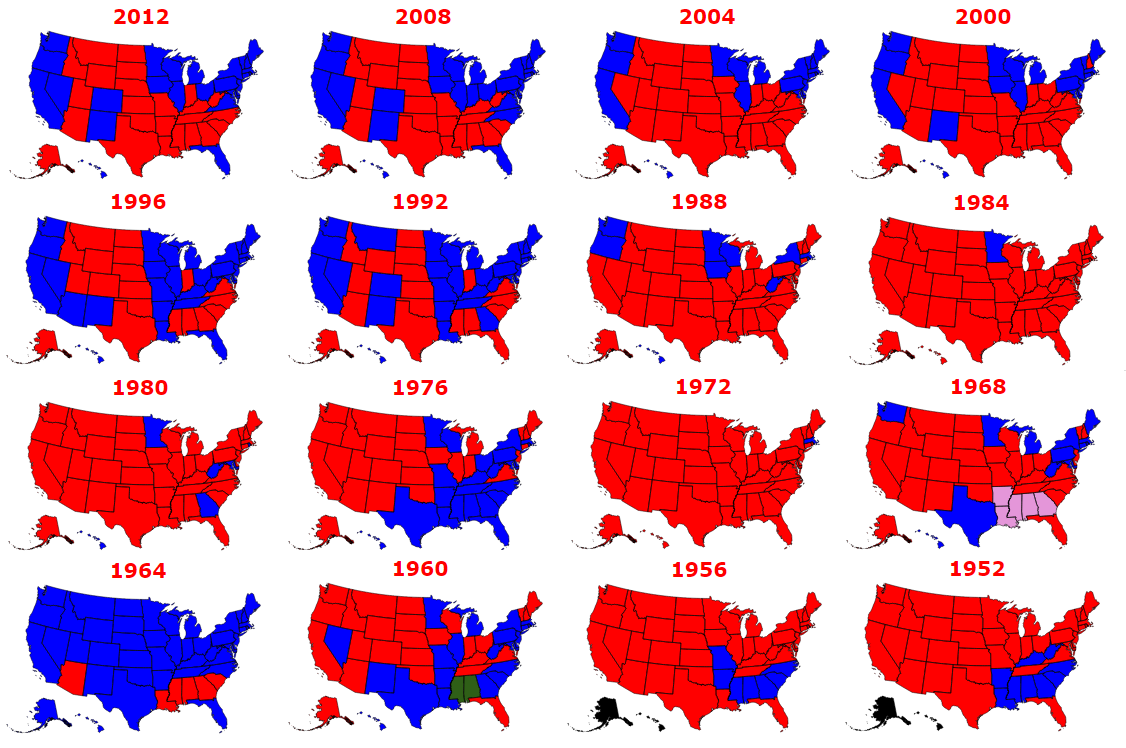
They are commercially connected together. They share financial interests.
So when you aren't saying that NYC wanted war with the South, you are saying NYC would do what it took to be the South's bidding.
You are trying to split hairs to make it look like I am saying something contradictory.
New York wanted what was in the best financial interest of New York. Avoiding war and keeping the status quo where *THEY* continued to handle the 200 million per year in Southern trade with Europe was optimal.
Yes, New York of 1860 would vote to ratify a slavery forever bill if it maintained the status quo.
New York would also urge war if *THAT* is what it took to prevent losses to their industry.
New York would go down either of two different paths to pursue what it perceived as being in its own financial interests, and it would pressure the great lakes states that depended on it to go along with it.
And they would have done.