My pre-supposition has always been that sea water dissolves them or micro organisms eat them.
Dunno but I've seen Jacques Cousteau programs where divers explored WW-II wrecks and showed lots of skeletal remains in good condition after 30 years in tropical waters.
The US military cemeteries overseas are not American soil but in every case their use has been "...granted to the United States in perpetuity...." (https://www.abmc.gov/node/534720)
Burial at sea historically was done to spare the living from the unpleasantness and possible health hazard of stowing a rotting corpse onboard. And sailors historically have been an uncommonly superstitious lot. Two of these don't apply if all you've retrieved is skeletal remains (but sailors are still sailors).
On a modern naval vessel, the only refrigeration (big enough to store a corpse in) is the food locker, and I'm pretty sure there's something in naval regulations prohibiting storing a dead body with the lamb chops.
Nowadays it's almost always possible for naval vessels to avoid burials at sea by airlifting remains ashore. Unless I'm mistaken, the last naval burial at sea in time of war was during the Falklands conflict.
According to this reference, there were 338 people aboard the Titanic who were never accounted for and so presumed drowned and lost. No one knows how many of them might have remained inside when she went down but there were at least a few because there were two firemen who volunteered to stay behind and continue stoking the boilers in boilerroom #5 so the ship's lights would remain on. And the survivors stated the lights indeed were still on when she slipped under the water.
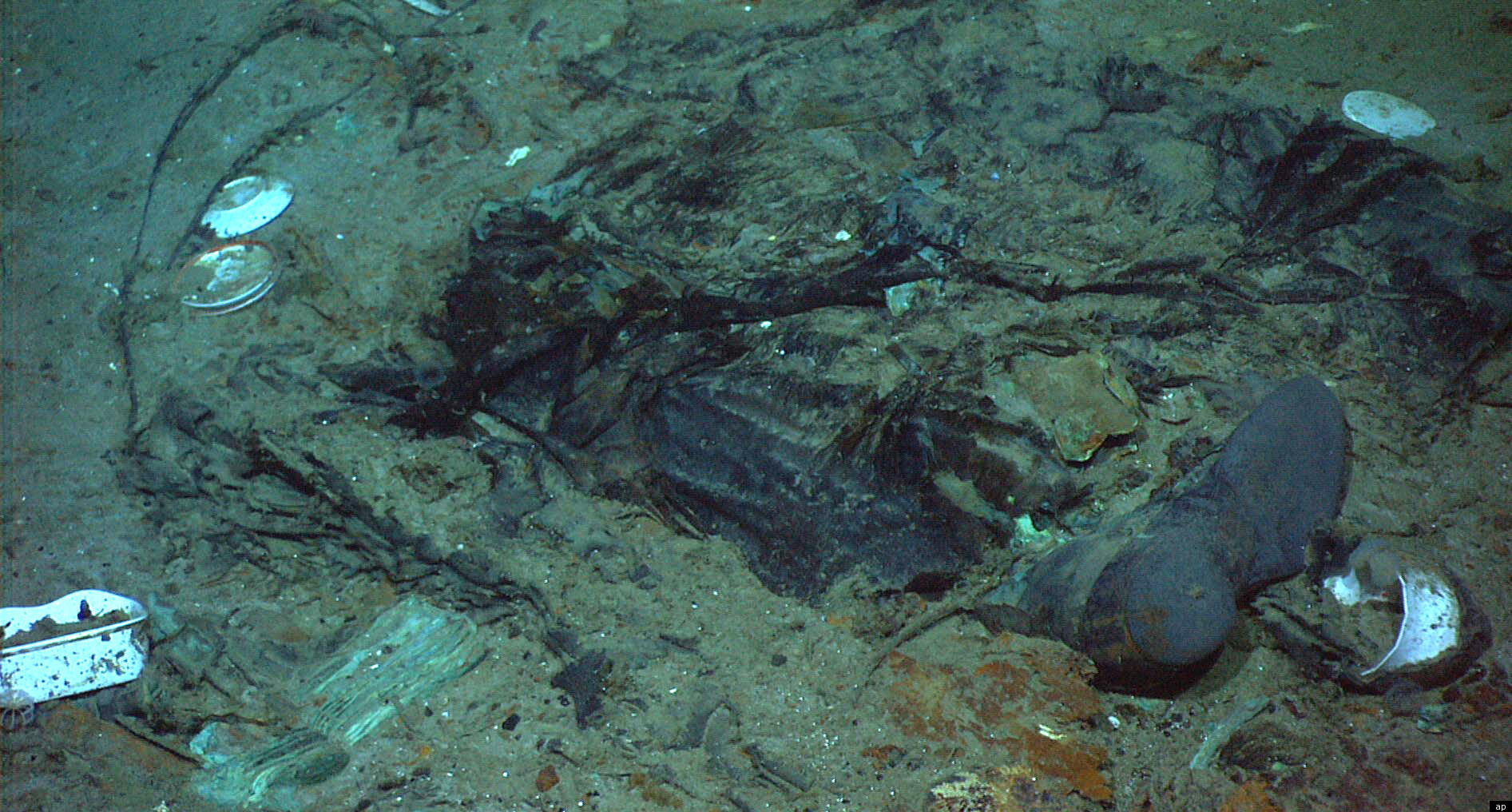
The expeditions to the wreck have only once found something they think was human remains (image here). All that's recognizable is a pair of crewman's dungarees and a single shoe, the rest buried in the silt. There are no bones apparent but that doesn't mean there aren't any. My hunch is there were only a very few others, and if they also were tending to their duties until the water came in, they might well be in the deep recesses of the wreck, where no probe has ever reached.