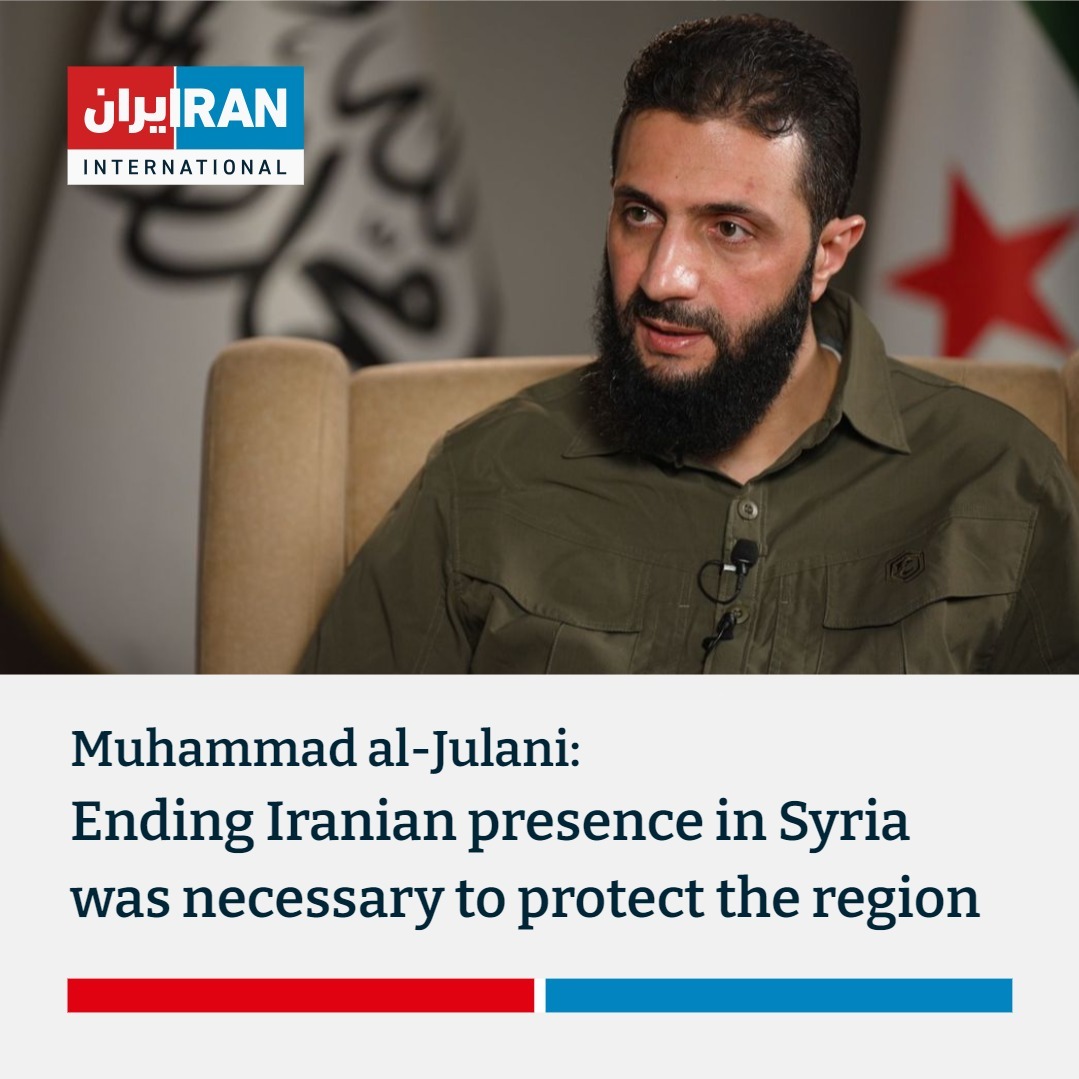
“We succeeded in ending the Iranian presence in Syria, but we harbor no hostility toward the Iranian people. Our issue was solely with the policies that brought harm to our country,” he added.
The Syrian Democratic Forces (SDF) is facing two perceived existential threats in the wake of the fall of the Assad regime, which almost certainly caused the SDF to deprioritize the counter-ISIS mission. The United States helped create the SDF by binding together Kurdish and Arab forces in Deir ez Zor.[20] Arab communities in Deir ez Zor and Raqqa have begun defecting from the SDF and an end to SDF rule in Arab areas, which threatens to unravel the fragile Kurdish-Arab coalition that the United States helped establish.[21] Turkey is simultaneously threatening to destroy the SDF. Turkish Foreign Minister Hakan Fidan threatened on December 13 to “eliminate” the SDF, Kurdistan Workers Party (PKK), and People's Defense Units (YPG).[22] Fidan added that these groups must leave Syria. The SDF, given that it prioritizes these existential threats over the threat it faces from ISIS, has stopped all counter-ISIS operations. This reallocation of SDF resources creates opportunities for ISIS to reemerge and leaves the United States without a viable counter-ISIS partner in Syria, at least temporarily.
SDF commander General Mazloum Abdi announced that the SDF plans to negotiate its role in a future Syrian government, likely to prevent further unrest within Arab populations and militias under the SDF.[23] Abdi stated that the SDF seeks a ”decentralized” Syrian administration in which the SDF is represented in the future government and armed forces.[24] The defection of Arab SDF formations and protests against SDF rule is probably contributing to Abdi’s decision to negotiate with the interim government. Arab citizens in SDF-controlled areas have long-standing grievances against the SDF which include limited reconstruction, repeated SDF abuses of the local populations, and a lack of representative Arab leadership.[25] Abdi probably calculates that by reaching out to the interim government, he can temper the unrest by expressing his willingness to integrate into the Syrian government. Abdi’s outreach to the interim government does not guarantee the SDF’s ability to control popular unrest. Even if he reaches a deal with the interim government. Arab communities are calling for an end to SDF rule, not just the SDF’s integration into the rest of Syria. This implies that these groups do not seek to be a part of an SDF-led autonomous region.
Iranian opposition media reported that Iranian officials instructed the IRGC to sell sanctioned oil stored at the Port of Dalian, China, through intermediary companies.[86] The directive reflects Tehran’s concerns that the incoming Trump administration could prevent Iranian access to the oil reserves.[87] CTP-ISW cannot confirm this report.
Satellite images obtained on December 12 reveal Iran's new drone carrier ship, Shahid Bagheri, undergoing sea trials in the Persian Gulf near Bandar Abbas. The drone carrier was originally a commercial container vessel which was modified with a ski-jump ramp and angled flight deck for drone operations.[88] The Shahid Bagheri drone carrier departed in late November and is currently undergoing its initial sea trial, with Maxar reporting a net-covered drone visible on its deck.[89]
https://www.understandingwar.org/backgrounder/iran-update-december-13-2024
“We succeeded in ending the Iranian presence in Syria, but we harbor no hostility toward the Iranian people. Our issue was solely with the policies that brought harm to our country,” he added.
The Iranian regime does not appear to have assumed a clear strategy for how to approach the HTS-led interim government in Syria, as exemplified by the contradicting reports regarding the safety of Shia holy sites following the fall of the Assad regime. Certain Iranian media outlets have amplified reports of HTS fighters interfering with the Sayyida Zeinab shrine and the Sayyidah Ruqayya shrine, while other Iranian media reports claimed that HTS engaged respectfully during a visit to the shrine in recent days.[19] The fact that the Iranian media is not pursuing a clear messaging campaign about the Shia holy sites in Syria may indicate that the Iranian defense and political establishment has not yet decided how best to interact with the new HTS-led interim government. The rapid pace in which the Assad regime fell, resulting in the loss of billions of dollars for the Iranian regime, has almost certainly forced Iran to re-evaluate its strategy in regard to Syria and the region at large.[20]
https://www.understandingwar.org/backgrounder/iran-update-december-14-2024