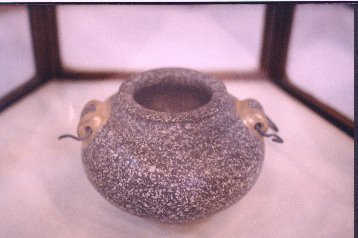

Try accomplishing that feat with clay, much less granite. The fact that they found thousands and thousands of these vessels suggests that it really wasn't a big deal for them to work granite as easily as clay.
Try accomplishing that feat with clay, much less granite. The fact that they found thousands and thousands of these vessels suggests that it really wasn't a big deal for them to work granite as easily as clay.
You are of course correct.
The question becomes how? Setting aside the question of who, how were such wonderfully precise vessels and the numerous rectangular boxes and sculptures created? What tools were used to fabricate with such precision?
Thanks, for adding a great complementary piece on this thread.
It is entirely possible that the science/art of doing some things with stone represents examples of lost knowledge and why it became lost is maybe the mystery.
Granite counter tops. I know it’s not a bowl.
Maybe Fred Flintstone was a real person.
Seriously, the major difference in modern man and nowadays is the knowledge base and the materials we can work with. In terms of rational thought and wisdom, their best is on par, if not better, than our best.