Sorry, here it is.
It says the Essex class carriers cost $68 to $78 million in 1942, which was supposedly equal to $1 billion today.
However, today's economy & money are vastly different from 1942, and a more accurate evaluation can be found here.
It shows several different methods for calculating today's worth, but I think only the largest number ($8 billion) really measures the relative economic impact of building such ships.
For Nimitz class carriers, the price is listed here as $4.5 billion.
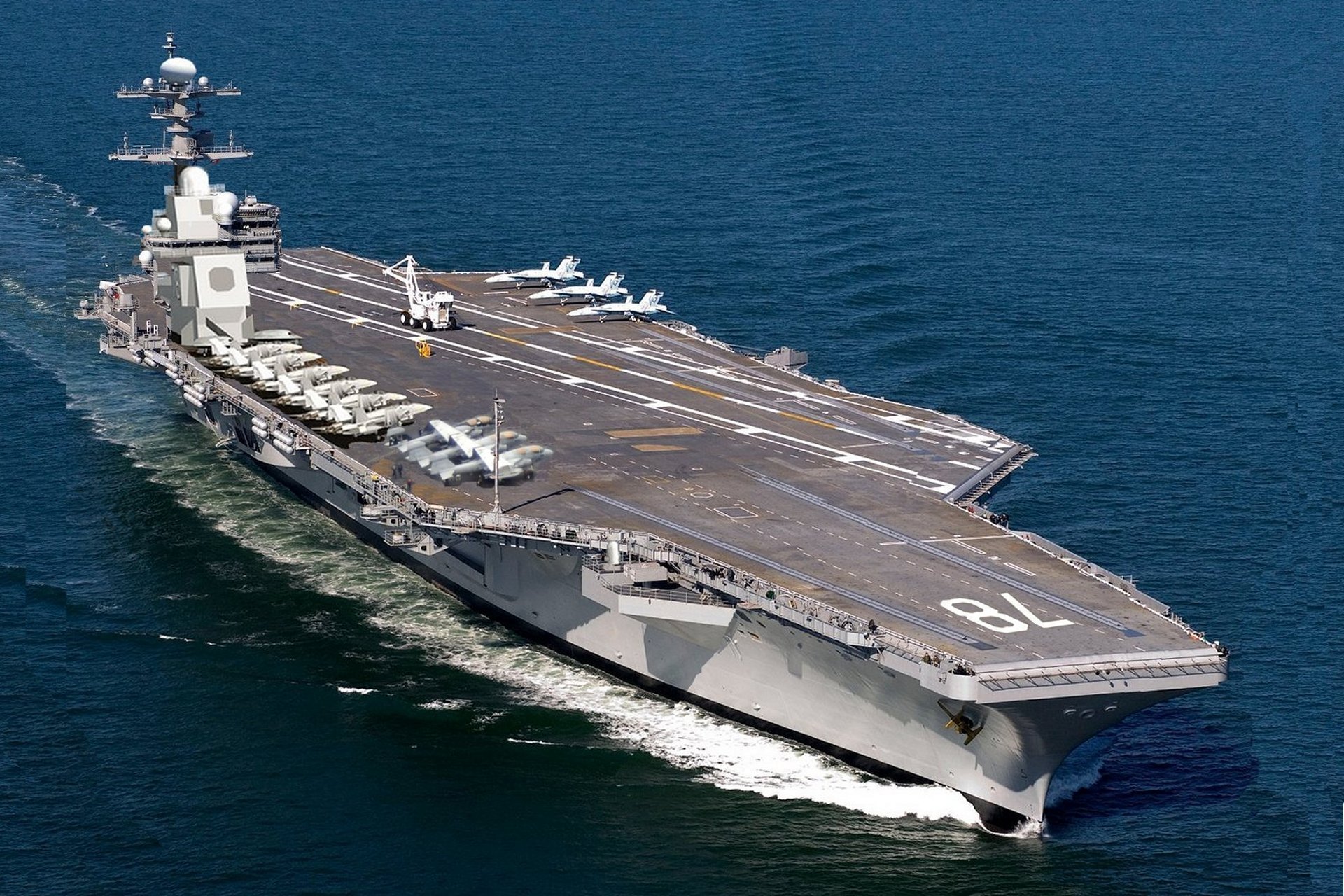
For the new Ford class, the price is listed here as $10.4 billion.
Therefore, I argue that today's carriers are roughly the same economic burden as were the big Essex class of WWII.
Again: the big difference is not so much the unit cost, but the fact that compared to 40% of GDP in WWII, today's defense budget is closer to 3%, for actual military spending, as opposed to related expenses like intelligence.
Essex class:
Ford class: