Skip to comments.
USAF Is Going To Explore What Will Finally Replace The B-52
TWZ ^
| 05/07/2026
| Joseph Trevithick
Posted on 05/08/2026 10:06:27 AM PDT by DFG
With the U.S. Air Force set to still be flying B-52s at least into 2050, at which point the youngest examples will be some 88 years old, it has become common to quip about the bombers staying in service forever. However, the Air Force is now looking to conduct a formal review of its requirements to see whether the development of a successor might be warranted, and potentially sooner rather than later.
The Air Force is asking for $1 million in its budget request for the 2027 Fiscal Year to conduct a New Heavy Bomber Analysis of Alternatives (AoA). Aviation Week was the first to report on the appearance of this AoA in the service’s budget documents. All branches of the U.S. military routinely use the AoA process to assess available options and further refine requirements for new weapon systems and other capabilities.
The Air Force currently has 76 B-52Hs in service. The last of these aircraft rolled off Boeing’s production line in 1962, though they have received numerous upgrades in the decades since then. These bombers continue to be in high demand as conventional long-range strike platforms, as evidenced by their heavy use in the latest conflict with Iran. They also play a key role in the air leg of America’s nuclear triad.
“A Heavy Bomber Analysis of Alternatives will begin in FY27 [Fiscal Year 2027] to analyze the future long range strike requirements to determine future B-52 requirements and costs and/or a new heavy bomber aircraft configuration and costs,” the Air Force’s latest proposed budget explains.
More specifically, the newly requested funding will support “initial planning activities to develop key performance parameters, key system attributes, and additional performance attributes for a follow-on heavy bomber in the USAF,” per the service’s budget documents. “The FY27 work scope will include key planning activities for programmatic, requirements, capabilities, and vendor options that could field [sic] in the future.”
The $1 million in funding for the AoA would come through a line item titled “Advanced Concept Demonstration” contained within the section of the Air Force’s budget for “B-52 System Improvements.” The service did not ask for or receive any money for this particular line item in Fiscal Year 2026, but did get nearly $4 million in funding for it in the preceding fiscal cycle.
The Fiscal Year 2025 funding supported a “classified Proof of Concept demonstration on the B-52,” according to the budget documents.
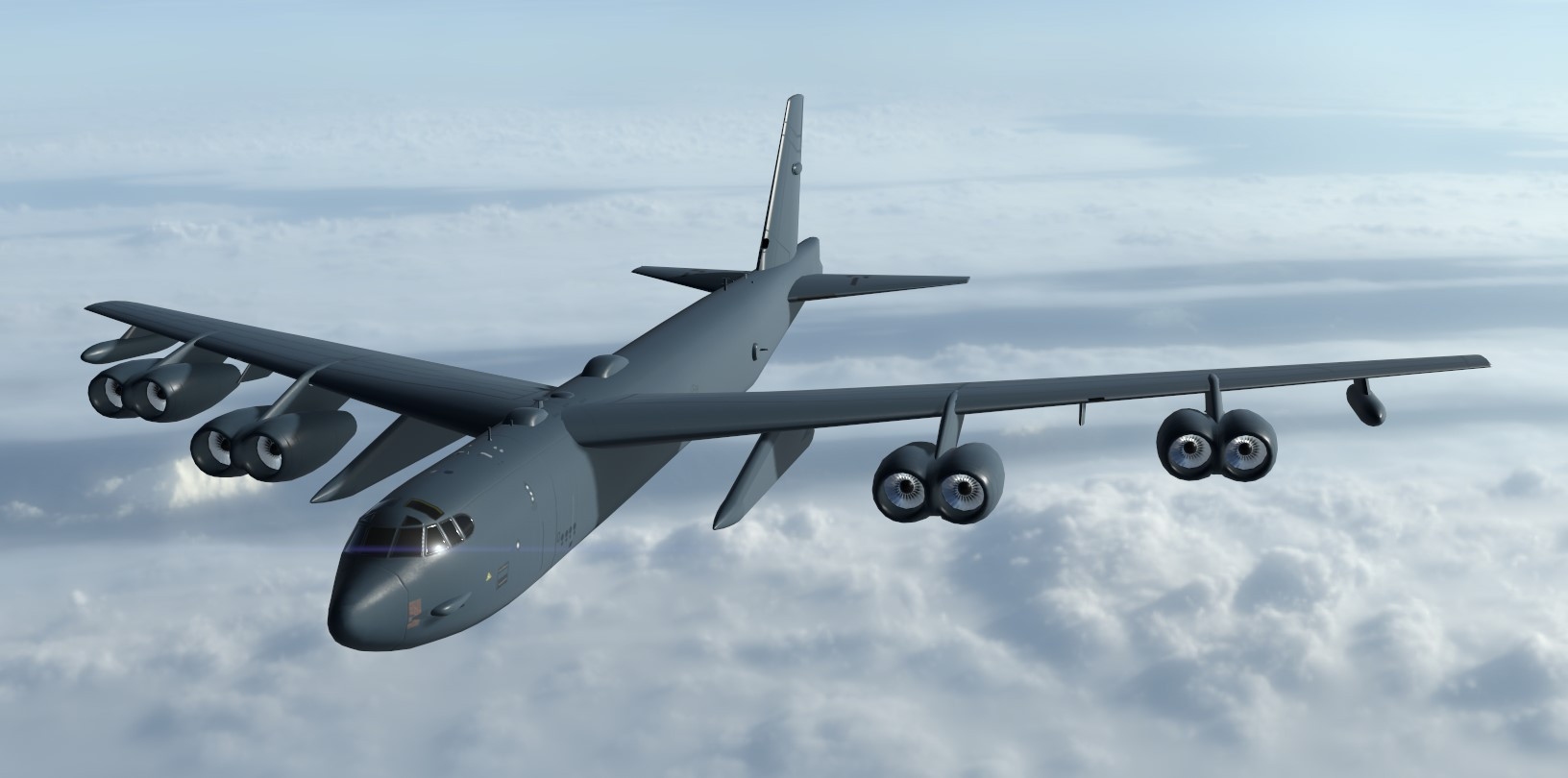
The Air Force is already in the midst of a massive, multi-billion-dollar modernization effort for the B-52 fleet. In the coming years, the bombers are set to get new engines, radars, communications capabilities, and more, as you can learn about in more detail here. The upgrades are so substantial that the aircraft will be redesignated B-52Js in the process. A host of new ordnance, including advanced hypersonic missiles and new nuclear weapons, is set to be integrated onto the B-52 fleet, as well.
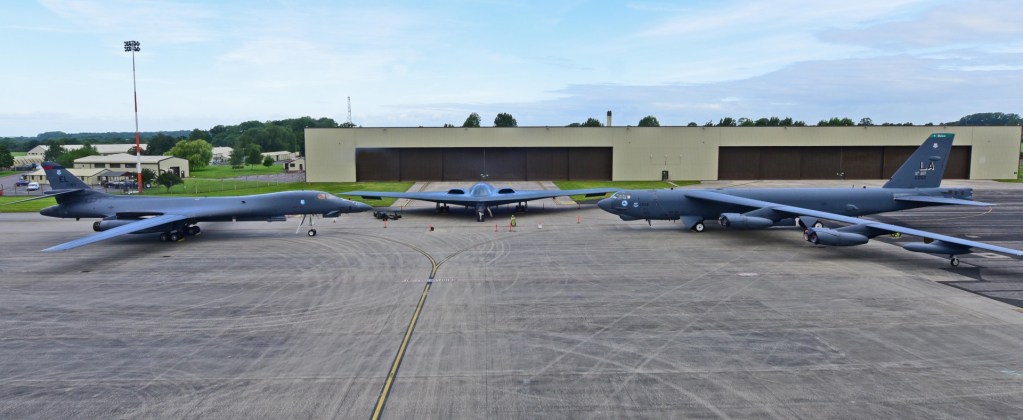
Based on the Air Force’s current force structure plans, the B-52 is set to outlast both the B-1 and B-2 bombers, and serve alongside the forthcoming B-21. Despite its age, the B-52’s design has certain unique benefits, especially the space underneath its wings for the carriage of outsized payloads, including very large munitions. This has also led the bombers to play important roles in research and development and test and evaluation efforts in the past, including air-launching large crewed and uncrewed aircraft.
There is really nothing like the B-52 in production today anywhere globally, which has further contributed to its long service life. There is only one company in the United States currently building heavy bombers of any type, Northrop Grumman, with the B-21. The stealthy Raider is a very different aircraft designed to meet a very different set of requirements from the B-52, hence the Air Force’s stated plan to operate the two aircraft together for decades to come.
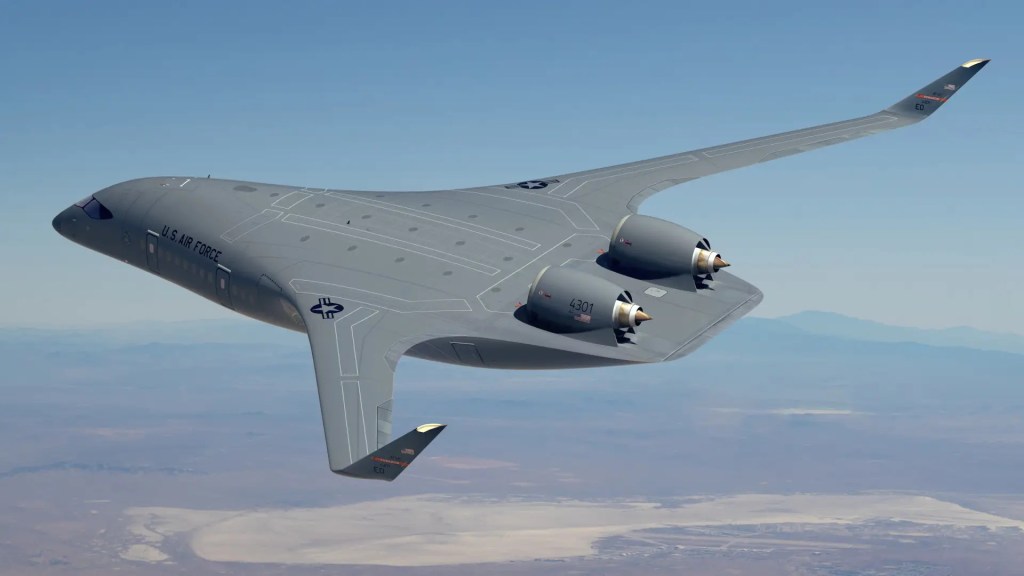
The Air Force’s budget documents do not specify any particular design or other requirements for a follow-on heavy bomber. One possibility could be an aircraft with a blended wing body (BWB) planform, something the service has already been exploring for other mission sets. A BWB aircraft could offer a limited degree of low-observability (stealthiness), as well as significant internal payload capacity, including the ability to carry outsized stores. This could also be paired with Air Force plans for a next-generation aerial refueling tanker, which we will come back to in a moment.
Whatever design requirements might emerge, a new heavy bomber to supplant the B-52 would not need to be as complex as the B-21. Still, it could involve a costly development cycle and risk, with few, if any, additional customers beyond the Air Force on the horizon. Today, only the United States, Russia, and China fly heavy bombers of any kind. Other countries, such as Australia, could be interested if the aircraft was uniquely cost-effective and could be exported.
The New Heavy Bomber AoA might also consider more radically different options for meeting even just some of the requirements that the B-52 fulfills today. As a tangential example, the Air Force has looked at a very wide array of concepts for next-generation aerial refueling capabilities, including stealthy, BWB, and business jet-based tankers, as well as packaging an aerial refueling boom in a ‘buddy store’ type pod that a fighter could carry.
The Air Force’s desire to conduct this AoA now also raises questions about the future of its existing B-52 modernization plans and the expected service life of the bombers. From what has been publicly disclosed to date, a fully upgraded force of B-52Js is still a decade away, at least, from becoming a reality. The re-engining effort and work on the new radars, the two biggest ticket items in the upgrade package, have also been beset by delays and cost growth.
Deciding to conduct an AoA does not commit the Air Force to pursue any particular course of action. As the budget documents note, the new heavy bomber review is also set to explore “future long range strike requirements to determine future B-52 requirements” that do not necessarily lead directly to a full follow-on program. We do not know what the service may have already concluded in this regard from the results of the classified demonstration in Fiscal Year 2025, either.
Regardless, despite the jokes, the B-52 cannot fly forever. At some point, the airframes will simply age out. The service is now clearly looking to put serious thought into what might come next.
TOPICS: Military/Veterans
KEYWORDS: aviation; b1; b2; b21; b52; military; usaf
Navigation: use the links below to view more comments.
first 1-20, 21-40, 41-55 next last
"A rendering of what the future B-52J configuration will look like. Boeing"
"A rendering of a blended wing body demonstrator aircraft already in development for the Air Force. USAF A rendering of the blended wing body demonstrator aircraft now in development for the Air Force. USAF"
"The US Air Force’s current bomber force, left to right, the B-1, B-2, and B-52. USAF"
1
posted on
05/08/2026 10:06:28 AM PDT
by
DFG
To: DFG
Whatever the replacement is, it’ll needlessly over-complicated and so incredibly expensive that the USAF will only get 12 or 13 of them.
To: DFG
tO me the B52’s design is close to perfect. They can make some improvments with the external paint material, maybe some shark fins for reducing drag, maybe upgrade the engines, but the frame itself is close to the epitome.
3
posted on
05/08/2026 10:12:16 AM PDT
by
Cronos
(Strange women lying in ponds distributing swords is no basis for a system of government.)
To: DFG
Ask a bunch of folks outside the DOD and outside existing U.S. military aircraft manufacturers. The answer needs people with no vested interest in anything the U.S. Air Force is already doing or considering - in other words “outside the box” of anything being done now.
4
posted on
05/08/2026 10:15:49 AM PDT
by
Wuli
(ui)
To: DFG
5
posted on
05/08/2026 10:17:08 AM PDT
by
rktman
(Destroy America from within? On hold! Enlisted USN 1967 proudly. 🚫💉! 🇮🇱🙏! Winning currently!)
To: DFG
Time to break out the flying saucers?
6
posted on
05/08/2026 10:17:10 AM PDT
by
pissant
((Deport them all))
To: Wuli
Old B-52’s. This story was around when I served. A retired pilot whose son flew them had a problem with the planes being older than him. That was in the mid-70’s.
To: DFG
The first prototype B-52 Stratofortress (the XB-52) was rolled out of the Boeing Seattle plant in March 1952, with its maiden flight occurring on April 15, 1952. The first production B-52A followed in 1954, and the first operational B-52B was delivered in June 1955. It has been the workhorse for the US military since. But maintenance needs and a growing effort in the world to figure out ways to stop it has caused a need for change. They were great, but their white beard is showing.
wy69
8
posted on
05/08/2026 10:23:25 AM PDT
by
whitney69
To: DFG
9
posted on
05/08/2026 10:27:55 AM PDT
by
null and void
(Trump isn't a pussycat, but he does have nine lives!)
To: DFG
10
posted on
05/08/2026 10:28:36 AM PDT
by
MotorCityBuck
(Keep the Change You Filthy Animal !)
To: DFG
Just build the B1-R for crying out loud.
The B1-R was the fixed wing version of the B1B much cheaper to build, not mach 2 fast but still supersonic. Fixed wings means you can pack them with pylons. The BB already can carry 125,000lb if you max out the internal bays and use all 8 of the original under body pylons. The B1R version could spread that load under the wings for massive hypersonic 20,000lb class weapons and air launched IRBMs as well.
The B1R would out carry and out range every other bomber on earth and with modern F22 engines not 1970s era F15 engines it would trounce the Russian Tu160 in payload range and speed. F2f engines let it supersonic at mach 1.4 all day every day across intercontinental distances.
It already would be low in observable as the B1B was also given RAM paint and it's intakes have radar baffles in them. The R version would get F35 level RAM materials and coatings it would be a first day of war penetration bomber against peer nations.
No need to pay billions to the MIC to reinvent what Boeing tried to get the Pentagon princes to fund in 2004 for this very mission.
Tankers you say, yeah they covered that already.

To: DIRTYSECRET
12
posted on
05/08/2026 10:31:25 AM PDT
by
sloanrb
To: DFG

The new one better have shark teeth or no sale.
To: Cronos
I agree. Back in the day, I built houses. I quickly learned the savings involved in IR which stands for “Infinite Replication”. We built hundreds of 3 different plans with about 30 different fronts (facing street) on them. The AF should try to restrain their whims and egos and go find the plans for the B52, dust them off and start building them with “Minor” modifications.
To: DFG
2050? Will there even be a United States?
15
posted on
05/08/2026 10:41:44 AM PDT
by
Salman
(The Democrats have seceded from the human race. It's time for Trump to go full Pinochet.)
To: pissant
“Time to break out the flying saucers?”
One could hope our new alien overlord saucer buddies might have a few aerodynamic design tips for us.
To: GenXPolymath
My dad worked on some of the defensive countermeasure systems on the B1. Every time he returned from a trip to the facility, he looked concerned. After returning from one trip, I asked him what was wrong, he said “that thing should never fly”. There are too many examples of the design issues to go over. Once it was put into operation, you would see all those issues come to light (fuel leaking issue was one of them). Glad they worked out some of the issues. If you ever get a chance to get inside one, it is pretty cool.
17
posted on
05/08/2026 10:46:50 AM PDT
by
GMThrust
(.)
To: DFG
They need to use slide rules instead of computers for the design. C-130s wouldn’t still be produced, and various C-135 and B-52s wouldn’t still be flying if they had been designed with computer tolerances instead of slide rule tolerances. I’m unsure if the 55 year old design of the A-10 was computer or slide rule driven.
The P-3s should still be flying as well, but naval aviation wanted jets and Boeing’s lobbyists managed to deliver politicians. The P-3s had real advantages over the 737s now in use.
Trivia - Sunday will be the 54th anniversary of the A-10 prototype’s first flight.
18
posted on
05/08/2026 10:53:10 AM PDT
by
PAR35
To: DFG
Easy - award Space-X $300K to envision some aircraft.
It’ll be better, cheaper, faster.
How about a composite fleet of a manned aircraft accompanied by X number of pilotless, low-observable CCAs - collaborative combat aircraft tasked withe different roles, like ISR/EW, SEAD, scout penetrator, AA truck, and several weapons ‘trucks’. Oh, and one or two tanker drones. That way, one crewed aircraft - CCAs = an entire mission. All interconnected by TTNT — the zippy new Tactical Targeting Network Technology, like a hive mind. Think Starship Trooper bugs, but for the good guys.
19
posted on
05/08/2026 10:54:14 AM PDT
by
Blueflag
(To not carry is to choose to be defenseless.)
To: Salman
It might be shaped and sized differently, but yes.
20
posted on
05/08/2026 10:54:57 AM PDT
by
Blueflag
(To not carry is to choose to be defenseless.)
Navigation: use the links below to view more comments.
first 1-20, 21-40, 41-55 next last
Disclaimer:
Opinions posted on Free Republic are those of the individual
posters and do not necessarily represent the opinion of Free Republic or its
management. All materials posted herein are protected by copyright law and the
exemption for fair use of copyrighted works.
FreeRepublic.com is powered by software copyright 2000-2008 John Robinson