Skip to comments.
Christian Morality, Migration, And The Good Samaritan: Understanding the doctrines reveals that Pope Francis erred, while Vance got it right
American Thinker ^
| 02/18/2025
| Benjamin Sanders
Posted on 02/18/2025 7:43:40 AM PST by SeekAndFind
Much has been made about Pope Francis’s recent comments criticizing the Trump Administration for opposing illegal immigration. He was not the only one, as UK commentator Rory Stewart also dueled with Vice-President JD Vance on X. The differing views on this issue can be explained as hierarchy versus universalism, a Christian debate that has its roots in St. Augustine. Understanding the doctrines reveals that Pope Francis, whether deliberately or accidentally, erred, while Vance got it right.
The hierarchical approach favors a more instinct-driven interpretation of the faith, whilst the latter relies on the tale of the Good Samaritan, emphasizing neighborly conduct. Yet what’s interesting is that these two versions of morality have not always been incompatible; it’s just that a recent misinterpretation of the universalist view has led to this being the case.
Some on the political right, especially nationalists, have strongly criticized Christianity for being too universalist and ignoring the necessity of tribal loyalties for a functioning society. That is too simplistic a view of both Christianity’s universality and importance of a hierarchy.
St. Augustine lamented his selfish secular ways in his early years, which he outlines with great clarity in his masterwork Confessions. His conversion to Christianity then leads to his adopting a universalist morality to some degree, but not completely. Even after praising the tale of the Good Samaritan, he still believed in a hierarchy of priorities that shaped his conduct in daily life. (Indeed, this tale is actually a good allegory for merit-based immigration, which I will explain later.)
St. Augustine acknowledged that worldly desires are secondary to the glory of God, which is known more commonly as the order of love (ordo amoris). But hierarchy also exists within what he describes as “temporal” things on earth, whether they be your spouse, pets, or even possessions.
(Excerpt) Read more at americanthinker.com ...
TOPICS: Catholic; Moral Issues; Religion & Culture; Religion & Politics
KEYWORDS: illegals; immigration; jdvance; morepopenews; popefrancis
In other words, love of God comes before earthly matters in order of importance, and those earthly matters also have a hierarchy of their own. This is why JD Vance responded to Rory Stewart on X by stating, “Does Rory really think his moral duties to his own children are the same as his duties to a stranger who lives thousands of miles away? Does anyone?”
To: SeekAndFind
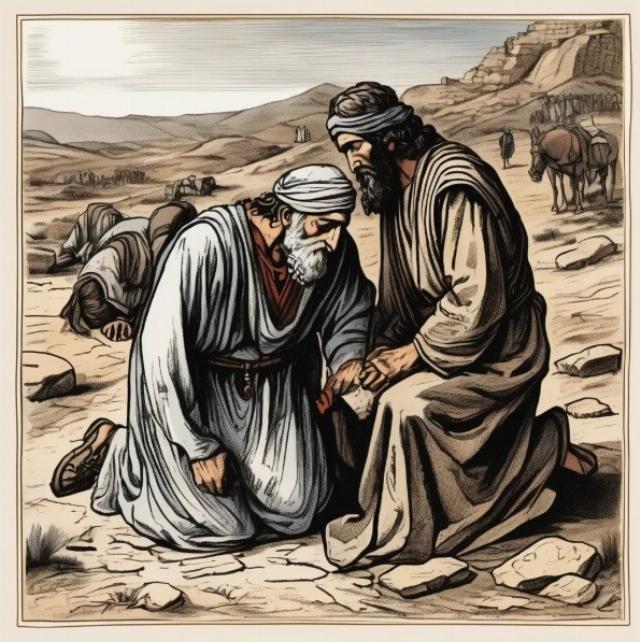
As a quick reminder, the passage in the New Testament is found in Luke 10:25-37. It refers to a Jewish traveler who is beaten and robbed on the road. Neither a fellow Jew nor a Levite assists him, but a Samaritan eventually comes to his aid.
Considering the Jews and Samaritans were at loggerheads at the time, the story is designed to instruct Jesus’s followers to love those who show mercy, no matter what tribe they are from.
Here, the outsider is the hero who is praised for helping somebody from another sect, whilst a man from the in-group sinned by ignoring his fellow Jewish brother on the roadside. However, the key point here is that while the outsider is praised for being good, it’s not an argument that all outsiders are good.
To: SeekAndFind
It is noteworthy that the Samaritan actually came upon the man. Proximity, even by chance, can be part of neighborliness. The famous freed slave, Amos Fortune was very charitable to those around him. He was a Christian man who knew he couldn’t save the world, but that he could at least help those he could touch.
3
posted on
02/18/2025 7:54:29 AM PST
by
Dr. Sivana
("Whatsoever he shall say to you, do ye." (John 2:5))
To: SeekAndFind
All of the misunderstandings or misinterpretations are just an attempt to guilt-trip Christians into accepting massive immigration, legal and illegal, because the guilt-trippers want it. They profit from it somehow, or they want the ethnic power. So they prey on the consciences and good nature of Christians by telling them they must accept open borders. “You’re not a very good Christian!” “You’re not very much like Christ!” etc. Often stated by people who never cracked open a Bible in their lives.
4
posted on
02/18/2025 8:06:10 AM PST
by
Nea Wood
( )
To: SeekAndFind
The parable doesn’t teach that the beaten man had a sense of entitlement to seek a situation where some one would have to help him. In fact, being a Jew, although even that’s not stated, if he is a Jew, it is humiliating to him to accept help from a Samaritan. The context is someone who tries to justify himself , the lawyer, who quotes the very same scripture Christ does at another time(in the previous several verses) Just like the rich young ruler who tries to justify himself by having adhered to the 10 commandments, this man has Christ show him the darkness of his heart in his self righteousness, by showing him he doesn’t measure up even to the standard set by a dog Samaritan. Thus he needs a Savior, as everyman does. The publican in the temple, praying not, “I thank God I am not as other men are, “ but “God be merciful to me a sinner. “( Lk 18:13) As always Christ points to every man’s need for a Savior; not possible to pile up enough good works.
5
posted on
02/18/2025 8:55:15 AM PST
by
sopo
To: Dr. Sivana; SeekAndFind
It is noteworthy that the Samaritan actually came upon the man. Proximity, even by chance, can be part of neighborliness. Great point! It used to be that Christians demonstrated their love for Christ by their love for one another and that included those less fortunate outside of one's immediate neighborhood. The Great Commission was to GO and preach the gospel to ALL the world. Along with that sharing of the good news was meeting the needs of the poor. Churches funded missions all over the world and helped to better the lives of those they met.
When the Government started taking over the need-meeting and missions started dropping off, taxpayers involuntarily supported people and they lost the spirit of giving and the main purpose of sharing the gospel. And like we see going on with the DOGE discoveries, vast sums of taxpayer money went towards things definitely not uplifting and which contributed to cultural rot all over the world. Helping our allies because it benefits American interests is a good thing, for sure, but like most things government bureaucracy touches it is as bloated as it is corrupt.
6
posted on
02/18/2025 4:24:02 PM PST
by
boatbums
(When you dwell in the shelter of the Most High, you will rest in the shadow of the Almighty. )
To: sopo
Shows the difference between Catholic and Protestant views of scripture. Catholic appeals to authority or the pope to try to develop an ethical rule. Protestant looks at context, looks for the savior Luke 10:
25 And, behold, a certain lawyer stood up, and tempted him, saying, Master, what shall I do to inherit eternal life?
26 He said unto him, What is written in the law? how readest thou?
27 And he answering said, Thou shalt love the Lord thy God with all thy heart, and with all thy soul, and with all thy strength, and with all thy mind; and thy neighbour as thyself.
28 And he said unto him, Thou hast answered right: this do, and thou shalt live.
29 But he, willing to justify himself, said unto Jesus, And who is my neighbour?
30 And Jesus answering said, A certain man went down from Jerusalem to Jericho, and fell among thieves, which stripped him of his raiment, and wounded him, and departed, leaving him half dead.
31 And by chance there came down a certain priest that way: and when he saw him, he passed by on the other side.
32 And likewise a Levite, when he was at the place, came and looked on him, and passed by on the other side.
33 But a certain Samaritan, as he journeyed, came where he was: and when he saw him, he had compassion on him,
34 And went to him, and bound up his wounds, pouring in oil and wine, and set him on his own beast, and brought him to an inn, and took care of him.
35 And on the morrow when he departed, he took out two pence, and gave them to the host, and said unto him, Take care of him; and whatsoever thou spendest more, when I come again, I will repay thee.
36 Which now of these three, thinkest thou, was neighbour unto him that fell among the thieves?
37 And he said, He that shewed mercy on him. Then said Jesus unto him, Go, and do thou likewise.
Sola Scriptura
7
posted on
02/18/2025 4:41:55 PM PST
by
sopo
Disclaimer:
Opinions posted on Free Republic are those of the individual
posters and do not necessarily represent the opinion of Free Republic or its
management. All materials posted herein are protected by copyright law and the
exemption for fair use of copyrighted works.
FreeRepublic.com is powered by software copyright 2000-2008 John Robinson