
Posted on 07/23/2026 3:55:19 AM PDT by Lazamataz
SAN FRANCISCO, July 22 (Reuters) - Amazon on Wednesday cut jobs in its artificial general intelligence group, marking the latest in a series of smaller reductions across the company since a much larger one in January.
Artificial general intelligence is a hypothetical AI system that surpasses human intelligence and can learn, grow and operate autonomously. Many of the top AI companies are working to develop similar systems, with the hope of deploying them to solve difficult problems.
"We've been building large AI models for several years, and it remains one of the most important things we're working on," said an Amazon spokesman following a Reuters inquiry. "We’re sharpening our focus on the initiatives that matter most for customers, so we can move faster on what counts. That focus means some difficult decisions, including eliminating some roles within parts of our AGI organization."
(Excerpt) Read more at msn.com ...
At least. at the moment, there are limits to AI’s ability to reason. That’s how I would read it.
Like anything technological, there is a place for it and not.
Limits on economical gains.
All the above.
I’ll start worrying about AI only when it learns how to generate its own electricity.
... therefore, do not give it balloons and shag rugs to rub them against.
Agreed. AGI might be harder than the previous GPT and LLM models suggested it might be.
For me, I would think they could create AGI just by instructing the computer to improve and then let it work.
I work there.
You forgot one reason - which is way more likely.
Incompetence - they hired some pretenders and you never fire people for cause any more.
A company that I've been doing gig work for in the Winter months adopted Copilot. The results have been hilarious as they are going back and having to audit much of the AI slop that they have coded and published.
On the other hand, the machine learning tool that I helped to integrate with one of their legacy systems to perform some of the more kludgy operations has been a game changer. It works very well within limited and well defined parameters (reinforcement learning).
Amazon makes it own AI chips for its data centers. So Amazon is way into the AI game. With AI it knows more about its customers than they know about themselves and their wives.
Google n Microsoft also designed their own AI chips for their data centers.
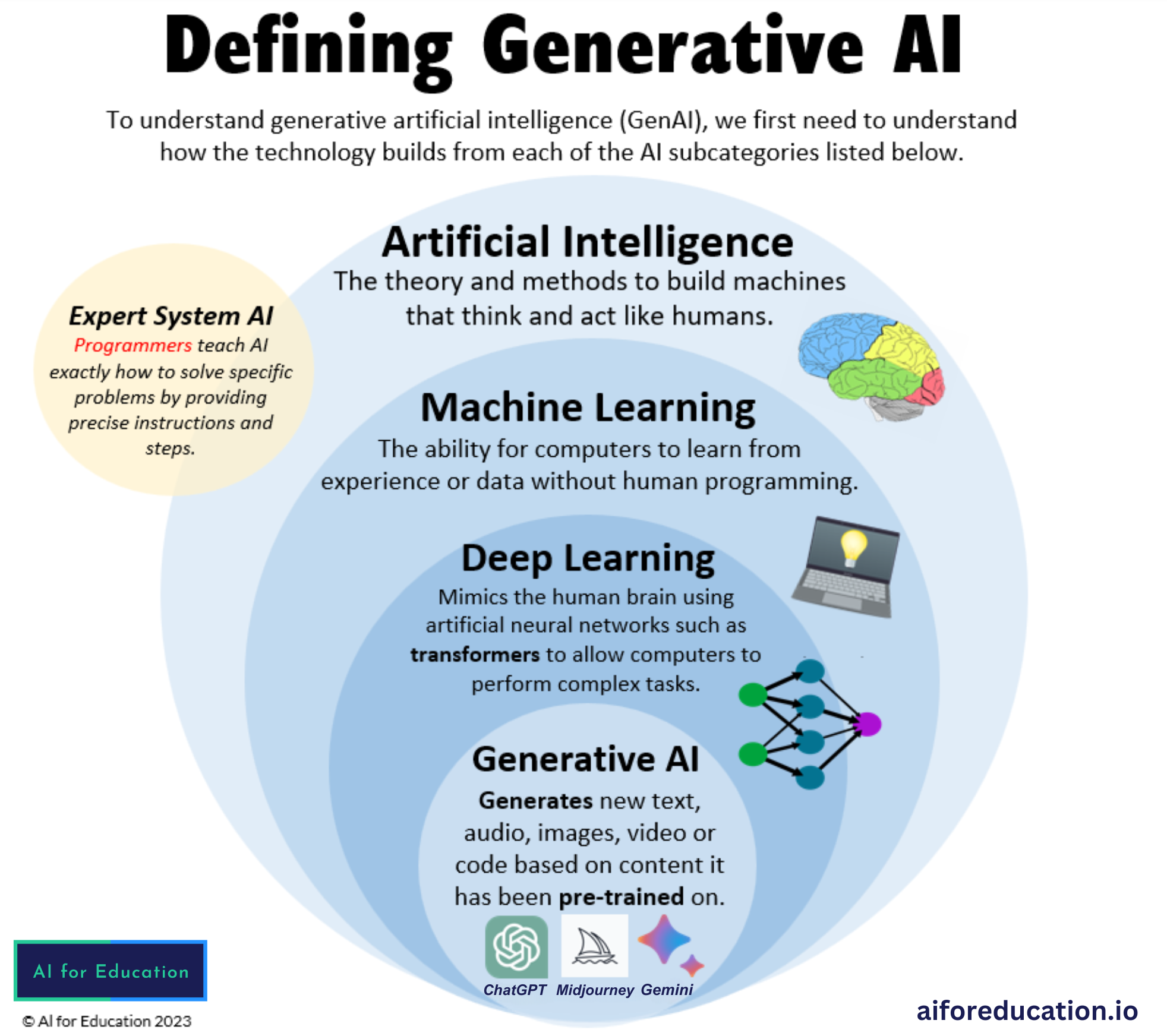
Most of what people call AI is really machine learning, which many of us have been doing since we were kids. This is an optimization method that is driven by tons of data and an objective function that repeatedly, iteratively is hyperfocused on shrinking the gap between the predicted and actual value, I.e., the error term for statisticians. It is prone to overfitting, and has drawbacks (like any technique), but isn’t witchcraft as some would like us to believe.
Generative AI doesn’t reason. It doesn’t think. It’s not magic, it’s not voodoo, and it’s not demonic (the developers may be demonic, but that’s for a different day). GenAI, too, is an optimization method that also seeks to shrink the error term, relying on a correlation matrix of probabilities that word X follows word Y (I am waaaay oversimplifying this tech…work with me).
GenAI differs from pure ML in the sense that it’s response to a prompt comes on a word-by-word/token-by-token basis, but with many more parameters AND is more prone to getting it wrong. Further, the same prompt can produce different responses - it’s a probabilistic outcome versus a fixed outcome. It has its strengths, but many weaknesses which MUST be identified by vigorous UAT as well as vigilant post-implementation monitoring.
Any sober discussion on this topic requires a little preparation. Otherwise the tech bros and doomsters will win the day.
.png)
Great post, thank you for those of us who work in this tech and keep resharing this type of info. As you said, this isn’t magic or voodoo and we are NOT worshipping it. I’ll use my same illustration that AI is akin to introducing nail guns to a construction site that only used hammers. It can make work faster or people can screw it up more and its not required in every situation. Either way, it’s in your benefit to learn it.
A computer can only evaluate one state as being true or false or 1 or 0. And it only can determinate that using 256 different tokens. Good luck having that rival a human beings cognitive ability.
We haven’t even been able to apply “AI” into these internet browsers spell checkers yet (mostly because there is no way to make money off of that).
The race is to create AI that rivals humans. And become the richest and most powerful human in the world (so you can mate with the most beautiful humans).
The problem is we don’t have the basic toolset to do that.
AI going rogue may be
a big part of it.
https://apnews.com/article/openai-rogue-ai-hack-hugging-face-67b151f1ca59851a9234bee110699f05
May be something happen and no one want to repeat it.
S&P Global Ratings gave its answer for one of the biggest spenders. It cut Oracle Corp.'s long-term credit rating to BBB-, the lowest rung of investment grade and just one notch above junk. What makes the downgrade worth more than a passing glance is what it reveals about the wider group. Every major AI spender is pouring money into building out their supply capabilities, but they're all doing it from different financial positions, and the gap between them is widening fast.
S&P's reasoning for the Oracle downgrade was blunt. The agency admitted it had underestimated the scale of investment required for Oracle's AI ambitions, and now expects the company's free operating cash flow deficit to widen to roughly $42 billion in fiscal 2027, nearly double its earlier forecast.
So what does that mean for Oracle's peers? Well, if you put the four biggest AI spenders side by side, then the divide becomes obvious. The top two are Microsoft Corp., which carries an AAA rating, and Alphabet Inc., which carries an AA+ rating. Next up is Amazon.com Inc. still at the higher end of the scale at AA, while Oracle sits alone down at BBB-.
The uncomfortable answer to the question, though, is that none of them can fully fund this from existing cash generation anymore? All four have seen their free cash flow compressed dramatically by the scale of the spending, and all four have been active issuers in the bond market to help cover the gap. What separates them isn't whether they borrow, but how heavily they're leaning on it, and how much of the repayment depends on revenue that hasn't arrived yet.
AI , the spying , hacking , virus

These were not the jobs that they had intended to eliminate.
Disclaimer: Opinions posted on Free Republic are those of the individual posters and do not necessarily represent the opinion of Free Republic or its management. All materials posted herein are protected by copyright law and the exemption for fair use of copyrighted works.