Skip to comments.
Should Ben Roberts-Smith case ever have been brought? (Australian Victoria Cross winner facing war crimes murder charged)
The Australian ^
| 16th April 2026
| Peta Credlin
Posted on 04/15/2026 7:50:58 PM PDT by naturalman1975
When Australian Army private Robert Poate was gunned down in 2012 by a rogue Afghan soldier inside what should have been a safe patrol base, within 20 minutes Ben Roberts-Smith was on the scene with his small SAS team. Too late to save Poate and the two other Australians murdered by Hekmatullah, the war hero was sent out to hunt the Afghan down. Elevated to the top of the Joint Priorities Effects List, this terrorist could be killed whether armed or not.
If the war in Afghanistan taught our soldiers anything it was that the line between friend and foe was often indistinguishable, that split-second judgments were a matter of life and death, and that officialdom made rules it never had to operate under.
It’s bad enough that the same officialdom that once lauded Roberts-Smith as a military hero now wants to make him a war criminal. But what’s worse is that to secure a conviction against Australia’s most decorated living soldier, officialdom is not playing fair, as demonstrated by the filming of his dramatic (and unnecessary) arrest; the prior tip-offs to the media outlets that have been persecuting him for years; and the obvious forum shopping of an arrest in Sydney (rather than in Brisbane or Perth) where prosecutors obviously think a jury might be less sympathetic to a soldier whose career was fighting Islamist terrorists.
Either Canberra got it wrong when it awarded Roberts-Smith the Victoria Cross without adequate due diligence or it has it wrong it now, targeting rank-and-file soldiers via the Brereton Inquiry process while exempting their commanders. And, if I can read anything from the incredibly strong response I’ve had from readers and viewers following the highly staged arrest of the former SAS corporal last week, it’s that Australians do not trust the official establishment to get it right from here.
Roberts-Smith’s lawyers had reportedly undertaken on several occasions to have him attend a police station if required. Yet the Australian Federal Police, the Office of the Special Investigator for these alleged war crimes cases, plus the federal Attorney-General decided instead to arrest him at Sydney airport in front of a planeload of bystanders and his own daughters. This was a deliberate and entirely unnecessary humiliation.
What’s more, in what seemed more theatre than justice, the AFP filmed the arrest and distributed the footage to the media. Perhaps this was the authorities’ way of letting the world know that no one, not even a war hero, was beyond their reach. In practice, it was plainly meant to be intimidatory and could hardly fail to have prejudiced potential jurors.
Further, Nine media, which has been running stories targeting Roberts-Smith for years, received a tip-off about the arrest so its cameras could be on the scene to get its own exclusive footage. And Nick McKenzie, the Nine print journalist who has long been hounding Roberts-Smith, reportedly had his story announcing the arrest written and filed hours before it actually took place.
All this is bad enough. But then The Sydney Morning Herald reported that “one well-placed source suggested that investigators might have waited to arrest Roberts-Smith in NSW because they wanted access to a wider and more diverse jury pool”. Not Perth, where Roberts-Smith was domiciled when the alleged offences took place; not Brisbane, where he has been living for many years; but Sydney where, it seems, prosecutors believe it would be easier to get a jury to convict. On my Sky News show this week, former AFP detective superintendent David Craig described the whole arrest circus as a “publicity stunt” and “close to perverting the course of justice”. Craig himself spent 12 months in Afghanistan as deputy commander of the AFP mission there. The AFP veteran, who says he “still bleeds blue”, is so angry about the way his former colleagues have handled the Roberts-Smith case that he accused the AFP of becoming “a puppet for the Albanese government” and “wanting to grandstand against anything that may be against the Muslim vote”.
At the heart of public concern is the perception of double standards: the fact, in the wake of the Brereton report, investigations were opened into the actions of dozens of special forces soldiers but not one of their senior officers, who were explicitly excused from any responsibility for the action of the soldiers under their command; plus the fact Australian officialdom has spent a decade and some $300m trying to make charges stick against our own soldiers.
Then there’s the sheer cruelty of a decade’s open-ended ongoing investigation into soldiers who, whatever their mistakes, were doing what few of their accusers have ever done, namely risking their lives for our country. Reviewing Aaron Patrick’s account of the Afghanistan campaign (The Last Battle: Australian SAS, Commandos and Our Greatest Victory in Our Longest War), Anne Henderson says his “analysis of what would unfold exposes the fragility of memory in retelling action from within the heat of battle, along with a breakdown in army command which failed to deal with human frailty and internal rivalry. The elevation of Ben Roberts-Smith to the highest level of award made him part of an elite when fellow combatants regarded others as equally worthy.” Henderson adds: “That it is taking so long to establish the facts says much for the limits of the available evidence.”
That evidentiary burden will be extreme in this case given there are no bodies, no post-mortem reports and no ballistics, plus the not-so-insignificant issue of how to deal with national security matters in an open court jury trial.
In finding against Roberts-Smith on the balance of probabilities in a defamation case, a Federal Court judge believed the former soldiers testifying against their one-time comrade – and not those supporting him – because of the “integrity” needed to testify against their own. And yes, that does take moral courage. Now, a jury will have to weigh all this again to determine whether war crimes have been established beyond reasonable doubt. And to lock him up in prison for life, that verdict must be unanimous.
The moral principle is clear: prisoners can never be shot. But given the need for split-second decisions and the difficulty of telling friend from foe, good people can certainly differ on what’s actually moral practice in the fog of war.
Given the conflict of testimony, the effluxion of time, the possible contamination of evidence, the failures of leadership and the slim chances of a conviction, this case should never have been brought. Now that it has been, the very least we owe these men is that they are treated fairly by a justice system that they have risked their lives to defend.
TOPICS: Australia/New Zealand; Culture/Society; Foreign Affairs; News/Current Events
KEYWORDS:
My own position - as a retired officer of the Australian Defence Force, and as a military historian - is that allegations of war crimes should be fully investigated, and that it is appropriate to bring charges in cases where a reasonable case can be made that such crimes occurred.
However, on the evidence so far available, it seems to me very unlikely that sufficient evidence exists to justify charges being laid in this case. When two of the five alleged victims cannot even be identified, for example...
And there definitely seem to be areas of genuine concern about how the case is being handled. A public arrest at Sydney Airport filmed by the media of a man who has consistently offered to surrender himself to authorities...
this is looking more and more like a witch hunt. And I see parallels with the unrelenting attacks on Cardinal George Pell that lead to him facing over a year in prison before finally being acquitted on appeal by a unanimous decision of Australia's High Court.
I have limited confidence that Ben Roberts-Smith VC MG can possibly receive a fair trial, and while I do have some confidence that in that event, the High Court would eventually remedy the situation as they did with George Pell, such a result would not only be bad for BRS himself, but bad for the Australian justice system.
To: naturalman1975
For the record, the following are the citations for Ben Roberts-Smith VC MG two awards for bravery.
CITATION
Australia Army
Awarded the Victoria Cross for Australia Corporal Ben Roberts-Smith, VC, MG
Corporal Benjamin Roberts-Smith enlisted in the Australian Regular Army in 1996. After completing the requisite courses, he was posted the 3rd Battalion, the Royal Australian Regiment where he saw active service in East Timor. In January 2003, he successfully completed the Australian Special Air Service Regiment Selection Course.
During his tenure with the Regiment, he deployed on Operation VALIANT, SLATE, SLIPPER, CATALYST and SLIPPER II. Corporal Benjamin Roberts-Smith was awarded the Medal for Gallantry for his actions in Afghanistan in 2006
On 11/06/2010, a troop of the Special Operations Task Group conducted a helicopter assault into Tizak, Kandahar Province, in order to capture or kill a senior Taliban commander.
Immediately upon the helicopter insertion, the troop was engaged by machine gun and rocket propelled grenade fire from multiple, dominating positions. Two soldiers were wounded in action and the troop was pinned down by fire from three machine guns in an elevated fortified position to the south of the village. Under the cover of close air support, suppressive small arms and machine gun fire, Corporal Roberts-Smith and his patrol manoeuvred to within 70 metres of the enemy position in order to neutralise the enemy machine gun positions and regain the initiative.
Upon commencement of the assault, the patrol drew very heavy, intense, effective and sustained fire from the enemy position. Corporal Roberts-Smith and his patrol members fought towards the enemy position until, at a range of 40 metres, the weight of fire prevented further movement forward. At this point, he identified the opportunity to exploit some cover provided by a small structure. As he approached the structure, Corporal Roberts-Smith identified an insurgent grenadier in the throes of engaging his patrol. Corporal Roberts-Smith instinctively engaged the insurgent at point-blank range resulting in the death of the insurgent. With the members of his patrol still pinned down by the three enemy machine gun positions, he exposed his own position in order to draw fire away from his patrol, which enabled them to bring fire to bear against the enemy. His actions enabled his Patrol Commander to throw a grenade and silence one of the machine guns. Seizing the advantage, and demonstrating extreme devotion to duty and the most conspicuous gallantry, Corporal Roberts-Smith, with a total disregard for his own safety, stormed the enemy position killing the two remaining machine gunners.
His act of valour enabled his patrol to break-in to the enemy position and to lift the weight of fire from the remainder of the troop who had been pinned down by the machine gun fire. On seizing the fortified gun position, Corporal Roberts-Smith then took the initiative again and continued to assault enemy positions in depth during which he and another patrol member engaged and killed further enemy. His acts of selfless valour directly enabled his troop to go on and clear the village of Tizak of Taliban. This decisive engagement subsequently caused the remainder of the Taliban in Shah Wali Kot District to retreat from the area.
Corporal Roberts-Smith’s most conspicuous gallantry in a circumstance of extreme peril was instrumental to the seizure of the initiative and the success of the troop against a numerically superior enemy force. His valour was an inspiration to the soldiers with whom he fought alongside and is in keeping with the finest traditions of the Australian Army and the Australian Defence Force.
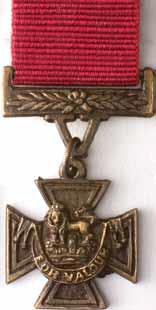
CITATION
Australian Army
Awarded the Medal for Gallantry
For gallantry in action in hazardous circumstances as a patrol sniper in the Special Operations Task Group – Task Force 637, whilst deployed on Operation SLIPPER Rotation Three Afghanistan, May – September 2006.
On the night of 31/05/2006, Lance Corporal Roberts-Smith was employed as a patrol scout and sniper in a patrol which was tasked with establishing an Observation Post near the Chora Pass in extremely rugged terrain overlooking an Anti Coalition Militia sanctuary. Early in the patrol, after an arduous ten hour foot infiltration up the side of a mountain, the patrol was required to coordinate offensive air support to assist a combined Special Operations Task Group and other Special Forces patrol who were in contact with the Anti Coalition Militia in the valley floor to their north. Following this engagement the patrol remained in the Observation Post to continue providing vital information on the Anti Coalition Militia in the area. This comprehensive reporting had a significant effect on shaping the local area for the subsequent coalition forces operation.
On 20/06/2006, the Observation Post had become the focus of the Anti Coalition Militia force and repeated attempts to locate and surround the position ensued. In one particular incident the Militia attempted to outflank the Observation Post. Lance Corporal Roberts-Smith was part of a two man team tasked to move out of their relatively secure Observation Post in order to locate and neutralise the Militia and regain the initiative. This task was successfully achieved.
In another incident, two Anti Coalition Militia attempted to attack the Observation Post from a different flank, Lance Corporal Roberts-Smith again moved to support and neutralise one of these Militia. Lance Corporal Roberts-Smith then realised that the forward edge of the Observation Post was not secure and made the decision to split the team and take up an exposed position forward of the patrol so he could effectively employ his sniper weapon. Whilst isolated, and in his precarious position, he observed a group of sixteen Anti Coalition Militia advancing across open ground towards the Observation Post. Lance Corporal Roberts-Smith effectively employed his sniper rifle to stop their advance whilst receiving very accurate small arms fire from another group of Militia to his flank.
Through his efforts, Lance Corporal Roberts-Smith maintained the initiative and ensured that his patrol remained secure by holding this position without support for twenty minutes. He was eventually reinforced by his original team member and together they continued to hold off the Militia advance for a further twenty minutes until offensive air support arrived.
Lance Corporal Roberts-Smith’s actions on 2/06/2006, whilst under heavy Anti Coalition Militia fire and in a precarious position, threatened by a numerically superior force, are testament to his courage, tenacity and sense of duty to his patrol. His display of gallantry in disregarding his own personal safety in maintaining an exposed sniper position under sustained fire with a risk of being surrounded by the Anti Coalition Militia was outstanding. His actions, in order to safeguard his patrol, were of the highest order and in keeping with the finest traditions of Special Operations Command Australia, the Australian Army and the Australian Defence Force.
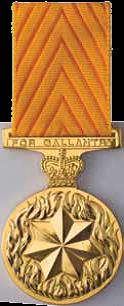
2
posted on
04/15/2026 7:58:31 PM PDT
by
naturalman1975
("America was under attack. Australia was immediately there to help." - John Winston Howard)
To: naturalman1975
I am still in shock that Australia should have come to this.
To: doorgunner69
I don’t believe this is particularly indicative of where Australia is, anymore than I believe the response to Maywand says much about the US as a whole.
4
posted on
04/15/2026 8:20:19 PM PDT
by
naturalman1975
("America was under attack. Australia was immediately there to help." - John Winston Howard)
To: naturalman1975
If any of the charges against him, 5 involved, are found to be true. then he did violate the Geneva Conventions of which Australia is a member. So it should come to trial and there are apparently negative witnesses that are providing information to acts that easily qualify are murder if true.
And by displaying the effort to protecting the soldier from his actions, if wrong, they are displaying deep contempt and/or disdain for their allies that are under the same international treaty signed on by 195 other countries in 1949.
wy69
5
posted on
04/15/2026 9:25:04 PM PDT
by
whitney69
(uestiuetion and interpret the answer.)
To: naturalman1975
Fine. Make the lawyers fight the war.
6
posted on
04/16/2026 3:23:24 PM PDT
by
Jacquerie
(ArticleVBlog.com)
To: whitney69
The enemy violated the Geneva Conventions by not being dressed in a military uniform. Hiding among civilians then attacking is a war crime. The Afghans were engaged in perfidy.
https://ihl-databases.icrc.org/en/customary-ihl/v1/rule65
But somehow I don’t see Australia prosecuting them.
7
posted on
04/16/2026 9:09:04 PM PDT
by
sloanrb
Disclaimer:
Opinions posted on Free Republic are those of the individual
posters and do not necessarily represent the opinion of Free Republic or its
management. All materials posted herein are protected by copyright law and the
exemption for fair use of copyrighted works.
FreeRepublic.com is powered by software copyright 2000-2008 John Robinson