Free Republic
Browse · Search
Religion
Topics · Post Article

Skip to comments.

Catholic Caucus: Daily Mass Readings 21-November-2026
https://universalis.com/20261121/mass.htm ^

Posted on 11/21/2026 4:15:41 PM PST by annalex

21 November 2026

The Presentation of the Blessed Virgin Mary
on Saturday of week 33 in Ordinary Time
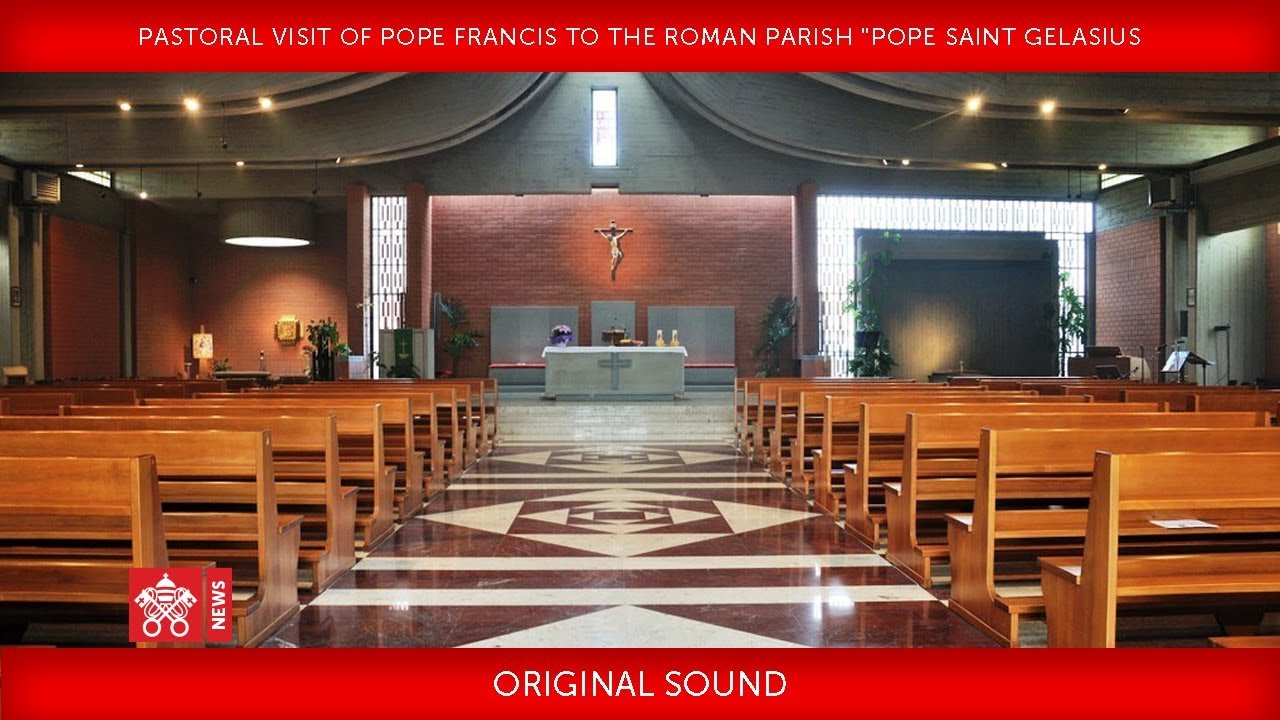


Pope Saint Gelasius I, Rome

Readings at Mass

This is a preview of Universalis. The Universalis app gives you every day of every year, not just the single week you’re seeing now, and it doesn’t need the Internet. It gives you the official New American Bible version for the readings at Mass.
As well as the Mass, it gives you the Liturgy of the Hours.
It costs $9.99-12.99 on your phone, or £19.99 (about $26.50) on your computer. Get it now.

Liturgical Colour: White. Year: A(II).

Readings for the feria

Readings for the memorial

These are the readings for the feria


First reading
Apocalypse 11:4-12

The prophets will die who have been a plague to the world

I, John, heard a voice saying: ‘These, my two witnesses, are the two olive trees and the two lamps that stand before the Lord of the world. Fire can come from their mouths and consume their enemies if anyone tries to harm them; and if anybody does try to harm them he will certainly be killed in this way. They are able to lock up the sky so that it does not rain as long as they are prophesying; they are able to turn water into blood and strike the whole world with any plague as often as they like. When they have completed their witnessing, the beast that comes out of the Abyss is going to make war on them and overcome them and kill them. Their corpses will lie in the main street of the Great City known by the symbolic names Sodom and Egypt, in which their Lord was crucified. Men out of every people, race, language and nation will stare at their corpses, for three-and-a-half days, not letting them be buried, and the people of the world will be glad about it and celebrate the event by giving presents to each other, because these two prophets have been a plague to the people of the world.’
  After the three-and-a-half days, God breathed life into them and they stood up, and everybody who saw it happen was terrified; then they heard a loud voice from heaven say to them, ‘Come up here’, and while their enemies were watching, they went up to heaven in a cloud.


Responsorial Psalm
Psalm 143(144):1-2,9-10
Blessed be the Lord, my rock.
Blessed be the Lord, my rock,
  who trains my arms for battle,
  who prepares my hands for war.
Blessed be the Lord, my rock.
He is my love, my fortress;
  he is my stronghold, my saviour
my shield, my place of refuge.
  He brings peoples under my rule.
Blessed be the Lord, my rock.
To you, O God, will I sing a new song;
  I will play on the ten-stringed lute
to you who give kings their victory,
  who set David your servant free.
Blessed be the Lord, my rock.

Gospel Acclamationcf.Lk8:15
Alleluia, alleluia!
Blessed are those who,
with a noble and generous heart,
take the word of God to themselves
and yield a harvest through their perseverance.
Alleluia!
Or:cf.2Tim1:10
Alleluia, alleluia!
Our Saviour Jesus Christ abolished death
and he has proclaimed life through the Good News.
Alleluia!

GospelLuke 20:27-40

In God all men are alive

Some Sadducees – those who say that there is no resurrection – approached Jesus and they put this question to him, ‘Master, we have it from Moses in writing, that if a man’s married brother dies childless, the man must marry the widow to raise up children for his brother. Well then, there were seven brothers. The first, having married a wife, died childless. The second and then the third married the widow. And the same with all seven, they died leaving no children. Finally the woman herself died. Now, at the resurrection, to which of them will she be wife since she had been married to all seven?’
  Jesus replied, ‘The children of this world take wives and husbands, but those who are judged worthy of a place in the other world and in the resurrection from the dead do not marry because they can no longer die, for they are the same as the angels, and being children of the resurrection they are sons of God. And Moses himself implies that the dead rise again, in the passage about the bush where he calls the Lord the God of Abraham, the God of Isaac and the God of Jacob. Now he is God, not of the dead, but of the living; for to him all men are in fact alive.’
  Some scribes then spoke up. ‘Well put, Master’ they said – because they would not dare to ask him any more questions.

Continue

These are the readings for the memorial


First reading
Zechariah 2:14-17

'I am coming', says the Lord

Sing, rejoice,
daughter of Zion;
for I am coming
to dwell in the middle of you
– it is the Lord who speaks.
Many nations will join the Lord,
on that day;
they will become his people.
But he will remain among you,
and you will know that the Lord of Hosts has sent me to you.
But the Lord will hold Judah
as his portion in the Holy Land,
and again make Jerusalem his very own.
Let all mankind be silent before the Lord!
For he is awaking and is coming from his holy dwelling.


Responsorial PsalmLuke 1:46-55
The Almighty works marvels for me. Holy is his name!
or
Blessed is the Virgin Mary, who bore the Son of the eternal Father.
My soul glorifies the Lord,
  my spirit rejoices in God, my Saviour.
The Almighty works marvels for me. Holy is his name!
or
Blessed is the Virgin Mary, who bore the Son of the eternal Father.
He looks on his servant in her nothingness;
  henceforth all ages will call me blessed.
The Almighty works marvels for me.
  Holy his name!
The Almighty works marvels for me. Holy is his name!
or
Blessed is the Virgin Mary, who bore the Son of the eternal Father.
His mercy is from age to age,
  on those who fear him.
He puts forth his arm in strength
  and scatters the proud-hearted.
The Almighty works marvels for me. Holy is his name!
or
Blessed is the Virgin Mary, who bore the Son of the eternal Father.
He casts the mighty from their thrones
  and raises the lowly.
He fills the starving with good things,
  sends the rich away empty.
The Almighty works marvels for me. Holy is his name!
or
Blessed is the Virgin Mary, who bore the Son of the eternal Father.
He protects Israel, his servant,
  remembering his mercy,
the mercy promised to our fathers,
  to Abraham and his sons for ever.
The Almighty works marvels for me. Holy is his name!
or
Blessed is the Virgin Mary, who bore the Son of the eternal Father.

Gospel AcclamationLk11:28
Alleluia, alleluia!
Happy are those
who hear the word of God
and keep it.
Alleluia!

Gospel
Matthew 12:46-50

My mother and my brothers are anyone who does the will of my Father in heaven

Jesus was speaking to the crowds when his mother and his brothers appeared; they were standing outside and were anxious to have a word with him. But to the man who told him this Jesus replied, ‘Who is my mother? Who are my brothers?’ And stretching out his hand towards his disciples he said, ‘Here are my mother and my brothers. Anyone who does the will of my Father in heaven, he is my brother and sister and mother.’

Continue

The readings on this page are from the Jerusalem Bible, which is used at Mass in most of the English-speaking world. The New American Bible readings, which are used at Mass in the United States, are available in the Universalis apps, programs and downloads.

You can also view this page with the Gospel in Greek and English.


TOPICS: Catholic; General Discusssion; Prayer; Worship
KEYWORDS: catholic; lk18; mt12; ordinarytime; prayer

Click here: to donate by Credit Card

Or here: to donate by PayPal

Or by mail to: Free Republic, LLC - PO Box 9771 - Fresno, CA 93794

Thank you very much and God bless you.

For your reading, reflection, faith-sharing, comments, questions, discussion.

1 posted on 11/21/2026 4:15:41 PM PST by annalex
[ Post Reply]

To: All

KEYWORDS: catholic; lk18; mt12; ordinarytime; prayer


2 posted on 11/21/2026 4:16:19 PM PST by annalex (fear them not)
[ Post Reply]

To: nickcarraway; NYer; ELS; Pyro7480; livius; ArrogantBustard; Catholicguy; RobbyS; marshmallow; ...


Alleluia Ping

Please FReepmail me to get on/off the Alleluia Ping List.


3 posted on 11/21/2026 4:16:59 PM PST by annalex (fear them not)
[ Post Reply]

To: annalex
Chris Robinson: My Dad [our Jim Robinson] Passed Away Peacefully Monday Night (October 27th) In Our Home.
Jim still needs our prayers. Thread 2
Prayer thread for Salvation's recovery
Pray for Ukraine
Prayer thread for Fidelis' recovery
Update on Jim Robinson's health issues
4 posted on 11/21/2026 4:17:26 PM PST by annalex (fear them not)
[ Post Reply]

To: annalex
Luke
 English: Douay-RheimsLatin: Vulgata ClementinaGreek NT: Byzantine/Majority Text (2000)
 Luke 20
27. And there came to him some of the Sadducees, who deny that there is any resurrection, and they asked him, Accesserunt autem quidam sadducæorum, qui negant esse resurrectionem, et interrogaverunt eum,προσελθοντες δε τινες των σαδδουκαιων οι αντιλεγοντες αναστασιν μη ειναι επηρωτησαν αυτον
28. Saying: Master, Moses wrote unto us, If any man's brother die, having a wife, and he leave no children, that his brother should take her to wife, and raise up seed unto his brother. dicentes : Magister, Moyses scripsit nobis : Si frater alicujus mortuus fuerit habens uxorem, et hic sine liberis fuerit, ut accipiat eam frater ejus uxorem, et suscitet semen fratri suo.λεγοντες διδασκαλε μωσης εγραψεν ημιν εαν τινος αδελφος αποθανη εχων γυναικα και ουτος ατεκνος αποθανη ινα λαβη ο αδελφος αυτου την γυναικα και εξαναστηση σπερμα τω αδελφω αυτου
29. There were therefore seven brethren: and the first took a wife, and died without children. Septem ergo fratres erant : et primus accepit uxorem, et mortuus est sine filiis.επτα ουν αδελφοι ησαν και ο πρωτος λαβων γυναικα απεθανεν ατεκνος
30. And the next took her to wife, and he also died childless. Et sequens accepit illam, et ipse mortuus est sine filio.και ελαβεν ο δευτερος την γυναικα και ουτος απεθανεν ατεκνος
31. And the third took her. And in like manner all the seven, and they left no children, and died. Et tertius accepit illam. Similiter et omnes septem, et non reliquerunt semen, et mortui sunt.και ο τριτος ελαβεν αυτην ωσαυτως ωσαυτως δε και οι επτα ου κατελιπον τεκνα και απεθανον
32. Last of all the woman died also. Novissime omnium mortua est et mulier.υστερον [δε] παντων απεθανεν και η γυνη
33. In the resurrection therefore, whose wife of them shall she be? For all the seven had her to wife. In resurrectione ergo, cujus eorum erit uxor ? siquidem septem habuerunt eam uxorem.εν τη ουν αναστασει τινος αυτων γινεται γυνη οι γαρ επτα εσχον αυτην γυναικα
34. And Jesus said to them: The children of this world marry, and are given in marriage: Et ait illis Jesus : Filii hujus sæculi nubunt, et traduntur ad nuptias :και αποκριθεις ειπεν αυτοις ο ιησους οι υιοι του αιωνος τουτου γαμουσιν και εκγαμισκονται
35. But they that shall be accounted worthy of that world, and of the resurrection from the dead, shall neither be married, nor take wives. illi vero qui digni habebuntur sæculo illo, et resurrectione ex mortuis, neque nubent, neque ducent uxores :οι δε καταξιωθεντες του αιωνος εκεινου τυχειν και της αναστασεως της εκ νεκρων ουτε γαμουσιν ουτε εκγαμιζονται
36. Neither can they die any more: for they are equal to the angels, and are the children of God, being the children of the resurrection. neque enim ultra mori potuerunt : æquales enim angelis sunt, et filii sunt Dei, cum sint filii resurrectionis.ουτε γαρ αποθανειν ετι δυνανται ισαγγελοι γαρ εισιν και υιοι εισιν του θεου της αναστασεως υιοι οντες
37. Now that the dead rise again, Moses also shewed, at the bush, when he called the Lord, The God of Abraham, and the God of Isaac, and the God of Jacob; Quia vero resurgant mortui, et Moyses ostendit secus rubum, sicut dicit Dominum, Deum Abraham, et Deum Isaac, et Deum Jacob.οτι δε εγειρονται οι νεκροι και μωσης εμηνυσεν επι της βατου ως λεγει κυριον τον θεον αβρααμ και τον θεον ισαακ και τον θεον ιακωβ
38. For he is not the God of the dead, but of the living: for all live to him. Deus autem non est mortuorum, sed vivorum : omnes enim vivunt ei.θεος δε ουκ εστιν νεκρων αλλα ζωντων παντες γαρ αυτω ζωσιν
39. And some of the scribes answering, said to him: Master, thou hast said well. Respondentes autem quidam scribarum, dixerunt ei : Magister, bene dixisti.αποκριθεντες δε τινες των γραμματεων ειπον διδασκαλε καλως ειπας
40. And after that they durst not ask him any more questions. Et amplius non audebant eum quidquam interrogare.ουκετι δε ετολμων επερωταν αυτον ουδεν

5 posted on 11/21/2026 4:19:22 PM PST by annalex (fear them not)
[ Post Reply]

To: annalex

Catena Aurea by St. Thomas Aguinas

20:27–40

27. Then came to him certain of the Sadducees, which deny that there is any resurrection; and they asked him,

28. Saying, Master, Moses wrote unto us, If any man’s brother die, having a wife, and he die without children, that his brother should take his wife, and raise up seed unto his brother.

29. There were therefore seven brethren: and the first took a wife, and died without children.

30. And the second took her to wife, and he died childless.

31. And the third took her; and in like manner the seven also: and they left no children, and died.

32. Last of all the woman died also.

33. Therefore in the resurrection whose wife of them is she? for seven had her to wife.

34. And Jesus answering said unto them, The children of this world marry, and are given in marriage:

35. But they which shall be accounted worthy to obtain that world, and the resurrection from the dead, neither marry, nor are given in marriage:

36. Neither can they die any more: for they are equal unto the angels; and are the children of God, being the children of the resurrection.

37. Now that the dead are raised, even Moses shewed at the bush, when he calleth the Lord the God of Abraham, and the God of Isaac, and the God of Jacob.

38. For he is not a God of the dead, but of the living: for all live unto him.

39. Then certain of the Scribes answering said, Master, thou hast well said.

40. And after that they durst not ask him any question at all.

BEDE. There were two heresies among the Jews, one of the Pharisees, who boasted in the righteousness of their traditions, and hence they were called by the people, “separated;” the other of the Sadducees, whose name signified “righteous,” claiming to themselves that which they were not. When the former went away, the latter came to tempt Him.

ORIGEN. The heresy of the Sadducees not only denies the resurrection of the dead, but also believes the soul to die with the body. Watching then to entrap our Saviour in His words, they proposed a question just at the time when they observed Him teaching His disciples concerning the resurrection; as it follows, And they asked him, saying, Master, Moses wrote to us, If a brother, &c.

AMBROSE. According to the letter of the law, a woman is compelled to marry, however unwilling, in order that a brother may raise up seed to his brother who is dead. The letter therefore killeth, but the Spirit is the master of charity.

THEOPHYLACT. Now the Sadducees resting upon a weak foundation, did not believe in the doctrine of the resurrection. For imagining the future life in the resurrection to be carnal, they were justly misled, and hence reviling the doctrine of the resurrection as a thing impossible they invent the story, There were seven brothers, &c.

BEDE. (ut sup.) They devise this story in order to convict those of folly, who assert the resurrection of the dead. Hence they object a base fable, that they may deny the truth of the resurrection.

AMBROSE. Mystically, this woman is the synagogue, which had seven husbands, as it is said to the Samaritan, Thou hadst five husbands, (John 4:18.) because the Samaritan follows only the five books of Moses, the synagogue for the most part seven. And from none of them has she received the seed of an hereditary offspring, and so can have no part with her husbands in the resurrection, because she perverts the spiritual meaning of the precept into a carnal. For not any carnal brother is pointed at, who should raise seed to his deceased brother, but that brother who from the dead people of the Jews should claim unto himself for wife the wisdom of the divine worship, and from it should raise up seed in the Apostles, who being left as it were unformed in the womb of the synagogue, have according to the election of grace been thought worthy to be preserved by the admixture of a new seed.

BEDE. Or these seven brothers answer to the reprobate, who throughout the whole life of the world, which revolves in seven days, are fruitless in good works, and these being carried away by death one after another, at length the course of the evil world, as the barren woman, itself also passes away.

THEOPHYLACT. But our Lord shews that in the resurrection there will be no fleshly conversation, thereby overthrowing their doctrine together with its slender foundation; as it follows, And Jesus said unto them, The children of this world marry, &c.

AUGUSTINE. (de Quæst. Ev. l. ii. cap. 49.) For marriages are for the sake of children, children for succession, succession because of death. Where then there is no death, there are no marriages; and hence it follows, But they which shall be accounted worthy, &c.

BEDE. Which must not be taken as if only they who are worthy were either to rise again or be without marriage, but all sinners also shall rise again, and abide without marriage in that new world. But our Lord wished to mention only the elect, that He might incite the minds of His hearers to search into the glory of the resurrection.

AUGUSTINE. (de Quæst. Ev. ubi sup.) As our discourse is made up and completed by departing and succeeding syllables, so also men themselves whose faculty discourse is, by departure and succession make up and complete the order of this world, which is built up with the mere temporal beauty of things. But in the future life, seeing that the Word which we shall enjoy is formed by no departure and succession of syllables, but all things which it has it has everlastingly and at once, so those who partake of it, to whom it alone will be life, shall neither depart by death, nor succeed by birth, even as it now is with the angels; as it follows, For they are equal to the angels.

CYRIL OF ALEXANDRIA. For as the multitude of the angels is indeed very great, yet they are not propagated by generation, but have their being from creation, so also to those who rise again, there is no more necessity for marriage; as it follows, And are the children of God.

THEOPHYLACT. As if He said, Because it is God who worketh in the resurrection, rightly are they called the sons of God, who are regenerated by the resurrection. For there is nothing carnal seen in the regeneration of them that rise again, there is neither coming together, nor the womb, nor birth.

BEDE. Or they are equal to the angels, and the children of God, because made new by the glory of the resurrection, with no fear of death, with no spot of corruption, with no quality of an earthly condition, they rejoice in the perpetual beholding of God’s presence.

ORIGEN. But because the Lord says in Matthew, which is here omitted, Ye do err, not knowing the Scriptures, (Mat. 22:29.) I ask the question, where is it so written, They shall neither marry, nor be given in marriage? for as I conceive there is no such thing to be found either in the Old or New Testament, but the whole of their error had crept in from the reading of the Scriptures without understanding; for it is said in Esaias, My elect shall not have children for a curse. (Isai. 65:23.) Whence they suppose that the like will happen in the resurrection. But Paul interpreting all these blessings as spiritual, knowing them not to be carnal, says to the Ephesians, Ye have blessed us in all spiritual blessings. (Eph. 1:3.)

THEOPHYLACT. Or to the reason above given the Lord added the testimony of Scripture, Now that the dead are raised, Moses also shewed at the bush, (Exod. 3:6.) as the Lord saith, I am the God of Abraham, the God of Isaac, and the God of Jacob. As if he said, If the patriarchs have once returned to nothing so as not to live with God in the hope of a resurrection, He would not have said, I am, but, I was, for we are accustomed to speak of things dead and gone thus, I was the Lord or Master of such a thing; but now that He said, I am, He shews that He is the God and Lord of the living. This is what follows, But he is not a God of the dead, but of the living: for all live unto him. For though they have departed from life, yet live they with Him in the hope of a resurrection.

BEDE. Or He says this, that after having proved that the souls abide alter death, (which the Sadducees denied,) He might next introduce the resurrection also of the bodies, which together with the souls have done good or evil. But that is a true life which the just live unto God, even though they are dead in the body. Now to prove the truth of the resurrection, He might have brought much more obvious examples from the Prophets, but the Sadducees received only the five books of Moses, rejecting the oracles of the Prophets.

CHRYSOSTOM. (de Anna, Serm. 4.) As the saints claim as their own the common Lord of the world, not as derogating from His dominion, but testifying their affection after the manner of lovers, who do not brook to love with many, but desire to express a certain peculiar and especial attachment; so likewise does God call Himself especially the God of these, not thereby narrowing but enlarging His dominion; for it is not so much the multitude of His subjects that manifests His power, as the virtue of His servants. Therefore He does not so delight in the name of the God of heaven and earth, as in that of the God of Abraham, Isaac, and Jacob. Now among men servants are thus denominated by their masters; for we say, ‘The steward of such a man,’ but on the contrary God is called the God of Abraham.

THEOPHYLACT. But when the Sadducees were silenced, the Scribes commend Jesus, for they were opposed to them, saying to Him, Master, thou hast well said.

BEDE. And since they had been defeated in argument, they ask Him no further questions, but seize Him, and deliver Him up to the Roman power. From which we may learn, that the poison of envy may indeed be subdued, but it is a hard thing to keep it at rest.


Catena Aurea Luke 20

6 posted on 11/21/2026 4:20:29 PM PST by annalex (fear them not)
[ Post Reply]

To: annalex


Mystical Marriage of St Catherine

Paolo Veronese

c. 1575
Oil on canvas, 337 x 241 cm
Gallerie dell'Accademia, Venice

7 posted on 11/21/2026 4:20:56 PM PST by annalex (fear them not)
[ Post Reply]

To: annalex
Matthew
 English: Douay-RheimsLatin: Vulgata ClementinaGreek NT: Byzantine/Majority Text (2000)
 Matthew 12
46. As he was yet speaking to the multitudes, behold his mother and his brethren stood without, seeking to speak to him. Adhuc eo loquente ad turbas, ecce mater ejus et fratres stabant foras, quærentes loqui ei.ετι δε αυτου λαλουντος τοις οχλοις ιδου η μητηρ και οι αδελφοι αυτου ειστηκεισαν εξω ζητουντες αυτω λαλησαι
47. And one said unto him: Behold thy mother and thy brethren stand without, seeking thee. Dixit autem ei quidam : Ecce mater tua, et fratres tui foris stant quærentes te.ειπεν δε τις αυτω ιδου η μητηρ σου και οι αδελφοι σου εξω εστηκασιν ζητουντες σοι λαλησαι
48. But he answering him that told him, said: Who is my mother, and who are my brethren? At ipse respondens dicenti sibi, ait : Quæ est mater mea, et qui sunt fratres mei ?ο δε αποκριθεις ειπεν τω ειποντι αυτω τις εστιν η μητηρ μου και τινες εισιν οι αδελφοι μου
49. And stretching forth his hand towards his disciples, he said: Behold my mother and my brethren. Et extendens manum in discipulos suos, dixit : Ecce mater mea, et fratres mei.και εκτεινας την χειρα αυτου επι τους μαθητας αυτου ειπεν ιδου η μητηρ μου και οι αδελφοι μου
50. For whosoever shall do the will of my Father, that is in heaven, he is my brother, and sister, and mother. Quicumque enim fecerit voluntatem Patris mei, qui in cælis est, ipse meus frater, et soror, et mater est.οστις γαρ αν ποιηση το θελημα του πατρος μου του εν ουρανοις αυτος μου αδελφος και αδελφη και μητηρ εστιν


(*) in verse 47, "ζητουντες σοι λαλησαι" means "seeking to speak with thee", a translation of "λαλησαι" is also missing in Jerome's.
8 posted on 11/21/2026 4:22:58 PM PST by annalex (fear them not)
[ Post Reply]

To: annalex

Catena Aurea by St. Thomas Aguinas

12:46–50

46. While he yet talked to the people, behold, his mother and his brethren stood without, desiring to speak with him.

47. Then one said unto him, Behold, thy mother and thy brethren stand without, desiring to speak with thee.

48. But he answered and said unto him that told him, Who is my mother? and who are my brethren?

49. And he stretched forth his hand toward his disciples, and said, Behold my mother and my brethren!

50. For whosoever shall do the will of my Father which is in heaven, the same is my brother, and sister, and mother.

HILARY. Because He had spoken all the aforesaid things in the power of His Father’s majesty, therefore the Evangelist proceeds to tell what answer He made to one that told Him that His mother and His brethren waited for Him without; While he yet spake unto the people, his mother and his brethren stood without desiring to see him.

AUGUSTINE. (De Cons. Ev. ii. 40.) We are to understand without doubt that this happened close upon the foregoing; for he begins to tell it with the words, And while he yet spake. What can that yet mean but that it was at the very time He spake the foregoing things? Mark also follows up that which He had said concerning blasphemy against the Holy Ghost, by saying, And there came his mother and his brethren. (Mark 3:31) Luke has not observed the order of action here, but has placed this earlier as he happened to recollect it.

JEROME. (cont. Helvid. 14, et seq.) From this is taken one of Helvidius’s propositions, on the ground that mention is made in the Gospel of the brethren of the Lord. How, says he, are they called brethren of the Lord, if they were not his brethren? But now it should be known that in divine Scripture men are said to be brethren in four different ways, by nature, by nation, by kindred, and by affection. By nature, as Esau and Jacob. By nation, as all Jews are called brethren, as in Deuteronomy, Thou shalt not set over thee a foreigner who is not thy brother. (Deut. 17:15) They are called brethren by kindred who are of one family, as in Genesis, Abraham said unto Lot, Let there not be strife between thee and me, for we are brethren. (Gen. 13:8) Also men are called brethren by affection, which is of two kinds, special and general. Special, as all Christians are called brethren, as the Saviour says, Go tell my brethren. General, inasmuch as all men are born of one father, we are bound together by a tie of consanguinity, as in that, Say unto them that hate you, Ye are our brethren. (Is. 66:5 sec. LXX.) I ask then, after which manner these are called the Lord’s brethren in the Gospel? According to nature? But Scripture saith not, neither calling them sons of Mary nor of Joseph. By nation? But it is absurd that some few out of all the Jews should be called brethren, seeing that all the Jews who were there might have thus been called brethren. By affection, either of a human sort, or of the Spirit? If that be true, yet how were they more His brethren than the Apostles, whom He instructed in the inmost mysteries. Or if because they were men, and all men are brethren, it was foolish to say of them in particular, Behold, thy brethren seek thee. It only remains then that they should be His brethren by kindred, not by affection, not by privilege of nation, not by nature.

JEROME. (in loc.) But some suspect the brethren of the Lord to be sons of Joseph by another wife, following the idle fancies of apocryphal writers, who have coined a certain woman called E sea. But we understand by the brethren of the Lord, not the sons of Joseph, but cousins of the Saviour, sons of a sister of Mary, an aunt of Our Lord, who is said to be the mother of James the Less, and Joseph, and Jude, whom in another place of the Gospel we find called the brethren of the Lord. (Mark 6:3) And that cousins are called brethren, appears from every part of Scripture.

CHRYSOSTOM. (Hom. xliv.) But mart the loftiness of His brethrena; when they should have come in and heartened with the crowd, or if they would not this, to have waited the end of His speech, and then to have approached Him—they on the contrary call Him out to them, and do this before the multitude, therein shewing their superabundant love of honour, and also, that with all authority they lay their commands upon Christ. This the Evangelist covertly hints when he says, While he yet spake; as much as to say, Was there no other time? But what did they seek to say? Was it aught of the dogmas of truth? then should they have brought it forth before all, that all might profit thereby. But if of other things that concerned themselves alone, they should not have called Him in such haste, whence it is plain that they did this out of vain glory.

AUGUSTINE. (De Nat. et Grat. 36.) But whatever may be decided concerning these brethren, yet concerning the holy Virgin Mary, (for the honour of Christ,) when sin in her is in question, I would not have it brought into doubt. For from this only we might know that more abundant grace was conferred upon her that she should overcome sin on all sides, because she merited to conceive and bring forth Him Who it is clear had no sin. It follows; Then said one unto him, Behold, thy mother and thy brethren stand without seeking thee.

JEROME. He that delivers this message, seems to me not to do it casually and without meaning, but as setting a snare for Him, whether He would prefer flesh and blood to the spiritual work; and thus the Lord refused to go out, not because He disowned His mother and His brethren, but that He might confound him that had laid this snare for Him.

CHRYSOSTOM. For He said not, Go and say unto her, She is not My mother, but continues His discourse to him that had brought Him word; as it follows; But he answered and said unto him that told him, Who is my mother? and who are my brethren?

HILARY. And He cannot be held to have thought meanly of His mother, seeing that in His passion He evinced the most extreme carefulness for her.

CHRYSOSTOM. But had He desired to disown His mother, He would have done it at the time when the Jews cast His birth in His teeth.

JEROME. He did not then, as Marcion and Manichæus say, disown His mother, so as to be thought to be born of a phantasm, but He preferred His Apostles to His kindred, that we also in a comparison of our affections should set the spirit before the flesh.

AMBROSE. (in Luc. 8:21.) Nor does He overthrow the duty of filial submission, which is conveyed in the command, Honour thy father and thy mother, (Ex. 20:12.) but shews that He owes more to the mysteries and relationship of His Father, than of His mother; as it follows, And stretching out his hand to his disciples, he said, Behold my mother and my brethren.

GREGORY. (Hom. in Ev. iii. 2.) The Lord deigned to call faithful disciples His brethren, saying, Go, tell my brethren. Since then a man may be made a brother of the Lord by coming to the faith, it should be enquired how one may become also His mother. Be it known by us then, that he that by believing is made brother or sister of Christ, becomes His mother by preaching; for in pouring Him into the heart of the hearer, he may be said to beget the Lord; and he is made the Lord’s mother, when by his word love of the Lord is begotten in the mind of his neighbour.

CHRYSOSTOM. And besides what has been said, He taught also somewhat more, namely, that we should not neglect virtue relying on any kindred. For if it profited His mother nothing that she was such, if she had not had virtue, who is there that shall be saved by his kindred? For there is one only nobility, to do the will of God, and therefore it follows, Whoso shall do the will of my Father which is in heaven, the same is my brother, and sister, and mother. Many women have blessed that holy Virgin and her womb, and have desired to be made such mothers. What is it then that hinders? Behold, He hath set before you a broad way, and not women only, but men likewise, may become the mother of God.

JEROME. Let us also expound in another way. The Saviour is speaking to the multitude—that is, He teaches the Gentiles the inward mysteries; His mother and His brethren, that is the synagogue and the Jewish people, stand without.

HILARY. Although they had like the rest power to come in, yet they abstain from all approach to Him, for he came unto his own, and his own received him not. (John 1:11.)

GREGORY. (ubi sup.) Thus also His mother is declared to stand without, as though she was not acknowledged, because the synagogue is therefore not acknowledged by its Author, because it held to the observance of the Law, and having lost the spiritual discernment thereof, kept itself without to guard the letter.

JEROME. And when they shall have asked and enquired, and sent a messenger, they shall receive for answer, that their will is free, and that they can enter in, if they will believe.

Catena Aurea Matthew 12

9 posted on 11/21/2026 4:23:35 PM PST by annalex (fear them not)
[ Post Reply]

To: annalex


Madonna and Child with Saints

Marco Palmezzano

1493
Oil on panel, 170 x 158 cm
Pinacoteca di Brera, Milan

The represented saints are John the Baptist, Peter, Dominic, and Mary Magdalen.

Source

10 posted on 11/21/2026 4:24:12 PM PST by annalex (fear them not)
[ Post Reply]

To: annalex

Pope St. Gelasius I

Died at Rome, 19 Nov., 496. Gelasius, as he himself states in his letter to the Emperor Anastasius (Ep. xii, n. 1), was Romanus natus. The assertion of the "Liber Pontificalis" that he was natione Afer is consequently taken by many to mean that he was of African origin, though Roman born. Others, however, interpreting natione Afer as "African by birth", explain Romanus natus as "born a Roman citizen". Before his election as pope, 1 March, 492, Gelasius had been much employed by his predecessor, Felix II (or III), especially in drawing up ecclesiastical documents, which has led some scholars to confuse the writings of the two pontiffs.

On his election to the papacy, Gelasius at once showed his strength of character and his lofty conception of his position by his firmness in dealing with the adherents of Acacius (see ACACIUS, PATRIARCH OF CONSTANTINOPLE). Despite all the efforts of the otherwise orthodox patriarch, Euphemius of Constantinople, and the threats and wiles by which the Emperor Anastasius tried to obtain recognition from the Apostolic See, Gelasius, though hard-pressed by difficulties at home, would make no peace that compromised in the slightest degree the rights and honor of the Chair of Peter. The constancy with which he combated the pretensions, lay and ecclesiastical, of the New Rome; the resoluteness with which he refused to allow the civil or temporal pre-eminence of a city to determine its ecclesiastical rank; the unfailing courage with which he defended the rights of the "second" and the "third" sees, Alexandria and Antioch, are some of the most striking features of his pontificate. It has been well said that nowhere at this period can be found stronger arguments for the primacy of Peter's See than in the works and writings of Gelasius. He is never tired of repeating that Rome owes its ecclesiastical princedom not to an oecumenical synod nor to any temporal importance it may have possessed, but to the Divine institution of Christ Himself, Who conferred the primacy over the whole Church upon Peter and his successors. (Cf. especially his letters to Eastern bishops and the decretal on the canonical and apocryphal books.) In his dealing with the emperor he is at one with the great medieval pontiffs. "There are two powers by which chiefly this world is ruled: the sacred authority of the priesthood and the authority of kings. And of these the authority of the priests is so much the weightier, as they must render before the tribunal of God an account even for the kings of men." Gelasius's pontificate was too short to effect the complete submission and reconciliation of the ambitious Church of Byzantium. Not until Hormisdas (514-23) did the contest end in the return of the East to its old allegiance. Troubles abroad were not the only occasions to draw out the energy and strength of Gelasius. The Lupercalia, a superstitious and somewhat licentious vestige of paganism at Rome, was finally abolished by the pope after a long contest. Gelasius's letter to Andromachus, the senator, covers the main lines of the controversy.

A stanch upholder of the old traditions, Gelasius nevertheless knew when to make exceptions or modifications, such as his decree obliging the reception of the Holy Eucharist under both kinds. This was done as the only effective way of detecting the Manichæans, who, though present in Rome in large numbers, sought to divert attention from their hidden propaganda by feigning Catholicism. As they held wine to be impure and essentially sinful, they would refuse the chalice and thus be recognized. Later, with the change of conditions, the old normal method of receiving Holy Communion under the form of bread alone returned into vogue. To Gelasius we owe the ordinations on the ember days (Ep. xv), as well as the enforcement of the fourfold division of all ecclesiastical revenues, whether income from estates or voluntary donations of the faithful, one portion for the poor, another for the support of the churches and the splendour of Divine service, a third for the bishop, and the fourth for the minor clergy. Though some writers ascribe the origin of this division of church funds to Gelasius, still the pontiff speaks of it (Ep. xiv, n. 27) as dudum rationabiliter decretum, having been for some time in force. Indeed, Pope Simplicius (475, Ep. i, n. 2) imposed the obligation of restitution to the poor and the Church upon a certain bishop who had failed in this duty; consequently it must have been already regarded as at least a custom of the Church. Not content with one enunciation of this charitable obligation, Gelasius frequently inculcates it in his writings to bishops. For a long time the fixing of the Canon of the Scriptures was attributed to Gelasius, but it seems now more probably the work of Damasus (367-85). As Gelasius, however, in a Roman synod (494), published his celebrated catalogue of the authentic writings of the Fathers, together with a list of apocryphal and interpolated works, as well as the proscribed books of the heretics (Ep. xlii), it was but natural to prefix to this catalogue the Canon of the Scriptures as determined by the earlier Pontiff, and thus in the course of time the Canon itself came to be ascribed to Gelasius. In his zeal for the beauty and majesty of Divine service, Gelasius composed many hymns, prefaces, and collects, and arranged a standard Mass-book, though the Missal that has commonly gone by his name, the "Sacramentarium Gelasianum", belongs properly to the next century. How much of it is the work of Gelasius is still a moot question. Though pope but for four years and a half, he exerted a deep influence on the development of church polity, of the liturgy and ecclesiastical discipline. A large number of his decrees have been incorporated into the Canon Law.

In his private life Gelasius was above all conspicuous for his spirit of prayer, penance, and study. He took great delight in the company of monks, and was a true father to the poor, dying empty-handed as a result of his lavish charity. Dionysius Exiguus in a letter to his friend, the priest Julian (P.L., LXVII, 231), gives a glowing account of Gelasius as he appeared to his contemporaries.

As a writer Gelasius takes high rank for his period. His style is vigorous and elegant, though occasionally, obscure. Comparatively little of his literary work has come down to us, though he is said to have been the most prolific writer of all the pontiffs of the first five centuries. There are extant forty-two letters and fragments of forty-nine others, besides six treatises, of which three are concerned with the Acacian schism, one with the heresy of the Pelagians, another with the errors of Nestorius and Eutyches, while the sixth is directed against the senator Andromachus and the advocates of the Lupercalia. The best edition is that of Thiel.

The feast of St. Gelasius is kept on 21 Nov., the anniversary of his interment, though many writers give this as the day of his death.

Sources

P.L., LIX, 9-191; CXXVIII, 439; CXXIX, 1210; THIEL, Epistolae Romanorum Pontificum Genuinae (Braunsberg, 1868), I, 285-613, 21-82; JAFFE, Regesta Pontificum Romanorum (Berlin), I, 53-60; DUCHESNE, Le Liber Pontificalis (Paris, 1886) I, 254-257; GRISAR, Geschichte Roms und der Päpste im Mittelalter, I, 452-457, passim; THOENES, De Gelasio I Papa (Wiesbaden, 1873); Roux, Le Pape Gélase (Bordeaux-Paris, 1880). For the Sacramentary of Gelasius see PROBST, Die ältesten römischen Sacramentarien und Ordines (Munster, 1892); BISHOP, The Earliest Roman Mass-book in Dublin Review (Octoher, 1894); WILSON. The Gelasian Sacramentary (Oxford, 1894): WILSON, A Classified Index to the Leonine, Gelasian and Gregorian Sacramentaries (Cambridge, 1890); also P.L., LXXIV, 1049.

About this page

APA citation. Murphy, J.F.X. (1909). Pope St. Gelasius I. In The Catholic Encyclopedia. New York: Robert Appleton Company. https://www.newadvent.org/cathen/06406a.htm

MLA citation. Murphy, John F.X. "Pope St. Gelasius I." The Catholic Encyclopedia. Vol. 6. New York: Robert Appleton Company, 1909. .

Transcription. This article was transcribed for New Advent by Joseph E. O'Connor.

Ecclesiastical approbation. Nihil Obstat. September 1, 1909. Remy Lafort, Censor. Imprimatur. +John M. Farley, Archbishop of New York.

Contact information. The editor of New Advent is Kevin Knight. My email address is webmaster at newadvent.org. Regrettably, I can't reply to every letter, but I greatly appreciate your feedback — especially notifications about typographical errors and inappropriate ads.


newadvent.org
11 posted on 11/21/2026 4:28:12 PM PST by annalex (fear them not)
[ Post Reply]

To: annalex

12 posted on 11/21/2026 4:29:29 PM PST by annalex (fear them not)
[ Post Reply]

Disclaimer: Opinions posted on Free Republic are those of the individual posters and do not necessarily represent the opinion of Free Republic or its management. All materials posted herein are protected by copyright law and the exemption for fair use of copyrighted works.

Free Republic
Browse · Search
Religion
Topics · Post Article

FreeRepublic, LLC, PO BOX 9771, FRESNO, CA 93794
FreeRepublic.com is powered by software copyright 2000-2008 John Robinson