Posted on 11/20/2026 3:33:02 PM PST by annalex
Friday of week 33 in Ordinary Time ![]() The Church of St Edmund King and Martyr, Southwold Readings at MassThis is a preview of Universalis. The Universalis app gives you every day of every year, not just the single week you’re seeing now, and it doesn’t need the Internet. It gives you the official New American Bible version for the readings at Mass. As well as the Mass, it gives you the Liturgy of the Hours. It costs $9.99-12.99 on your phone, or £19.99 (about $26.50) on your computer. Get it now. Liturgical Colour: Green. Year: A(II).
I was told to swallow the scroll, and to prophesyI, John, heard the voice I had heard from heaven speaking to me again. ‘Go,’ it said ‘and take that open scroll out of the hand of the angel standing on sea and land.’ I went to the angel and asked him to give me the small scroll, and he said, ‘Take it and eat it; it will turn your stomach sour, but in your mouth it will taste as sweet as honey.’ So I took it out of the angel’s hand, and swallowed it; it was as sweet as honey in my mouth, but when I had eaten it my stomach turned sour. Then I was told, ‘You are to prophesy again, this time about many different nations and countries and languages and emperors.’
Your promise is sweet to my taste, O Lord. I rejoiced to do your will as though all riches were mine. Your will is my delight; your statutes are my counsellors. Your promise is sweet to my taste, O Lord. The law from your mouth means more to me than silver and gold. Your promise is sweeter to my taste than honey in the mouth. Your promise is sweet to my taste, O Lord. Your will is my heritage for ever, the joy of my heart. I open my mouth and I sigh as I yearn for your commands. Your promise is sweet to my taste, O Lord.
Alleluia, alleluia! Our Saviour Jesus Christ abolished death and he has proclaimed life through the Good News. Alleluia!
Alleluia, alleluia! The sheep that belong to me listen to my voice, says the Lord, I know them and they follow me. Alleluia!
You have turned God's house into a robbers' denJesus went into the Temple and began driving out those who were selling. ‘According to scripture,’ he said ‘my house will be a house of prayer. But you have turned it into a robbers’ den.’ He taught in the Temple every day. The chief priests and the scribes, with the support of the leading citizens, tried to do away with him, but they did not see how they could carry this out because the people as a whole hung on his words. Universalis podcast: The week ahead – from 22 to 28 NovemberOur Lord Jesus Christ, King of the Universe. How we are all priests, prophets and kings. How to be a king. (17 minutes) Christian Art![]() Each day, The Christian Art website gives a picture and reflection on the Gospel of the day. The readings on this page are from the Jerusalem Bible, which is used at Mass in most of the English-speaking world. The New American Bible readings, which are used at Mass in the United States, are available in the Universalis apps, programs and downloads. |
|
Click here: to donate by Credit Card Or here: to donate by PayPal Or by mail to: Free Republic, LLC - PO Box 9771 - Fresno, CA 93794 Thank you very much and God bless you. |
KEYWORDS: catholic; lk19; ordinarytime; prayer

Please FReepmail me to get on/off the Alleluia Ping List.
| Luke | |||
| English: Douay-Rheims | Latin: Vulgata Clementina | Greek NT: Byzantine/Majority Text (2000) | |
| Luke 19 | |||
| 45. | And entering into the temple, he began to cast out them that sold therein, and them that bought. | Et ingressus in templum, cœpit ejicere vendentes in illo, et ementes, | και εισελθων εις το ιερον ηρξατο εκβαλλειν τους πωλουντας εν αυτω και αγοραζοντας |
| 46. | Saying to them: It is written: My house is the house of prayer. But you have made it a den of thieves. | dicens illis : Scriptum est : Quia domus mea domus orationis est : vos autem fecistis illam speluncam latronum. | λεγων αυτοις γεγραπται ο οικος μου οικος προσευχης εστιν υμεις δε αυτον εποιησατε σπηλαιον ληστων |
| 47. | And he was teaching daily in the temple. And the chief priests and the scribes and the rulers of the people sought to destroy him: | Et erat docens quotidie in templo. Principes autem sacerdotum, et scribæ, et princeps plebis quærebant illum perdere : | και ην διδασκων το καθ ημεραν εν τω ιερω οι δε αρχιερεις και οι γραμματεις εζητουν αυτον απολεσαι και οι πρωτοι του λαου |
| 48. | And they found not what to do to him: for all the people were very attentive to hear him. | et non inveniebant quid facerent illi. Omnis enim populus suspensus erat, audiens illum. | και ουχ ευρισκον το τι ποιησωσιν ο λαος γαρ απας εξεκρεματο αυτου ακουων |

19:45–48
45. And he went into the temple, and began to cast out them that sold therein, and them that bought;
46. Saying unto them, It is written, My house is the house of prayer: but ye have made it a den of thieves.
47. And he taught daily in the temple. But the Chief Priests and the Scribes and the chief of the people sought to destroy him,
48. And could not find what they might do: for all the people were very attentive to hear him.
GREGORY. (ut sup.) When He had related the evils that were to come upon the city, He straightway entered the temple, that He might cast out them that bought and sold in it. Shewing that the destruction of the people arose chiefly from the guilt of the priests.
AMBROSE. For God wishes not His temple to be a house of traffic, but the dwelling-place of holiness, nor does He fix the priestly service in a saleable performance of religion, but in a free and willing obedience.
CYRIL OF ALEXANDRIA. Now there were in the temple a number of sellers who sold animals, by the custom of the law, for the sacrificial victims, but the time was now come for the shadows to pass away, and the truth of Christ to shine forth. Therefore Christ, who together with the Father was worshipped in the temple, commanded the customs of the law to be reformed, but the temple to become a house of prayer; as it is added, My house, &c.
GREGORY. For they who sat in the temple to receive money would doubtless sometimes make exaction to the injury of those who gave them none.
THEOPHYLACT. The same thing our Lord did also at the beginning of His preaching, as John relates; and now He did it a second time, because the crime of the Jews was much increased by their not having been chastened by the former warning.
AUGUSTINE. (de Qu. Ev. lib. ii. qu. 48.) Now mystically, you must understand by the temple Christ Himself, as man in His human nature, or with His body united to Him, that is, the Church. But inasmuch as He is the Head of the Church, it was said, Destroy this temple, and I will raise it up in three days. (John 2:19.) Inasmuch as the Church is joined to Him, is the temple so interpreted, of which He seems to have spoken in the same place, Take these away from hence; signifying that there would be those in the Church who would rather be pursuing their own interest, or find a shelter therein to conceal their wickedness, than follow after the love of Christ, and by confession of their sins receiving pardon be restored.
GREGORY. (Hom. 39. ut sup.) But our Redeemer does not withdraw His word of preaching even from the unworthy and ungrateful. Accordingly after having by the ejection of the corrupt maintained the strictness of discipline, He now pours forth the gifts of grace. For it follows, And he was teaching daily in the temple.
CYRIL OF ALEXANDRIA. Now from what Christ had said and done it was meet that men should worship Him as God, but far from doing this, they sought to slay Him; as it follows, But the chief priests and scribes and the chief of the people sought to destroy him.
BEDE. Either because He daily taught in the temple, or because He had cast the thieves therefrom, or that coming thereto as King and Lord, He was greeted with the honour of a heavenly hymn of praise.
CYRIL OF ALEXANDRIA. But the people held Christ in far higher estimation than the Scribes and Pharisees, and chiefs of the Jews, who not receiving the faith of Christ themselves, rebuked others. Hence it follows, And they could not find what they might do: for all the people were very attentire to hear him.
BEDE. This may be taken in two ways; either that fearing a tumult of the people they knew not what they should do with Jesus, whom they had settled to destroy; or they sought to destroy Him because they perceived their own authority set aside, and multitudes flocking to hear Him.
GREGORY. (ut sup.) Mystically, such as the temple of God is in a city, such is the life of the religious in a faithful people. And there are frequently some who take upon themselves the religious habit, and while they are receiving the privilege of Holy Orders, are sinking the sacred office of religion into a bargain of worldly traffic. For the sellers in the temple are those who give at a certain price that which is the rightful possession of others. For to sell justice is to observe it on condition of receiving a reward. But the buyers in the temple are those, who whilst unwilling to discharge what is just to their neighbour, and disdaining to do what they are in duty bound to, by paying a price to their patrons, purchase sin.
ORIGEN. If any then sells, let him be cast out, and especially if he sells doves. For of those things which have been revealed and committed to me by the Holy Spirit, I either sell for money to the people, or do not teach without hire, what else do I but sell a dove, that is, the Holy Spirit?
AMBROSE. Therefore our Lord teaches generally that all worldly bargains should be far removed from the temple of God; but spiritually He drove away the money-changers, who seek gain from the Lord’s money, that is, the divine Scripture, lest they should discern good and evil.
GREGORY. (ut sup.) And these make the house of God a den of thieves, because when corrupt men hold religious offices, they slay with the sword of their wickedness their neighbours, whom they ought to raise to life by the intercession of their prayers. The temple also is the soul of the faithful, which if it put forth corrupt thoughts to the injury of a neighbour, then is it become as it were a lurking place of thieves. But when the soul of the faithful is wisely instructed to shun evil, truth teaches daily in the temple.
Catena Aurea Luke 19
St. Edmund the Martyr (c. 841–869) was a young king whose courage and faith left a lasting mark on the Christian heritage of England. Born in Saxony, St. Edmund came to the throne of East Anglia around the age of 14. Despite his youth, he exemplified fairness, devotion to justice, and dedication to Christ.
During his reign, more than 5,000 Viking invaders advanced their armies across England, arriving in East Anglia in 865. Their intent was not to raid and pillage the land, but to conquer the people and settle the vast Anglian territories. St. Edmund, considering his immediate choices, negotiated a peace treaty by giving them horses as tribute to ensure peace.
While the Vikings eventually moved on to York, they returned a year later, demanding that St. Edmund renounce his faith and submit to their rule as their vassal. St. Edmund refused, declaring that he would never deny Christ or abandon his people.
St. Edmund’s army fought valiantly, but they were defeated, and the Vikings captured St. Edmund. He was tied to a tree, beaten, and shot with arrows. Even as he was tortured, he called upon the name of Jesus and was finally beheaded. His martyrdom quickly inspired devotion among the faithful, and miracles were reported at his burial site.
St. Edmund’s shrine at Bury St. Edmunds in Suffolk became one of the most important pilgrimage destinations in medieval England. St. Edmund was venerated as the first patron saint of England, symbolizing courage, justice, and steadfastness in the faith.
Although little is known about his short reign, St. Edmund’s willingness to die rather than betray Christ speaks powerfully across the centuries.
Despite his youth, St. Edmund the Martyr was a pious and devout Christian and a just ruler. He committed himself to learning by heart the Psalter, which contained the Book of Psalms that monks and nobles traditionally memorized. He was revered for his courage, compassion, and steadfastness in the face of death. He defended his people during the 9th-century Viking invasions and suffered martyrdom for refusing to renounce his Christian faith.
St. Edmund is recognized as the “first” patron saint of England. He was venerated as England’s patron saint for centuries, with pilgrims flocking to his shrine at Bury St. Edmunds. He is revered for his saintly martyrdom and is a symbol of unity among the people who settled in that region. During the Middle Ages, several saints, including St. Edmund, were considered nationally important. St. George’s popularity increased significantly in the 14th century, and a century later, St. George was named England’s sole patron saint.
The Viking invasions failed to conquer all of England due to a combination of strong Anglo-Saxon resistance and eventual Christian conversions and assimilation of Viking settlers into the local culture over time.
Reasons for England’s success include military reforms that were effective against Viking tactics, trained militias, fortified townships, and faster ships that gave England the advantage in battle. About 14 years after the first Viking invasion, a decisive battle resulted in the Viking leader Guthrum surrendering to England.


Today’s First Reading
From: Revelation 10:8-11
The Author Is Given the Little Scroll to Eat
--------------------------------------------
[8] Then the voice which I heard from heaven spoke to me again, saying, "Go, take the scroll which is open in the hand of the angel who is standing on the sea and on the land." [9] So I went to the angel and told him to give me the little scroll; and he said to me, "Take it and eat; it will be bitter to your stomach, but sweet as honey in your mouth." [10] And I took the little scroll from the hand of the angel and ate it; it was sweet as honey in my mouth, but when I had eaten it my stomach was made bitter. [11] And I was told, "You must again prophesy about many peoples and nations and tongues and kings."
***********************************************************************
Commentary:
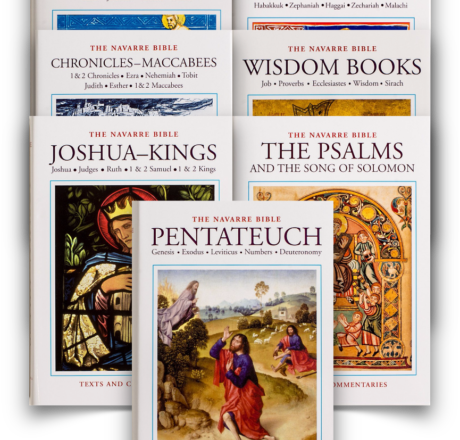
8-11. Cf. note on 10:2. The book described by Ezekiel 2:8-3:3 was sweet as honey when eaten; but when Ezekiel began to prophesy, his heart was filled with bitterness (cf. Ezek 3:14). The same symbolism of the two kinds of taste is used here--no doubt to indicate that the prophecy contains grace and blessing, and also judgment and condemnation. The sweetness can also be interpreted as reflecting the triumph of the Church, and the bitterness its affliction.
Although nothing is said about what is written on scroll John is given to eat, it is reasonable to suppose that it has to do with the passage about the two witnesses which now follows, before the blowing of the seventh trumpet; this would make it a prophetic oracle, brought in here as a preview of the final eschatological battles, to show that evil apparently triumphs on earth.
[The note on 10:2 states: 2. The open scroll carried by the angel is different from the sealed scroll in the vision recounted in Revelation 5:2. It is more like the scroll described by the prophet Ezekiel (cf. Ezek 2:9-3:1) which was also meant to be eaten by the seer. The fact that it is open indicates that its content is not secret. The eating of the scroll symbolizes that what the prophet has to say after he eats it is really the word of God. It also indicates that God speaks through the medium of a written text. So, this imagery helps to strengthen people's faith in the divine inspiration of sacred writings, that is, the Bible, and to recognize them for they are--holy books because they are the very word of God which reaches the Church in written form via inspired authors: by reading these books publicly the Church is in fact proclaiming their divine inspiration.
We are not told what this little scroll contains; so, the only reason the writer brings in this symbol is to make it clear that he is a prophet. He wants people to be in no doubt about the fact that his prophecies apply to all creation--both heaven and earth (v. 6).]
From: Luke 19:45-48
Jesus in the Temple
-------------------
[45] And He (Jesus) entered the temple and began to drive out those who sold, [46] saying to them, "It is written, `My house shall be a house of prayer'; but you have made it a den of robbers."
[47] And He was teaching daily in the temple. The chief priests and the scribes and the principal men of the people sought to destroy Him; [48] but they did not find anything they could do, for all the people hung upon His words.
***********************************************************************
Commentary:
45-48. Jesus' indignation shows His zeal for the glory of His Father, to be recognized at this time in the temple itself. He inveighs against the traders for engaging in business which has nothing to do with divine worship (cf. Matthew 21:12; Mark 11-15). Even the priests allowed some of these abuses to go on--perhaps because they benefited from them in the form of taxes. The traders did perform services necessary for divine worship but this was vitiated by their excessive desire for gain, turning the temple into a marketplace.
"My house shall be a house of prayer": Jesus uses these words from Isaiah (56:7; cf. Jeremiah 7:11) to underline the purpose of the temple. Jesus' behavior shows the respect the Temple of Jerusalem deserved; how much more reverence should be shown our churches, where Jesus Himself is really present in the Blessed Sacrament. (cf. notes on Matthew 21:12-13; and Mark 11:15-18).
[The notes on Matthew 21:12-13 states: 12-13. Although God is present everywhere and cannot be confined within the walls of temples built by man (Acts 17:24-25), God instructed Moses to build a tabernacle where He would dwell among the Israelites (Exodus 25:40). Once the Jewish people were established in Palestine, King Solomon, also in obedience to a divine instruction, built the temple of Jerusalem (1 Kings 6-8), where people went to render public worship to God (Deuteronomy 12).
Exodus (23:15) commanded the Israelites not to enter the temple empty-handed, but to bring some victim to be sacrificed. To make this easier for people who had to travel a certain distance, a veritable market developed in the temple courtyards with animals being bought and sold for sacrificial purposes. Originally this may have made sense, but seemingly as time went on commercial gain became the dominant purpose of this buying and selling of victims; probably the priests themselves and temple servants benefited from this trade or even operated it. The net result was that the temple looked more like a livestock mart than a place for meeting God.
Moved by zeal for His Father's house (John 2:17), Jesus cannot tolerate this deplorable abuse and in holy anger He ejects everyone--to show people the respect and reverence due to the temple as a holy place. We should show much greater respect in the Christian temple--the Christian churches--where the eucharistic sacrifice is celebrated and where Jesus Christ, God and Man, is really and truly present, reserved in the tabernacle. For a Christian, proper dress, liturgical gestures and postures, genuflections and reverence to the tabernacle, etc. are expressions of the respect due to the Lord in His temple.]
[The notes on Mark 11:15-18 states: 15-18. Our Lord does not abide lack of faith or piety in things to do with the worship of God. If He acts so vigorously to defend the temple of the Old Law, it indicates how we should truly conduct ourselves in the Christian temple, where He is really and truly present in the Blessed Eucharist. "Piety has its own good manners. Learn them. It's a shame to see those `pious' people who don't know how to attend Mass--even though they go daily—nor how to bless themselves (they throw their hands about in the weirdest fashion), nor how to bend the knee before the Tabernacle (their ridiculous genuflections seem a mockery), nor how to bow their heads reverently before a picture of our Lady" (St J. Escriva, "The Way", 541).]
Disclaimer: Opinions posted on Free Republic are those of the individual posters and do not necessarily represent the opinion of Free Republic or its management. All materials posted herein are protected by copyright law and the exemption for fair use of copyrighted works.