
Posted on 11/10/2026 10:08:41 PM PST by fidelis
Memorial of Saint Martin of Tours, Bishop
As Jesus continued his journey to Jerusalem, he traveled through Samaria and Galilee. As he was entering a village, ten lepers met him. They stood at a distance from him and raised their voice, saying, “Jesus, Master! Have pity on us!” And when he saw them, he said, “Go show yourselves to the priests.” As they were going they were cleansed. Luke 17:11–14
According to the Law of Moses, lepers were declared ritually unclean and required to live apart from the community. They had to wear torn clothing, leave their hair disheveled, cover the lower part of their face, and cry out “Unclean! Unclean!” whenever anyone approached (cf. Leviticus 13:45–46). This separation prevented the spread of disease and maintained ritual purity among the people of Israel. Lepers endured profound social isolation, spiritual alienation, and personal suffering, making their condition one of the most tragic and symbolic representations of sin and its consequences in the Bible.
The lepers in today’s Gospel met Jesus as He was entering a village they were not permitted to enter. They lived on the outskirts, likely with others who shared their condition. Spiritually, they symbolize each of us. If we can humbly recognize ourselves in them, we will more readily embrace the lesson they offer.
In our current state, our souls are spiritually disfigured due to fallen human nature and personal sin. This world is, symbolically, on the outskirts of the Kingdom of God—a place from which we are barred until cleansed by grace. These lepers show us the path to that cleansing. First, they teach us to recognize our need and then to turn to Christ with confident hope in His mercy, that we may be restored to full communion with God and the saints.
Ten cried out from a distance, “Jesus, Master! Have pity on us!” Though Scripture doesn’t say if these were the only lepers near that city, it’s possible others remained silent. If so, these ten who did cry out stand for those who humbly acknowledge their misery, fallenness, isolation from God’s Kingdom, and trust in Christ’s saving power.
Similarly, we must remember that this world is not our true home. With our first parents, we were cast out from Paradise because of Original Sin. Only through the mercy of Christ can we be restored. Recognizing our exile and its cause is the first step toward healing. If we do not acknowledge our spiritual leprosy, we will not cry out for the only cure: Jesus’ mercy.
One beautiful aspect of this story is that it reveals a second, deeper level of spiritual healing. The ten who cried out and were healed represent those who are baptized and remain in a state of grace, either by avoiding mortal sin or by being restored through sacramental confession and absolution. Yet only one, upon realizing he was healed, returned to give thanks to Jesus. The other nine did not.
Reflect today on the lepers’ cry for mercy, and ask yourself whether you recognize your own need for healing. Are you willing to admit your spiritual wounds, to cry out to Jesus, and to persevere in gratitude? If so, are you among the nine who took God’s mercy for granted and failed to express proper gratitude for the gift of spiritual cleansing and restoration? Strive to be like the one who returned to Jesus, humble, grateful, and filled with faith. Fall at the feet of Jesus in adoration, give thanks for all He has done, and hear Him say to you, “Your faith has saved you.”
Most generous Lord, Your mercy is endless and freely given in superabundance. Despite Your goodness, I often take You for granted and fail to offer the gratitude and humble worship You deserve. Please have mercy on me now and always. Remove every sense of self-entitlement, that I may always return to You, fall before You, and express my most humble and sincere thanks to You. Jesus, I trust in You.

|
Click here: to donate by Credit Card Or here: to donate by PayPal Or by mail to: Free Republic, LLC - PO Box 9771 - Fresno, CA 93794 Thank you very much and God bless you. |
Please keep in mind that this is a Catholic Caucus/Devotional thread for the purpose of prayerful reflection on the Sacred Scriptures and is closed to debate of any kind. Per FR policy on Religion Caucus threads, off-topic, argumentative, and abusive comments are not allowed and will be submitted to the Mods for deletion. Thanks, and God bless you.
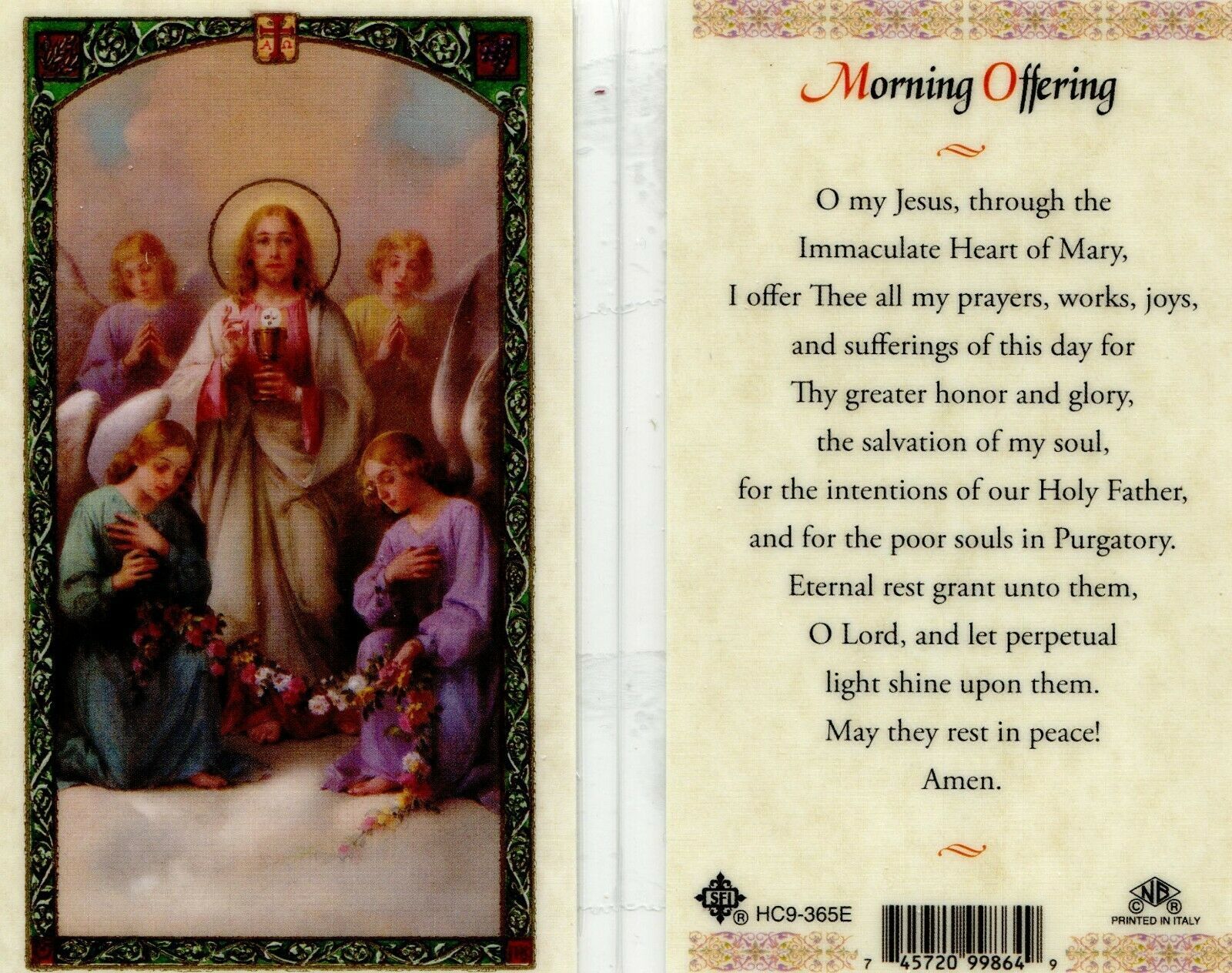

The Month of November is Dedicated to the Holy Souls in Purgatory
“It is a holy and wholesome thought to pray for the dead, so they may be loosed from sins..” (2 Maccabees 12:46)

Pope Leo XIV’s prayer intention for the month of November, 2026:
For the proper use of wealth
Let us pray for the proper use of wealth, that not succumbing to the temptation of selfishness, it may always be put at the service the common good and solidarity of those who have less.

Today’s First Reading
From: Titus 3:1-7
Respect for Lawful Authority
----------------------------
[1] Remind them to be submissive to rulers and authorities, to be obedient, to be ready for any honest work, [2] to speak evil of no one, to avoid quarreling, to be gentle, and to show perfect courtesy toward all men.
Renewal of the Christian Life in the Holy Spirit
------------------------------------------------
[3] For we ourselves were once foolish, disobedient, led astray, slaves to various passions and pleasures, passing our days in malice and envy, hated by men and hating one another; [4] but when the goodness and loving kindness of God our Savior appeared, [5] he saved us, not because of deeds done by us in righteousness, but in virtue of his own mercy, by the washing of regeneration and renewal in the Holy Spirit, [6] which he poured out upon us richly through Jesus Christ our Savior, [7] so that we might be justified by his grace and become heirs in hope of eternal life.
***********************************************************************
Commentary:
1-8. In the last part of the epistle St Paul deals with the way believers conduct themselves in society at large (vv. 1-8); he warns Titus to see that the Church does not become a place where people argue (vv. 9-11); and finally he gives him some little personal commissions and messages (vv. 12-14) and ends with the usual words of farewell (v.15).
The scheme of the first section (vv. 1-8), like the previous chapter, is as follows: first he describes the requirements of Christian living, specifically the attitude towards civil authority and one's fellow-citizens (vv. 1-2); then he gives the theological reasoning behind it (vv. 3-8): for a Christian, moral behavior is a consequence of faith.
1-2. Respect for lawful authority (cf. Roman 13:1-7; Tim 2:2; 1 Pet 2: 13-14) was particularly difficult and meritorious in the situation in Crete, where the local population (many of them Jews) were not at all happy with their Roman overlords. However, the freedom of the children of God (cf. Rom 8:21) which the Christian acquires at Baptism does not mean he has to be opposed to existing structures: the main thing it leads him to is personal improvement: "The acute need for radical reforms of the structures which conceal poverty and which are themselves forms of violence, should not let us lose sight of the fact that the source of injustice is in the hearts of men. Therefore it is only by making an appeal to the moral potential of the person and to the constant need for inner conversion, that social change will be brought about which will truly be in the service of man. For it will only be in the measure that they collaborate freely in these necessary changes through their own initiative and solidarity, that people, awakened to a sense of their responsibility, will grow in humanity" (SCDF, "Libertatis Nuntius", 11, 8).
Gentleness and courtesy are expressions of the new commandment of love; they show that a person is spiritually mature, and they are very effective in drawing souls closer to Christ. "To criticize, to destroy, is not difficult; any unskilled laborer knows how to drive his pick into the noble and finely-hewn stone of a cathedral. To construct: that is what requires the skill of a master" (St. J. Escriva, "The Way", 456).
3-7. The main subject of the chapter is the theological basis of social obligations (vv. 1-2); every Christian should bear witness to salvation history, to the change from sin to grace, and the change from an era of slavery and error to the era of freedom and rebirth ushered in by Christ.
The "old regime" is sketched out in a very vivid way (v. 3), showing the effects of sin on man in his three dimensions: in relation to himself, sin makes a person foolish, rebellious, wayward, a slave; in respect of God, he becomes hateful in his rebellious pride; and as far as others are concerned he becomes their enemy--"hating one another".
However, the coming of Christ has opened up a new panorama (vv. 4-7). As elsewhere in these letters (cf. 1 Tim 3:15; Tit 2:11-14), we have here a hymn to Christ which may well have come from primitive Christian liturgy or from a confession of faith. It summarizes Christian teaching on the Incarnation, the Redemption and the application of salvation to the individual.
According to this text, the Incarnation is the revelation of God our Savior, who makes known his goodness ("benignity", a word which often occurs in the Old Testament and sometimes in the New: cf. Rom 2:4; 11:22; Gal 5:22; Eph 2:7) and "loving goodness" (literally "philanthropy", a word taken from Greek). The Redemption is referred to in Old Testament language: "he saved us in virtue of his own mercy."
Finally, the Christian's access to salvation is something gratuitous: without any prior merit on our part, God's mercy has sought us out (v. 5; cf. note on Rom 3:27-31); Baptism is the door to salvation, for it is the sacrament of "regeneration and renewal" (cf. Eph 5:26); the Holy Spirit sent by Christ (cf. Jn 14:26) makes the waters of Baptism effective; his grace gives life to the soul and entitles it to eternal life (cf. Gal 4:7; Rom 8:16-17). The Council of Trent specified that "justification is not only the remission of sins, but sanctification and renovation of the interior man through the voluntary reception of grace and gifts whereby a man becomes just instead of unjust and a friend instead of an enemy, that he may be an heir in the hope of life everlasting" ("De Iustificatione", chap. 7).
The magnificent resume of faith in Christ contained in Titus 3:3-7 also helps Christians see how to approach their work and social involvement; the Second Vatican Council has reminded us once again that "the promised and hoped-for restoration has already begun in Christ. It is carried forward in the sending of the Holy Spirit and through him continues in the Church in which, through our faith, we learn the meaning of our earthly life, while we bring to term, with hope of future good, the task allotted to us in the world by the Father, and so work out our salvation" ("Lumen Gentium", 48).
From: Luke 17:11-19
The Ten Lepers
--------------
[11] On the way to Jerusalem He (Jesus) was passing along between Samaria and Galilee. [12] And as He entered the village, He was met by ten lepers, who stood at a distance [13] and lifted up their voices and said, "Jesus, Master, have mercy on us." [14] When He saw them He said to them, "Go and show yourselves to the priests." And as they went they were cleansed. [15] Then one of them, when he saw that he was healed, turned back, praising God with a loud voice; [16] and he fell on his face at Jesus' feet, giving Him thanks. Now he was a Samaritan. [17] Then said Jesus, "Were not ten cleansed? Where are the nine? [18] Was no one found to return and give praise to God except this foreigner?" [19] And He said to him, "Rise and go your way; your faith has made you well."
***********************************************************************
Commentary:
11-19. The setting of this episode explains how a Samaritan could be in the company of Jews. There was no love lost between Jews and Samaritans (cf. John 4:9), but shared pain, in the case of these lepers, overcame racial antipathy.
The Law of Moses laid down, to prevent the spread of the disease, that lepers should live away from other people and should let it be known that they were suffering from this disease (cf. Leviticus 13:45-46). This explains why they did not come right up to Jesus and His group, but instead begged His help by shouting from a distance. Before curing them our Lord orders them to go to the priests to have their cure certified (cf. Leviticus 14:2ff), and to perform the rites laid down. The lepers' obedience is a sign of faith in Jesus' words. And, in fact, soon after setting out they are cleansed.
However, only one of them, the Samaritan, who returns praising God and showing his gratitude for the miracle, is given a much greater gift than the cure of leprosy. Jesus says as much: "Your faith has made you well" (verse 19) and praises the man's gratefulness. The Gospel records this event to teach us the value of gratefulness: "Get used to lifting your heart to God, in acts of thanksgiving, many times a day. Because He gives you this and that. Because you have been despised. Because you haven't what you need or because you have.
"Because He made His Mother so beautiful, His Mother who is also your Mother. Because He created the sun and the moon and this animal and that plant. Because He made that man eloquent and you He left tongue-tied....
"Thank Him for everything, because everything is good" (St J. Escriva, "The Way", 268).
The Glorious Mysteries (from My Catholic Life!)

Disclaimer: Opinions posted on Free Republic are those of the individual posters and do not necessarily represent the opinion of Free Republic or its management. All materials posted herein are protected by copyright law and the exemption for fair use of copyrighted works.


