
Posted on 11/09/2026 9:32:15 PM PST by fidelis
Memorial of Saint Leo the Great, Pope and Doctor of the Church
Jesus said to the Apostles: “Who among you would say to your servant who has just come in from plowing or tending sheep in the field, ‘Come here immediately and take your place at table?’ Would he not rather say to him, ‘Prepare something for me to eat. Put on your apron and wait on me while I eat and drink. You may eat and drink when I am finished?’ Is he grateful to that servant because he did what was commanded?” Luke 17:7–9
It’s easy to fall into the trap of believing a version of the Gospel that differs from what Jesus actually preached. Some tend toward scrupulosity, magnifying our Lord’s more challenging words. More commonly, others soften His message to make it more palatable. Both distort the purity of the Gospel as Christ taught it.
Today’s passage is easily misunderstood or ignored. On one hand, it might be misused to justify servitude or ingratitude. On the other, those who downplay difficult teachings may find it easier to dismiss this passage altogether. The ideal response is to meditate on Jesus’ words carefully, receiving the message He intends.
The scene is jarring to modern sensibilities. Jesus uses the Greek word doulos, often translated as “servant” or “slave.” In His time, such servitude was common. A doulos was owned by a master, had no legal rights, and existed to carry out the master’s commands. Some were born into slavery, others were sold because of debt, and still others entered servitude voluntarily to escape poverty.
Though the word doulos referred to literal enslavement, it is also used in the New Testament in a spiritual sense. For example, Saint Paul called himself “a slave of Christ Jesus” (Romans 1:1), as did Saint James: “James, a slave of God and of the Lord Jesus Christ…” (James 1:1). Perhaps they used this term as they recalled today’s teaching.
Because this is a parable, Jesus is not endorsing slavery. Rather, He uses that familiar social structure to illustrate how we should see ourselves before God.
In such a relationship, it would be unthinkable for a master to invite his servant to dine with him after work. The servant was expected to prepare and serve the meal. The master wouldn’t typically thank the servant for doing what was required.
Though the institution of slavery has largely been abolished, the image still teaches us something vital. Like Paul and James, we are called to become slaves of Christ. The difference is that our Divine Master is not oppressive—He commands in love, setting us free from all that binds us. For that reason, we are the ones who owe gratitude to God.
Reflect today on how you perceive your relationship with God. Do you serve Him with the expectation of praise or reward? Or do you recognize how privileged you are to become a servant of such a glorious and merciful Master? Let the humility of this Gospel passage shape your soul. Strive to say with sincerity, “I am an unprofitable servant; I have only done what I was obliged to do.” Then be grateful. Do not be afraid to become a slave of Christ Jesus. In doing so, you will discover the paradox of divine love that in lowering yourself before God, He lifts you up and calls you friend, commanding that you receive a share in His Kingdom.
My God and Master, You call us to be servants, and even Your slaves. Yet there is no fear in such a calling, for You are the perfect Master and Lord. Help me to understand my duty, that I may obey all You command with trust and love. Let me see that every command You give, even those that challenge or stretch me, is an expression of Your highest love. Jesus, I trust in You.
Dear FRiends,
We need your continuing support to keep FR funded. Your donations are our sole source of funding. No sugar daddies, no advertisers, no paid memberships, no commercial sales, no gimmicks, no tax subsidies. No spam, no pop-ups, no ad trackers.
If you enjoy using FR and agree it's a worthwhile endeavor, please consider making a contribution today:
Click here: to donate by Credit Card
Or here: to donate by PayPal
Or by mail to: Free Republic, LLC - PO Box 9771 - Fresno, CA 93794
Thank you very much and God bless you,
Jim
Please keep in mind that this is a Catholic Caucus/Devotional thread for the purpose of prayerful reflection on the Sacred Scriptures and is closed to debate of any kind. Per FR policy on Religion Caucus threads, off-topic, argumentative, and abusive comments are not allowed and will be submitted to the Mods for deletion. Thanks, and God bless you.
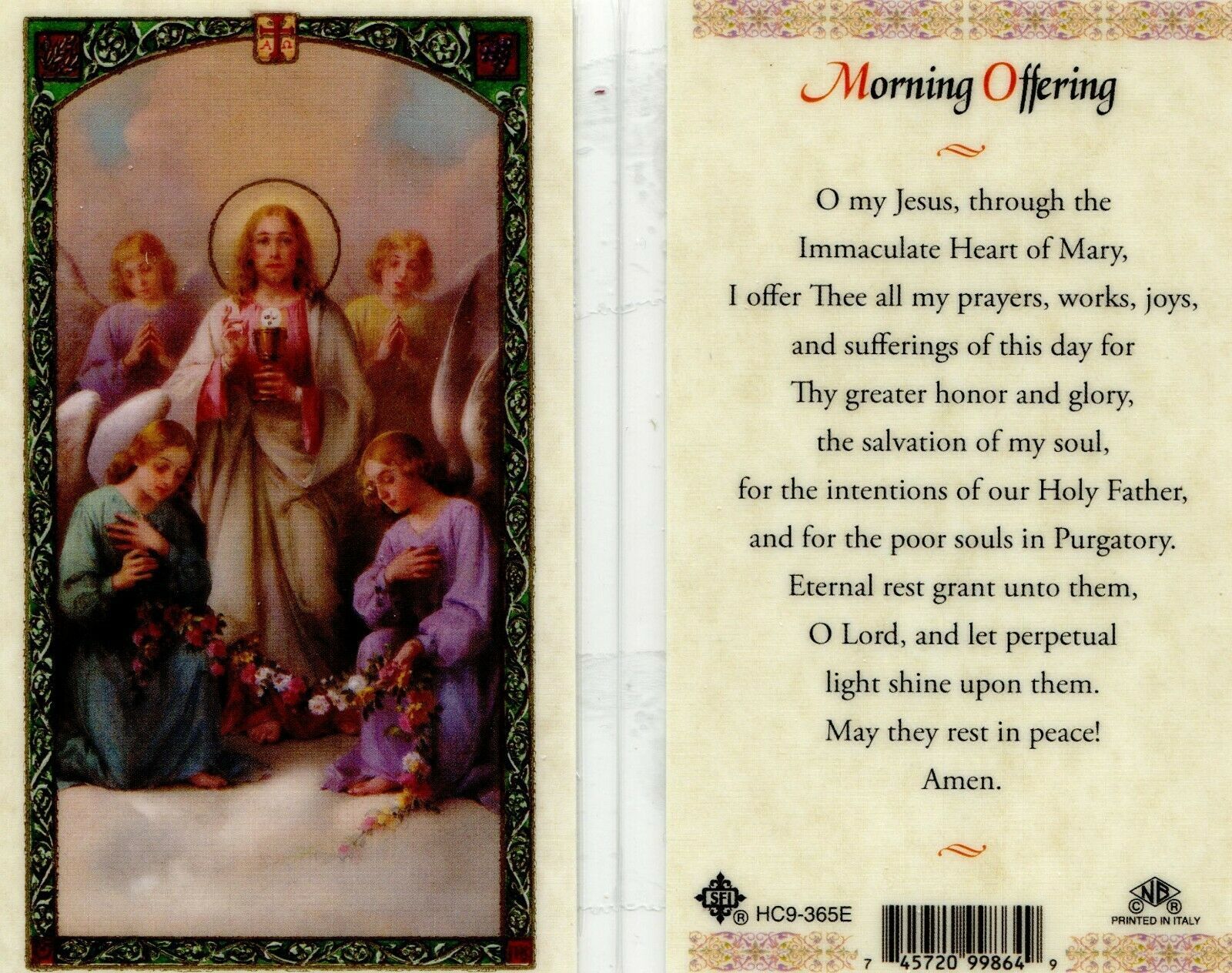

The Month of November is Dedicated to the Holy Souls in Purgatory
“It is a holy and wholesome thought to pray for the dead, so they may be loosed from sins..” (2 Maccabees 12:46)

Pope Leo XIV’s prayer intention for the month of November, 2026:
For the proper use of wealth
Let us pray for the proper use of wealth, that not succumbing to the temptation of selfishness, it may always be put at the service the common good and solidarity of those who have less.

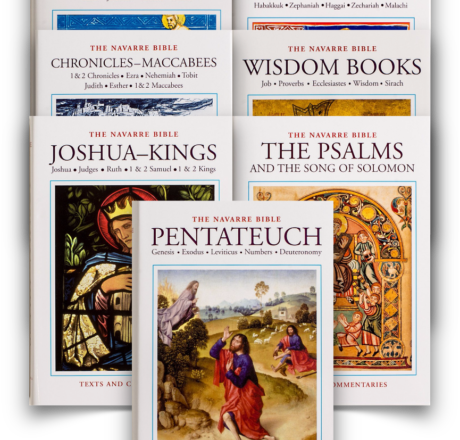
Today’s First Reading
From: Titus 2:1-8, 11-14
Duties of Christians in Different Situations
--------------------------------------------
[1] But as for you, teach what befits sound doctrine. [2] Bid the older men be temperate, serious, sensible, sound in faith, in love, and in steadfastness. [3] Bid the older women likewise to be reverent in behavior, not to be slanderers or slaves to drink; they are to teach what is good, [4] and so train the young women to love their husbands and children, [5] to be sensible, chaste, domestic, kind, and submissive to their husbands, that the word of God may not be discredited. [6] Likewise urge the younger men to control themselves. [7] Show yourself in all respects a model of good deeds, and in your teaching show integrity, gravity, [8] and sound speech that cannot be censured, so that an opponent may be put to shame, having nothing evil to say to us.
The Incarnation, the Basis of Christian Ethics and Piety
--------------------------------------------------------
[11] For the grace of God has appeared for the salvation of all men, [12] training us to renounce irreligion and worldly passions, and to live sober, upright, and godly lives in this world, [13] awaiting our blessed hope, the appearing of the glory of our great God and Savior Jesus Christ, [14] who gave himself for us to redeem us from all iniquity and to purify for himself a people of his own who are zealous for good deeds.
***********************************************************************
Commentary:
1-10. To counter the fallacies of those whose depraved conduct is at odds with what they profess to believe, Titus is urged to be sincere in everything he does and always to act in accordance with the faith. A key feature of Christian morality is that it can never be reduced to an abstract ethical code with no theological basis; rather, it flows directly from the deep truth one professes: doctrinal orthodoxy leads to upright conduct--and upright conduct equips one to understand and accept revealed truth. As the Second Vatican Council teaches, faith is meant to shape the Christian life: "Bishops should be especially concerned about catechetical instruction. Its function is to develop in men a living, explicit and active faith, enlightened by doctrine. It should be very carefully imparted, not only to children and adolescents but also to young people and even to adults. In imparting this instruction the teachers must observe an order and method suited not only to the matter in hand but also to the character, the ability, the age and the lifestyle of their audience. This instruction should be based on holy Scripture, tradition, liturgy, and on the teaching authority and life of the Church" ("Christus Dominus", 14).
In this section of the letter St. Paul reminds Titus about the obligations and the virtues people have (depending on their age, state-in-life, social position, etc.); this advice is very like that given to Timothy in 1 Timothy (cf. 1 Tim 5:1-6:2).
2-3. "Sound in faith...": in the Pastoral Epistles physical health is often used metaphorically in connection with Christian doctrine and its transmission (cf. 1 Tim 6:3; 2 Tim 1:13; 4:3; Tit 1:9; 2:8); it is also applied to people: as the years go on their interior life should grow stronger and stronger.
"Be reverent in behavior": older women are given special mention (cf. 1 Tim 5:2-16); they must be exemplary, because younger women have to learn from them.
4-5. All members of the Church are responsible for the formation and Christian life of their juniors; this general principle applies to adult women: they have to show younger women that their role as mothers, their place in the home, is so important that it must be given priority over outside activities (in which they do have a right to engage). In connection with the role of women in society and in the family Pope John Paul II says: "the mentality which honors women more for their work outside the home than for their work within the family must be overcome. This requires that men should truly esteem and love women with total respect for their personal dignity, and that society should create and develop conditions favoring work in the home" ("Familiaris Consortio", 23).
"That the word of God may not be discredited": an expression very similar to that used by St. Paul when advising slaves to be submissive (cf. 1 Tim 6:1). The Apostle is not approving behavior which women or slaves find obnoxious; what he is saying is that obedience and humility is the best way to do God honor and to offer others a testimony of love, following the example of the Master, who "humbled himself and became obedient unto death" (cf. Phil 2:6-11).
6-8. The model for the younger men should be Titus himself; as in the case of Timothy in Ephesus (1 Tim 4:12), Titus' duty to be exemplary derives from the fact that pastors have an obligation to reflect Jesus' life in their life: "Be imitators of me, as I am of Christ" (1 Cor 11:1; cf. Phil 3:17; 2 Thess 3:9). "THE PRIESTLY PERSONALITY must be FOR OTHERS a clear SIGN AND INDICATION." This is the first condition for our pastoral service. The people from among whom we have been chosen and for whom we have been appointed want above all to see in us such a sign and indication, and to this they have a right" (John Paul II, "Letter to All Priests", 8 April 1979).
11-14. This section is almost like a hymn in praise of saving grace and God's loving kindness as manifested in Christ. The terse, sober style, with phrases piled on one another, and very few verbs, is typical of St. Paul. The duties just described (2L1-10)—of older men, women, young people and slaves--all point to Christians' having a common lifestyle, which is the fruit of grace. God is the source of that grace, and salvation its goal, and it is given to us through Jesus Christ.
Thus, divine grace manifested in the Incarnation is actively at work to redeem us; it brings salvation; it sanctifies us, enabling us to live godly lives; and it is the basis of our hope in the second coming of the Lord. All these dimensions of the action of grace summarize revealed doctrine on righteousness (justification) in Jesus Christ. Thus, in the Incarnation, God's salvific will, embracing all men, is manifested in a special way (cf. 1 Tim 2:4); in the Redemption, Christ, the only Mediator and Savior (cf. 1 Tim 2:5) obtains for us the gift of grace, whereby man becomes a sharer in the good things of salvation. Jesus is our model; by means of grace he instructs the Christian on how to control his defects and grow in virtue. The instruction we receive is not only an external one: God inwardly moves us to seek holiness (cf. Rom 5:1-5 and note). Grace also channels our hope, for Christians are motivated not only by the memory of a past event (our Lord's life on earth) but also, and especially, by the fact that Jesus is in the glory of heaven even now and that we are invited to share his inheritance (cf. 2 Pet 3:12-13).
13. "The glory of our great God and Savior Jesus Christ": an explicit confession of faith in the divinity of Jesus Christ, who is stated at one and at the same time (with only one article in the original Greek) to be God and Savior. This expression is the hinge on which the entire hymn turns: Jesus Christ our God is the one who came at the Incarnation, who will manifest himself fully at his second coming, and who through his work of redemption has made it possible for man to live a live pleasing to God.
This verse is reminiscent of Romans 9:5, where St. Paul wrote: "to them belong the patriarchs, and of their race according to the flesh is the Christ, who is God over all, blessed for ever. Amen."
14. The mention of Jesus Christ at the end of the previous verse leads St. Paul to summarize the doctrine of the Redemption in this lovely passage. Four essential elements in redemption are listed: Christ's self-giving; redemption from all iniquity; purification; and Christ's establishment of a people of his own dedicated to good deeds. The reference to Christ's self -giving clearly means whereby we are set free from the slavery of sin; Christ's sacrifice is the cause of the freedom of the children of God (analogously, God's action during the Exodus liberated the people of Israel). Purification, a consequence of redemption, enables a man to become part of God's own people (cf. Ezek 37-23). The expression "a people of his own" is a clear allusion to Exodus 19:5: through the covenant of Sinai God made Israel his own people, different from other nations; through the New Covenant of his blood Jesus forms his own people, the Church, which is open to all nations: "As Israel according to the flesh which wandered in the desert was already called the Church of God, so, too, the new Israel, which advances in this present era in search of a future and permanent city, is called also the Church of Christ. It is Christ indeed who has purchased it with his own blood; he has filled it with his Spirit; he has provided means adapted to its visible and social union [...]. Destined to extend to all regions of the earth, it enters into human history, though it transcends at once all times and all racial boundaries" ("Lumen Gentium", 9).
[T]he coming of Christ has opened up a new panorama (vv. 4-7). As elsewhere in these letters (cf. 1 Tim 3:15; Tit 2:11-14), we have here a hymn to Christ which may well have come from primitive Christian liturgy or from a confession of faith. It summarizes Christian teaching on the Incarnation, the Redemption and the application of salvation to the individual.
According to this text, the Incarnation is the revelation of God our Savior, who makes known his goodness ("benignity", a word which often occurs in the Old Testament and sometimes in the New: cf. Rom 2:4; 11: 22; Gal 5:22; Eph 2:7) and "loving goodness" (literally "philanthropy", a word taken from Greek). The Redemption is referred to in Old Testament language: "he saved us in virtue of his own mercy."
Finally, the Christian's access to salvation is something gratuitous: without any prior merit on our part, God's mercy has sought us out (v. 5; cf. note on Rom 27-31); Baptism is the door to salvation, for it is the sacrament of "regeneration and renewal" (cf. Eph 5:26); the Holy Spirit sent by Christ (cf. Jn 14:26) makes the waters of Baptism effective; his grace gives life to the soul and entitles it to eternal life (cf. Gal 4:7; Rom 8:16-17). The Council of Trent specified that "justification is not only the remission of sins, but sanctification and renovation of the interior man through the voluntary reception of grace and gifts whereby a man becomes just instead of unjust and a friend instead of an enemy, that he may be an heir in the hope of life everlasting" ("De Iustificatione", chap. 7).
The magnificent resume of faith in Christ contained in Titus 3:3-7 also helps Christians see how to approach their work and social involvement; the Second Vatican Council has reminded us once again that "the promised and hoped-for restoration has already begun in Christ. It is carried forward in the sending of the Holy Spirit and through him continues in the Church in which, through our faith, we learn the meaning of our earthly life, while we bring to term, with hope of future good, the task allotted to us in the world by the Father, and so work out our salvation" ("Lumen Gentium", 48).
From: Luke 17:7-10
---------------------------
[5] The apostles said to the Lord, "Increase our faith! [6] And the Lord said, "If you had faith as a grain of mustard seed, you could say to this sycamine tree, `Be rooted up, and be planted in the sea', and it would obey you.
Humble Service
--------------
[7] "Will any of you, who has a servant ploughing or keeping sheep, say to him when he has come in from the field, `Come at once and sit down at table'? [8] Will he not rather say to him, `Prepare supper for me, and gird yourself and serve me, till I eat and drink; and afterward you shall eat and drink'? [9] Does he thank the servant because he did what was commanded? [10] So you also, when you have done all that is commanded you, say, `We are unworthy servants; we have only done what was our duty.'"
***********************************************************************
Commentary:
7-10. Jesus is not approving this master's abusive and arbitrary behavior: He is using an example very familiar to His audience to show the attitude a person should have towards his Creator: everything, from our very existence to the eternal happiness promised us, is one huge gift from God. Man is always in debt to God; no matter what service he renders Him he can never adequately repay the gifts God has given him. There is no sense in a creature adopting a proud attitude towards God. What Jesus teaches us here we see being put into practice by our Lady, who replied to God's messenger (the Archangel Gabriel), "Behold, I am the handmaid of the Lord" (Luke 1:38).
Disclaimer: Opinions posted on Free Republic are those of the individual posters and do not necessarily represent the opinion of Free Republic or its management. All materials posted herein are protected by copyright law and the exemption for fair use of copyrighted works.

