
Posted on 11/08/2026 10:09:52 PM PST by fidelis
Feast of the Dedication of the Lateran Basilica in Rome
Jesus answered and said to them, “Destroy this temple and in three days I will raise it up.” The Jews said, “This temple has been under construction for forty-six years, and you will raise it up in three days?” But he was speaking about the temple of his Body. John 2:19–21
The Lateran Basilica, officially known as the Archbasilica of the Most Holy Savior and of Saints John the Baptist and John the Evangelist, is the cathedral church of the Diocese of Rome and holds the unique distinction of being the mother and head of all churches throughout the world. It is the oldest of the four major papal basilicas in Rome and was the first Christian basilica built in the city after Emperor Constantine’s Edict of Milan in AD 313 legalized Christianity.
The basilica was dedicated in 324 by Pope Sylvester I to Christ the Savior. Later, it was also dedicated to Saints John the Baptist and John the Evangelist. As the pope’s official cathedral, the Lateran Basilica is the spiritual heart of the universal Church. Its annual dedication feast reminds us of the sacredness of every church building, each one a visible sign of the invisible Church and a privileged place of encounter with the living God.
Today’s Gospel offers a striking portrayal of Jesus, the Son of God, cleansing the temple in Jerusalem with righteous anger. His actions were not impulsive, but deliberate. He made a whip of cords and drove out those who had turned His Father’s house into a marketplace. This dramatic scene challenges us to reflect more deeply on the holiness of places set apart for divine worship and invites us into the mystery of the Church as the Body of Christ.
First, Jesus’ actions reveal the sacred character of our churches. By honoring the Dedication of the Lateran Basilica, we honor every church consecrated for the worship of God. Our churches are not to be marketplaces, theaters, or social halls. At their center is the altar and the tabernacle—places where the divine Presence dwells among us. In these sacred spaces, we listen to the Word of God, offer our lives to Christ, and are spiritually renewed to bring His presence into the world.
Jesus’ cleansing of the Jerusalem Temple also reminds us that our souls are now the true temples of God—the dwelling place of the Holy Spirit and tabernacles of the Most High. Just as our Lord was filled with zeal to cleanse the Temple, so too is He continually moved to purify our souls, calling each of us to repentance and conversion. When considering our own need for cleansing and purification, it’s helpful to ponder Jesus’ zeal in the Temple, seeing Him desiring to cleanse us with the same zeal.
Though this divine purification is personal, it is also ecclesial and communal. The Church, as the Mystical Body of Christ, must always be renewed and transformed. Throughout history, the Church as an institution has strayed from the path of holiness through the sins of her members. When this has happened, God has raised up saints to serve as prophetic voices, calling the members of the Church on earth to holiness, cleansing, and fidelity.
Reflect today on the sacredness of your own soul. Ask our Lord to cleanse whatever needs purifying and to raise you up in holiness, so that you may become a more perfect temple of His presence in the world. Pray also for your parish church and the Church universal. With zeal, pray for the purification necessary to make every member of the Church true temples of God.
Most zealous Lord, Your righteous anger is not directed at me or at any member of Your Church, but at the sin and defilement that hinder us from offering You pure and holy worship. Please cleanse me and every member of Your Mystical Body, that we may radiate Your divine presence more fully in this world and draw all people to Yourself. Jesus, I trust in You.

|
Click here: to donate by Credit Card Or here: to donate by PayPal Or by mail to: Free Republic, LLC - PO Box 9771 - Fresno, CA 93794 Thank you very much and God bless you. |
Please keep in mind that this is a Catholic Caucus/Devotional thread for the purpose of prayerful reflection on the Sacred Scriptures and is closed to debate of any kind. Per FR policy on Religion Caucus threads, off-topic, argumentative, and abusive comments are not allowed and will be submitted to the Mods for deletion. Thanks, and God bless you.
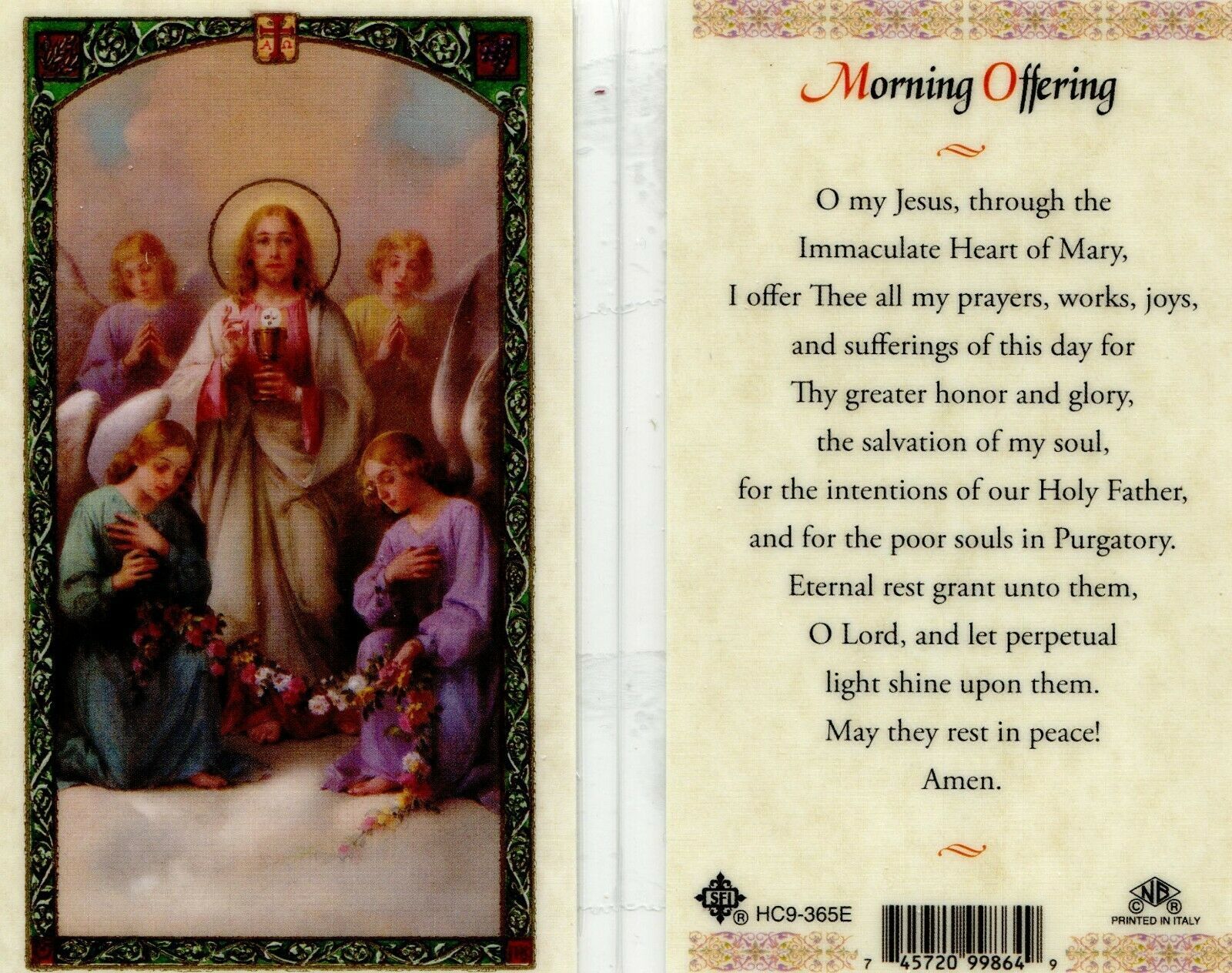

The Month of November is Dedicated to the Holy Souls in Purgatory
“It is a holy and wholesome thought to pray for the dead, so they may be loosed from sins..” (2 Maccabees 12:46)

Pope Leo XIV’s prayer intention for the month of November, 2026:
For the proper use of wealth
Let us pray for the proper use of wealth, that not succumbing to the temptation of selfishness, it may always be put at the service the common good and solidarity of those who have less.
Luke 21 Radio 
Luke 21 Radio: Catholic Bible prophecy in the tradition of St. Augustine

Today’s First Reading
From: Ezekiel 47:1--9, 12
The Spring in the Temple
------------------------
[1] Then he brought me back to the door of the temple; and behold, water was issuing from below the threshold of the temple toward the east (for the temple faced east); and the water was flowing down from below the south end of the threshold of the temple, south of the altar. [2] Then he brought me out by way of the north gate, and led me round on the outside to the outer gate, that faces toward the east; and the water was coming out on the south side. [3] Going on eastward with a line in his hand, the man measured a thousand cubits, and then led me through the water; and it was ankle-deep. [4] Again he measured a thousand, and led me through the water; and it was knee-deep. Again he measured a thousand, and led me through the water; and it was up to the loins. [5] Again he measured a thousand, and it was a river that I could not pass through, for the water had risen; it was deep enough to swim in, a river that could not be passed through. [6] And he said to me, “Son of man, have you seen this?” Then he led me back along the bank of the river. [7] As I went back, I saw upon the bank of the river very many trees on the one side and on the other. [8] And he said to me, “This water flows toward the eastern region and goes down into the Arabah; and when it enters the stagnant waters of the sea, the water will become fresh.
[9] And wherever the rivers goes every living creature which swarms will live, and there will be very many fish; for this water goes there, that the waters of the sea may become fresh; so everything will live where the river goes. [12] And on the banks, on both sides of the river, there will grow all kinds of trees for food. Their leaves will not wither nor their fruit fail, but they will bear fresh fruit every month, because the water for them flows from the sanctuary. Their fruit will be for food, and their leaves for healing.”
***********************************************************************
Commentary:
47:1-12. The vision of the spring flowing from the southern end of the temple and ending up in the Dead Sea revitalizing everything it meets on its way, is one of the most striking images in the book. Its content is reminiscent of the Vision of the bones (37:1-14): there, it was the Spirit that gave life to the dry bones; here, the water refreshes the dead waters The image of the river reminds one of how in paradise (Gen 2:10-14) the four branches of the river make the whole garden beautiful; here, a single river actually gives life. Although the vision contains references to actual places, such as the oasis of En-gedi (v. 10), the Dead Sea or the Arabah, it is symbolic and what it shows is that the renewal of the temple and its worship will bring all sorts of advantages to the whole people.
There is an echo of this vision in the New Testament in the words of Jesus recorded by St John: “If any one thirst, let him come to me and drink. He who believes in me, as the scripture has said, Out of his heart shall flow rivers of living water” (Jn 7:37). Early Christian tradition links this text of St John with Ezekiel’s vision, seeing in the spring in the temple the waters of Baptism that flow from Christ who is life, or from Christ’s side on the altar of the cross: We go down to the water’s edge steeped in our sins and impurity, and we walk out of the water, our hearts filled with grace, fear of the Lord and hope in Jesus” ("Epistula Barnabae" 11, 10).
From: 1 Corinthians 3:9c-11, 16-17
Apostolic Ministry (Continuation)
----------------------------------------
[9] (For we are God's) building. [10] According to the commission of God given to me, like a skilled master builder I laid a foundation, and another man is building upon it. [11] For no other foundation can any one lay than that which is laid, which is Jesus Christ.
[16] Do you not know that you are God's temple and that God's Spirit dwells in you? [17] If any one destroys God's temple, God will destroy him. For God's temple is holy, and that temple you are.
***********************************************************************
Commentary:
9. "God's field, God's building". The Second Vatican Council uses these images to describe the inner nature of the Church: "The Church is a cultivated field, the tillage of God (cf. 1 Cor 3:9). on that land the ancient olive tree grows whose holy roots were the prophets and in which the reconciliation of Jews and Gentiles has been brought about and will be brought about again (Rom 11:13-26). That land, like a choice vineyard, has been planted by the heavenly cultivator (Mt 21:33-43; cf. Is 5:1f). Yet the true vine is Christ who gives life and fruitfulness to the branches, that is, to us, who through the Church remain in Christ without whom we can do nothing (Jn 15:1-5).
"Often, too, the Church is called the building of God (1 Cor 3:9). The Lord compared himself to the stone which the builders rejected, but which was made into the cornerstone (Mt 21:42; cf. Acts 4:11; 1 Pet 2:7; Ps 117:22). on this foundation the Church is built by the Apostles (cf. 1 Cor 3:11) and from it the Church receives solidity and unity. This edifice has many names to describe it--the house of God in which his family dwells; the household of God in the Spirit (Eph 2:19:22); the dwelling-place of God among men (Rev 21:3); and, especially, the holy temple. This temple, symbolized in places of worship built out of stone, is praised by the Fathers and, not without reason, is compared in the liturgy to the Holy City, the New Jerusalem. As living stones we here on earth are built into it (1 Pet 2:5). It is this holy city that is seen by John as it comes down out of heaven from God when the world is made anew, prepared like a bride adorned for her husband (Rev 21:1f)" ("Lumen Gentium", 6).
The Lord wants Christians to be living stones in this building and has associated them in the redemptive task of saving all mankind, so that in the course of their own redemption they might also be co-redeemers with him, completing "what is lacking in Christ's afflictions for the sake of his body, that is, the church" (Col 1:24): "Jesus has wanted every person to cooperate freely in the work of redemption [...]. The work of salvation is still going on, and each one of us has a part in it [...]. It is worth while putting our lives on the line, giving ourselves completely, so as to answer to the love and the confidence that God has placed in us. It is worthwhile, above all, to decide to take our Christian faith seriously" (St J. Escriva, "Christ Is Passing By", 129).
10-11. With a solemn introduction (" According to the commission of God given to me", which equipped him for his ministry), St Paul identifies what holds together the community at Corinth and its individual members—Jesus Christ, the essential basis for every spiritual building. Christ, as St Peter reminds us, is "the stone which was rejected by you builders, but which has become the head of the corner. And there is salvation in no one else, for there is no other name under heaven given among men by which we must be saved" (Acts 4:11-12).
Therefore, all genuine catechesis must be Christ-centered; it must all be focused on Jesus Christ, perfect God and perfect man, and on his teachings. Catechesis, says John Paul II, means "to reveal in the Person of Christ the whole of God's eternal design reaching fulfillment in that Person. It is to seek to understand the meaning of Christ's actions and words and of the signs worked by him, for they simultaneously hide and reveal his mystery. Accordingly, the definitive aim of catechesis is to put people not only in touch but in communion, in intimacy, with Jesus Christ; only he can lead us to the love of the Father in the Spirit and make us share in the life of the Holy Trinity [...]. We must therefore say that in catechesis it is Christ, the Incarnate Word and Son of God, who is taught--everything else is taught with reference to him--and it is Christ alone who teaches--anyone else teaches to the extent that he is Christ's spokesman, enabling Christ to teach with his lips" ("Catechesi Tradendae", 5-6).
Also, reflection on the fact that Jesus Christ is the foundation of the spiritual building, leads to the conclusion that a Christian "needs to be not only linked to Jesus Christ," St John Chrysostom points out, "but to adhere to him, to be finally attached to him: to be separated from him to the least degree is to be lost [...]. Notice all the comparisons the Apostle makes to explain this intimate unity: Jesus Christ is the head, we the body, for there can be no gap between head and body. He is the foundation, we the building; he is the vine, we the branches; he the spouse, we the bride; he is the shepherd, we the flock; he is the way along which we are to travel; we are the temple, and God dwells therein; he is the first-born, we his brethren; he is the heir and we co-heirs; he is life and we have life through him; he is the resurrection and we men are raised up; he is the light by which our darkness is dispelled" ("Hom. on 1 Cor", 8, "ad loc.").
16-17. These words apply to the individual Christian, and to the Church as a whole (cf. note on 1 Corinthians 3:9). The simile of the Church as God's temple, frequently used by St. Paul (cf. 1 Corinthians 6:19-20; 2 Corinthians 6:16), shows that the Holy Trinity dwells in the soul in grace. As [Pope] Leo XIII reminds us, by means of grace God dwells in the just soul as in a temple, in a special and intimate manner" ("Divinum Illud Munus" 10). Although this indwelling is attributed to the Holy Spirit (cf. John 14:17; 1 Corinthians 6:19), it really comes about through the presence of the Three Persons of the Blessed Trinity, because all actions of God which terminate outside God Himself (activities "ad extra") are to be seen as actions of the one, unique divine nature.
This sublime mystery which we could never have suspected, was revealed by Jesus Christ Himself: "The Spirit of truth [...] dwells with you, and will be in you [...]. If a man loves me, he will keep My word and My Father will love him, and We will come to him, and make Our home with him" (John 14:17-23). Although this is a matter which we never plumb in this life, some light is thrown on it if we remember that "the Divine Persons are said to inhabit as much as they are present to intellectual creatures in a way that transcends human comprehension, and are known and loved (cf. "Summa Theologiae", I, q. 43, a. 3) by them, yet in a way that is unique, purely supernatural, and in the deepest sanctuary of the soul" (Pope Pius XII, "Mystici Corporis, Dz-Sch", 35).
Reflection on this wonderful fact will help us to realize how extremely important it is to live in the grace of God, and to have a horror of mortal sin, which "destroys God's temple," depriving the soul of God's grace and friendship.
Moreover, through this indwelling a human being begins to receiving an inkling of what the Beatific Vision--Heaven--will be like, for "this admirable union [of indwelling] differs only by virtue of man's [present] condition and state from union whereby God fills the blessed [in Heaven]" ("Divinum Illud Munus", 11).
The presence of the Trinity in the soul in grace invites the Christian to try to have a more personal and direct relationship with God, whom we can seek at every moment in the depths of our souls: "Get to know the Holy Spirit, the Great Stranger, on whom depends your sanctification. Don't forget that you are God's temple. The Advocate is in the center of your soul: listen to Him and be docile to His inspirations" (St J. Escriva, "The Way", 57).
From: John 2:13-25
The Cleansing of the Temple
---------------------------
[13] The Passover of the Jews was at hand, and Jesus went up to Jerusalem. [14] In the temple he found those who were selling oxen and sheep and pigeons, and the money-changers at their business. [15] And making a whip of cords, he drove them all, with the sheep and oxen, out of the temple; and he poured out the coins of the money-changers and overturned their tables. [16] And he told those who sold the pigeons, "Take these things away; you shall not make my Father's house a house of trade." [17] His disciples remembered that it was written, "Zeal for thy house will consume me." [18] The Jews then said to him, "What signs have you to show us for doing this?" [19] Jesus answered them, "Destroy this temple, and in three days I will raise it up." [20] The Jews then said, "It has taken forty-six years to build this temple, and will you raise it up in three days?" [21] But he spoke of the temple of his body. [22] When therefore he was raised from the dead, his disciples remembered that he had said this; and they believed the scripture and the word which Jesus had spoken.
[23] Now when he was in Jerusalem at the Passover feast, many believed in his name when they saw the signs which he did; [24] but Jesus did not trust himself to them, [25] because he knew all men and needed no one to bear witness of mail; for he himself knew what was in man.
***********************************************************************
Commentary:
13. "The Passover of the Jews": this is the most important religious feast for the people of the Old Testament, the prefiguring of the Christian Easter (cf. note on Mt 26:2). The Jewish Passover was celebrated on the fourteenth day of the month of Nisan and was followed by the festival week of the Azymes (unleavened bread). According to the Law of Moses, on those days every male Israelite had to "appear before the Lord God" (Ex 34:23; Deut 16:16)—hence the pious custom of making a pilgrimage to the temple of Jerusalem for these days, hence the crowd and all the vendors to supply the needs of the pilgrims; this trading gave rise to abuses.
"Jesus went up to Jerusalem": by doing this Jesus publicly shows that he observes the Law of God. But, as we shall soon see, he goes to the temple as the only-begotten Son who must ensure that all due decorum is observed in the House of the Father: "And from thenceforth Jesus, the Anointed of God, always begins by reforming abuses and purifying from sin; both when he visits his Church, and when he visits the Christian soul" (Origen, "Hom. on St John", 1).
14-15. Every Israelite had to offer as a passover sacrifice an ox or a sheep, if he was wealthy; or two turtle-doves or two pigeons if he was not (Lev 5:7). In addition he had to pay a half shekel every year, if he was twenty or over. The half shekel, which was the equivalent of a day's pay of a worker, was a special coin also called temple money (cf. Ex 30:13); other coins in circulation (denarii, drachmas, etc.) were considered impure because they bore the image of pagan rulers. During the Passover, because of the extra crowd, the outer courtyard of the temple, the court of the Gentiles, was full of traders, money-changers etc., and inevitably this meant noise, shouting, bellowing, manure etc. Prophets had already fulminated against these abuses, which grew up with the tacit permission of the temple authorities, who made money by permitting trading. Cf. notes on Mt 21:12-13 and Mk 11:15-18.
16-17. "Zeal for thy house will consume me"--a quotation from Psalm 69:10. Jesus has just made a most significant assertion: "You shall not make my Father's house a house of trade." By calling God his Father and acting so energetically, he is proclaiming he is the Messiah, the Son of God. Jesus' zeal for his Father's glory did not escape the attention of his disciples who realized that what he did fulfilled the words of Psalm 69.
18-22. The temple of Jerusalem, which had replaced the previous sanctuary which the Israelites carried around in the wilderness, was the place selected by God during the Old Covenant to express his presence to the people in a special way. But this was only an imperfect anticipation or prefiguring of the full expression of his presence among men--the Word of God became man. Jesus, in whom "the whole fullness of deity dwells bodily" (Col 2:9), is the full presence of God here on earth and, therefore, the true temple of God. Jesus identifies the temple of Jerusalem with his own body, and by so doing refers to one of the most profound truths about himself—the Incarnation. After the ascension of the Lord into heaven this real and very special presence of God among men is continued in the sacrament of the Blessed Eucharist.
Christ's words and actions as he expels the traders from the temple clearly show that he is the Messiah foretold by the prophets. That is why some Jews approach him and ask him to give a sign of his power (cf. Mt 16:1; Mk 8:11; Lk 11:29). Jesus' reply (v. 20), whose meaning remains obscure until his resurrection, the Jewish authorities try to turn into an attack on the temple--which merits the death penalty (Mt 26:61; Mk 14:58; cf. Jer 26:4ff); later they will taunt him with it when he is suffering on the cross (Mt 27:40; A 15:29) and later still in their case against St Stephen before the Sanhedrin they will claim to have heard him repeat it (Acts 6:14).
There was nothing derogatory in what Jesus said, contrary to what false witnesses made out. The miracle he offers them, which he calls "the Sign of Jonah" (cf. Mt 16:4), will be his own resurrection on the third day. Jesus is using a metaphor, as if to say: Do you see this temple? Well, imagine if it were destroyed, would it not be a great miracle to rebuild it in three days? That is what I will do for you as a sign. For you will destroy my body, which is the true temple, and I will rise again on the third day.
No one understood what he was saying. Jews and disciples alike thought he was speaking about rebuilding the temple which Herod the Great had begun to construct in 19-20 B.C. Later on the disciples grasped what he really meant.
23-25. Jesus' miracles moved many to recognize that he had extraordinary, divine powers. But that falls short of perfect theological faith. Jesus knew their faith was limited, and that they were not very deeply attached to him: they were interested in him as a miracle-worker. This explains why he did not trust them (cf. Jn 6:15, 26) "Many people today are like that. They carry the name of faithful, but they are fickle and inconstant", comments Chrysostom ("Hom. on St John", 23, 1).
Jesus' knowledge of men's hearts is another sign of his divinity; for example, Nathanael and the Samaritan woman recognized him as the Messiah because they were convinced by the evidence of supernatural power he showed by reading their hearts (cf. Jn 1:49; 4:29).
Disclaimer: Opinions posted on Free Republic are those of the individual posters and do not necessarily represent the opinion of Free Republic or its management. All materials posted herein are protected by copyright law and the exemption for fair use of copyrighted works.
