
Posted on 11/07/2026 10:09:47 PM PST by fidelis
Thirty-second Sunday in Ordinary Time
Jesus told his disciples this parable: “The kingdom of heaven will be like ten virgins who took their lamps and went out to meet the bridegroom. Five of them were foolish and five were wise.” Matthew 25:1–2
The Parable of the Ten Virgins draws on culturally familiar language and practices from first-century Israel. Understanding the wedding customs of that time sheds light on its deeper meaning.
First, the bride and groom did not choose each other. The father of the groom selected a bride for his son and spoke to the bride’s father to obtain his consent. If the bride’s father agreed, the two fathers drew up a contract, which often included a financial contribution from the groom’s family to the bride’s—both to compensate for the loss of her presence in the household and to symbolize the value the groom placed on her.
Once an agreement was reached, the bride price was paid, and a betrothal ceremony took place. During this ceremony, the bride and groom were legally bound to each other, though they would not yet live together. From that point on, the bride belonged to the groom, and the union could only be dissolved through a formal divorce. After the betrothal, the groom returned to his father’s house to prepare a place for his bride—often by building a new room onto the family home. This period of preparation could last up to a year. During that time, the bride remained in her father’s house, readying herself and awaiting the groom’s return.
When the groom had finished his preparations and received his father’s consent, he and his friends would set out to retrieve the bride. This usually happened at night, and the exact timing was unknown to the bride and her attendants. As a result, they had to remain constantly watchful. When the groom drew near, a cry would go out—often accompanied by trumpet blasts or joyful shouts—announcing his arrival. The bride, accompanied by her virgin attendants, would rise to meet him with lamps lit. Together, they would process to the groom’s house, where the door would be shut and the wedding feast would begin. The celebration itself could last several days.
It is against this backdrop that Jesus tells today’s parable. The story takes place toward the end of the betrothal period, when the groom was expected to arrive at any moment. This period of watchful anticipation symbolizes our present age, when we are already bound to Christ through Baptism. The price for our mystical marriage was the death of the Son of Man, the Bridegroom Himself. Now we must remain vigilant, anticipating His arrival.
Reflect today on the oil in your own lamp. Is it full and ready to burn brightly at a moment’s notice? Have you been attentive to the daily promptings of grace, or have you grown spiritually drowsy, distracted by worldly cares? Ask the Lord to awaken your soul, to keep you vigilant and eager for His coming, whether at the end of your life or in the quiet moments of each day. Remain watchful, and be prepared to follow Him in every moment of every day.
My Lord and Bridegroom of the Church, You call us to vigilance, so that when You come to us—whether by grace throughout the day or at the end of our lives—we may be ready to follow You into the wedding feast of Divine Union. Free me, I pray, from all complacency and spiritual sloth. Grant me instead the virtues of attentiveness and diligence, that I may respond to every graced moment with love and fidelity. May each response draw me into deeper communion with You, now and forever. Jesus, I trust in You.

|
Click here: to donate by Credit Card Or here: to donate by PayPal Or by mail to: Free Republic, LLC - PO Box 9771 - Fresno, CA 93794 Thank you very much and God bless you. |
Please keep in mind that this is a Catholic Caucus/Devotional thread for the purpose of prayerful reflection on the Sacred Scriptures and is closed to debate of any kind. Per FR policy on Religion Caucus threads, off-topic, argumentative, and abusive comments are not allowed and will be submitted to the Mods for deletion. Thanks, and God bless you.
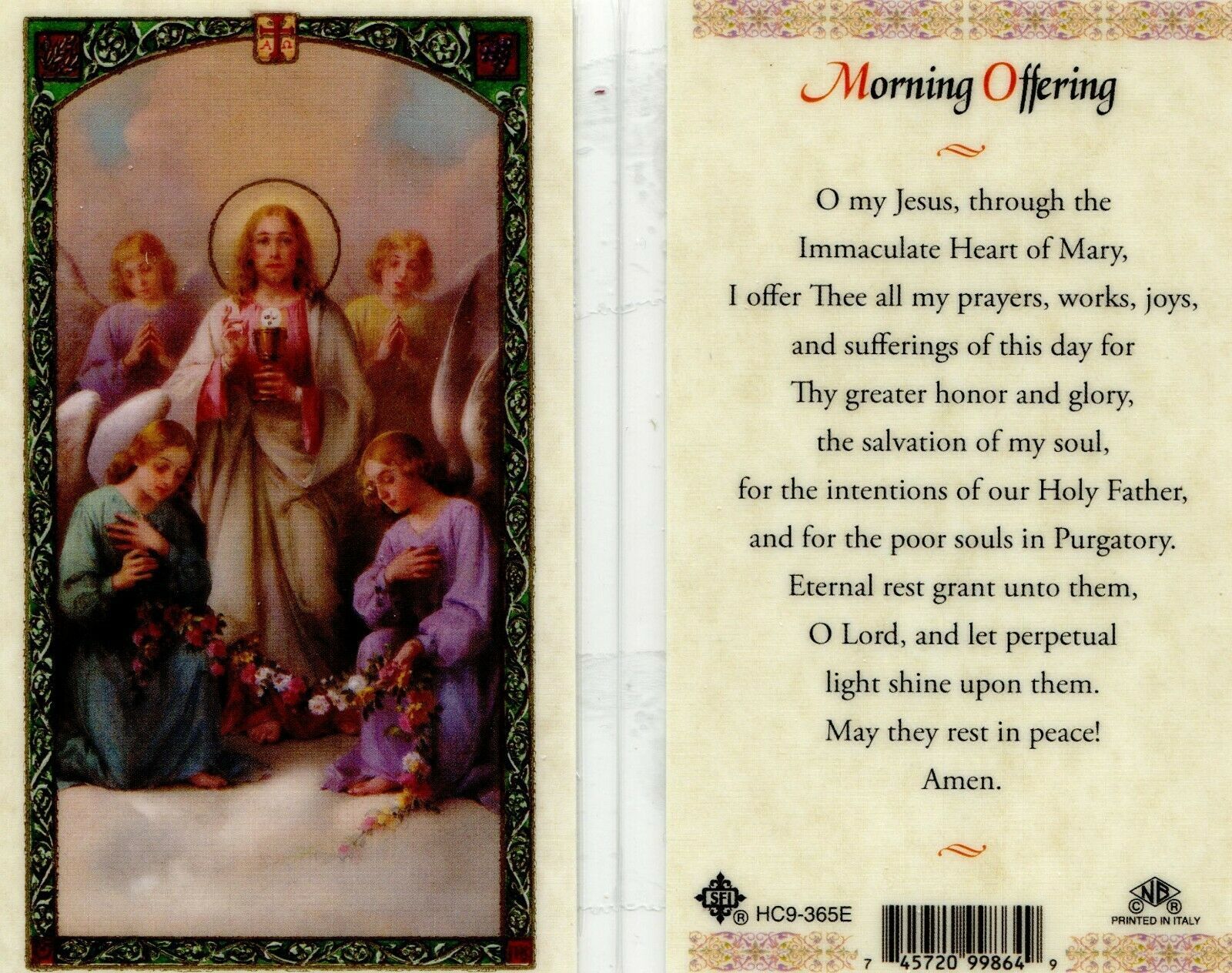

The Month of November is Dedicated to the Holy Souls in Purgatory
“It is a holy and wholesome thought to pray for the dead, so they may be loosed from sins..” (2 Maccabees 12:46)

Pope Leo XIV’s prayer intention for the month of November, 2026:
For the proper use of wealth
Let us pray for the proper use of wealth, that not succumbing to the temptation of selfishness, it may always be put at the service the common good and solidarity of those who have less.

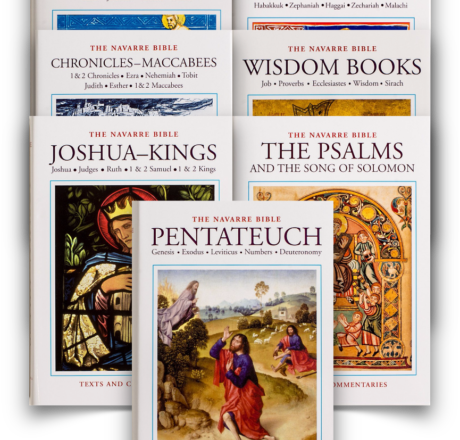
Today’s First Reading
From: Wisdom 6:12-16
Wisdom Leads to a Kingdom
-------------------------
[12] Wisdom is radiant and unfading, and she is easily discerned by those who love her, and is found by those who seek her. [13] She hastens to make herself known to those who desire her. [14] He who rises early to seek her will have no difficulty, for he will find her sitting at his gates. [15] To fix one’s thought on her is perfect understanding, and he who is vigilant on her account will soon be free from care, [16] because she goes about seeking those worthy of her, and she graciously appears to them in their paths, and meets them in every thought.
***********************************************************************
Commentary:
6:12-21. This passage extols wisdom. It is not easy to work out when the sacred writer is referring to divine Wisdom and when he means the wisdom of which man partakes. He praises the radiance and permanence of wisdom (v. 12), personifying her: “She hastens to make herself known”, “goes about seeking” those who desire her (vv. 13, 16); she is “sitting” at the gates of those rho “rise early to seek her” (v. 14); if one is “vigilant on her account”, he will be free from care (v. 15); she teaches people right living. Although it is she who takes the initiative, people need to desire her and do what they can to make her theirs.
From: 1 Thessalonians 4:13-18
The Second Coming of the Lord
-----------------------------
[13] But we would not have you ignorant, brethren, concerning those who are asleep, that you may not grieve as others do who have no hope. [14] For since we believe that Jesus died and rose again, even so, through Jesus, God will bring with him those who have fallen asleep. [15] For this we declare to you by the word of the Lord, that we who are alive, who are left until the coming of the Lord, shall not precede those who have fallen asleep. [16] For the Lord himself will descend from heaven with a cry of command, with the archangel's call, and with the sound of the trumpet of God. And the dead in Christ will rise first; [17] then we who are alive, who are left, shall be caught up together with them in the clouds to meet the Lord in the air; and so we shall always be with the Lord. [18] Therefore comfort one another with these words.
***********************************************************************
Commentary:
13. "Those who are asleep": this expression, already to be found in some pagan writings, was often used by the early Christians to refer to those who died in the faith of Christ. In Christian writings it makes more sense, given Christian belief in the resurrection of Jesus and in the resurrection of the body. It is not just a euphemism: it underlines the fact that death is not the end. "Why does it say that they are asleep", St Augustine asks, "if not because they will be raised when their day comes?" ("Sermon 93", 6). Hence St. J. Escriva's advice: "When facing death, be calm. I do not want you to have the cold stoicism of the pagan, but the fervor of a child of God who knows that life is changed, not taken away. To die is to live!" ("Furrow", 876).
Even though we have this hope, it is perfectly understandable for us to feel sad when people we love die. This sadness, provided it is kept under control, is a sign of affection and piety, but "to be excessively downcast by the death of friends is to act like someone who does not have the spirit of Christian hope. A person who does not believe in the resurrection and who sees death as total annihilation has every reason to weep and lament and cry over those friends and relations who have passed away into nothingness. But you are Christians, you believe in the resurrection, you live and die in hope: why should you mourn the dead excessively?" (Chrysostom, "Hom. on 1 Thess, ad loc.").
14. "It is appointed for men to die once" (Heb 9:27). However, for a person who has faith, death does not just mean the end of his days on earth. Our Lord Jesus Christ died and rose again, and his resurrection is a pledge of our resurrection: death "in Christ" is the climax of a life in union with him, and it is the gateway to heaven. And so St Paul tells Timothy, "If we have died with him, we shall also live with him; if we endure, we shall also reign with him" (2 Tim 2:11-12).
The resurrection the Christian will experience is not only similar to our Lord's; his resurrection is in fact the cause of ours. St Thomas Aquinas explains this as follows: "Christ is the model of our resurrection, because he took flesh and he rose in the flesh. However, he is not only our model; he is also the efficient cause (of our resurrection) because anything done by the human nature of Christ was done not only by the power of his human nature but also by the power of the godhead united to that nature. And so, just as his touch cured the leper by virtue of its being the instrument of his godhead, so the resurrection of Christ is the cause of our resurrection" ("Commentary on 1 Thess, ad loc."). Although this passage of the letter does not say so explicitly, it is implied that we will rise with our bodies, just as Jesus rose with his.
15-17. The religious instruction of the Thessalonians was cut short because St Paul had to leave the city in a hurry. One of the doubts remaining in their minds can be expressed as follows: Will the dead be under any disadvantage "vis-a-vis" those who are still alive when the Parousia of the Lord happens? The Apostle replies in two stages: first he says that we will have no advantage of any kind over them (vv. 15-18); then he makes clear that we do not know when that even will come about (5:1-2).
In his reply he does not explicitly speak about the general resurrection; he refers only to those who die "in Christ". He distinguishes two groups as regards the situation people find themselves in at our Lord's second coming--1) those who are alive: these will be "caught up", that is changed (cf. 1 Cor 15:51; 2 Cor 5:2-4) by the power of God and will change from being corruptible and mortal to being incorruptible and immortal; 2) those who have already died: these will rise again.
St Paul's reply is adapted to the tenor of the question; so, when he writes "we who are alive, who are left" he does not mean that the Parousia will happen soon or that he will live to see the day (cf. Pontifical Biblical Commission, "Reply" concerning the Parousia, 18 June 1915). He uses the first person plural because at the time of writing both he and his readers were alive. However, his words were misinterpreted by some of the Thessalonians, and that was the reason he wrote the second epistle a few months later (in which he puts things more clearly: "Now concerning the coming of our Lord Jesus Christ and our assembling to meet him, we beg you, brethren, not to quickly shaken in mind or excited [...], to the effect that the day of the Lord has come" (2 Thess 2:1-2). However, even in the first letter there are enough indications that St Paul was not saying the Parousia was imminent, for he implies that he does not know when it will happen (cf. 5:1-2).
To describe the signs which will mark the Lord's coming, St Paul uses imagery typical of apocalyptic writing--the voice of the archangel, the sound of the trumpet, the clouds of heaven. These signs are to be found in the Old Testament theophanies or great manifestations of Yahweh (cf. Ex 19:16); on the day of the Parousia, too, they will reveal God's absolute dominion over the forces of nature, as also his sublimity and majesty.
When the Lord Jesus comes in all his glory, those who had died in the Lord (who already were enjoying the vision of God in heaven) and those who have been changed will go to meet the Lord "in the air", for both will now have glorified bodies (cf. 1 Cor 15:43) endowed with the gift of "agility", "by which the body will be freed from the heaviness that now presses it down, and will take on a capability of moving with the utmost ease and swiftness, wherever the soul pleases" ("St. Pius V Catechism", I, 12, 13).
After the general judgment, which will take place that day, the righteous will be "always with the Lord." That is in fact the reward of the blessed--to enjoy forever, in body and soul, the sight of God, thereby attaining a happiness which more than makes up for whatever they have had to do to obtain it, for "the sufferings of this present life are not worth comparing with the glory that is to be revealed to us" (Rom 8:18). "If at any time you feel uneasy at the thought of our sister death because you see yourself to be such a poor creature, take heart. Think of this: Heaven awaits us; what will it be like when all the infinite beauty and greatness and happiness and Love of God are poured into the poor clay vessel that the human being is, to satisfy it eternally with the freshness of an ever-new joy?" (St J. Escriva, "Furrow", 891).
From: Matthew 25:1-13
The Parable of the Wise and Foolish Maidens
-------------------------------------------
(Jesus said to His disciples,) [1] "Then the Kingdom of Heaven shall be compared to ten maidens who took their lamps and went to meet the bridegroom. [2] Five of them were foolish, and five were wise. [3] For when the foolish took their lamps, they took no oil with them; [4] but the wise took flasks of oil with their lamps. [5] As the bridegroom was delayed, they all slumbered and slept. [6] But at midnight there was a cry, `Behold the bridegroom! Come out to meet him.' [7] Then all those maidens rose and trimmed their lamps. [8] And the foolish said to the wise, `Give us some of your oil, for our lamps are going out.' [9] But the wise replied, `Perhaps there will not be enough for us and for you; go rather to the dealers and buy for yourselves.' [10] And while they went to buy, the bridegroom came, and those who were ready went in with him to the marriage feast; and the door was shut. [11] Afterwards the other maidens came also, saying, Lord, lord, open to us.' [12] But he replied, `Truly, I say to you, I do not know you.' [13] Watch therefore, for you know neither the day nor the hour."
***********************************************************************
Commentary:
1-46. The whole of chapter 25 is a practical application of the teaching contained in chapter 24. With these parables of the wise and foolish virgins and of the talents, and His teaching on the Last Judgment, our Lord is again emphasizing the need for vigilance (cf. note on Matthew 24:42). In this sense, chapter 25 makes chapter 24 more intelligible.
1-13. The main lesson of this parable has to do with the need to be on the alert: in practice, this means having the light of faith, which is kept alive with the oil of charity. Jewish weddings were held in the house of the bride's father. The virgins are young unmarried girls, bridesmaids who are in the bride's house waiting for the bridegroom to arrive. The parable centers on the attitude one should adopt up to the time when the bridegroom comes. In other words, it is not enough to know that one is "inside" the Kingdom, the Church: one has to be on the watch and be preparing for Christ's coming by doing good works.
This vigilance should be continuous and unflagging, because the devil is forever after us, prowling around "like a roaring lion, seeking someone to devour" (1 Peter 5:8). "Watch with the heart, watch with faith, watch with love, watch with charity, watch with good works [...]; make ready the lamps, make sure they do not go out [...], renew them with the inner oil of an upright conscience; then shall the Bridegroom enfold you in the embrace of His love and bring you into His banquet room, where your lamp can never be extinguished" (St. Augustine, "Sermon", 93).
Disclaimer: Opinions posted on Free Republic are those of the individual posters and do not necessarily represent the opinion of Free Republic or its management. All materials posted herein are protected by copyright law and the exemption for fair use of copyrighted works.


