
Posted on 11/06/2026 9:50:30 PM PST by fidelis
Jesus said to his disciples: “I tell you, make friends for yourselves with dishonest wealth, so that when it fails, you will be welcomed into eternal dwellings. The person who is trustworthy in very small matters is also trustworthy in great ones; and the person who is dishonest in very small matters is also dishonest in great ones.” Luke 16:9–10
Today’s Gospel begins with a perplexing command: “Make friends for yourselves with dishonest wealth, so that when it fails, you will be welcomed into eternal dwellings.” At first glance, Jesus seems to present a contradiction. How can wealth that is described as “dishonest” be something we are encouraged to use to make friends?
In this passage, the phrase “dishonest wealth” does not refer primarily to money obtained through immoral means, such as theft or fraud. Rather, it refers to this world’s temporal wealth, which is often tainted by human sin and selfishness. It is “unrighteous” in that it is fleeting, easily misused, and frequently becomes an idol. Yet Jesus teaches that even this worldly wealth can become a source of grace when used rightly—that is, when it is placed at the service of the Kingdom of God.
To “make friends” with this wealth means to use it for works of mercy: feeding the hungry, sheltering the homeless, caring for the poor, and supporting the Church. These acts of love create spiritual bonds—“friends” who will, as Jesus says, “welcome you into eternal dwellings.” Think about money. How do you see it? The lure of money is strong. It’s very common for people to daydream about becoming rich. We might imagine the nice vacations we can take, the new car or homes we can purchase, and the temporal security we could enjoy. As a side thought, we might also think about the good we could do for family and others.
Because this lure is often strong, we need to be vigilant when it comes to money and material possessions. It’s easy to justify wealth, just as the Pharisees did. But what Jesus said to them, He will also say to us when we are overly attached to wealth and use what we have selfishly: “You justify yourselves in the sight of others, but God knows your hearts; for what is of human esteem is an abomination in the sight of God” (Luke 16:15). The selfish attachment to money and material possessions is “an abomination in the sight of God.”
This can be difficult to hear, so it is beneficial to meditate on this Gospel passage. Everything Jesus said is meant to draw us out of the foolishness of sinful attachments—abominations is God’s sight—and into the wisdom of spiritual purity and poverty of heart.
Reflect today on how you see money. How deeply does it affect your imagination, your choices, and your peace? The pull of wealth is strong, but grace is stronger. If you find within yourself any disordered desire for material gain, ask our Lord to purify your heart. Pray for the grace to see wealth not as an end, but as a means to serve others, to advance the Gospel, and to grow in virtue. In the end, what matters is not how much we possess, but how faithfully we have loved with what we’ve been given. Use every temporal good in a way that echoes into eternity.
Most generous Lord, all that I have is Yours. You are the Origin and Sustainer of all things. Please free me from every inordinate desire for money and material possessions. Grant me the grace to keep my eyes fixed on the true riches of Your grace, mercy, and the promise of eternal life. May I offer all that I am and all that I have to You, for Your glory, and for the salvation of souls. Jesus, I trust in You.

|
Click here: to donate by Credit Card Or here: to donate by PayPal Or by mail to: Free Republic, LLC - PO Box 9771 - Fresno, CA 93794 Thank you very much and God bless you. |
Please keep in mind that this is a Catholic Caucus/Devotional thread for the purpose of prayerful reflection on the Sacred Scriptures and is closed to debate of any kind. Per FR policy on Religion Caucus threads, off-topic, argumentative, and abusive comments are not allowed and will be submitted to the Mods for deletion. Thanks, and God bless you.
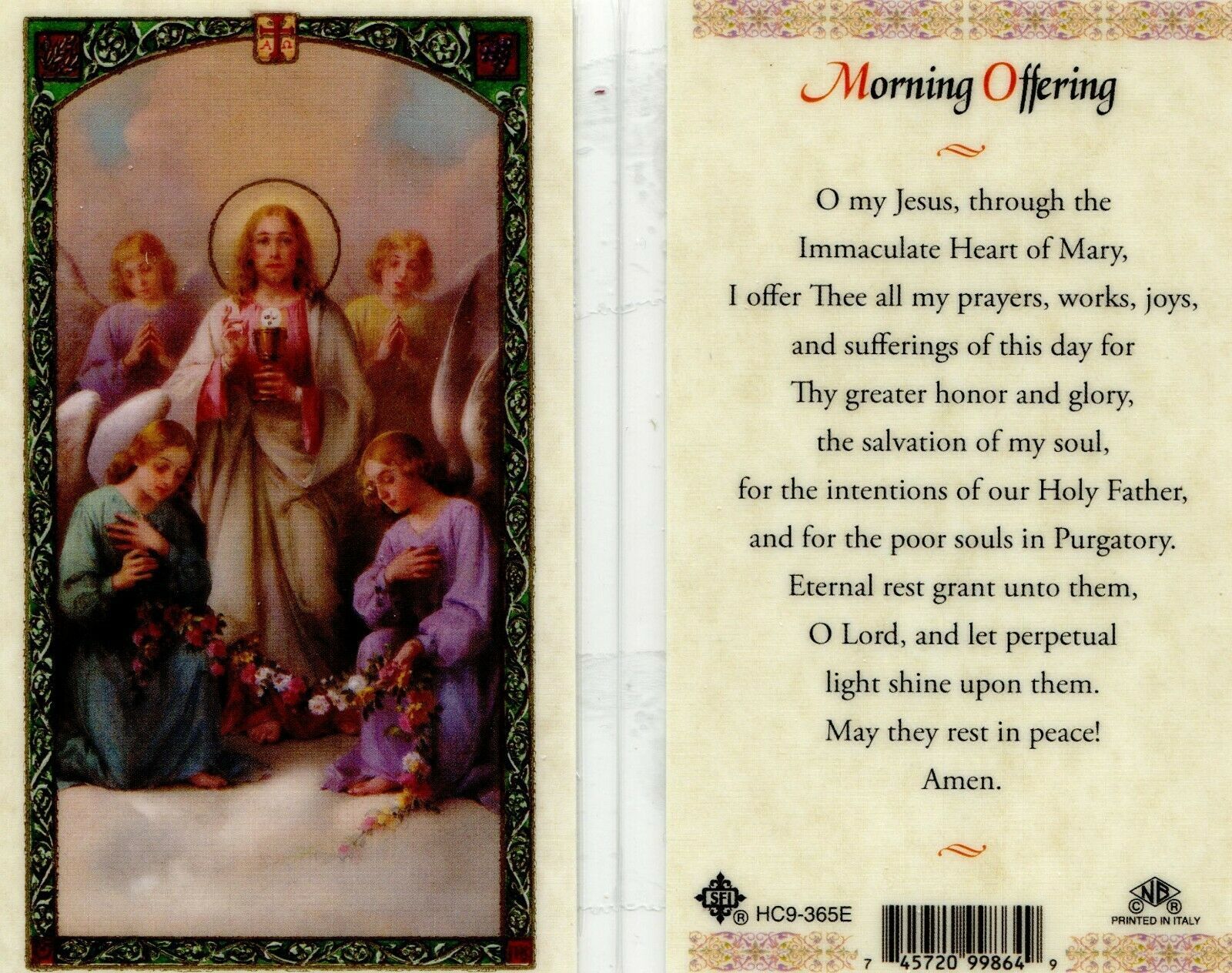

The Month of November is Dedicated to the Holy Souls in Purgatory
“It is a holy and wholesome thought to pray for the dead, so they may be loosed from sins..” (2 Maccabees 12:46)

Pope Leo XIV’s prayer intention for the month of November, 2026:
For the proper use of wealth
Let us pray for the proper use of wealth, that not succumbing to the temptation of selfishness, it may always be put at the service the common good and solidarity of those who have less.

Today’s First Reading
From: Philippians 4:10-19
Thanks for Help Received
---------------------------------
[10] I rejoice in the Lord greatly that now at length you have revived your concern for me; you were indeed concerned for me, but you had no opportunity. [11] Not that I complain of want; for I have learned, in whatever state I am, to be content. [12] I know how to be abased, and I know how to abound; in any and all circumstances I have learned the secret of facing plenty and hunger, abundance and want. [13] I can do all things in him who strengthens me.
[14] Yet it was kind of you to share my trouble. [15] And you Philippians yourselves know that in the beginning of the gospel, when I left Macedonia, no church entered into partnership with me in giving and receiving except you only; [16] for even in Thessalonica you sent me help once and again. [17] Not that I seek the gift; but I seek the fruit which increases to your credit. [18] I have received full payment, and more; I am filled, having received from Epaphroditus the gifts you sent, a fragrant offering, a sacrifice acceptable and pleasing to God. [19] And my God will supply every need of yours according to his riches in glory in Christ Jesus.
***********************************************************************
Commentary:
10-20. Gratitude is a very characteristic feature of Christian life; in this passage we can see the noble soul of St Paul, ever appreciative of any sign of affection and thoughtfulness.
It also shows what great confidence St Paul had in the Philippians; from them alone did he accept help, for his general policy was not to accept material aid so as to leave no one in any doubt about the purity of his intentions in preaching the Gospel (cf. 1 Cor 9:18; 2 Cor12:14-18). This meant that he was also practicing the virtue of poverty, being content with what he had.
Financial resources do make a person's life easier and by helping us meet our material needs they allow us to cultivate friendship with God and go to the help of others, but these resources are not an end in themselves; they are only a means. Therefore there is nothing essentially bad about not having money or property: one can get to heaven without them. However, if a person is well-to-do and is attached to his wealth, that is bad. That is what St Paul is saying. "If you want to be your own masters at all times, I advise you to make a very real effort to be detached from everything, and to do so without fear or hesitation. Then, when you go about your various duties, whether personal, family or otherwise, make honest use of legitimate human resources with a view to serving God, his Church, your family, your profession, your country, and the whole of mankind. Remember that what really matters is not whether you have this or lack that, but whether you are living according to the truth taught us by our Christian faith, which tells us that created goods are only a means, nothing more. So, do not be beguiled into imagining that they are in any way definitive" (St J. Escriva, "Friends of God", 118).
13. "In him who strengthens me": the proposition "in" often refers to the place "where", in which case the text would mean that the person who lives in Christ, who is identified with him, can do all things. However, in biblical Greek it frequently has a causal meaning, in which case the Apostle would be saying that he can do all things because God lends him his strength.
The difficulties which can arise in apostolic work or in one's search for personal holiness are not an insuperable obstacle, for we can always count on God's support. So, we need to let ourselves be helped; we need to go to the Lord whenever we are tempted or feel discouraged ("Thou art the God in whom I take refuge": Ps 43:2), humbly recognizing that we need his help, for we can do nothing on our own. St Alphonsus encourages us always to put our trust in God: "The proud person relies on his strength and he falls; but the humble person, who puts all his trust in God, holds his ground and does not succumb, no matter how severely he is tempted" ("The Love of God Reduced to Practice", 9).
"I have asked you", Monsignor Escriva says, "to keep on lifting your eyes up to heaven as you go about your work, because hope encourages us to catch hold of the strong hand which God never ceases to reach out to us, to keep us from losing our supernatural point of view. Let us persevere even when our passions rear up and attack us, attempting to imprison us within the narrow confines of our selfishness; or when puerile vanity makes us think we are the center of the universe. I am convinced that unless I look upward, unless I have Jesus, I shall never accomplish anything. And I know that the strength to conquer myself and to win comes from repeating that cry, 'I can do all things in him who strengthens me' (Phil 4:13), words which reflect God's firm promise not to abandon his children if they do not abandon him" (St J. Escriva, "Friends of God", 213).
17-19. Using a metaphor taken from commercial life, the Apostle gives us an insight into the value of generosity. He is not asking the Philippians for donations: he can survive without them; he is seeking the good that will redound to them on account of their almsgiving (cf. v. 17): and, given their own limited financial resources, they are in fact being particularly generous (cf. 2 Cor 8:2).
Since God is the one who rewards men for their actions, then clearly a person who gives alms ultimately benefits more than he who receives alms. As a reward for their almsgiving the Philippians will receive nothing less than the eternal glory won for us by Christ Jesus. And so St Leo the Great recommends that "whoever gives alms should do so with detachment and joy, for the less he keep back for himself, the greater will be his gain" ("Tenth Lenten Sermon").
From: Luke 16:9-15
The Unjust Steward
------------------------
[9] And I tell you, make friends for yourselves by means of unrighteous mammon, so that when it fails they may receive you into the eternal habitations.
[10] "He who is faithful in a very little is faithful also in much; and he who is dishonest in a very little is dishonest also in much. [11] If then you have not been faithful in the unrighteous mammon, who will entrust to you the true riches? [12] And if you had not been faithful in that which is another's, who will give you that which is your own? [13] No servant can serve two masters; for either he will hate the one and love the other, or he will be devoted to the one and despise the other. You cannot serve God and mammon."
[14] The Pharisees, who were lovers of money, heard all this, and they scoffed at Him. [15] But He said to them, "You are those who justify yourselves before men, but God knows your hearts; for what is exalted among men is an abomination in the sight of God."
***********************************************************************
Commentary:
9-11. "Unrighteous mammon" means temporal good which have been obtained in some unjust, unrighteous way. However, God is very merciful: even this unjust wealth can enable a person to practice virtue by making restitution, by paying for the damage done and then by striving to help his neighbor by giving alms, by creating work opportunities, etc. This was the case with Zacchaeus, the chief tax collector, who undertook to restore fourfold anything he had unjustly taken, and also to give half his wealth to the poor. On hearing that, our Lord specifically declared that salvation had that day come to that house (cf. Luke 19:1-10).
Our Lord speaks out about faithfulness in very little things, referring to riches--which really are insignificant compared with spiritual wealth. If a person is faithful and generous and is detached in the use he makes of these temporal riches, he will, at the end of his life, receive the rewards of eternal life, which is the greatest treasure of all, and a permanent one. Besides, by its very nature human life is a fabric of little things: anyone who fails to give them their importance will never be able to achieve great things. "Everything in which we poor men have a part--even holiness--is a fabric of small trifles which, depending upon one's intention, can form a magnificent tapestry of heroism or of degradation, of virtues or of sins.
"The epic legends always relate extraordinary adventures, but never fail to mix them with homely details about the hero. May you always attach great importance to the little things. This is the way!" (St J. Escriva, "The Way", 826).
The parable of the unjust steward is a symbol of man's life. Everything we have is a gift from God, and we are His stewards or managers, who sooner or later will have to render an account to Him.
12. "That which is another's" refers to temporal things, which are essentially impermanent. "That which is your own" refers to goods of the spirit, values which endure, which are things we really do possess because they will go with us into eternal life. In other words: how can we be given Heaven if we have proved unfaithful, irresponsible, during our life on earth?
13-14. In the culture of that time "service" involved such commitment to one's master that a servant could not take on any other work or serve any other master.
Our service to God, our sanctification, requires us to direct all our actions towards Him. A Christian does not divide up his time, allocating some of it to God and some of it to worldly affairs: everything he does should become a type of service to God and neighbor--by doing things with upright motivation, and being just and charitable.
The Pharisees jeered at what Jesus was saying, in order to justify their own attachment to material things; sometimes people make fun of total commitment to God and detachment from material things because they themselves are not ready to practice virtue; they cannot even imagine other people really having this generosity: they think they must have ulterior motives. See also the note on Matthew 6:24.
[The note on Matthew 6:24 states: 24. Man's ultimate goal is God; to attain this goal he should commit himself entirely. But in fact some people do not have God as their ultimate goal, and instead choose wealth of some kind--in which case wealth becomes their god. Man cannot have two absolute and contrary goals.]
15. "Abomination": the original Greek work means worship of idols, and, by derivation, the horror this provoked in a true worshipper of God. So the expression conveys God's disgust with the attitude of the Pharisees who, by wanting to be exalted, are putting themselves, like idols, in the place of God.
Disclaimer: Opinions posted on Free Republic are those of the individual posters and do not necessarily represent the opinion of Free Republic or its management. All materials posted herein are protected by copyright law and the exemption for fair use of copyrighted works.

