Catena Aurea by St. Thomas Aguinas
CHAP. 1616:17
1. And he said unto his disciples, There was a certain rich man, which had a steward; and the same was accused unto him that he had wasted his goods.
2. And he called him, and said unto him, How is it that I hear this of thee? give an account of thy stewardship; for thou mayest be no longer steward.
3. Then the steward said within himself, What shall I do? for my lord taketh away from me the stewardship: I cannot dig; to beg I am ashamed.
4. I am resolved what to do, that, when I am put out of the stewardship, they may receive me into their houses.
5. So he called every one of his lords debtors unto him, and said unto the first, How much owest thou unto my lord?
6. And he said, An hundred measures of oil. And he said unto him, Take thy bill, and sit down quickly, and write fifty.
7. Then said he to another, And how much owest thou? And he said, An hundred measures of wheat. And he said unto him, Take thy bill, and write fourscore.
BEDE. Having rebuked in three parables those who murmured because He received penitents, our Saviour shortly after subjoins a fourth and a fifth on almsgiving and frugality, because it is also the fittest order in preaching that almsgiving should be added after repentance. Hence it follows, And he said unto his disciples, There was a certain rich man.
PSEUDO-CHRYSOSTOM. (Hom. de Divite.) There is a certain erroneous opinion inherent in mankind, which increases evil and lessens good. It is the feeling that all the good things we possess in the course of our life we possess as lords over them, and accordingly we seize them as our especial goods. But it is quite the contrary. For we are placed in this life not as lords in our own house, but as guests and strangers, led whither we would not, and at a time we think not of. He who is now rich, suddenly becomes a beggar. Therefore whoever thou art, know thyself to be a dispenser of the things of others, and that the privileges granted thee are for a brief and passing use. Cast away then from thy soul the pride of power, and put on the humility and modesty of a steward.
BEDE. (ex Hieron.) The bailiff is the manager of the farm, therefore he takes his name from the farm. But the steward, or director of the household, (villicus conomus) is the overseer of money as well as fruits, and of every thing his master possesses.
AMBROSE. From this we learn then, that we are not ourselves the masters, but rather the stewards of the property of others.
THEOPHYLACT. Next, that when we exercise not the management of our wealth according to our Lords pleasure, but abuse our trust to our own pleasures, we are guilty stewards. Hence it follows, And he was accused to him.
PSEUDO-CHRYSOSTOM. (ut sup.) Meanwhile he is taken and thrust out of his stewardship; for it follows, And he called him, and said unto him, What is this that I hear of thee? give an account of thy stewardship, for thou canst be no longer steward. Day after day by the events which take place our Lord cries aloud to us the same thing, shewing us a man at midday rejoicing in health, before the evening cold and lifeless; another expiring in the midst of a meal. And in various ways we go out from our stewardship; but the faithful steward, who has confidence concerning his management, desires with Paul to depart and be with Christ. (Phil. 1:23.) But he whose wishes are on earth is troubled at his departing. Hence it is added of this steward, Then the steward said within himself, What shall I do, for my Lord taketh away from me the stewardship? I cannot dig, to beg I am ashamed. Weakness in action is the fault of a slothful life. For no one would shrink who had been accustomed to apply himself to labour. But if we take the parable allegorically, after our departure hence there is no more time for working; the present life contains the practice of what is commanded, the future, consolation. If thou hast done nothing here, in vain then art thou careful for the future, nor wilt thou gain any thing by begging. The foolish virgins are an instance of this, who unwisely begged of the wise, but returned empty. (Matt 25:8.) For every one puts on his daily life as his inner garment; it is not possible for him to put it off or exchange it with another. But the wicked steward aptly contrived the remission of debts, to provide for himself an escape from his misfortunes among his fellow-servants; for it follows, I am resolved what to do, that when I am put out of the stewardship, they may receive me into their houses. For as often as a man, perceiving his end approaching, lightens by a kind deed the load of his sins, (either by forgiving a debtor his debts, or by giving abundance to the poor,) dispensing those things which are his Lords, he conciliates to himself many friends, who will afford him before the judge a real testimony, not by words, but by the demonstration of good works, nay moreover will provide for him by their testimony a resting-place of consolation. But nothing is our own, all things are in the power of God. Hence it follows, So he called every one of his Lords debtors unto him, and said unto the first, How much owest thou unto my Lord? And he said, A hundred casks of oil.
BEDE. A cadus in Greek is a vessel containing three urns. It follows, And he said unto him, Take thy bill, and sit down quickly, and write fifty, forgiving him the half. It follows, Then said he to another, And how much owest thou? And he said, An hundred measures of wheat. A corus is made up of thirty bushels. And he said unto him, Take thy bill, and write fourscore, forgiving him a fifth part. It may be then simply taken as follows: whosoever relieves the want of a poor man, either by supplying half or a fifth part, will be blessed with the reward of his mercy.
AUGUSTINE. (de Qu. Ev. l. ii. qu. 34.) Or because out of the hundred measures of oil, he caused fifty to be written down by the debtors, and of the hundred measures of wheat, fourscore, the meaning thereof is this, that those things which every Jew performs toward the Priests and Levites should be the more abundant in the Church of Christ, that whereas they give a tenth, Christians should give a half, as Zaccheus gave of his goods, (Luke 19:8.) or at least by giving two tenths, that is, a fifth, exceed the payments of the Jews.
16:813
8. And the lord commended the unjust steward, because he had done wisely: for the children of this world are in their generation wiser than the children of light.
9. And I say unto you, Make to yourselves friends of the mammon of unrighteousness; that, when ye fail, they may receive you into everlasting habitations.
10. He that is faithful in that which is least is faithful also in much: and he that is unjust in the least is unjust also in much.
11. If therefore ye have not been faithful in the unrighteous mammon, who will commit to your trust the true riches?
12. And if ye have not been faithful in that which is another mans, who shall give you that which is your own?
13. No servant can serve two masters: for either he will hate the one, and love the other; or else he will hold to the one, and despise the other. Ye cannot serve God and mammon.
AUGUSTINE. (ubi sup.) The steward whom his Lord cast out of his stewardship is nevertheless commended because he provided himself against the future. As it follows, And the Lord commended the unjust steward, because he had done wisely; we ought not however to take the whole for our imitation. For we should never act deceitfully against our Lord in order that from the fraud itself we may give alms.
ORIGEN. (in Prov. 1:1.) But because the Gentiles say that wisdom is a virtue, and define it to be the experience of what is good, evil, and indifferent, or the knowledge of what is and what is not to be done, we must consider whether this word signifies many things, or one. For it is said that God by wisdom prepared the heavens. (Prov. 3:19.) Now it is plain that wisdom is good, because the Lord by wisdom prepared the heavens. It is said also in Genesis, according to the LXX, that the serpent was the wisest animal, wherein He makes wisdom not a virtue, but evil-minded cunning. And it is in this sense that the Lord commended the steward that he had done wisely, that is, cunningly and evilly. And perhaps the word commended was spoken not in the sense of real commendation, but in a lower sense; as when we speak of a man being commended in slight and indifferent matters, and in a certain measure clashings and sharpness of wit are admired, by which the power of the mind is drawn out.
AUGUSTINE. (ubi sup.) On the other hand this parable is spoken, that we should understand that if the steward who acted deceitfully, could be praised by his lord, how much more they please God who do their works according to His commandment.
ORIGEN. The children of this world also are not called wiser but more prudent than the children of light, and this not absolutely and simply, but in their generation. For it follows, For the children of this world are in their generation wiser than the children of light, &c.
BEDE. The children of light and the children of this world are spoken of in the same manner as the children of the kingdom, and the children of hell. For whatever works a man does, he is also termed their son.
THEOPHYLACT. By the children of this world then He means those who mind the good things which are on the earth; by the children of light, those who beholding the divine love, employ themselves with spiritual treasures. But it is found indeed in the management of human affairs, that we prudently order our own things, and busily set ourselves to work, in order that when we depart we may have a refuge for our life; but when we ought to direct the things of God, we take no forethought for what shall be our lot hereafter.
GREGORY. (18. Mor. cap. 18.) In order then that after death they may find something in their own hand, let men before death place their riches in the hands of the poor. Hence it follows, And I say to you, Make to yourselves friends of the mammon of unrighteousness, &c.
AUGUSTINE. (Serm. 113.) That which the Hebrews call mammon, in Latin is riches. As if He said, Make to yourselves friends of the riches of unrighteousness. Now some misunderstanding this, seize upon the things of others, and so give something to the poor, and think that they are doing what is commanded. That interpretation must be corrected into, Give alms of your righteous labours. (Prov. 3:9. LXX.) For you will not corrupt Christ your Judge. If from the plunder of a poor man, you were to give any thing to the judge that he might decide for you, and that judge should decide for you, such is the force of justice, that you would be ill pleased in yourself. Do not then make to yourself such a God. God is the fountain of Justice, give not your alms then from interest and usury. I speak to the faithful, to whom we dispense the body of Christ. But if you have such money, it is of evil that you have it. Be no longer doers of evil. Zaccheus said, Half my goods I give to the poor. (Luke 19:8.) See how he runs who runs to make friends of the mammon of unrighteousness; and not to be held guilty from any quarter, he says, I If hare taken any thing from any one, I restore fourfold. According to another interpretation, the mammon of unrighteousness are all the riches of the world, whenever they come. For if you seek the true riches, there arc some in which Job when naked abounded, when he had his heart full towards God. The others are called riches from unrighteousness; because they are not true riches, for they are full of poverty, and ever liable to chances. For if they were true riches, they would give you security.
AUGUSTINE. (de Quæst. Ev. l. ii. q. 34.) Or the riches of unrighteousness are so called, because they are not riches except to the unrighteous, and such as rest in their hopes and the fulness of their happiness. But when these things are possessed by the righteous, they have indeed so much money, but no riches are theirs but heavenly and spiritual.
AMBROSE. Or he spoke of the unrighteous Mammon, because by the various enticements of riches covetousness corrupts our hearts, that we may be willing to obey riches.
BASIL. (Hom. de Avar.) Or if thou hast succeeded to a patrimony, thou receivest what has been amassed by the unrighteous; for in a number of predecessors some one must needs be found who has unjustly usurped the property of others. But suppose that thy father has not been guilty of exaction, whence hast thou thy money? If indeed thou answerest, From myself; thou art ignorant of God, not having the knowledge of thy Creator; but if, From God, tell me the reason for which thou receivedst it. Is not the earth and the fulness thereof the Lords? (Ps. 24:1.) If then whatever is ours belongs to our common Lord, so will it also belong to our fellow-servant.
THEOPHYLACT. Those then are called the riches of unrighteousness which the Lord has given for the necessities of our brethren and fellow-servants, but we spend upon ourselves. It became us then, from the beginning, to give all things to the poor, but because we have become the stewards of unrighteousness, wickedly retaining what was appointed for the aid of others, we must not surely remain in this cruelty, but distribute to the poor, that we may be received by them into everlasting habitations. For it follows, That, when ye fail, they may receive you into everlasting habitations.
GREGORY. (21. Mor. cap. 14.) But if through their friendship we obtain everlasting habitations, we ought to calculate that when we give we rather offer presents to patrons, than bestow benefits upon the needy.
AUGUSTINE. (Serm. 113.) For who are they that shall have everlasting habitations but the saints of God? and who are they that are to be received by them into everlasting habitations but they who administer to their want, and whatsoever they have need of, gladly supply. They are those little ones of Christ, who have forsaken all that belonged to them and followed Him; and whatsoever they had have given to the poor, that they might serve God without earthly shackles, and freeing their shoulders from the burdens of the world, might raise them aloft as with wings.
AUGUSTINE. (de Quæst. Ev. l. ii. q. 34.) We must not then understand those by whom we wish to be received into everlasting habitations to be as it were debtors of God; seeing that the just and holy are signified in this place, who cause those to enter in, who administered to their necessity of their own worldly goods.
AMBROSE. Or else, make to yourselves friends of the mammon of unrighteousness, that by giving to the poor we may purchase the favour of angels and all the saints.
CHRYSOSTOM. Mark also that He said not, that they may receive you into their own habitations. For it is not they who receive you. Therefore when He said, Make to yourselves friends, he added, of the mammon of unrighteousness, to shew, that their friendship will not alone protect us unless good works accompany us, unless we righteously cast away all riches unrighteously amassed. The most skilful then of all arts is that of almsgiving. For it builds not for us houses of mud, but lays up in store an everlasting life. Now in each of the arts one needs the support of another; but when we ought to shew mercy, we need nothing else but the will alone.
CYRIL OF ALEXANDRIA. Thus then Christ taught those who abound in riches, earnestly to love the friendship of the poor, and to have treasure in heaven. But He knew the sloth of the human mind, how that they who court riches bestow no work of charity upon the needy. That to such men there results no profit of spiritual gifts, He shews by obvious examples, adding, He that is faithful in that which is least is faithful also in much; and he that is unjust in the least is unjust also in much. Now our Lord opens to us the eye of the heart, explaining what He had said, adding, If therefore ye have not been faithful in the unrighteous mammon, who will commit to your trust the true riches? That which is least then is the mammon of unrighteousness, that is, earthly riches, which seem nothing to those that are heavenly wise. I think then that a man is faithful in a little, when he imparts aid to those who are bowed down with sorrow. If then we have been unfaithful in a little thing, how shall we obtain from hence the true riches, that is, the fruitful gift of Divine grace, impressing the image of God on the human soul? But that our Lords words incline to this meaning is plain from the following; for He says, And if ye have not been faithful in that which is another mans, who shall give you that which is your own?
AMBROSE. Riches are foreign to us, because they are something beyond nature, they are not born with us, and they do not pass away with us. But Christ is ours, because He is the life of man. Lastly, He came unto His own.
THEOPHYLACT. Thus then hitherto He has taught us how faithfully we ought to dispose of our wealth. But because the management of our wealth according to God is no otherwise obtained than by the indifference of a mind unaffected towards riches, He adds, No man can serve two masters.
AMBROSE. Not because the Lord is two, but one. For although there are who serve mammon, yet he knoweth no rights of lordship; but has himself placed upon himself a yoke of servitude. There is one Lord, because there is one God. Hence it is evident, that the power of the Father and the Son is one: and He assigns a reason, thus saying, For either he will hate the one, and love the other; or else he will hold to the one, and despise the other.
AUGUSTINE. (de Qu. Ev. lib. ii. q. 36.) But these things were not spoken indifferently or at random. For no one when asked whether he loves the devil, answers that he loves him, but rather that he hates him; but all generally proclaim that they love God. Therefore either he will hate the one, (that is, the devil,) and love the other, (that is, God;) or will hold to the one, (that is, the devil, when he pursues as it were temporal wants,) and will despise the other, (that is, God,) as when men frequently neglect His threats for their desires, who because of His goodness flatter themselves that they will have impunity.
CYRIL OF ALEXANDRIA. But the conclusion of the whole discourse is what follows, Ye cannot serve God and mammon. Let us then transfer all our devotions to the one, forsaking riches.
BEDE. (ex Hier.) Let then the covetous hear this, that we can not at the same time serve Christ and riches; and yet He said not, Who has riches, but, who serves riches; for ho who is the servant of riches, watches them as a servant; but he who has shaken off the yoke of servitude, dispenses them as a master; but he who serves mammon, verily serves him who is set over those earthly things as the reward of his iniquity, and is called the prince of this world. (John 12:31, 2 Cor. 4:4.)
Catena Aurea Luke 16
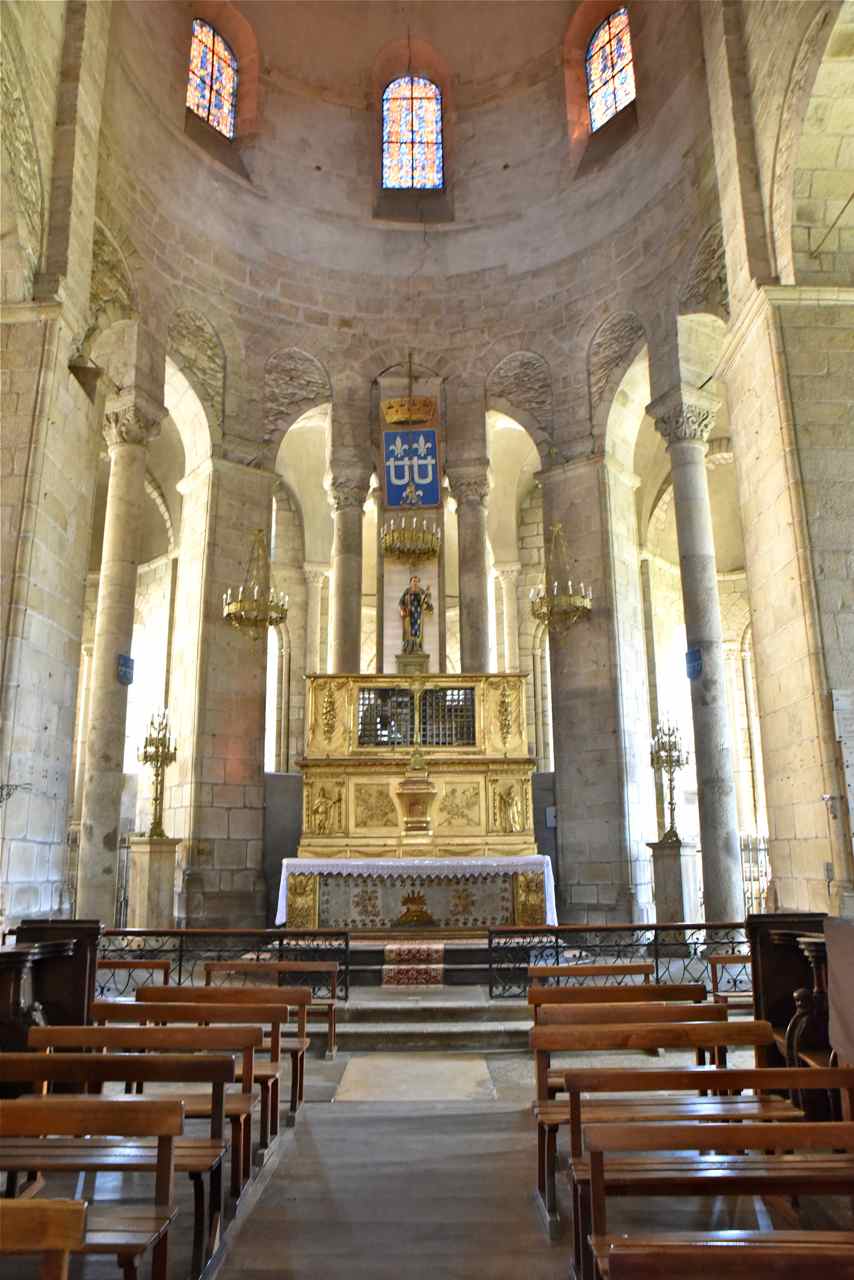
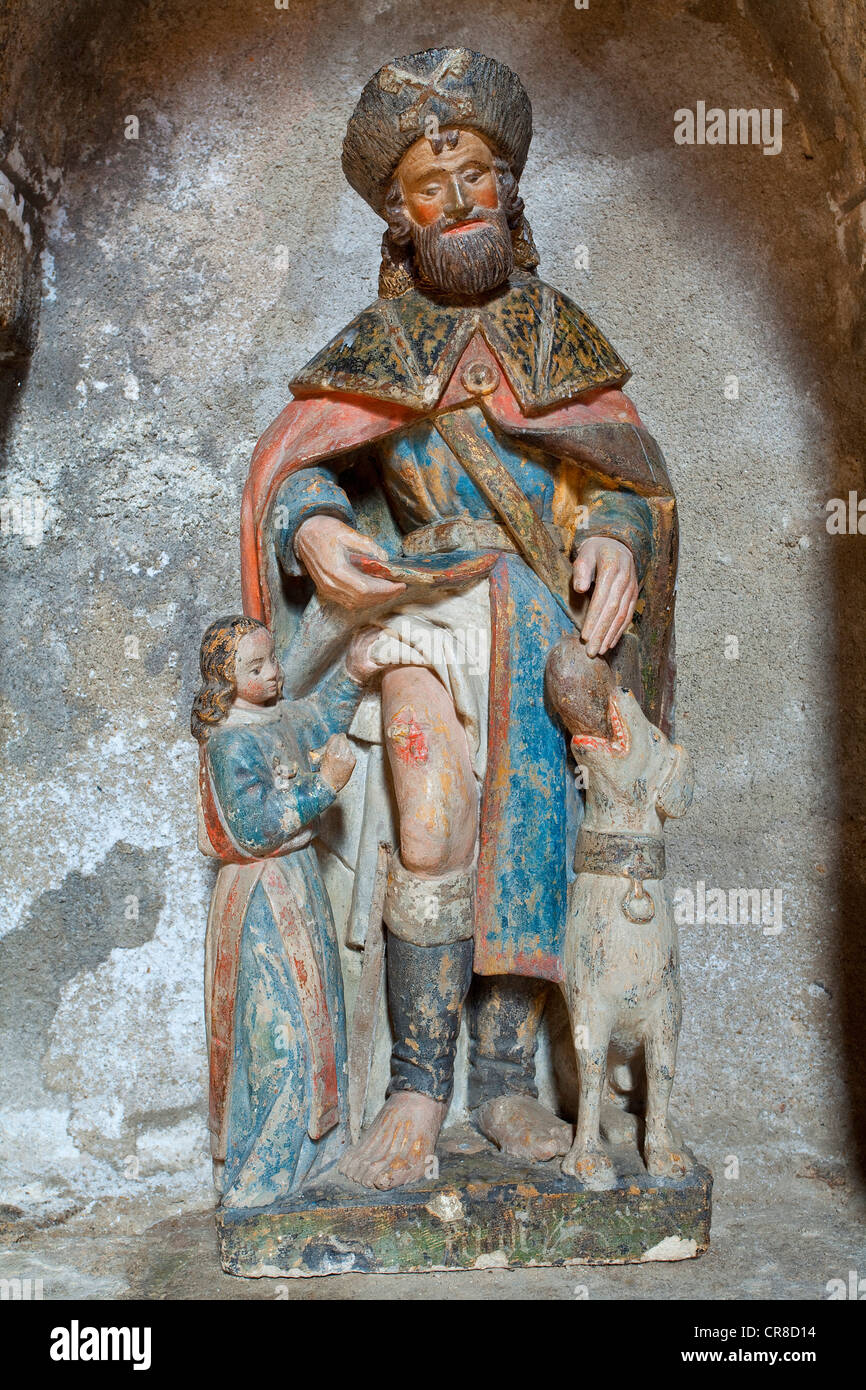
Saint Leonard of Noblac
Monk, Abbot, Hermit
(Unknown – 559)
His Early Life
Leonard was born on an unknown exact date, probably late 5th century, in France to noble and illustrious parents. Born into Frankish royalty, Leonard belonged to the court of King Clovis I. His relatives were dignitaries, military commanders and people of both privilege and society. Leonard was baptized by future Saint Remigius of Rheims, who was also his godfather.
While Leonard was still very young, the kingdom was threatened by an invading army. The Queen, knowing of Leonard’s Christian faith, jokingly suggested to Leonard that he invoke the help of his God to repel an invading repeal the attack. Leonard prayed, the tide of battle turned and the armies of Gaul were victorious. Saint Remigius of Rheims used this miracle to convert Leonard, the King, and thousands of followers to Christianity.
Freed Prisoners from Their Chains
Saint Remigius of Rheims had persuaded King Clovis to decree that whenever the king entered the city of Rheims, all prisoners there, either in chains or in prisons, would be set free. As a disciple of Saint Remigius of Rheims, Leonard was granted the power to visit and free anyone held in prison. So, his particular association with the liberation of prisoners grew quickly and is the reason why he is patron saint of imprisoned people and prisoners of war. Leonard declined the bishopric offer from King Clovis.
Entered Monastery Near Orleans, France
Looking to Saint Remigius for advice and spiritual guidance, Leonard quickly came to embrace and exemplify the greatest of Christian virtues. While still a young man, Leonard took the tonsure (monk’s haircut) as a symbol to the world of his commitment to serving the Lord.
Leonard began an austere life practicing sanctification, mortification, prayer, and fasting for long periods in his zealous dedication to God. His desire to know God grew until he decided to enter the monastery at Micy near Orleans, France, under the direction of Saint Mesmin and Saint Lie. His brother, Lifiard, followed his example and left the royal court, built a monastery at Meun, and lived there.
Hermit
Leonard desired further seclusion. Through his prayers the Queen safely gave birth to a male child (making him the patron of women in labor). In recompense, Leonard was given royal lands at Noblac, 21 kilometers (13 miles) from Limoges. So, he withdrew into the forest of Limousin, converting many on the way. Here, Leonard lived on herbs, wild fruits, and spring water.
Leonard built himself an oratory, leaving it only for journeys to churches. Others begged to live with him and learn from him. So, he founded the abbey of Noblac, around which a village grew, named in his honor Saint-Léonard-de-Noblat.
Legend Prisoners Chains Breaking/
According to legend, prisoners who invoked Leonard from their cells saw their chains break before their eyes. Many came to him afterwards, bringing their heavy chains and irons to offer them in homage. A considerable number remained with him, and he often gave them part of his vast forest to clear and make ready for the labors of the fields, that they might have the means to live an honest life.
His Death
He died in 559 most likely in Noblac, France. However, details of the exact date and location of his death are unknown. Saint Leonard of Noblac (also known as Saint Leonard of Limoges) is generally represented holding chains in his hands.
Saint Leonard’s cult spread through all of Western Europe. After his death, churches were dedicated to him in France, England, Belgium, Spain, Italy, Switzerland, Germany, Bohemia, Poland and other countries. In fact, in England with its cultural connections to the region, no fewer than 177 churches are dedicated to him. Pilgrims flocked to his tomb, and in one small town in Bavaria there are records of 4,000 favors granted through Saint Leonard’s intercession.
Born : Unknown exact date (late 5th century) in France
Died: 559 most likely in Noblac, France
Beatified: Pre-Congregation
Canonized: Pre-Congregation
Feast Day: November 6
Patron Saint: Captives; Childbirth; Imprisoned People; Locksmiths; Prisoners of War; Women in Labor
Source:
Saint of the Day – St Leonard of Noblac (c496-559) – AnaStpaul
St. Leonard, Abbot of Noblac, Limoges, France (catholicfire.blogspot.com)
CatholicSaints.Info » Saint Leonard of Noblac
Leonard of Noblac – Wikipedia
findthesaint.com