
Posted on 11/04/2026 10:10:59 PM PST by fidelis
“What man among you having a hundred sheep and losing one of them would not leave the ninety-nine in the desert and go after the lost one until he finds it? And when he does find it, he sets it on his shoulders with great joy and, upon his arrival home, he calls together his friends and neighbors and says to them, ‘Rejoice with me because I have found my lost sheep.’ I tell you, in just the same way there will be more joy in heaven over one sinner who repents than over ninety-nine righteous people who have no need of repentance.” Luke 15:4–7
Repentance is often perceived as harsh, humiliating, and difficult. It requires us to admit our guilt, take ownership of our sins, resolve to change, and seek to repair the harm we’ve caused. It can feel easier to remain obstinate and avoid the discomfort of contrition. But that perspective distorts the truth. Self-justification is not rooted in God nor in truth; it is a selfish defense of our pride, not a pathway to healing.
The chief obstacle to repentance is pride. It is difficult to acknowledge our sins honestly, let alone confess them and seek reparation. Pride stirs our defenses and tempts us to resist humbling ourselves before God, others, and truth itself.
This struggle is often magnified in close relationships, especially when both parties wrestle with pride and self-righteousness. In such cases, even a sincere apology may be met with resistance, and only time and grace can bring reconciliation.
But if the one we offended were perfect—like our Lord—repentance would be easier. We would know we are met with mercy, not condemnation. Reparation becomes more bearable when received by a heart full of compassion that is eager to reconcile.
The good news is that every sin, though it may harm others, is first and foremost a debt we owe to God. Repentance, then, is an act offered to Him above all. And from God’s perspective, our repentance is never met with bitterness but with rejoicing.
Today’s Gospel reveals this divine joy through two parables. A shepherd searches for one lost sheep, and a woman searches for a lost coin. In both, the search is diligent, personal, and ends in joy. The shepherd and the woman represent God, who relentlessly seeks us, not to scold, but to rescue and carry us home. Both, upon finding what was lost, gather their friends and rejoice. These “friends” are the angels and saints, as well as the faithful on earth who share in God’s joy.
We all sin. But how do we view repentance? As a burden or a joy? This Gospel invites us to shed the worldly view of repentance and adopt God’s view: one of rejoicing, restoration, and love.
What is your attitude toward sin? Do you cling to guilt and shame, deny your faults, or justify them? Or do you see sin as God sees it: as a wound He longs to heal? Repentance, rightly understood, floods God’s heart with joy. Though we can add nothing to His glory, we can offer Him joy each time we repent in humility. This truth means that repentance is not only desirable, but freeing and life-giving.
Reflect today on whether your view of repentance reflects God’s. Consider both your sins and the sins of others. Ask for the grace to see repentance as a cause of joy, not only in Heaven but also in your own heart.
My forgiving Lord, I sin each day and wound Your Sacred Heart. Yet I know that Your mercy is greater than my weakness. Help me to recognize that the remedy for my sin is sincere repentance and ongoing conversion. Deepen my understanding of the joy that fills Your Heart when I return to You, so that I may never hesitate to repent. As You joyfully receive and forgive me, grant me the grace to extend that same mercy to others. Help me to seek out the lost with love and perseverance, just as You have sought me. Jesus, I trust in You.

|
Click here: to donate by Credit Card Or here: to donate by PayPal Or by mail to: Free Republic, LLC - PO Box 9771 - Fresno, CA 93794 Thank you very much and God bless you. |
Please keep in mind that this is a Catholic Caucus/Devotional thread for the purpose of prayerful reflection on the Sacred Scriptures and is closed to debate of any kind. Per FR policy on Religion Caucus threads, off-topic, argumentative, and abusive comments are not allowed and will be submitted to the Mods for deletion. Thanks, and God bless you.
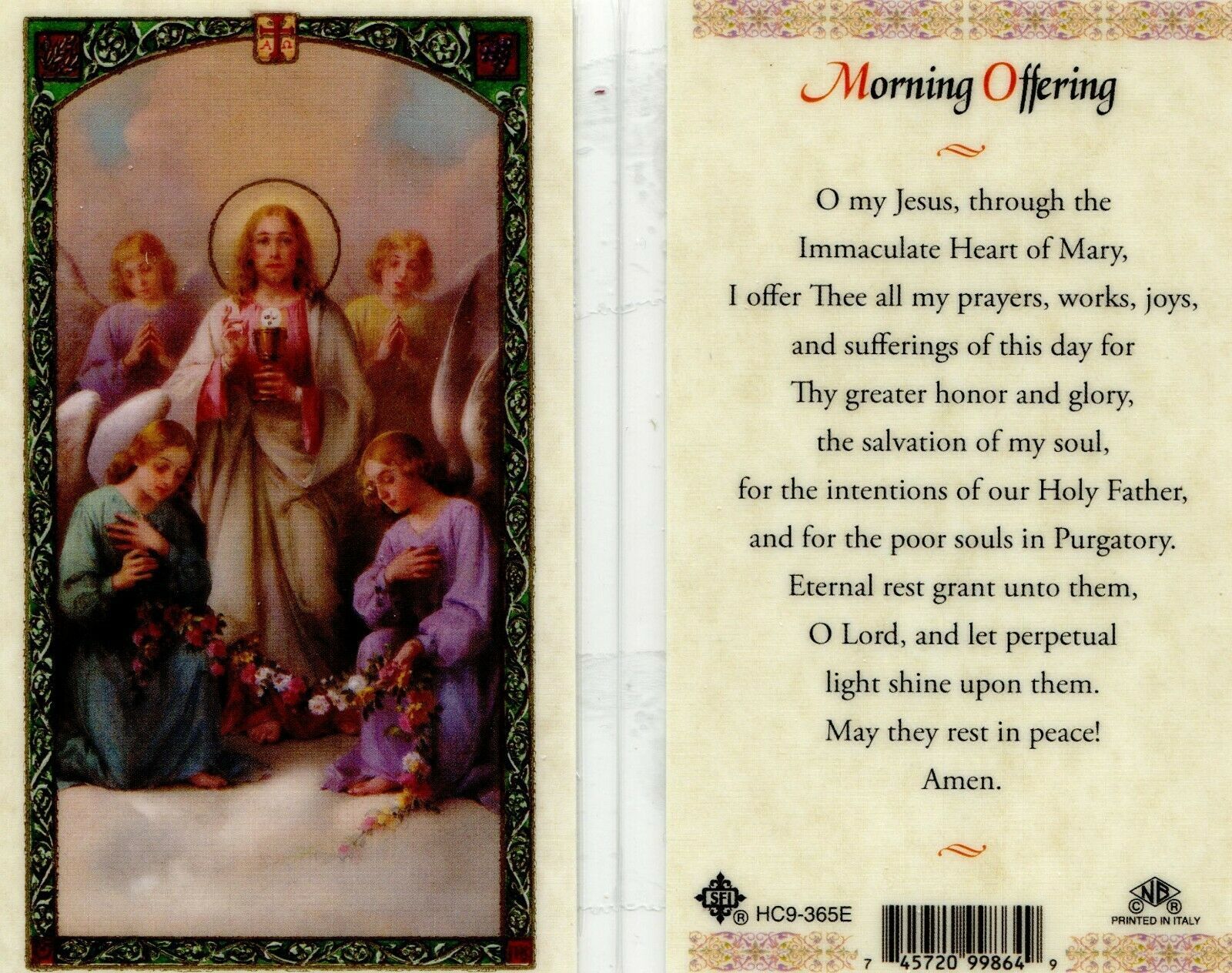

The Month of November is Dedicated to the Holy Souls in Purgatory
“It is a holy and wholesome thought to pray for the dead, so they may be loosed from sins..” (2 Maccabees 12:46)

Pope Leo XIV’s prayer intention for the month of November, 2026:
For the proper use of wealth
Let us pray for the proper use of wealth, that not succumbing to the temptation of selfishness, it may always be put at the service the common good and solidarity of those who have less.

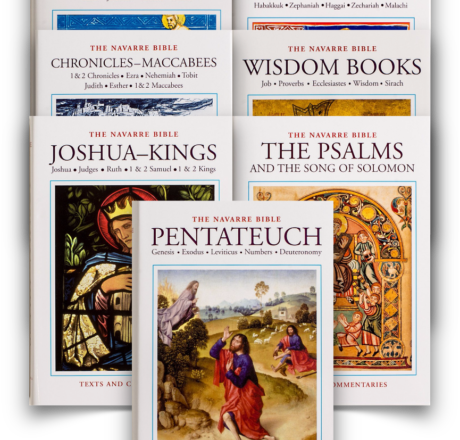
Today’s First Reading
From: Philippians 3:3-8a
A Warning About Judaizers
------------------------------------
[3] For we are the true circumcision, who worship God in spirit, and glory in Christ Jesus, and put no confidence in the flesh. [4] Though I myself have reason for confidence in the flesh also. If any other man thinks he has reason for confidence in the flesh, I have more: [5] circumcised on the eighth day, of the people of Israel, of the tribe of Benjamin, a Hebrew born of Hebrews; as to the law a Pharisee, [6] as to zeal a persecutor of the church, as to righteousness under the law blameless.
The Righteousness of God Is Better Than That of the Law
--------------------------------------------------------------------------
[7] But whatever gain I had, I counted as loss for the sake of Christ. [8] Indeed I count everything as loss because of the surpassing worth of knowing Christ Jesus my Lord.
*******************************************************
Commentary:
2-3. It was quite common for Roman houses to have a notice at the entrance which read "Cave canem", Beware of the dog. St Paul uses these words as a colorful way of telling the Philippians to be on their guard against Judaizer--"evil-workers" who instead of helping to build Christ's building were demolishing it.
In the Old Testament circumcision showed that one belonged to the people of Israel; it guaranteed the promises of salvation made by God on Sinai. The Judaizers were arguing that all Gentiles who came to the faith should first be circumcised. The Apostle calls them "those who mutilate the flesh", because the circumcision they were promoting was something purely external, to do with the flesh, whereas after Christ the only true circumcision is an internal one, circumcision of the heart, the work of the Holy Spirit, which is effected by Baptism (cf. Rom 2:28-29).
4-11. St Paul had no opposition in Philippi; the Philippians in fact, were exemplary in their conduct. But prudence leads him to warn them about those who have been causing trouble in other churches, just in case they venture into Philippi also. His adversaries cannot argue that he is ignorant of the Law and the traditions of the chosen people. Just as on another occasion he felt he had to make it known that he was a Roman citizen (cf. Acts 16:37; 22:25-29), now because he thinks it will help the spread of the Gospel, he spells out his Jewish pedigree (cf. 2 Cor 11:22).
Similarly, it is not only lawful for a Christian to claim his civic rights or those connected with his family or work position: justice or the common good may demand that he exercise them.
8. St Paul has a great love for his people. In Romans he shows that he would be ready to accept any sacrifice "for the sake of my brethren, my kinsmen of the flesh" (Rom 9:3f). However, he recognizes that everything in which he gloried before his conversion is worthless in comparison with the grace of knowledge of Christ: that is the hidden treasure, the precious pearl referred to in Gospel parables (cf. Mt 13: 44-46). For "once a person experiences the riches of Christ the Lord, he looks down on everything else: property, wealth and honors he views as filth. For there is nothing that can compare with that supreme treasure, nothing that can be placed beside it" ("St Pius V Catechism", IV, 11, 15).
From: Luke 15:1-10
Parable's of God's Mercy
------------------------
[1] Now the tax collectors and sinners were all drawing near to hear Him (Jesus). [2] And the Pharisees and the scribes murmured, saying, "This man receives sinners and eats with them."
The Lost Sheep
--------------
[3] So He told them this parable: [4] "What man of you, having a hundred sheep, if he has lost one of them, does not leave the ninety-nine in the wilderness, and go after the one which is lost, until he finds it? [5] And when he has found it, he lays it on his shoulders, rejoicing. [6] And when he comes home he calls together his friends and his neighbors, saying to them, `Rejoice with me, for I have found my sheep which was lost.' [7] Just so, I tell you, there will be more joy in Heaven over one sinner who repents than over ninety-nine righteous persons who need no repentance.
The Lost Coin
-------------
[8] "Or what woman, having ten silver coins, if she lost one coin, does not light a lamp and sweep the house and seek diligently until she finds it? [9] And when she has found it, she calls together her friends and neighbors, saying, `Rejoice with me, for I have found the coin which I has lost.' [10] Just so, I tell you, there is joy before the angels of God over one sinner who repents.
***********************************************************************
Commentary:
1-32. Jesus' actions manifest God's mercy: He receives sinners in order to convert them. The scribes and Pharisees, who despised sinners, just cannot understand why Jesus acts like this; they grumble about Him; and Jesus uses the opportunity to tell these Mercy parables. "The Gospel writer who particularly treats of these themes in Christ's teaching is Luke, whose Gospel has earned the title of `the Gospel of mercy'" (John Paul II, "Dives In Misericordia", 3).
In this chapter St. Luke reports three of these parables in which Jesus describes the infinite, fatherly mercy of God and His joy at the conversion of the sinner.
The Gospel teaches that no one is excluded from forgiveness and that sinners can become beloved children of God if they repent and are converted. So much does God desire the conversion of sinners that each of these parables ends with a refrain, as it were, telling of the great joy in Heaven over sinner who repents.
1-2. This is not the first time that publicans and sinners approach Jesus (cf. Matthew 9:10). They are attracted by the directness of the Lord's preaching and by His call to self-giving and love. The Pharisees in general were jealous of His influence over the people (cf. Matthew 26:2-5; John 11:47) a jealousy which can also beset Christians; a severity of outlook which does not accept that, no matter how great his sins may have been, a sinner can change and become a saint; a blindness which prevents a person from recognizing and rejoicing over the good done by others. Our Lord criticized this attitude when He replied to His disciples' complaints about others casting out devils in His name: "Do not forbid him; for no one who does a mighty work in My name will be able soon after to speak evil of Me" (Mark 9:39). And St. Paul rejoiced that others proclaimed Christ and even overlooked the fact they did so out of self interest, provided Christ was preached (cf. Philippians 1:17-18).
5-6. Christian tradition, on the basis of this and other Gospel passages (cf. John 10:11), applies this parable to Christ, the Good Shepherd, who misses and then seeks out the lost sheep: the Word, by becoming man, seeks out mankind, which has strayed through sinning. Here is St. Gregory the Great's commentary: "He put the sheep on His shoulders because, on taking on human nature, He burdened Himself with our sins" ("In Evangelia Homiliae", II, 14).
The Second Vatican Council applies these verses of St. Luke to the way priests should approach their pastoral work: "They should be mindful that by their daily conduct and solicitude they display the reality of a truly priestly and pastoral ministry both to believers and unbelievers alike, to Catholics and non-Catholics; that they are bound to bear witness before all men of the truth and of the life, and as good shepherds seek after those too who, whilst having been baptized in the Catholic Church, have given up the practice of the Sacraments, or even fallen away from the faith" ("Lumen Gentium", 28). However, every member of the faithful should show this same kind of concern—expressed in a fraternal way--towards his brothers and sisters, towards everyone on the road to sanctification and salvation.
7. This does not mean that our Lord does not value the perseverance of the just: He is simply emphasizing the joy of God and the saints over the conversion of a sinner. This is clearly a call to repentance, to never doubt God's readiness to forgive. "Another fall, and what a fall!... Must you give up hope? No. Humble yourself and, through Mary, your Mother, have recourse to the merciful Love of Jesus. A "miserere", and lift up your heart! And now begin again" (St J. Escriva, "The Way", 711).
8. This silver coin was a "drachma", of about the same value as a denarius, that is, approximately a day's wage for an agricultural worker (cf. Matthew 20:2).
“Let nothing disturb you, let nothing frighten you, all things pass away. God never changes.”
— ST. TERESA OF ÁVILA
Disclaimer: Opinions posted on Free Republic are those of the individual posters and do not necessarily represent the opinion of Free Republic or its management. All materials posted herein are protected by copyright law and the exemption for fair use of copyrighted works.

