
Posted on 10/28/2026 11:09:50 PM PDT by fidelis
“Jerusalem, Jerusalem, you who kill the prophets and stone those sent to you, how many times I yearned to gather your children together as a hen gathers her brood under her wings, but you were unwilling! Behold, your house will be abandoned. But I tell you, you will not see me until the time comes when you say, Blessed is he who comes in the name of the Lord.” Luke 13:34–35
In today’s Gospel, Jesus laments Jerusalem’s tragic history of persecuting the prophets sent by God to call His people back to fidelity. The deaths of Zechariah and Isaiah stand out, but the broader implication is that Jerusalem—the city of the Temple and the seat of divine worship—had often become the very place where divine truth was violently rejected. In lamenting this, Jesus reveals His deep love for His people and foreshadows His own death at their hands, which would also take place in Jerusalem.
Of note, Jesus’ words drip with holy sorrow and compassion, but also resolute clarity. Though He offers a condemnation in the form of a prophetic warning—that the Temple would ultimately be destroyed and the city overtaken by the Romans in AD 70—His tone is one of loving lament, not vengeful retribution.
In many ways, Jesus’ lament is that of a loving father mourning a wayward son: “How many times I yearned to gather your children together as a hen gathers her brood under her wings.” Understanding this compassion in His Sacred Heart is especially helpful to us as we examine our own struggles with sin. Though God is perfectly just, His judgments are issued with a broken heart, not a violent one.
When you consider your sins, examine them through this lens. See Jesus’ Sacred Heart pierced with a sword of profound sorrow. When we turn back to Him, we console Him and relieve Him of that sorrow. Though we can add nothing to God’s greatness and glory on our own, we do have the capacity to fill Him with joy when we repent and diligently strive to overcome sin in our lives.
Recognizing this spiritual reality is the highest form of the spiritual Gift of Fear of the Lord. This gift of the Holy Spirit manifests itself in two ways. First, Fear of the Lord begins with what we traditionally call servile fear—that is, fear of punishment. Consider again a son who obeys his father because he fears being punished. This is a good beginning, but it is not the ideal.
The ideal form of Fear of the Lord is filial fear—the fear of a loving son or daughter. This fear does not avoid sin for selfish reasons, such as fear of punishment. Rather, it leads us to avoid sin because we perceive the tender compassion in Jesus’ Sacred Heart and become vividly aware of the sorrow our sin inflicts upon Him. What’s more, we also see the joy we can give Him by remaining faithful to His will. Our love for Him grows so strong that we are compelled to do all we can to give Him joy. His joy becomes ours, and we “fear” doing anything that would oppose that joy.
Reflect today on Jesus’ Sacred Heart as He looks at you with sorrowful love. Hear Him say, “How often I have longed to gather you.” Let that invitation move you to turn away from all that saddens Him and to cling to Him with fidelity and love. As you do, look also to those in your life who struggle with sin, and allow yourself to feel the same longing that Jesus has for them. Be an instrument of His Sacred Heart toward others, and you will ultimately share in His joy.
Most compassionate Lord, You long for Your children with the tenderest love, desiring that we turn to You with all our hearts. Please fill me with the Gift of Holy Fear, so that I may readily and wholeheartedly avoid all that grieves You. Make me an instrument of Your Sacred Heart toward others, so that through me, they may come to feel and know Your loving care. Jesus, I trust in You.

|
Click here: to donate by Credit Card Or here: to donate by PayPal Or by mail to: Free Republic, LLC - PO Box 9771 - Fresno, CA 93794 Thank you very much and God bless you. |
Please keep in mind that this is a Catholic Caucus/Devotional thread for the purpose of prayerful reflection on the Sacred Scriptures and is closed to debate of any kind. Per FR policy on Religion Caucus threads, off-topic, argumentative, and abusive comments are not allowed and will be submitted to the Mods for deletion. Thanks, and God bless you.
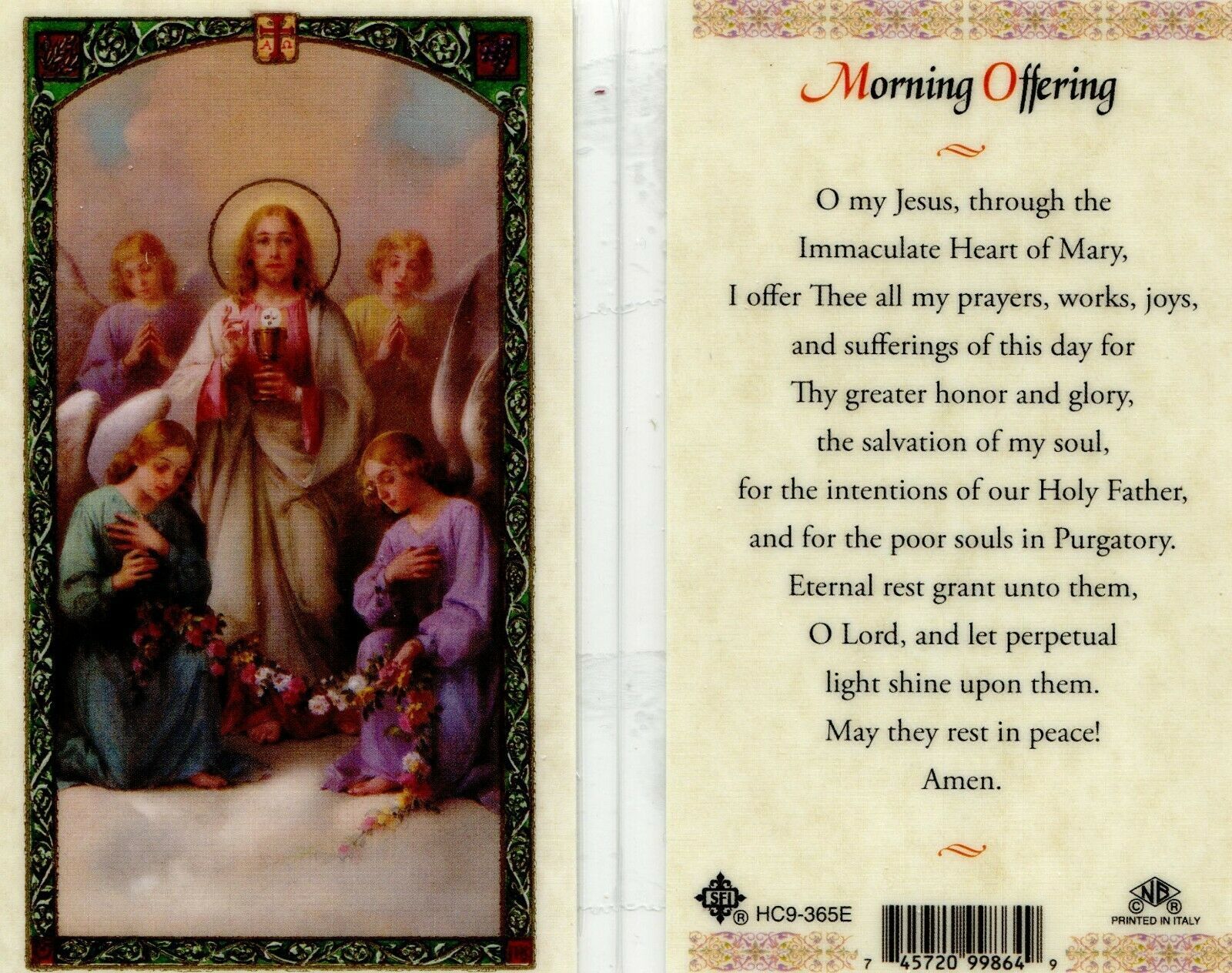

The Month of October is Dedicated to the Holy Rosary

“Rejoice in your hope, be patient in tribulation, be constant in prayer.” (Romans 12:12)

Pope Leo XIV’s prayer intention for the month of October, 2026:
For mental health ministry
Let us pray that the mental health ministry be established throughout the Church, helping to overcome the stigma and discrimination of persons with mental illnesses.

Today’s First Reading
From: Ephesians 6:10-20
Weapons for Spiritual War
--------------------------------------
[10] Finally, be strong in the Lord and in the strength of his might. [11] Put on the whole armor of God, that you may be able to stand against the wiles of the devil. [12] For we are not contending against flesh and blood, but against the principalities, against the powers, against the world rulers of this present darkness, against the spiritual hosts of wickedness in the heavenly places. [13] Therefore take the whole armor of God, that you may be able to withstand in the evil day, and having done all, to stand. [14] Stand therefore, having girded your loins with truth, and having put on the breastplate of righteousness, [15] and having shod your feet with the equipment of the gospel of peace; [16] above all taking the shield of faith, with which you can quench all the flaming darts of the evil one. [17] And take the helmet of salvation, and the sword of the Spirit, which is the word of God. [18]
Pray at all times in the Spirit, with all prayer and supplication. To that end keep alert with all perseverance, making supplication for all the saints, [19] and also for me, that utterance may be given me in opening my mouth boldly to proclaim the mystery of the gospel, [20] for which I am an ambassador in chains; that I may declare it boldly, as I ought to speak.
********************************************************
Commentary:
10-20. After these counsels to parents and children, servants and masters, the Apostle says something very important: all need to be prepared to struggle "against the principalities" of this world (v. 12). He is referring to those angels who rebelled against God and whom Christ has already overcome (1 Cor 15:24; Col 1:13-14; 2:15), but against whom we still have to contend. This is a struggle which must be pursued to the end: Paul uses terminology to do with the armor and weapons of Roman soldiers to describe the form this combat must take. First he recommends that they put on the "armor of God" (v. 13), for the "world rulers" who have to be striven against can be defeated only with spiritual weapons, which God supplies to those who love him-- truth, righteousness, peace, faith (vv. 14-16), not forgetting the need for constant prayer moved by the Spirit (v. 18) and a strong sense of brotherhood.
These weapons, since they are supernatural, are a guarantee of victory and therefore they enable one to engage in the struggle cheerfully and confidently. "Let us be filled with confidence", St John Chrysostom exhorts, "and let us discard everything so as to be able to meet this onslaught. Christ has equipped us with weapons more splendid than gold, more resistant than steel, weapons more fiery than any flame and lighter than the slightest breeze [...]. These are weapons of a totally new kind, for they have been forged for a previously unheard-of type of combat. I, who am a mere man, find myself called upon to deal blows to demons; I, who am clothed in flesh, find myself at war with incorporeal powers. God has designed for me also an armor made, not of metal, but of justice; he has designed for me a shield not of bronze but of faith. I hold in my hand a keen sword, the word of the Spirit [...]. Your victory must be that of a man who rests content" ("Baptismal Catechesis", 3, 11-12).
St Paul, who is here writing from prison, in chains (v. 20) and in need of the help of God and of all his brethren in the faith, asks them to pray for him (v. 19), so that he may freely and effectively preach the Gospel.
16. The devil never ceases to try to find ways to bring about man's eternal damnation. But once overcome by Christ on the cross he has no longer any real power over us provided we use in our struggle against him the weapons provided by faith and complete trust in God. St John of Avila argues in this way: "Since this enemy is stronger than we are, we must avail of the 'shield of faith', which is something supernatural, whether it be by using a word of God, or receiving the sacraments or (countering the devil with) a doctrine of the Church. We need to believe firmly with our mind that all our strength comes from God" ("Audi Filia", 30).
18. Prayer is our outstanding supernatural resource for fighting the wiles of the enemy, "Prayer is, beyond doubt, the most powerful weapon the Lord gives us to conquer evil passions and temptations of the devil; but we must really put ourselves into our prayer: it is not enough just to say the words, it must come from the heart. And also prayer needs to be continuous, we must pray no matter what kind of situation we find ourselves in: the warfare we are engaged in is on-going, so our prayer must be on-going also [...]. The Apostle adds 'for all the saints', because we should not only pray for ourselves but for the perseverance of all the faithful in the grace of God" (St Alphonsus, "Thoughts on the Passion", 9, 3).
The Apostle also identifies, as a supernatural resource in this struggle, a solicitous care for the holiness of others. It is quite likely that this concern will lead us to notice defects as well as virtues in our neighbor. This should not cause us to look down on him or criticize him, but rather to pray for him and help him improve. "If you notice some defect in your friend," St Ambrose recommends, "correct him privately; if he fails to listen to you, take him to task openly. For corrections are helpful and they are much more useful that a mute friendship. If your friend feels offended, you should still correct him; do not be afraid to insist on the point, even if the bitter taste of correction does not appeal to him. It is written in the Book of Proverbs: 'Faithful are the wounds of a friend, profuse the kisses of an enemy'" ("De Officiis Ministrorum", III, chap. XII, 127).
From: Luke 13:31-35
Jesus' Reply to Herod
--------------------------------
[31] At that very hour some Pharisees came, and said to him (Jesus), "Get away from here, for Herod wants to kill you." [32] And he said to them, "Go and tell that fox, 'Behold, I cast out demons and perform cures today and tomorrow, and the third day I finish my course. [33] Nevertheless I must go on my way today and tomorrow and the day following; for it cannot be that a prophet should perish away from Jerusalem.'
Jerusalem Admonished
----------------------------------
[34] "O Jerusalem, Jerusalem, killing the prophets and stoning those who are sent to you! How often would I have gathered your children together as a hen gathers her brook under her wings, and you would not! [35] Behold, your house is forsaken. And I tell you, you will not see me until you say, 'Blessed is he who comes in the name of the Lord.'"
*********************************************************************
Commentary:
31-33. This episode apparently took place in the Perea region which, like Galilee, was under the jurisdiction of Herod Antipas (cf. Lk 3:1), a son of Herod the Great (cf. note on Mt 2:1). On other occasions St. Luke mentions that Herod was keen to meet Jesus and see him perform a miracle (cf. Lk 9:9; 23:8). These Pharisees may be giving Jesus the warning just to get him to go away. Jesus calls Herod--and indirectly his accomplices--a "fox", once again showing his rejection of duplicity and hypocrisy.
Jesus' answer shows them he is completely in command of his life and death: he is the Son of God and his Father's will is his only governor (cf. Jn 10:18).
34. Jesus here shows the infinite extent of his love. St Augustine explores the meaning of this touching simile: "You see, brethren, how a hen becomes weak with her chickens. No other bird, when it is a mother, shows its maternity so clearly. We see all kinds of sparrows building their nests before our eyes; we see swallows, storks, doves, every day building their nests; but we do not know them to be parents, except when we see them on their nests. But the hen is so enfeebled over her brood that even if the chickens are not following her, even if you do not see the young ones, you still know her at once to be a mother. With her wings drooping, her feathers ruffled, her note hoarse, in all her limbs she becomes so sunken and abject, that, as I have said, even though you cannot see her young, you can see she is a mother. That is the way Jesus feels" ("In Ioann. Evang.", 15, 7).
35. Jesus shows the deep sorrow he feels over Jerusalem's resistance to the love God had so often shown it. Later St Luke will record Jesus' weeping over Jerusalem (cf. Lk 19:41). See also the note on Mt 23:37-39.
[The note on Mt 23:37-39 states: Jesus' moving remarks seem almost to sum up the entire history of salvation and are a testimony to his divinity. Who if not God was the source of all these acts of mercy which marks the stages of the history of Israel? The image of being protected by wings, which occurs often in the Old Testament, refers to God's love and protection of his people. It is to be found in the prophets, in the canticles of Moses (cf. Deut 32:11), and in many psalms (cf. 17:8; 36:8; 57:2; 61:5; 63:8). "And you would not": the Kingdom of God has been preached to them unremittingly for centuries by the prophets; in these last few years by Jesus himself, the Word of God made man. But the "Holy City" has resisted all the unique graces offered it. Jerusalem should serve as a warning to every Christian: the freedom God has given us by creating us in his image and likeness means that we have this terrible capacity to reject him. A Christian's life is a continuous series of conversions--repeated instances of repentance, of turning to God, who, loving Father that he is, is every ready to forgive.]
Disclaimer: Opinions posted on Free Republic are those of the individual posters and do not necessarily represent the opinion of Free Republic or its management. All materials posted herein are protected by copyright law and the exemption for fair use of copyrighted works.


