
Posted on 10/24/2026 10:33:02 PM PDT by fidelis
Thirtieth Sunday in Ordinary Tim
When the Pharisees heard that Jesus had silenced the Sadducees, they gathered together, and one of them, a scholar of the law tested him by asking, “Teacher, which commandment in the law is the greatest?” Matthew 22:34–36
The Law of Moses, found in the Torah—the first five books of our Old Testament—is traditionally said to contain 613 commandments: 248 positive (“dos”) and 365 negative (“don’ts”). Among these laws, there was a longstanding debate among the rabbis about which commandment was the greatest. Therefore, though the Pharisee who posed this question to Jesus was testing Him, it was also likely a sincere inquiry.
Jesus certainly perceived the testing nature of the question, but He also recognized the genuine desire for truth. In response, He gently and directly offered a comprehensive answer, presenting a twofold summary that encompasses the entire Law and the prophets: “You shall love the Lord, your God, with all your heart, with all your soul, and with all your mind” and “You shall love your neighbor as yourself.”
These two commandments do more than summarize the Law and the prophets, they also encapsulate the essence of the petitions of the Lord’s Prayer. Once we acknowledge God as our Father, we pray, “Hallowed be Thy name” and “Thy Kingdom come.” These are the highest petitions we can make.
To hallow God’s name is to give Him His due. God is thrice holy—holy, holy, holy. Our greatest duty is to hallow His name and His very being by magnifying and glorifying Him. This is the highest way to love Him with all our heart, soul, and mind.
In this life, we also turn to God in other ways. We ask for the grace to do His will, for His providential care, and for mercy and forgiveness. We pray to overcome trials and to be kept safe from the evil one. Each of these petitions, found in the Lord’s Prayer, is essential and finds expression throughout the Torah and the New Testament. Yet in the end, every petition we make must ultimately lead to the highest commandment: to hallow God’s name—to love Him with all we are—not merely because of what He does for us, but because of who He is. He is worthy of our love for His own sake, and it is our highest duty to offer Him that love.
In Heaven, many of the commandments and petitions we now make will cease. We will not ask for forgiveness, since we will be purified and sin no more. We will not pray for daily bread—pointing to the Sacraments and God’s temporal care—because we will enter the eternal Banquet. Nor will we ask for strength to endure or receive protection from the evil one, because all trials will have been conquered in Christ. But we will eternally fulfill the greatest commandment and the first petition of the Lord’s Prayer by forever hallowing God’s name, crying out “holy, holy, holy,” and loving Him with a purified and perfected love.
Reflect today on the inseparable bond between love of God and love of neighbor, and the eternal nature of these commandments. Does your life bear witness to these two great commands? Does your daily prayer arise from and lead to this twofold love? Hallow God’s name not only with your lips, but also with your heart, soul, and mind. Allow that love to overflow to all people—especially those hardest to love—so that you show them the dignity and charity due to your neighbor, in anticipation of expressing that love forever in Heaven.
Lord of Heaven and earth, I thank You for Your holy commandments. I pray that I may live each one with full fidelity. Help me to hallow Your name in all things, to seek Your Kingdom above all, and to love all people with the love You have for them. May I see these commands, not as a burden, but as the joy and direction of my life. Jesus, I trust in You.

|
Click here: to donate by Credit Card Or here: to donate by PayPal Or by mail to: Free Republic, LLC - PO Box 9771 - Fresno, CA 93794 Thank you very much and God bless you. |
Please keep in mind that this is a Catholic Caucus/Devotional thread for the purpose of prayerful reflection on the Sacred Scriptures and is closed to debate of any kind. Per FR policy on Religion Caucus threads, off-topic, argumentative, and abusive comments are not allowed and will be submitted to the Mods for deletion. Thanks, and God bless you.
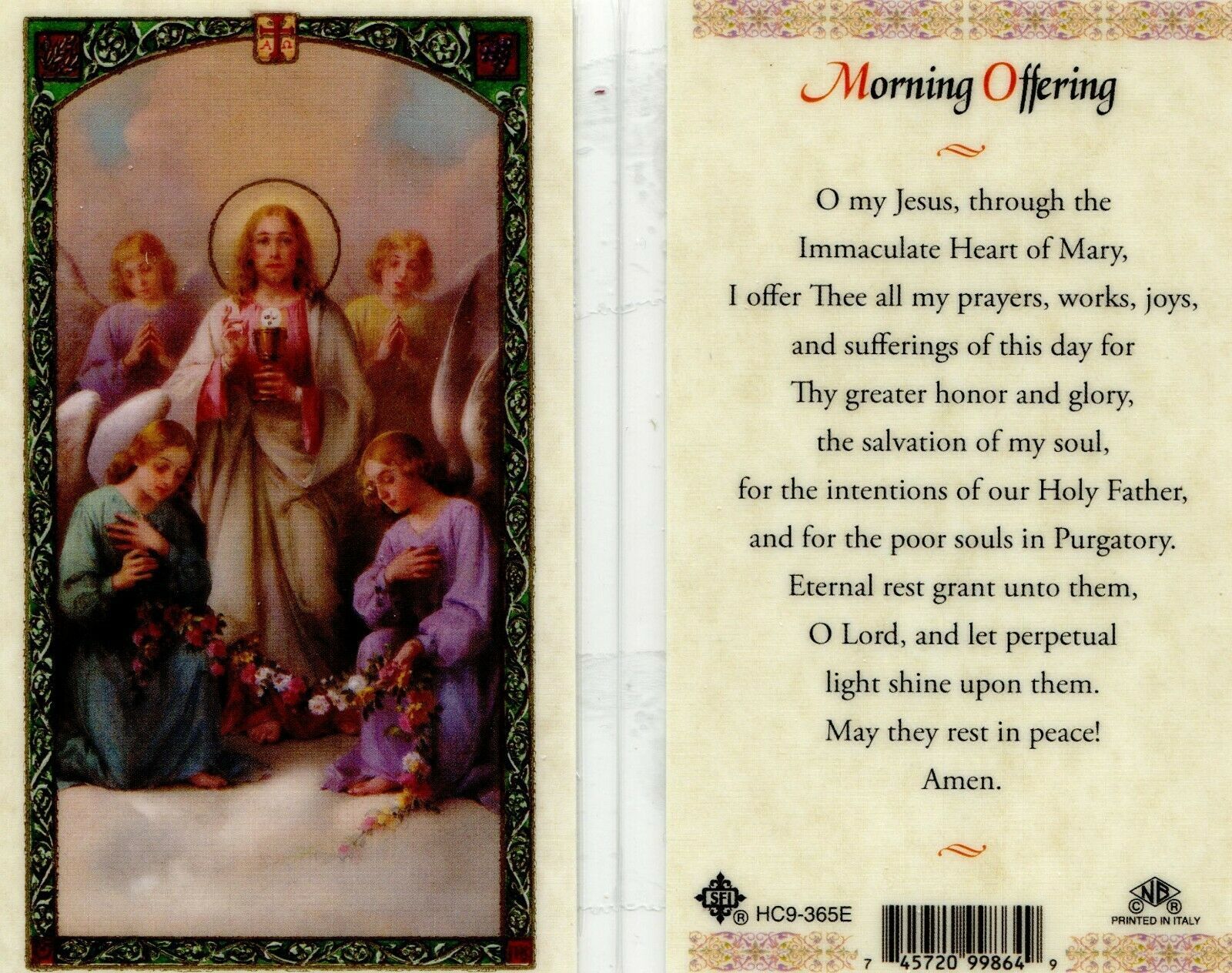

The Month of October is Dedicated to the Holy Rosary

“Rejoice in your hope, be patient in tribulation, be constant in prayer.” (Romans 12:12)

Pope Leo XIV’s prayer intention for the month of October, 2026:
For mental health ministry
Let us pray that the mental health ministry be established throughout the Church, helping to overcome the stigma and discrimination of persons with mental illnesses.

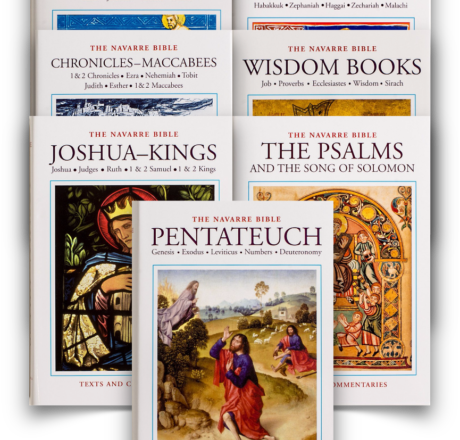
Today’s First Reading
From: Exodus 22:21-27 (RSV numbering)
Social Laws
------------------
[21] "You shall not wrong a stranger or oppress him, for you were strangers in the land of Egypt. [22] You shall not afflict any widow or orphan. [23] If you do afflict them, and they cry out to me, I will surely hear their cry; and my wrath will burn, and I will kill you with the sword, and your wives shall become widows and your children fatherless.
[25] "If you lend money to any of my people with you who are poor, you shall not be to him as a creditor, and you shall not exact interest from him. [26] If ever you take your neighbor's garment in pledge, you shall restore it to him before the sun goes down, [27] for that is his only covering, it is his mantle for his body; in what else shall he sleep? And if he cries to me, I will hear, for I am compassionate.”
*********************************************************************
Commentary:
22:18-31. This passage contains a number of laws on social matters, in no particular order; some are apodictic, some religious, others are work-associated—but all deal with serious offenses […]
Strangers who (due to war, disease or famine) found themselves forced to leave their country, widows without a family to support them, and orphans were typical marginalized or poor people in that tribal society. In its laws (e.g. Deut 10:17-18; 24:17) and in its prophetic message (e.g. Is 1:17; Jer 7:6), the Bible constantly speaks out on behalf of people most in need (cf. Jas 1:27). The oppression of the weak and of those on the margin of society is one of the sins that cry out to heaven (cf. "Catechism of the Catholic Church", 1867).
From: 1 Thessalonians 1:5c--10
Thanksgiving for the Thessalonians' Fidelity
--------------------------------------------
[5c] You know what kind of men we proved to be among you for your sake. [6] And you became imitators of us and of the Lord, for you received the word in much affliction, with joy inspired by the Holy Spirit; [7] so that you became an example to all the believers in Macedonia and in Achaia. [8] For not only has the word of the Lord sounded forth from you in Macedonia and Achaia, but your faith in God has gone forth everywhere, so that we need not say anything.. [9] For they themselves report concerning us what a welcome we had among you, and how you turned to God from idols, to serve a living and true God, [10] and to wait for his Son from heaven, whom he raised from the dead, Jesus who delivers us from the wrath to come.
***********************************************************************
Commentary:
6. St Paul rejoices at the effect God has had on the Thessalonians. It is true that Christ is "the" model to be imitated, but the Apostle's own example played its part in leading them to Christ (cf. 1 Cor 11:1). "To follow Christ: that is the secret. We must accompany him so closely that we come to live with him, as the first Twelve did; so closely, that we become identified with him. Soon we will be able to say, provided we have not put obstacles in the way of grace, that we have put on, have clothed ourselves with, our Lord Jesus Christ (cf. Rom 13:14). Our Lord is then reflected in our behavior, as in a mirror. If the mirror is as it ought to be, it will capture our Savior's most lovable face without distorting it or making a caricature of it; and then other people will have an opportunity of admiring him and following him" ([St] J. Escriva, "Friends of God", 299).
"Joy", which is one of the fruits of the Holy Spirit (cf. Gal 5:22-23), is linked to unconditional acceptance of the word of God, and helps a person to overcome any obstacle he or she may meet on his way (cf. Acts 5:41). "One can be joyful despite lashes and blows, when these are accepted in the cause of Christ", St John Chrysostom comments. "A feature of the joy of the Holy Spirit is that it causes an uncontainable happiness to grow even out of affliction and sorrow [...]. In the natural course of events afflictions do not produce joy: joy is the privilege of those who accept sufferings for Jesus Christ's sake; it is one of the good things bestowed by the Holy Spirit" ("Hom. on 1 Thess, ad loc.").
7-8. Thessalonica was an important center of trade and a hub of communications for all Greece. The Christians in the city included a number of important people and even some women of the aristocracy (cf. Acts 17:4). The social standing of the converts and the prestige of the city partly explain the rapid spread of Christian teaching throughout the region.
What the Apostle says here only goes to show that when the Christian life is given full rein it spreads far and wide. This should give us every encouragement "always to act in public in accordance with our holy faith" ([St] J. Escriva, "Furrow", 46).
9. We can see how happy the Apostle is to learn that the work of evangelization has borne fruit of conversion to God--which is the whole purpose of Gospel preaching. "For the Church, evangelization means bringing the Good News into all the strata of humanity, and through its influence transforming humanity from within and making it new" (Paul VI, "Evangelii Nuntiandi", 18).
It is moving to see the way good news spread among the early Christian communities. Obviously anecdotes about the apostolate would go from church to church; this gave them an occasion to praise God while at the same time providing encouragement to stay true to Christ and to spread the Gospel.
10. The Christian message has this feature which differentiates it from Judaism--hope in Christ and expectation of Christ. Two central points of Christian teaching emerge from this verse: Jesus Christ is the Son of God, who rose from the dead, and he will come again to judge all. St John Chrysostom observes that "in a single text St Paul brings together a number of different mysteries concerning Jesus Christ—his glorious resurrection, his victorious ascension, his future coming, the judgment, the reward promised to the righteous, and the punishment reserved for evildoers" ("Hom. on 1 Thess, ad loc.").
This verse probably contains a form of words used in oral preaching, and perhaps a profession of faith belonging to early Christian liturgy.
"To wait for his son (to come) from heaven": that Jesus Christ will come again is a truth of faith professed in the Creed: "He will come again in glory to judge the living and the dead." Christ will be the Judge of all mankind. Everyone will be personally judged by God twice: "The first judgment takes place when each one of us departs this life; for then he is instantly placed before the judgment-seat of God, where all that he has ever done or spoken or thought during life shall be subjected to the most rigid scrutiny. This is called the particular judgment. The second occurs when on the same day and in the same place all men shall stand together before the tribunal of their Judge, that in the presence and hearing of all human beings of all time each may know his final doom and sentence [...]. This is called the general judgment" ("St Pius V Catechism", I, 8, 3).
The "wrath to come" is a metaphor referring to the just punishment of sinners. Our Lord Jesus Christ will exempt from it those who have consistently tried to live in the state of grace and fellowship with God. St Teresa of Avila warns that "it will be a great thing at the hour of death to know that we are going to be judged by him whom we have loved above all things. We can approach this trial with confidence. It will not be like going into a strange land but into our own land, for it is the land that belongs to him whom we love so much and who loves us" ("Way of Perfection", 70, 3).
From: Matthew 22:34-40
The Greatest Commandment of All
-------------------------------
[34] But when the Pharisees heard that He (Jesus) had silenced the Sadducees, they came together. [35] And one of them, a lawyer, asked Him a question, to test Him. [36] "Teacher, which is the greatest commandment in the law?" [37] And He said to him, "You shall love the Lord your God with all your heart, and with all your soul, and with all your mind. [38] This is the great and first commandment. [39] And a second is like it, You shall love your neighbor as yourself. [40] On these two commandments depend all the law and the prophets."
***********************************************************************
Commentary:
34-40. In reply to the question, our Lord points out that the whole law can be condensed into two commandments: the first and more important consists in unconditional love of God; the second is a consequence and result of the first, because when man is loved, St. Thomas says, God is loved, for man is the image of God (cf. "Commentary on St. Matthew", 22:4).
A person who genuinely loves God also loves his fellows because he realizes that they are his brothers and sisters, children of the same Father, redeemed by the same blood of our Lord Jesus Christ: "this commandment we have from Him, that he who loves God should love his brother also" (1 John 4:21). However, if we love man for man's sake without reference to God, this love will become an obstacle in the way of keeping the first commandment, and then it is no longer genuine love of our neighbor. But love of our neighbor for God's sake is clear proof that we love God: "If anyone says, `I love God', but hates his brother, he is a liar" (1 John 4:20).
"You shall love your neighbor as yourself": here our Lord establishes as the guideline for our love of neighbor the love each of us has for himself; both love of others and love of self are based on love of God. Hence, in some cases it can happen that God requires us to put our neighbor's need before our own; in others, not: it depends on what value, in the light of God's love, needs to be put on the spiritual and material factors involved.
Obviously spiritual goods take absolute precedence over material ones, even over life itself. Therefore, spiritual goods, be they our own or our neighbor's, must be the first to be safeguarded. If the spiritual good in question is the supreme one of the salvation of the soul, no one is justified in putting his own soul into certain danger of being condemned in order to save another, because given human freedom we can never be absolutely sure what personal choice another person may make: this is the situation in the parable (cf. Matthew 25:1-13), where the wise virgins refuse to give oil to the foolish ones; similarly St. Paul says that he would wish himself to be rejected if that could save his brothers (cf. Romans 9:3)--an unreal theoretical situation. However, what is quite clear is that we have to do all we can to save our brothers, conscious that, if someone helps to bring a sinner back to the Way, he will save himself from eternal death and cover a multitude of his own sins (James 5:20). From all this we can deduce that self-love of the right kind, based on God's love for man, necessarily involves forgetting oneself in order to love God and our neighbor for God.
37-38. The commandment of love is the most important commandment because by obeying it man attains his own perfection (cf. Colossians 3:14). "The more a soul loves," St. John of the Cross writes, "the more perfect is it in that which it loves; therefore this soul that is now perfect is wholly love, if it may thus be expressed, and all its actions are love and it employs all its faculties and possessions in loving, giving all that it has, like the wise merchant, for this treasure of love which it has found hidden in God [...]. For, even as the bee extracts from all plants the honey that is in them, and has no use for them for aught else save for that purpose, even so the soul with great facility extracts the sweetness of love that is in all the things that pass through it; it loves God in each of them, whether pleasant or unpleasant; and being, as it is, informed and protected by love, it has neither feeling nor taste nor knowledge of such things, for, as we have said, the soul knows naught but love, and its pleasure in all things and occupations is ever, as we have said, the delight of the love of God" ("Spiritual Canticle", Stanza 27, 8).
Disclaimer: Opinions posted on Free Republic are those of the individual posters and do not necessarily represent the opinion of Free Republic or its management. All materials posted herein are protected by copyright law and the exemption for fair use of copyrighted works.


