
Posted on 10/22/2026 11:23:17 PM PDT by fidelis
Jesus said to the crowds, “When you see a cloud rising in the west you say immediately that it is going to rain—and so it does; and when you notice that the wind is blowing from the south you say that it is going to be hot—and so it is. You hypocrites! You know how to interpret the appearance of the earth and the sky; why do you not know how to interpret the present time?” Luke 12:54–56
Today, when we want to know the weather forecast, we turn to an app, a website, or the evening news. As a result, most of us have lost the skill of reading the sky, the wind, and the shifting temperatures with our senses. In Jesus’ time, however, people depended on direct observation. That practical wisdom served as a point of comparison for Jesus, who used it to rebuke the people for failing to recognize something far more important: the spiritual signs of the times in which they lived.
Those years when Jesus walked the earth were the most consequential in all of human history. They marked the moment when God took on flesh, proclaimed the coming of His Kingdom, offered His life as a sacrificial gift for the salvation of souls, and conquered death through His Resurrection.
Imagine being alive at that time. Would we have recognized Jesus as the Messiah? Or would we, like so many, have simply found Him intriguing, perhaps believed He was a prophet, admired His miracles, but ultimately failed to grasp the fullness of who He was and is?
Some did recognize Him. Ordinary men and women; repentant sinners like Mary Magdalene; tax collectors like Matthew; fishermen such as Peter, Andrew, James, and John; and even Gentiles like the Syrophoenician woman and the Roman centurion all responded with faith. Yet many others, especially among the scribes, Pharisees, chief priests, and residents of cities like Capernaum and Nazareth, did not perceive the reality before them. They failed to see the divine presence and the eternal significance of that moment in history.
While we may hope that we would have responded with faith had we lived then, Jesus’ sharp rebuke—“You hypocrites!”—invites us to pause in humility. Rather than take offense, we should receive these words as if spoken to us, not to discourage, but to awaken deeper faith. By admitting that we, too, sometimes fail to recognize Christ’s presence and His mission in our lives, we open ourselves to a greater awareness of His action and an increased attentiveness to His divine mission, in which we are now called to participate.
In truth, Jesus’ words apply to us all in some measure. Even His closest disciples, with the exception of His Blessed Mother, struggled to comprehend the mystery unfolding before them. Likewise, even those who today manifest profound faith fail in subtle ways to perceive God’s presence among us. Therefore, Jesus’ loving rebuke invites us to approach the present moment with vigilance and faith, striving each day to interpret rightly the signs of God’s grace active in our lives and in the world.
Reflect today on how well you perceive God’s presence in the ordinary moments of your day. Do you interpret those moments as opportunities to grow in holiness by loving God and serving His will, even in the smallest ways? Strive to be among the faithful few who seek out graced moments of great significance for your life and the lives of others. Discern those moments with care and love, and you will discover the Messiah’s ongoing mission of love.
My Lord and Messiah, You entered the ordinariness of daily life in Nazareth, Capernaum, and throughout the region, yet so many failed to recognize You. Please open my eyes to see You and my heart to love You. Help me to perceive the profound significance hidden in each ordinary moment of my day. May I find You there, present and at work, building Your Kingdom of grace. Jesus, I trust in You.

|
Click here: to donate by Credit Card Or here: to donate by PayPal Or by mail to: Free Republic, LLC - PO Box 9771 - Fresno, CA 93794 Thank you very much and God bless you. |
Please keep in mind that this is a Catholic Caucus/Devotional thread for the purpose of prayerful reflection on the Sacred Scriptures and is closed to debate of any kind. Per FR policy on Religion Caucus threads, off-topic, argumentative, and abusive comments are not allowed and will be submitted to the Mods for deletion. Thanks, and God bless you.
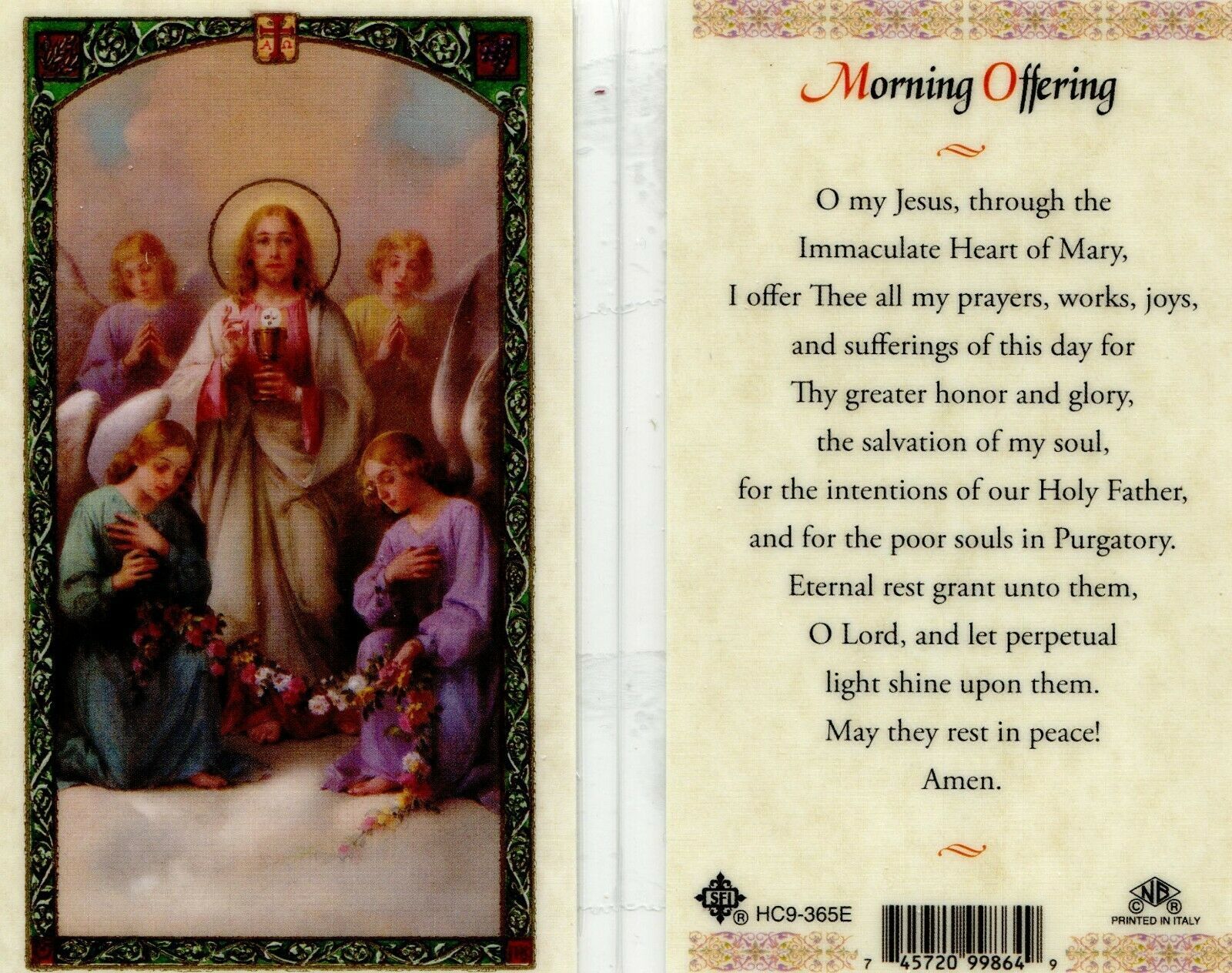

The Month of October is Dedicated to the Holy Rosary

“Rejoice in your hope, be patient in tribulation, be constant in prayer.” (Romans 12:12)

Pope Leo XIV’s prayer intention for the month of October, 2026:
For mental health ministry
Let us pray that the mental health ministry be established throughout the Church, helping to overcome the stigma and discrimination of persons with mental illnesses.

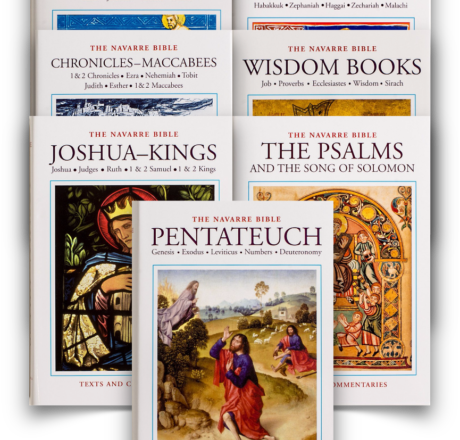
Today’s First Reading
From: Ephesians 4:1-6
A Call to Unity
-------------------
[1] I therefore, a prisoner of the Lord, beg you to lead a life worthy of the calling to which you have been called, [2] with all lowliness and meekness, with patience, forbearing one another in love, [3] eager to maintain the unity of the Spirit in the bond of peace. [4] There is one body and one Spirit, just as you were called to the one hope that belongs to your call, [5] one Lord, one faith, one baptism, [6] one God and Father of us all, who is above all and through all and in all.
***********************************************************************
Commentary:
1-16. The second part of the letter points out certain practical consequences of the teaching given earlier. The underlying theme of the previous chapters was the revelation of the "mystery" of Christ—the calling of all men, Gentiles and Jews, to form a single people, the Church. The second part of the letter begins with an appeal to maintain the unity of the Church in the face of factors making for division--internal discord (vv. 1-3), misuse of the different gifts or charisms with which Christ endows individuals (v. 7), and the danger of being led astray by heretical ideas (v. 14). Against this, St Paul teaches that the Church's unity is grounded on the oneness of God (vv. 4-6), and that Christ acts with full authority in the building up of his body, through its various ministries (vv. 8-13) and through its members' solidarity (vv. 14-16).
1. The exhortation begins by stating a general principle: a Christian's conduct should be consistent with the calling he has received from God.
Enormous consequences flow from the fact of being called to form part of the Church through Baptism: "Being members of a holy nation," St J. Escriva says, "all the faithful have received a call to holiness, and they must strive to respond to grace and to be personally holy [. . .]. Our Lord Jesus Christ, who founds the holy Church, expects the members of this people to strive continually to acquire holiness. Not all respond loyally to his call. And in the spouse of Christ there are seen, at one and the same time, both the marvel of the way of salvation and the shortcomings of those who take up that way" (St. Josemaria Escriva, "In Love with the Church", 5-6).
Speaking about incorporation into the Church, which is the way of salvation, Vatican II exhorts Catholics to "remember that their exalted condition results, not from their own merits, but from the grace of Christ. If they fail to respond in thought, word and deed to that grace, not only shall they not be saved, but they shall be the more severely judged (see Lk 12:48: 'everyone to whom much is given, of him will much be required'; cf. Mt 5:19-20; 7:21-22; 25:41-46; Jas 2:14)" ("Lumen Gentium", 14).
2-3. The virtues which the Apostle lists here are all different aspects of charity which "binds everything together in perfect harmony" (Col 3:14) and is the mark of the true disciple of Christ (cf. Jn 13:35). Charity originates not in man but in God: "it is a supernatural virtue infused by God into our soul by which we love God above everything else for his own sake, and our neighbor as ourselves for love of God" ("St Pius X Catechism", 898).
In its decree on ecumenism the Second Vatican Council shows the perennial relevance of these words of St Paul: "There can be no ecumenism worthy of the name without interior conversion. For it is from interior renewal of mind (cf. Eph 4:23), from self-denial and unstinted love, that desires of unity take their rise and develop in a mature way. We should therefore pray to the Holy Spirit for the grace to be genuinely self-denying, humble, gentle in the service of others and to have an attitude of brotherly generosity toward them" ("Unitatis Redintegratio", 7).
Charity is basic to the building up of a peaceful human society. 'The consciousness of being trespassers against each other goes hand in hand with the call to fraternal solidarity, which St Paul expressed in his concise exhortation to 'forbear one another in love'. What a lesson of humility is to be found here with regard to man, with regard both to one's neighbor and to oneself! What a school of good will for daily living, in the various conditions of our existence!" (Pope St. John Paul II, "Dives In Misericordia", 14).
The peace which unites Christians is the peace which Christ brings, or rather it is Christ himself (cf. 2:14). By having the same faith and the same Spirit, "all find themselves", says St John Chrysostom, "brought together in the Church--old and young, poor and rich, adult and child, husband and wife: people of either sex and of every condition become one and the same, more closely united than the parts of a single body, for the unity of souls is more intimate and more perfect than that of any natural substance. However, this unity is maintained only by 'the bond of peace'. It could not exist in the midst of disorder and enmity.... This is a bond which does not restrict us, which unites us closely to one another and does not overwhelm us: it expands our heart and gives us greater joy than we could ever have if we were unattached. He who is strong is linked to the weaker one to carry him and prevent him from falling and collapsing. Does the weak person feel weak?: the stronger person tries to build up his strength. 'A brother helped is like a strong city', says the wise man (Prov 18:19)" ("Hom. on Eph, 9, ad loc".).
Union of hearts, affections and intentions is the result of the action of the Holy Spirit in souls, and it makes for effectiveness and strength in apostolate.
"Do you see? One strand of wire entwined with another, many woven tightly together, form that cable strong enough to lift huge weights. "You and your brothers, with wills united to carry out God's will, can overcome all obstacles" (St J. Escriva, "The Way", 480).
4-6. To show the importance of unity in the Church, and the theological basis of that unity, St Paul quotes an acclamation which may well have been taken from early Christian baptismal liturgy. It implies that the unity of the Church derives from the unicity of the divine essence. The text also reflects the three persons of the Blessed Trinity who are at work in the Church and who keep it together--one Spirit, one Lord, one God and Father.
There is "only one" Holy Spirit, who brings about and maintains the unity of Christ's mystical body; and there is "only one" such body, the Church: "After being lifted up on the cross and glorified, the Lord Jesus pours forth the Spirit whom he had promised, and through whom he has called and gathered together the people of the New Covenant, which is the Church, into a unity of faith, hope and charity, as the Apostle teaches us (Eph 4:4-5; Gal 3:27-28) [...] It is the Holy Spirit, dwelling in believers and pervading and ruling over the entire Church, who brings about that wonderful communion of the faithful and joins them together so intimately in Christ, for he [the Spirit is the principle of the Church's unity" (Vatican II, "Unitatis Redintegratio", 2). All Gentiles as well as Jews are called to join this Church; all, therefore, share the one single hope--that of being saints which is implied in the vocation they have received.
Recognition of there being only one Lord, who is head of the mystical body, underlines the unity that should obtain among all the many members of this single body. All its members are solidly built on Christ when they confess "only one" faith--the faith that he taught and which the Apostles and the Church have expressed in clear statements of doctrine and dogma. "There can be only one faith; and so, if a person refuses to listen to the Church, he should be considered, so the Lord commands, as a heathen and a publican (cf. Mt 18:17)" (Pius XII, "Mystici Corporis", 10). All Christians have also received only one Baptism, that is, a Baptism by means of which, after making a profession of faith, they join the other members of the Church as their equals. Since there is only "one Lord, one faith, one baptism," "there is a common dignity of members deriving from their rebirth in Christ, a common grace as sons, a common vocation to perfection, one salvation, one hope and undivided charity. In Christ and in the Church there is, then, no inequality arising from race or nationality, social condition or sex, for 'there is neither Jew nor Greek; there is neither slave nor free; there is neither male nor female; for you are all one in Christ Jesus' (Gal 3:28; cf. Col 3:11)" (Vatican II, "Lumen Gentium", 32).
God, the Father of all, is, in the last analysis, the basis of the natural unity of mankind. Pope Pius XII, after recalling that the sacred books tell us that all the rest of mankind originated from the first man and woman, and how all the various tribes and peoples grew up which are scattered throughout the world, exclaimed, "This is a wonderful vision which allows us to reflect on the unity of mankind: all mankind has a common origin in the Creator, as we are told, 'one God and father of us all' (Eph 4:6); moreover, all men and women share one and the same nature: all have a material body and an immortal and spiritual soul" ("Summi Pontificatus", 18). God is "above all": his lordship and control over things means that he is the author and maintainer of their unity. Throughout history he has acted "through all" his children, that is, believers, whom he has used to bring about unity among men and over all created things. And he dwells "in all" the faithful, for they belong to him; even the deepest recesses of their hearts are his.
From: Luke 12:54-59
The Coming of Christ
--------------------
[54] He (Jesus) also said to the multitudes, "When you see a cloud rising in the west, you say at once, `A shower is coming'; and so it happens. [55] And when you see the south wind blowing, you say, `There will be scorching heat'; and it happens. [56] You hypocrites! You know how to interpret the appearances of earth and sky; but why do you not know how to interpret the present time?"
[57] "And why do you not judge for yourselves what is right? [58] As you go with your accuser before the magistrate, make an effort to settle with him on the way, lest he drag you to the judge, and the judge hand you over to the officer, and the officer put you in prison. [59] I tell you, you will never get out till you have paid the very last copper."
***********************************************************************
Commentary:
56. Jesus' listeners knew from experience how to forecast the weather. However, although they knew the signs of the Messiah's coming announced by the prophets, and were hearing His preaching and witnessing His miracles, they did not want to draw the logical conclusion; they lacked the necessary good will and upright intention, and they just closed their eyes to the light of the Gospel (cf. Romans 1:18ff).
This attitude is also found to be very widespread in our own time, in forms of certain kinds of atheism denounced by the Second Vatican Council: "Those who willfully try to drive God from their heart and to avoid all questions about religion, not following the biddings of their conscience, are not free from blame" ("Gaudium Et Spes", 19).
Disclaimer: Opinions posted on Free Republic are those of the individual posters and do not necessarily represent the opinion of Free Republic or its management. All materials posted herein are protected by copyright law and the exemption for fair use of copyrighted works.


