
Posted on 10/19/2026 10:32:31 PM PDT by fidelis
Jesus said to his disciples: “Gird your loins and light your lamps and be like servants who await their master’s return from a wedding, ready to open immediately when he comes and knocks.” Luke 12:35–36
In biblical times, men wore long tunics that extended below the knees, often to the ankles. Though suitable for daily life, these garments could hinder strenuous activity. To “gird one’s loins,” a man would pull the back hem of his tunic forward between his legs, gather the fabric in front, and tuck it into his belt—creating a kind of makeshift pair of shorts. This freed the legs for running, fighting, or working.
Jesus uses this image to express the vigilance we must maintain in anticipating His coming. “Light your lamps” further implies that we live in a world of spiritual darkness, requiring the illumination of grace to recognize His arrival.
The Church Fathers often interpreted the “wedding” as the Heavenly Wedding—the union of Christ with the angels and saints. The master’s return symbolizes three things: Christ’s final coming at the end of time, His particular judgment at our death, and His continual coming by grace into our souls.
Christ’s return in glory is a certainty. What a glorious day that will be. Sin and evil will be vanquished, the condemned separated, and the righteous—fully purified—will enter His Eternal Kingdom. Yet it’s easy to lose sight of this reality and become absorbed in daily life, as though this world were all that matters. If that were true, then a long and prosperous life here would be the goal. But since eternal life is our true destiny, this life must be lived in preparation for what is to come.
Though the Second Coming may seem distant, our own death is ever before us, especially as we age. This Gospel invites us to prepare not only for the end of the world but for the end of our lives. That preparation isn’t just a matter of prayer at death’s door, it begins now. We gird our loins and light our lamps daily by seeking God’s grace and responding to His promptings.
As you go about each day, where is your focus? Of course, we have an obligation to fulfill our daily responsibilities, but woven into that routine must be a consistent attentiveness to God, who is always coming to us. “Blessed are those servants whom the master finds vigilant on his arrival.” Jesus adds, “Should he come in the second or third watch and find them prepared in this way, blessed are those servants.” In biblical times, the second watch (9 p.m.–midnight) and the third watch (midnight–3 a.m.) were the hardest times to remain alert, symbolizing the more difficult moments of life.
Our Lord is telling us that vigilance matters most when it’s hardest to maintain. The early morning watch may represent the easier seasons of life, such as times of peace, joy, and spiritual clarity. The second and third watches reflect moments of suffering, discouragement, illness, or confusion, especially when we’re tempted to turn inward and forget to look to God. Even our prayers in those times can become self-focused: “Lord, help me with this” or “Please take that away.”
Reflect today on the consistency of your own prayer. Are you vigilant in every season, especially in the second and third watches of the night? Are you especially faithful to God when life is challenging? Seek to make every moment an offering to God, watching and waiting for Him with love and trust.
My Lord and Bridegroom of my soul, I believe and profess that You will return in glory to renew the heavens and the earth at the end of time. Grant that I, and all Your children, may be fully prepared for that moment by remaining vigilant and attentive at all times. Help me to see and hear You each time You come to me by grace, especially in the most difficult moments of my life. Jesus, I trust in You.
Dear FRiends,
We need your continuing support to keep FR funded. Your donations are our sole source of funding. No sugar daddies, no advertisers, no paid memberships, no commercial sales, no gimmicks, no tax subsidies. No spam, no pop-ups, no ad trackers.
If you enjoy using FR and agree it's a worthwhile endeavor, please consider making a contribution today:
Click here: to donate by Credit Card
Or here: to donate by PayPal
Or by mail to: Free Republic, LLC - PO Box 9771 - Fresno, CA 93794
Thank you very much and God bless you,
Jim
Please keep in mind that this is a Catholic Caucus/Devotional thread for the purpose of prayerful reflection on the Sacred Scriptures and is closed to debate of any kind. Per FR policy on Religion Caucus threads, off-topic, argumentative, and abusive comments are not allowed and will be submitted to the Mods for deletion. Thanks, and God bless you.
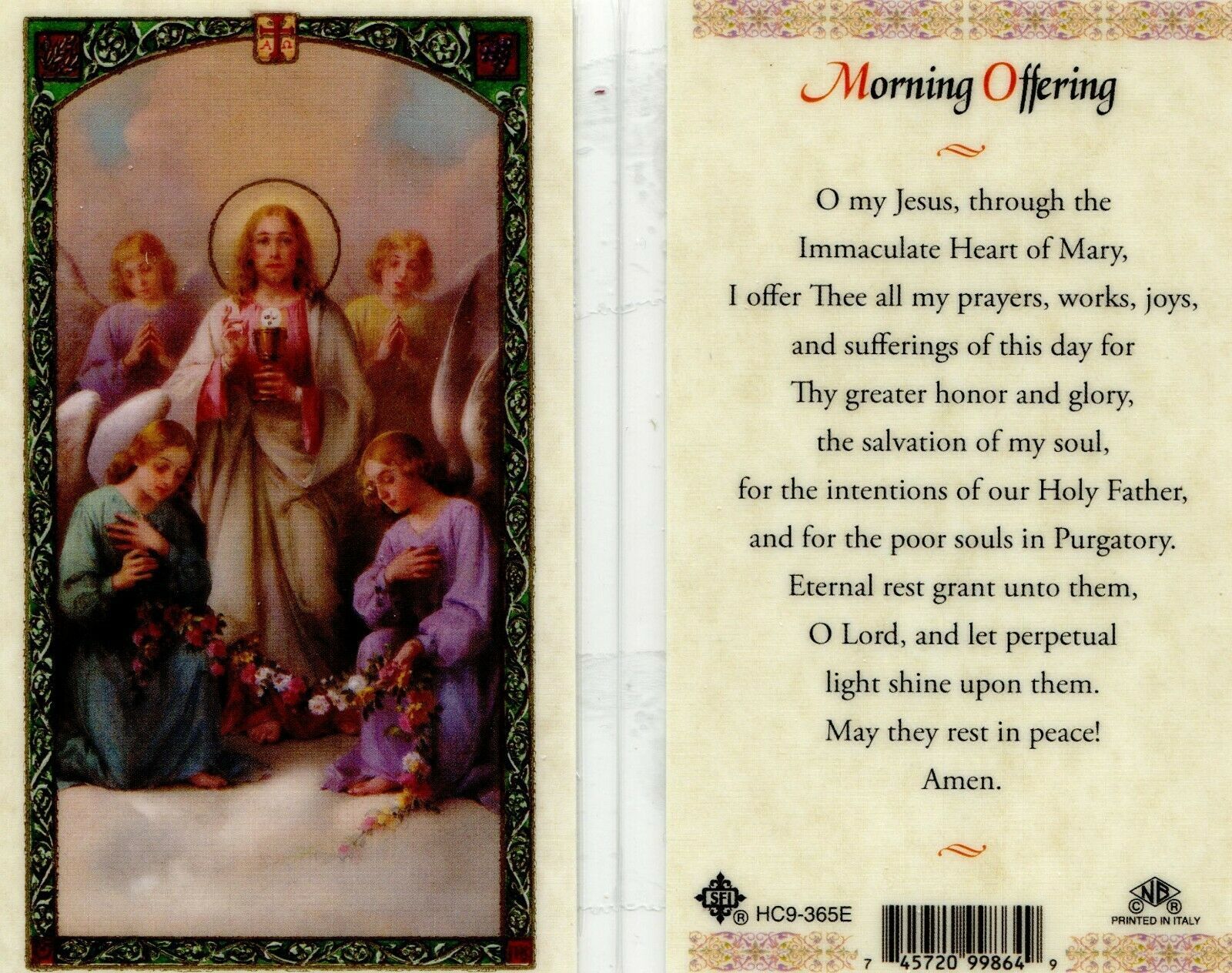

The Month of October is Dedicated to the Holy Rosary

“Rejoice in your hope, be patient in tribulation, be constant in prayer.” (Romans 12:12)

Pope Leo XIV’s prayer intention for the month of October, 2026:
For mental health ministry
Let us pray that the mental health ministry be established throughout the Church, helping to overcome the stigma and discrimination of persons with mental illnesses.

Today’s First Reading
From: Ephesians 2:12-22
Reconciliation of Jews and Gentiles in Christ
-------------------------------------------------------
[12] Remember that you were at that time separated from Christ, alienated from the commonwealth of Israel, and strangers to the covenants of promise, having no hope and without God in the world. [13] But now in Christ Jesus you who once were far off have been brought near in the blood of Christ. [14] For he is our peace, who has made us both one, and has broken down the dividing wall of hostility, [15] by abolishing, in his flesh the law of commandments and ordinances, that he might create in himself one new man in place of the two, so making peace, [16] and might reconcile us both to God in one body through the cross, thereby bringing the hostility to an end. [17] And he came and preached peace to you who were far off and peace to those who were near; [18] for through him we both have access in one Spirit to the Father. [19] So then you are no longer strangers and sojourners, but you are fellow citizens with the saints and members of the household of God, [20] built upon the foundation of the apostles and prophets, Christ Jesus himself being the cornerstone, [21] in whom the whole structure is joined together and grows into a holy temple in the Lord; [22] in whom you also are built into it for a dwelling place of God in the Spirit.
***********************************************************************
Commentary:
11-22. What is the significance of the calling of the Gentiles to the Church? Their previous situation, separated from Christ (vv. 11-12), has undergone radical change as a result of the Redemption Christ achieved on the Cross: that action has, on the one hand, brought the two peoples together (made peace between them: vv. 13-15) and, on the other, it has reconciled them with God, whose enemy each was (w. 16-18). The Redemption has given rise to the Church, which St Paul here describes as a holy temple built on the foundation of the apostles and prophets (vv. 19-22).
11-12. Prior to the coming of the Messiah, the Gentiles bore the mark of paganism even on their bodies: they were uncircumcised; and on this account they were despised by the Jews. St Paul, however, goes much further: he says that the essential distinction between Jews and Gentiles was not circumcision but the grace of election, which previously was extended only to the Jewish people. To them "belong the sonship, the glory, the covenants, the giving of the law, the worship, and the promises; to them belong the patriarchs" (Rom 9:4-5). The Gentiles had been given no such grace; it had been reserved to the people to whom God had promised the Messiah. Despite their myriad gods, the Gentiles did not know the true God.
Thus, one of the great results of the Redemption wrought by Christ and by God's mercy is that the Gentiles have been admitted to the covenants God made with the patriarchs, covenants which contained the promise that a Messiah would bring salvation (cf. note on Rom 9:4-6). This fulfilled the promise made to Abraham that through him all the families of the earth should account themselves blessed (cf. Gen 12:3). The prophets proclaimed this many times (cf. Is 2:1-3; 56:6-8; 60:11-14; etc.), and Jesus Christ saw it as imminent when he said that many would come from east and west and sit at table with Abraham, Isaac and Jacob (cf. Mt 8:11).
14-15. "He is our peace": through his death on the cross Christ has abolished the division of mankind into Jews and Gentiles. The Gentiles, who had been far away from God, from his covenant and from his promises (cf. v. 12), are now on a par with the Jews: they share in the New Covenant that has been sealed with the blood of Christ. That is why he is "our peace". In him all men find that solidarity they yearned for, because, through his obedient self-sacrifice unto death, Christ has made up for the disobedience of Adam, which had been the cause of human strife and division (cf. Gen 3-4). "Christ, the Word made flesh, the prince of peace, reconciled all men to God by the cross, and, restoring the unity of all in one people and one body, he abolished hatred in his own flesh (cf. Eph 2:16; Col 1:20-22) and, having been lifted up through his resurrection, he poured forth the Spirit of love into the hearts of men" (Vatican II, "Gaudium Et Spes", 78).
God's plan to attract mankind to himself and to reestablish peace included the election of the Jewish people, from whom the Messiah would be born; and in that Messiah all the nations of the world would be blessed (cf. Gen 11:3). He is in fact called "prince of peace" (Is 9:6; cf. Mic 5:4). However, many Jews had come to regard their election in such a narrow-minded way that they saw it as creating a permanent barrier between themselves and the Gentiles. Some rabbis of our Lord's time despised and even hated the Gentiles. The separation between the two peoples was reflected in the temple wall which divided the court of the Gentiles from the rest of the sacred precincts (cf. Acts 21:28). The real roots of the separation lay in Jewish pride at being the only ones to have the Law of God and keep it by scrupulous attention to countless legal niceties.
By his death on the cross Jesus Christ has broken down the barriers dividing Jews from Gentiles and also those which kept man and God apart. St Paul says this metaphorically when he says that Christ "has broken down the dividing wall", referring to the wall in the temple. But he is not resorting to metaphor when he says that Christ abolished "in his flesh the law of commandments and ordinances". Christ, through his obedience to the Father unto death (cf. Phil 2:8), has brought the Law to fulfillment (cf. Mt 5:17 and note on Mt 5:17-19); he has become, for all mankind, the way to the Father. The Law of the Old Testament, although it was something good and holy, also created an unbridgeable gap between God and man, because man, on his own, was incapable of keeping the Law (cf. notes on Gal 3:19-20; 3:21-25; and Acts 15:7-11). Christ, through grace, has created a new man who can keep the very essence of the Law—obedience and love.
The "new man" of whom St Paul speaks here is Jesus Christ himself, who stands for both Jews and Gentiles, because he is the new Adam, the head of a new mankind: the "new man", St Thomas Aquinas explains, "refers to Christ himself, who is called 'new man' because of the new form his conception took, ...the newness of the grace which he extends ..., and the new commandment which he brings" ("Commentary on Eph, ad loc.").
By taking human nature and bringing about our redemption, the Son of God has become the cause of salvation for all, without any distinction between Jew and Greek, slave and free, male and female (cf. Gal 3:28): only through Christ's grace can peace be achieved and all differences overcome. Pope John XXIII explains this in his encyclical "Pacem In Terris": peace is "such a noble and elevated task that human resources, even though inspired by the most praiseworthy goodwill, cannot bring it to realization alone. In order that human society may reflect as faithfully as possible the Kingdom of God, help from on high is necessary. For this reason, during these sacred days our supplication is raised with greater fervor towards him who by his painful passion and death overcame sin--the root of discord and the source of sorrows and inequalities--and by his blood reconciled mankind to the Eternal Father: 'For he is our peace, who has made us both one'."
16. Through his death on the cross, Jesus Christ reestablishes man's friendship with God, which sin had destroyed. Pope John Paul suggests that "With our eyes fixed on the mystery of Golgotha we should be reminded always of that 'vertical' dimension of division and reconciliation concerning the relationship between man and God, a dimension which in the eyes of faith always prevails over the 'horizontal' dimension, that is to say, over the reality of division between people and the need for reconciliation between them. For we know that reconciliation between people is and can only be the fruit of the redemptive act of Christ, who died and rose again to conquer the kingdom of sin, to reestablish the covenant with God and thus break down the dividing wall which sin had raised up between people" ("Reconciliatio Et Paenitentia", 7). Redemption therefore brings about our reconciliation with God (cf. Rom 5:10-2 Cor 5:18) and it affects everyone, Gentiles as well as Jews, and all creation (cf. Col 1:20). This reconciliation is achieved in the physical body of Christ sacrificed on the cross (cf. Col 1:22) and also in his mystical body, in which Christ convokes and assembles all whom he has reconciled with God by his redemptive sacrifice (cf. 1 Cor 12:13ff). The words "in one body" can be taken in two senses--as referring to Christ's physical body on the cross and to his mystical body, the Church.
The sacrifice of the body and blood of Christ, "the memorial of the death and resurrection of the Lord, in which the Sacrifice of the cross is forever perpetuated, is the summit and the source of all worship and Christian life. By means of it the unity of the body of Christ is signified and brought about, and the building up of the body of Christ is perfected" (Code of Canon Law, can. 897).
18. Prior to Christ's coming, man was excluded from the Father's house, living like a slave rather than a son (cf. Gal 4:1-5). But in the fullness of time God sent his Son to give us the spirit of sonship that enables us to call God our Father (cf. note on Rom 8:15-17).
"The way that leads to the throne of grace would be closed to sinners had Christ not opened the gate. That is what he does: he opens the gate, leads us to the Father, and by the merits of his passion obtains from the Father forgiveness of our sins and all those graces God bestows on us" (St Alphonsus, "Thoughts on the Passion", 10, 4).
Here we see the part played by the Holy Spirit in the work of salvation decreed by the Father and carried out by the Son. The words "in one Spirit", as well as identifying the access route to the Father, also imply two basic facts: on the one hand, that the mysterious union which binds Christians together is caused by the action of the Holy Spirit who acts in them; on the other, that this same Holy Spirit, inseparable from the Son (and from the Father) because they constitute the same divine nature, is always present and continually active in the Church, the mystical body of Christ. "When the work which the Father gave the Son to do on earth (cf. In 17:4) was accomplished, the Holy Spirit was sent on the day of Pentecost in order that he might continually sanctify the Church, and that, consequently, those who believe might have access through Christ in one Spirit to the Father (cf. Eph 2:18). [...] Hence the universal Church is seen to be 'a people brought into unity from the unity of the Father, the Son and the Holy Spirit' (cf. St Cyprian, "De Oratione Dominica", 23)" (Vatican II, "Lumen Gentium", 4).
Christ has brought about salvation, and, to enable all to appropriate that salvations he calls them to form part of his body, which is the Church. The Holy Spirit is, as it were, the soul of this mystical body; it is he who gives it life and unites all its members. "If Christ is the head of the Church, the Holy Spirit is its soul: 'As the soul is in our body, so the Holy Spirit is in the body of Christ, that is, the Church' (St Augustine, "Sermon 187")" (Leo XIII, "Divinum Illud Munus", 8). The Holy Spirit is inseparably united to the Church, for St Irenaeus says, "where the Church is, there is the Spirit of God; and where the Spirit of God is, there is the Church and the fullness of grace" ("Against Heresies", III, 24).
19. After describing the Redemption wrought by Christ and applied in the Church by the Holy Spirit, St Paul arrives at this conclusion: the Gentiles are no longer strangers; they belong to Christ's Church.
In the new Israel (the Church) privileges based on race, culture or nationality cease to apply. No baptized person, be he Jew or Greek, slave or free man, can be regarded as an outsider or stranger in the new people of God. All have proper citizenship papers. The Apostle explains this by using two images: The Church is the city of saints, and God's family or household (cf. 1 Tim 3:15). The two images are complementary: everyone has a family, and everyone is a citizen. In the family context, the members are united by paternal, filial and fraternal links, and love presides; family life has a special privacy. But as a citizen one is acting in a public capacity; public affairs and business must be conducted in a manner that is in keeping with laws designed to ensure that justice is respected. The Church has some of the characteristics of a family, and some of those of a polity (cf. St Thomas Aquinas, "Commentary on Eph, ad loc.").
The head of the Church is Christ himself, and in his Church are assembled the children of God, who are to live as brothers and sisters, united by love. Grace, faith, hope, charity and the action of the Holy Spirit are invisible realities which forge the links bringing together all the members of the Church, which is moreover something very visible, ruled by the successor of Peter and by the other bishops (cf. Vatican II, "Lumen Gentium", 8), and governed by laws--divine and ecclesiastical--which are to be obeyed.
20-22. To better explain the Church, the Apostle links the image of "the household of God" to that of God's temple and "building" (cf. 1 Cor. 3:9). Up to this he has spoken of the Church mainly as the body of Christ (v. 16). This image and that of a building are connected: our Lord said, "Destroy this temple and in three days I will raise it up" (Jn 2:19), and St John goes on to explain that he was speaking "of the temple of his body" (Jn 2:21). If the physical body of Christ is the true temple of God because Christ is the Son of God, the Church can also be seen as God's true temple, because it is the mystical body of Christ.
The Church is the temple of God. "Jesus Christ is, then, the foundation stone of the new temple of God. Rejected, discarded, left to one side, and done to death--then as now--the Father made him and continues to make him the firm immovable basis of the new work of building. This he does through his glorious resurrection [...].
"The new temple, Christ's body, which is spiritual and invisible, is constructed by each and every baptized person on the living cornerstone, Christ, to the degree that they adhere to him and 'grow' in him towards 'the fullness of Christ'. In this temple and by means of it, the 'dwelling place of God in the Spirit', he is glorified, by virtue of the 'holy priesthood' which offers spiritual sacrifices (1 Pet 2:5), and his kingdom is established in the world.
"The apex of the new temple reaches into heaven, while, on earth, Christ, the cornerstone, sustains it by means of the foundation he himself has chosen and laid down--'the apostles and prophets' (Eph 2:20) and their successors, that is, in the first place, the college of bishops and the 'rock', Peter (Mt 16: 18)" (St. Pope John Paul II, "Homily at Orcasitas, Madrid", 3 November 1981).
Christ Jesus is the stone: this indicates his strength; and he is the cornerstone because in him the two peoples, Jews and Gentiles, are joined together (cf. St Thomas Aquinas, "Commentary on Eph, ad loc".). The Church is founded on this strong, stable bedrock; this cornerstone is what gives it its solidity. St Augustine expresses his faith in the perennial endurance of the Church in these words: "The Church will shake if its foundation shakes, but can Christ shake? As long as Christ does not shake, so shall the Church never weaken until the end of time" ("Enarrationes in Psalmos", 103).
Every faithful Christian, every living stone of this temple of God, must stay fixed on the solid cornerstone of Christ by cooperating in his or her own sanctification. The Church grows "when Christ is, after a manner, built into the souls of men and grows in them, and when souls also are built into Christ and grow in him; so that on this earth of our exile a great temple is daily in course of building, in which the divine majesty receives due and acceptable worship" (Pius XII, 'Mediator Dei", 6).
From: Luke 12:35-38
The Need for Vigilance and the Parable of the Steward
-----------------------------------------------------
[35] "Let your loins be girded and your lamps burning, [36] and be like men who are waiting for their master to come home from the marriage feast, so that they may open to him at once when he comes and knocks. [37] Blessed are those servants whom the master finds awake when he comes; truly, I say to you, he will gird himself and have them sit at table, and he will come and serve them. [38] If he comes in the second watch, or in the third, and finds them so, blessed are those servants!
***********************************************************************
Commentary:
35-39. In the preaching of Christ and of the Apostles we are frequently exhorted to be watchful (cf. Matthew 24:42; 25:13; Mark 14:34)--for one thing, because the enemy is always on the prowl (cf. 1 Peter 5:8), and also because a person in love is always awake (cf. Song of Songs 5:2). This watchfulness expresses itself in a spirit of prayer (cf. Luke 21:36; 1 Peter 4:7) and fortitude in faith (cf. 1 Corinthians 16:13). See the note on Matthew 25:1-13.
35. To enable them to do certain kinds of work the Jews used to hitch up the flowing garments they normally wore. "Girding your loins" immediately suggests a person getting ready for work, for effort, for a journey etc. (cf. Jeremiah 1:17; Ephesians 6:14; 1 Peter 1:13). Similarly, "having your lamps burning" indicates the sort of attitude a person should have who is on the watch or is waiting for someone's arrival.
I’ve been hospitalized several times. I spoke with the nurse handling my x-ray visit. She’s working for a private company now but was an ER nurse before. She quit the ER job as the patients treated her badly as did the hospital. The hours were horrendous and they were always understaffed. The x-ray job paid more, had normal working hours and nobody spat on her.
I think the ER problem and probably much of the other issues are due to the fact that illegals use the ER as their regular doctor. We let people in from areas that are not similarly civil to each other as I’d like to think we are in the US.
Sorry. I commented on the wrong thread.
Disclaimer: Opinions posted on Free Republic are those of the individual posters and do not necessarily represent the opinion of Free Republic or its management. All materials posted herein are protected by copyright law and the exemption for fair use of copyrighted works.

