
Posted on 10/11/2026 10:34:27 PM PDT by fidelis
While still more people gathered in the crowd, Jesus said to them, “This generation is an evil generation; it seeks a sign, but no sign will be given it, except the sign of Jonah. Just as Jonah became a sign to the Ninevites, so will the Son of Man be to this generation.” Luke 11:29–30
Imagine a homily beginning with these words: “This generation is an evil generation…” Such a proclamation would surely draw attention and perhaps provoke outrage. Yet these are the very words our Lord spoke to a growing crowd. The “generation” Jesus condemned was not defined by chronological birth within a specific era. Rather, it referred to a spiritual generation—a collective mindset of hardened unbelief. Specifically, it referred to those descendants of Abraham who had been entrusted with the Law and the Prophets and who awaited the coming of the Messiah, but failed to recognize Him when He arrived. The irony is tragic.
God had initiated a covenant with Abraham, which passed to his son Isaac, then to his grandson Jacob, whose name was changed to Israel. Israel’s twelve sons became the patriarchs of the twelve tribes. During a time of famine, Israel and his family migrated to Egypt, where Joseph had risen to a position of power second only to Pharaoh.
As the generations passed, the Israelites multiplied and became a threat to the Egyptians, who enslaved them. God then raised up Moses and Aaron to deliver the Israelites from bondage. During those forty years in the wilderness, God revealed His covenant to Moses and gave the people the moral, liturgical, and civil laws now contained in the Torah—the first five books of the Bible.
When the forty years were complete, God led them into the Promised Land under Joshua’s leadership—a land flowing with milk and honey, the region we identify as modern-day Israel and its surroundings. There, the twelve tribes settled, and Saul was anointed as the first king, uniting the tribes under a monarchy.
The Law given through Moses became the foundation of Israel’s national and religious life. Priests from the tribe of Levi offered sacrifices in the Temple in Jerusalem, and scribes and scholars interpreted and applied the Law in daily life. Yet despite the covenantal privileges they enjoyed, many in Israel repeatedly turned away from the Lord. God, in His mercy, sent prophet after prophet to call His people back, and though there were moments of renewal, apostasy often returned. Over time, Israel was repeatedly conquered and oppressed due to the people’s infidelity. By the time of Jesus, they lived under Roman occupation and longed for the Messiah promised by the prophets.
It was into this religious and historical context that Jesus entered and revealed Himself as the promised Messiah. He confirmed His identity not only by words but by miracles. Given their sacred heritage, one would expect the people of Israel to have recognized and received their Savior. Tragically, many failed to do so. Why? Because their hearts were closed to grace. They expected signs on their terms, not God’s. And so, Jesus rebuked them.
Reflect today on the spiritual condition of your soul. Are you among the faithful who respond to the call of repentance? Or are you among those who act like God’s children but ignore His will? Today, just like when Jesus preached, God is here. He is here in the Scriptures, the Sacraments, and the life and teachings of the Church. Open your heart today and believe, refusing to be part of this evil generation.
My Lord and Messiah, I believe You are here, in our midst, calling us to repent and to be faithful to the Gospel. Please open my eyes to see You and my heart to profess You. May I never be a part of the evil in this generation, one that professes You with their lips but ignores Your commands. Jesus, I trust in You.

|
Click here: to donate by Credit Card Or here: to donate by PayPal Or by mail to: Free Republic, LLC - PO Box 9771 - Fresno, CA 93794 Thank you very much and God bless you. |
Please keep in mind that this is a Catholic Caucus/Devotional thread for the purpose of prayerful reflection on the Sacred Scriptures and is closed to debate of any kind. Per FR policy on Religion Caucus threads, off-topic, argumentative, and abusive comments are not allowed and will be submitted to the Mods for deletion. Thanks, and God bless you.
The Month of October is Dedicated to the Holy Rosary

“Rejoice in your hope, be patient in tribulation, be constant in prayer.” (Romans 12:12)

Pope Leo XIV’s prayer intention for the month of October, 2026:
For mental health ministry
Let us pray that the mental health ministry be established throughout the Church, helping to overcome the stigma and discrimination of persons with mental illnesses.

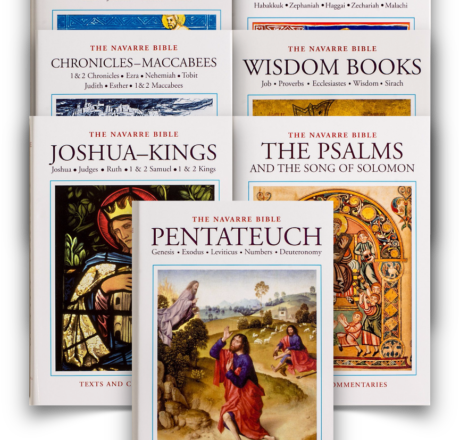
Today’s First Reading
From: Galatians 4:22-24, 26-27, 31-5:1
The Two Covenants: Hagar and Sarah
-------------------------------------------------
[22] For it is written that Abraham had two sons, one by a slave and one by a free woman. [23] But the son of the slave was born according to the flesh, the son of the free woman through promise. [24] Now this is an allegory: these women are two covenants. One is from Mount Sinai, bearing children for slavery; she is Hagar. [26] But the Jerusalem above is free, and she is our mother. [27] For it is written, "Rejoice, O barren one that dost not bear; break forth and shout, thou who art not in travail; for the desolate hath more children than she who hath a husband." [31] So, brethren, we are not children of the slave but of the free woman.
Christian Liberty
----------------------
[1] For freedom Christ has set us free; stand fast therefore, and do not submit again to a yoke of slavery.
***********************************************************************
Commentary:
21-31. The entire Old Testament narrative contains lessons for Christians. The Apostle says as much when he declares that these things have a symbolic meaning and "were written down for your instruction, upon whom the end of the ages has come" (1 Cor 10:11). However, certain episodes and people have particular significance, and this passage cites one (cf. Gen chaps. 16, 17 and 21). Abraham had been given a promise by God that he would have a son (Gen 15:4) by his wife Sarah (cf. Gen 17:19). However, both of them were quite old, and Sarah, besides, was barren; so, in keeping with the ancestral customs of the tribe, Sarah made Abraham take Hagar, her slave-girl, and Hagar had a son, Ishmael. However, God told Abraham that this son was not the son of the promise (cf. Gen 17:19). The promise was fulfilled sometime later when, through a miracle of God, Sarah gave birth to a son. St Paul speaks to us about the allegorical meaning of this episode: two women--Sarah, Abraham's wife and the mother of Isaac, and Hagar, her slave and the mother of Ishmael--stand for two stages in Salvation History. Hagar symbolizes the stage of the Old Covenant made on Mount Sinai, while Sarah represents the New Covenant sealed forever by the blood of Christ, the covenant which frees us from the yoke of the Law and from sin.
Paul's conclusion from this is that Christians are brothers of Isaac, born of the free woman, and therefore they are heirs of the promise made to Abraham and his descendants.
24-26. The sacred writer wants to stress that if one continues to be subject to the Mosaic Law it is equivalent to remaining a slave, to being a son of Hagar. People in that position constitute the present Jerusalem who is "in slavery with her children". Against this there is the heavenly Jerusalem, a metaphor also used in the Apocalypse to describe the Church triumphant in glory (cf. Rev 21:2, 10). This metaphor also conveys the idea of the transcendent, supernatural character of the Church.
Undoubtedly St Paul's Jewish contemporaries would have regarded this comparison of Jerusalem with Hagar as virtually blasphemous. However, we do know that the rabbis of his time did make a distinction between the earthly Jerusalem and the heavenly Jerusalem, the former being only a pale shadow of the latter. The Apostle uses these teachings, which can be deduced from Sacred Scripture, to explain that those who believe in Christ are the true descendants--spiritual descendants--of the lawful wife, Sarah, who prefigures the heavenly Jerusalem; whereas those who do not believe in Christ, although they belong racially to the people of Israel, are no longer true descendants of the lawful wife, but rather are children of Hagar.
St Paul then makes a play on words, in typical rabbinical style: since Hagar is one of the names of the mountainous region of Sinai, to which, according to the geographical notions of the time, Mount Sion also belongs (Sion being the hill on which Jerusalem is built), this earthly Jerusalem is connected with Hagar, the slave, to whom the divine promise was not made. This whole passage, while we may find it very odd, does reveal St Paul's earlier training as a rabbi, a training which divine Providence uses to show us the inner meaning of one of the most important episodes in Old Testament history.
1-3. The Law of Moses, which was divinely revealed, was something good; it suited the circumstances of the time. Christ came to bring this Law to perfection (cf. notes on Mt 5:17-19 and Gal 5:14-15). All the elaborate legal and ritual prescriptions in the Mosaic Law were laid down by God for a specific stage in Salvation History, that is, the stage which ended with the coming of Christ. Christians are under no obligation to follow the letter of that Law (cf. St Thomas Aquinas, "Summa Theologiae", I-II, q. 108, a.3 ad 3).
Although in this letter to the Galatians the Apostle is emphasizing, as we have seen, freedom from the Law of Moses, obviously this liberation cannot be entirely disconnected from freedom in general. If someone submits to circumcision after being baptized, it amounts to subjecting oneself to a series of practices which have now no value and to depriving oneself of the fruits of Christ's Redemption. In other words, subjection to the Law brings with it a loss of freedom in general. Paul is using the full might of his apostolic authority when he says, "If you receive circumcision, Christ will be of no advantage to you." Christ's Redemption alone is effective; it has no need of the rites of the Old Testament.
From: Luke 11:29-32
The Sign of Jonah
-----------------
[29] When the crowds were increasing, He (Jesus) began to say, "This generation is an evil generation; it seeks a sign, but no sign shall be given to it except the sign of Jonah. [30] For as Jonah became a sign to the men of Nineveh, so will the Son of Man be to this generation. [31] The queen of the South will arise at the judgment with the men of this generation and condemn them; for she came from the ends of the earth to hear the wisdom of Solomon, and behold, something greater than Solomon is here. [32] The men of Nineveh will arise at the judgment with this generation and condemn it; for they repented at the preaching of Jonah, and behold, something greater than Jonah is here."
***********************************************************************
Commentary:
29-32. Jonah was the prophet who led the Ninevites to do penance: his actions and preaching they saw as signifying that God had sent him (cf. note on Matthew 12:41-42).
[Note on Matthew 12:41-42 states: 41-42. Nineveh was a city in Mesopotamia (modern Iraq) to which the prophet Jonah was sent. The Ninevites did penance (John 3:6-9) because they recognized the prophet and accepted his message; whereas Jerusalem does not wish to recognize Jesus, of whom Jonah was merely a figure. The queen of the South was the queen of Sheba in southwestern Arabia, who visited Solomon (1 Kings 10:1-10) and was in awe of the wisdom with which God had endowed the King of Israel. Jesus is also prefigured in Solomon, whom Jewish tradition saw as the epitome of the wise man. Jesus' reproach is accentuated by the example of pagan converts, and gives us a glimpse of the universal scope of Christianity, which will take root among the Gentiles.
There is a certain irony in what Jesus says about "something greater" than Jonah or Solomon having come: really, He is infinitely greater, but Jesus prefers to tone down the difference between Himself and any figure, no matter how important, in the Old Testament. ]
Disclaimer: Opinions posted on Free Republic are those of the individual posters and do not necessarily represent the opinion of Free Republic or its management. All materials posted herein are protected by copyright law and the exemption for fair use of copyrighted works.


